Boost your listening and critical thinking skills for the SAT, TOEFL, and IELTS by studying the Sherlock Holmes method. Includes a full listening lecture, vocabulary, and a 10-question quiz.


Boost your listening and critical thinking skills for the SAT, TOEFL, and IELTS by studying the Sherlock Holmes method. Includes a full listening lecture, vocabulary, and a 10-question quiz.

Develop a reading habit and improve your English listening! A friendly librarian gives five practical tips. Includes script, vocabulary, and a 10-question quiz for exam prep.

Listen to an author reflect on their literary prize nomination. A great exercise for TOEFL/IELTS, with script, vocabulary, and a 10-question quiz to test your comprehension of personal storytelling.

Test your listening skills with a passionate review of a fictional sci-fi novel. Perfect for IELTS and TOEFL prep, this post includes a full audio script, key vocabulary, and a 10-question quiz.

Improve your English listening for TOEFL, IELTS, and SAT with this university lecture on magical realism. Includes a full script, vocabulary, and 10 exam-style questions.

Practice high-level listening with a lecture on Peace Parks—transboundary wildlife corridors co-managed across borders to protect biodiversity, grow ecotourism, and support conflict-free livelihoods. Includes advanced vocabulary and a 10-question MCQ quiz with detailed feedback.

Sharpen your listening for international exams with a lecture on contact theory—how intergroup contact, equal status, common goals, and institutional support turn rivals into neighbors via co-ops, joint projects, and daily empathy builders. Includes advanced vocabulary and a 10-question MCQ quiz with detailed feedback.
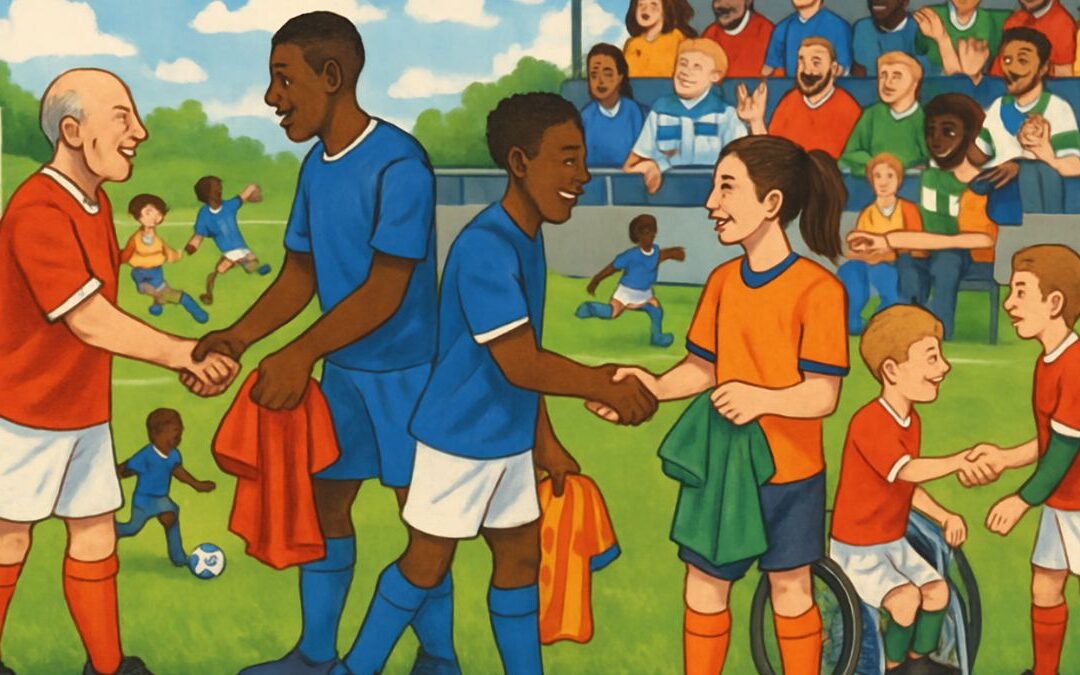
Build exam-ready listening skills with a lecture on sports diplomacy—how truces, mixed squads, and fan codes of conduct de-escalate conflict. Includes advanced vocabulary and a 10-question international-exam-style MCQ quiz with detailed feedback.

Practice high-level listening skills with a lecture on culinary diplomacy—how food rituals, shared kitchens, and tasting events can de-escalate tension and build trust. Includes advanced vocabulary and a 10-question exam-style MCQ quiz with feedback.

Sharpen your listening skills for the TOEFL, IELTS, or SAT with this advanced audio practice. Listen to a university-level lecture on the refugee crisis and test your comprehension with exam-style questions and vocabulary analysis.

We don’t always move in straight lines. Sometimes life takes us back — to a place, a feeling, a truth — and the return reveals something the departure couldn’t. ‘Coming full circle’ is one of the most quietly profound expressions in English, and this episode explores what happens when the journey bends back and finds its beginning.

Capitulate sounds like defeat. And sometimes it is. But in this episode, we look at the more interesting cases — when surrendering a position takes more strength than holding it, and when knowing when to capitulate is the most powerful move available.

It’s easy to be there for someone when things are good. The expression ‘through thick and thin’ is about something rarer and deeper — the kind of presence that doesn’t require favorable conditions. This episode is a quiet celebration of loyalty, constancy, and the relationships that actually hold.

Grandiloquent is one of English’s most perfectly self-aware words — a grandiose word for grandiose language. In this episode, we explore the gap between impressive-sounding speech and actual substance, and why the difference matters more than ever.

Some things you hear and they stay outside of you. Others reach right in. ‘Hitting close to home’ is the expression for that second kind — when something resonates at a personal, often uncomfortable depth. This episode explores why that phrase matters and what it reveals about the places we protect most.

Resilience is one of the most overused words of the last decade. In this episode, we strip it back to what it actually means, where it actually comes from, and why the most resilient people aren’t the ones who bounce back — but the ones who bounce forward.