Learn how to use prepositions effectively in English with these tips and examples. Improve your language learning with a better understanding of grammar and vocabulary.


Learn how to use prepositions effectively in English with these tips and examples. Improve your language learning with a better understanding of grammar and vocabulary.

Improve your English grammar skills by mastering the usage of articles. Learn the proper usage of ‘a’, ‘an’, and ‘the’, common mistakes to avoid, and tips to enhance your understanding of article usage.

In this article, we’ll take a closer look at the most important parts of speech: nouns, verbs, adjectives, adverbs, and more.

In this blog post, we discuss common mistakes non-native speakers make when talking about moving around in English. From using the wrong preposition to confusing verb tenses, we provide tips and tricks to help you avoid making these mistakes. Whether you’re giving directions, talking about transportation schedules, or describing your travel experiences, this post will help you communicate more effectively and confidently in English.

Are you struggling with mastering English grammar? Don’t worry, you’re not alone. English grammar can be a daunting subject, but it’s worth the effort. In this blog post, we explore the importance of grammar in everyday life and the many benefits of mastering it beyond improving communication skills. We also discuss effective strategies for learning and teaching grammar, the challenges faced by non-native English speakers, and how technology can be used to enhance the learning and teaching of grammar. Furthermore, we provide practical tips for maintaining and improving grammar skills over time. Whether you’re a student, professional, or simply looking to improve your language skills, this blog post has something for you.

What is the difference between the words famous, infamous, well known and notorious? If you would like to learn about that join me in this Usage Notes episode from English Plus Podcast.
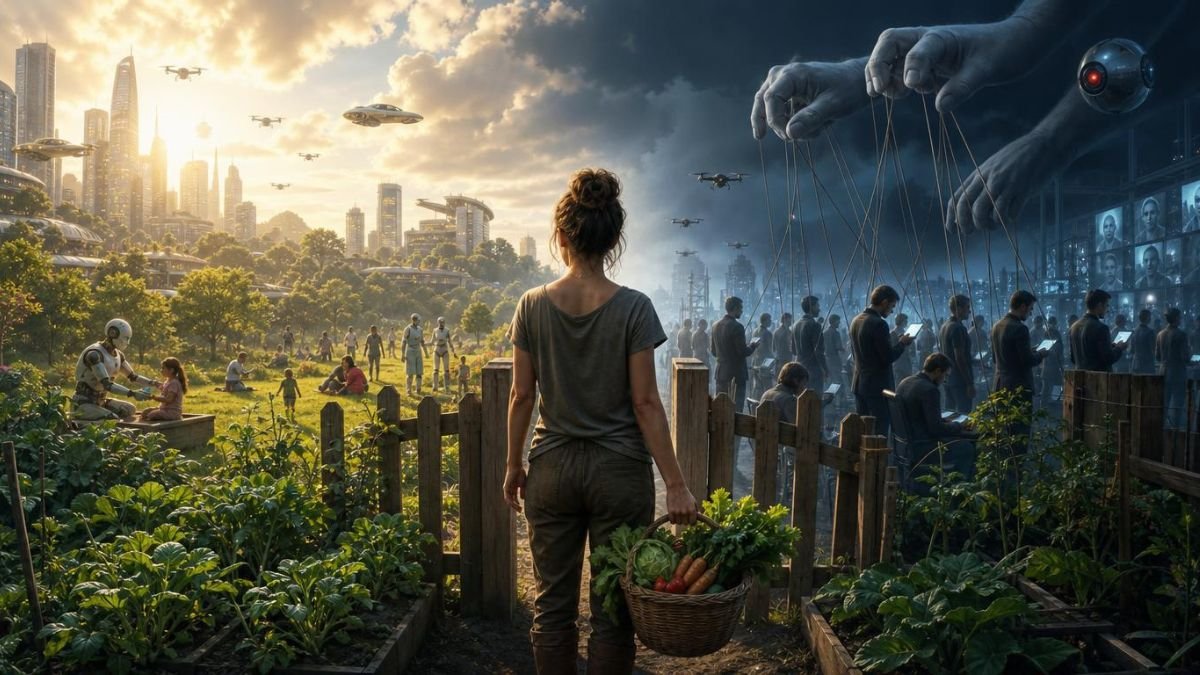
Elon Musk says AI and robots will make work optional within ten to twenty years, funded by government-issued “universal high income.” The promise is sincere. The arithmetic is plausible. The politics are a catastrophe — and for most of the world, the offer isn’t even on the table. An examination of what happens to human dignity, political leverage, and global hope when your livelihood becomes a transfer instead of a claim.

We compress distant cultures into one word and bristle when anyone does it to us. A look at resolution asymmetry — why it happens, when it’s harmless, and when it isn’t.

We use “Luddite” to mean technophobe. The real Luddites were skilled workers fighting over who controls technology and who profits from it — the exact fight we’re having about AI right now.

The Luddites are history’s favorite punchline for anyone who fears progress. But they never opposed machines — and the people who actually killed good technology were rarely holding a hammer. A deep dive into the smearing of a movement and the far quieter sabotage that followed.

We recoil at AI-generated content while happily consuming whatever an algorithm serves us. This deep dive examines the hypocrisy in our performed disgust, why “human or machine?” is the wrong question, and what a more honest relationship with content actually looks like.

Scientists, poets, and teachers were once public heroes. Now they’re invisible. A deep dive into what actually changed — and what to honestly tell a young person.