The Spanish call their country España. The name comes from the ancient word Span, which means hidden or remote land. It’s a fitting name, since Spain stands somewhat apart from the rest of Europe.
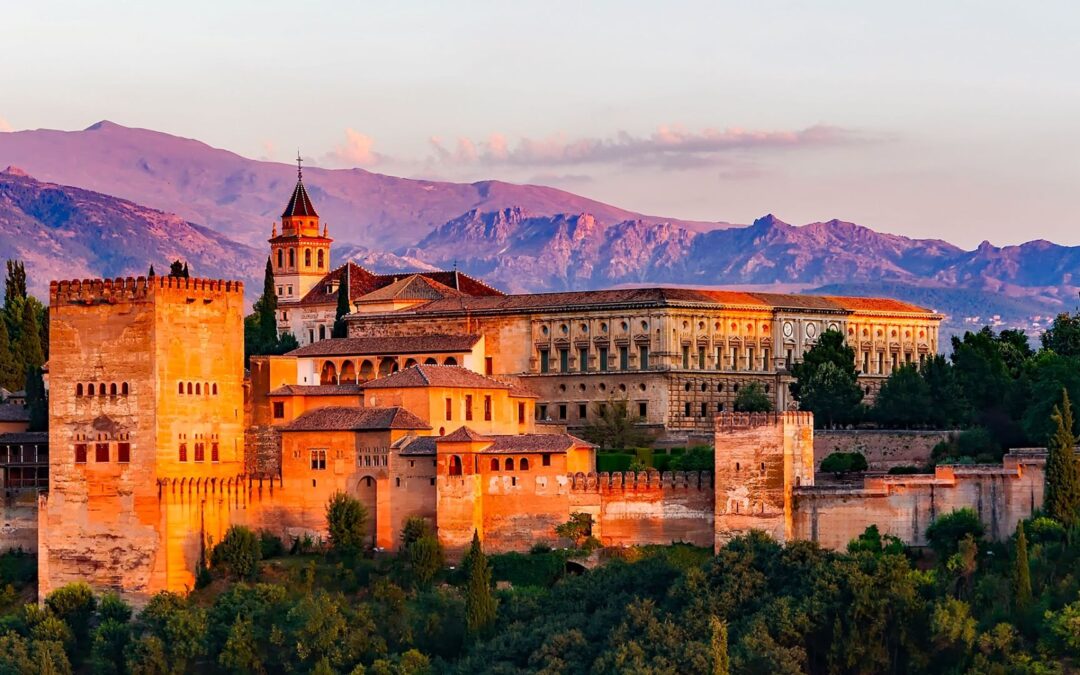

The Spanish call their country España. The name comes from the ancient word Span, which means hidden or remote land. It’s a fitting name, since Spain stands somewhat apart from the rest of Europe.
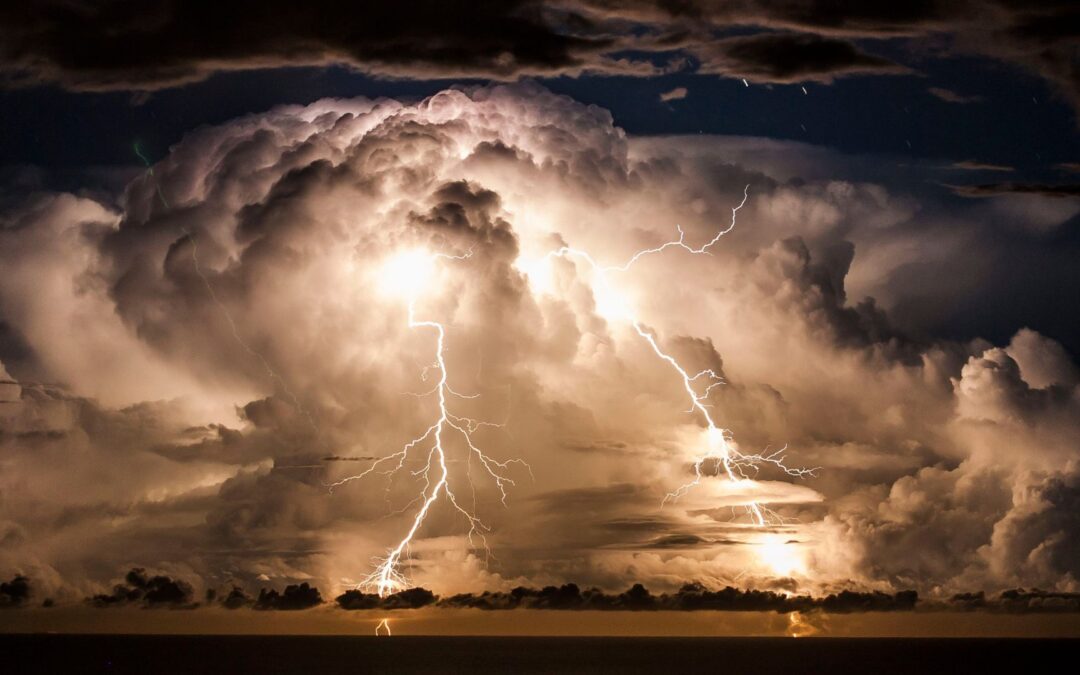
A thunderstorm is coming. A bolt of lightning flashes across the sky. Thunder rumbles in the distance. The storm comes closer. The lightning bolts get brighter. They light up the clouds. The thunder gets louder. It crashes and roars. Thunder and lightning can be frightening.

Was Benjamin Franklin a famous scientist? Or was he an inventor? Was he a diplomat and a statesman? Or a printer and a writer? Franklin was not just one of these things—he was all of them!

Brazil is a big country. It covers about half of South America and is home to about half the continent’s people. In fact, only four countries of the world have more land than Brazil: Russia, Canada, China, and the United States. All that area gives Brazil many kinds of landscapes and great natural beauty.
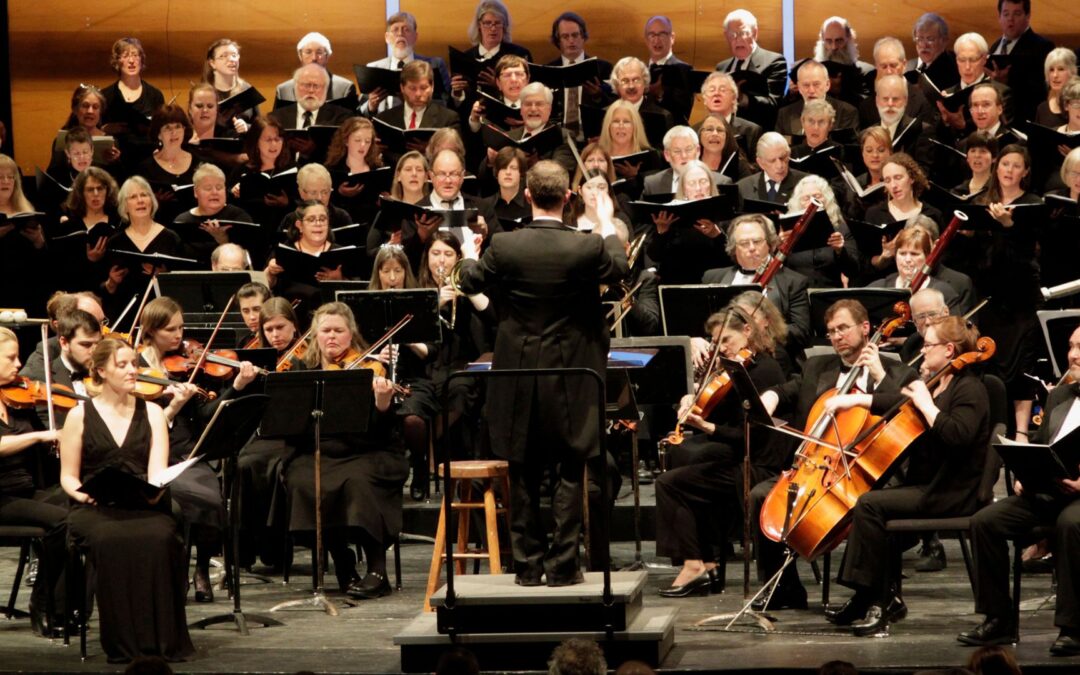
Do not be bored. Classical music can be very stimulating. Classical music began in Europe in the Middle Ages and continues today.
Classical music is the art music of Europe and North America. When we call it art music, we are distinguishing classical music from popular music and folk music. Art music generally requires more training to write and perform than the other two kinds.

Have you ever watched baby chickens hatch? You can see them on farms and at many children’s zoos.
The baby chick is inside a shell. It pecks at the shell for a while, and then it rests. When the chick has pecked away enough of the shell, it breaks out. Baby chickens are covered with soft down.

Explorers only reached the North Pole and the South Pole in the 1900s. They risked chilling cold, blinding blizzards, and frostbite to investigate these frozen zones.

Crazy Horse grew up riding horses and hunting buffalo. But it was his bravery and daring in battle that earned him the name Crazy Horse. This was also his father’s name.
Crazy Horse was one of the greatest Native American chiefs. When the United States government tried to force Native Americans to live on reservations, Crazy Horse fiercely defended his people’s land and way of life.
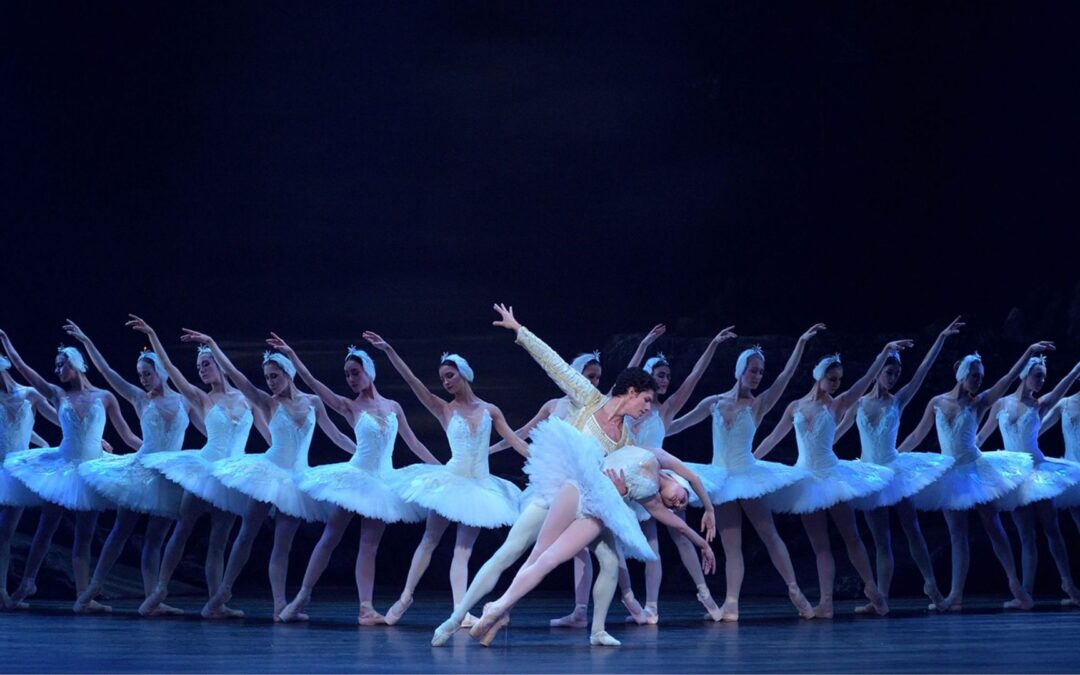
BALLET Raise your arms and bring your fingers together over your head. Now lift one foot, point your toes, and strike a pose. You are doing ballet. Ballet is a form of dance with graceful steps and arm movements as well as leaps and spins. We also use the word ballet...

VACCINATION “You’ll just feel a little jab.” Ouch! That wasn’t too bad, and it could save your life. Most of us have had “shots” from a needle. These are usually vaccinations, and they are extremely valuable. They help protect us against diseases. VIRUSES Most...
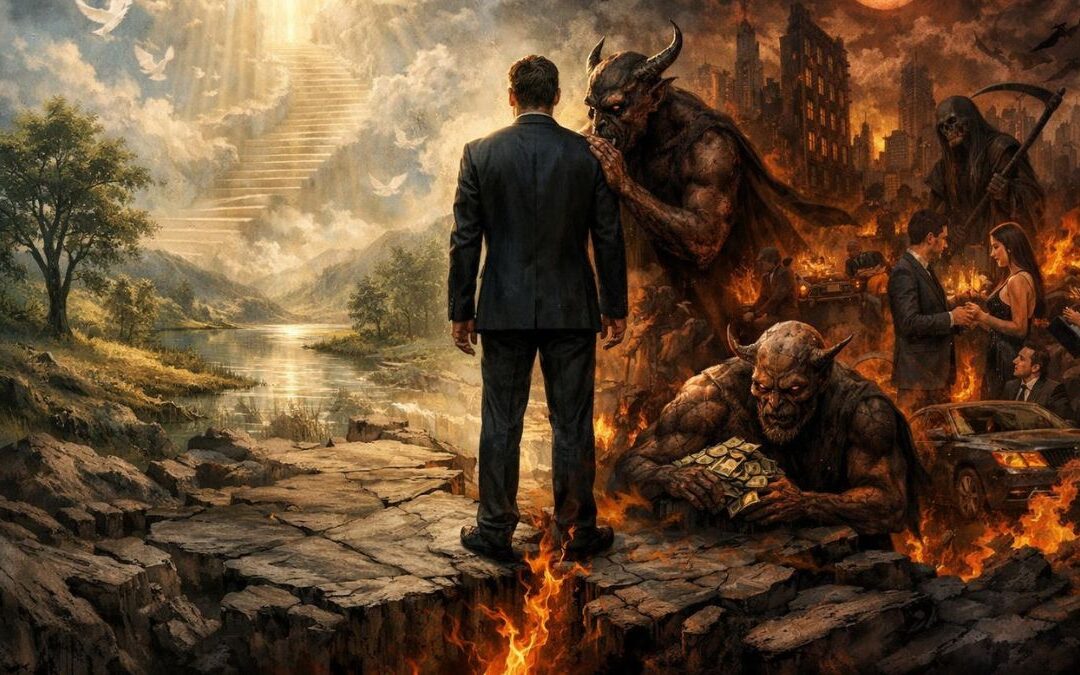
Are you suffering from “Ethical Fading”? Discover actionable strategies to navigate a compromised world and cutthroat office politics without losing your soul or your competitive edge.
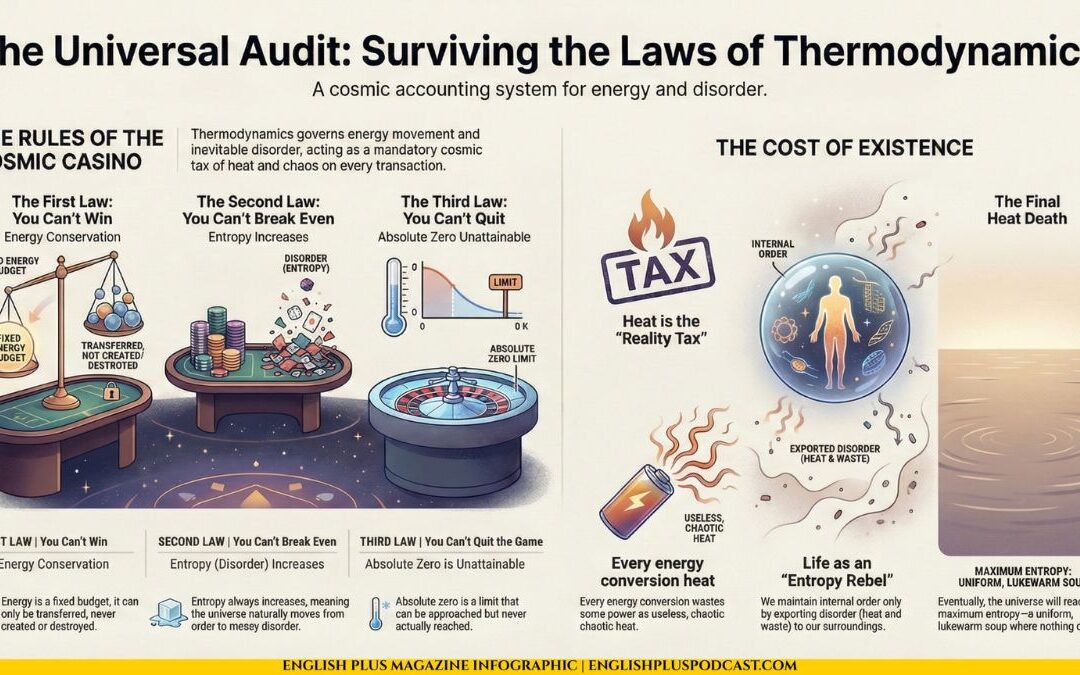
Why does disorder always increase? We break down the Laws of Thermodynamics, from energy conservation to the Heat Death of the universe, and why you can never win against entropy.

Are you struggling with a hybrid team? We explore Proximity Bias, the death of the watercooler, and why “Asynchronous Communication” is the secret to managing the chaos of the modern workplace.
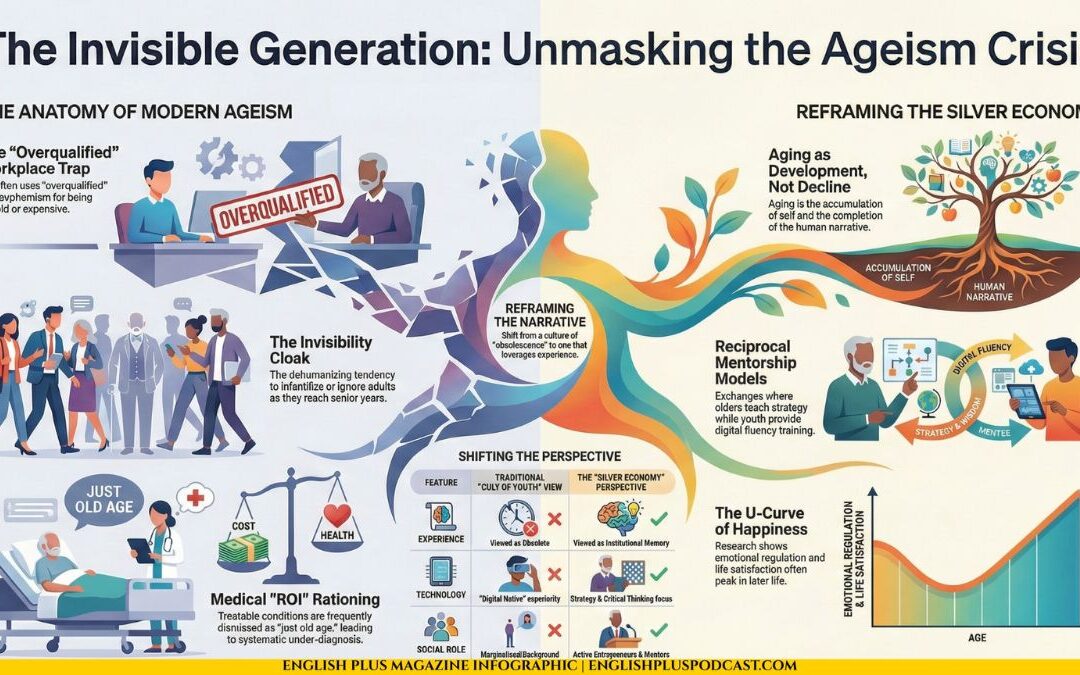
Ageism is the last acceptable prejudice. We explore the “cult of youth,” workplace discrimination, and the “Silver Economy,” challenging how society devalues the elderly.

Is your company’s “Wellness Wednesday” actually helping, or just a Band-Aid on burnout? We analyze the disconnect between corporate mindfulness perks and the reality of the 80-hour work week.

After eight years of giving it all away, the internet has changed. To survive the noise of the AI era and build something truly lasting, English Plus must evolve from a public broadcast into an exclusive community.