Is there something from your past — a mistake, a conflict, a hurt — that you've been holding onto long after the moment has gone?
Most of us can answer that question with a quiet yes. And that's exactly where this expression lives.
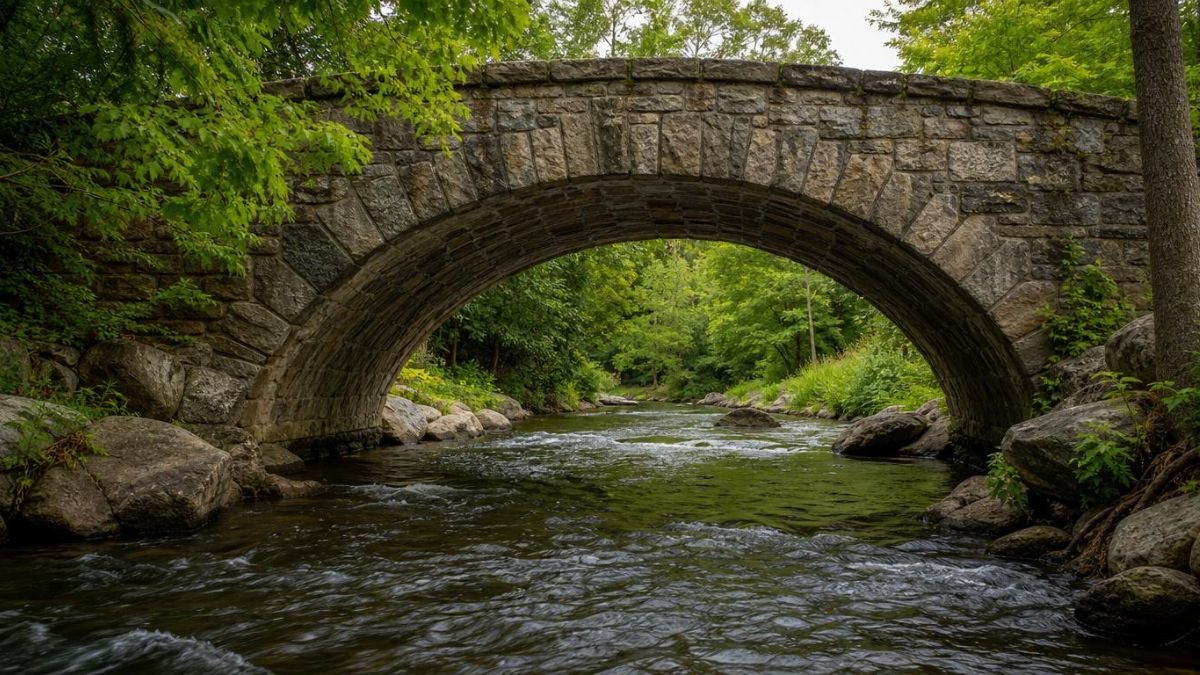
"Water under the bridge" means that something that happened in the past — a mistake, a disagreement, a difficult episode — is over and done with, and no longer worth dwelling on or arguing about. It's gone. It's past. It has moved on, the way water moves under a bridge and keeps going downstream. The water doesn't come back. And neither does the past.
We use it as release. "Look, we had our differences, but that's water under the bridge." Or as reassurance: "Don't apologize again — it's all water under the bridge." The expression performs a kind of grace — it says: we're not going to live in what happened. We're going to acknowledge it passed, and stand here, on the bridge, looking forward.
The image itself is quietly beautiful. A bridge is a structure built to cross something — to span what would otherwise be impassable. Water flows underneath it, carrying with it everything that has already been. And you — standing on the bridge — are above the current. Not denying it exists. But not in it either. You're crossing, not drowning.
Now here's where it gets more complex and more honest. Water under the bridge is not the same as pretending nothing happened. It's not erasure. The water flowed — the event occurred, the hurt was real, the mistake was made. Water under the bridge acknowledges that. It doesn't pretend the river was dry. It simply says: that water has moved on, and we can too.
That's harder than it sounds. Some water takes a very long time to move. Some things we clutch in our hands like stones, turning them over and over, refusing to let the current take them. And sometimes that's because the hurt hasn't been properly witnessed, named, or processed. You can't let water under the bridge until you've stood there long enough to really see it.
But when the time comes — when the work has been done, the conversation has been had, the apology given and received or not — there is something genuinely liberating about choosing to release. About deciding that this thing, which was real, which mattered, is now past. And the person you are today doesn't need to be defined or constrained by it.
Water under the bridge is an act of self-permission. Permission to keep walking. Permission to let the river carry what it can carry. Permission to not be in the current forever.
The bridge was always there. You've been standing on it longer than you needed to.
Here's your question: Is there something in your own life that you know, in your heart, is ready to become water under the bridge — if you'd let it?









0 Comments