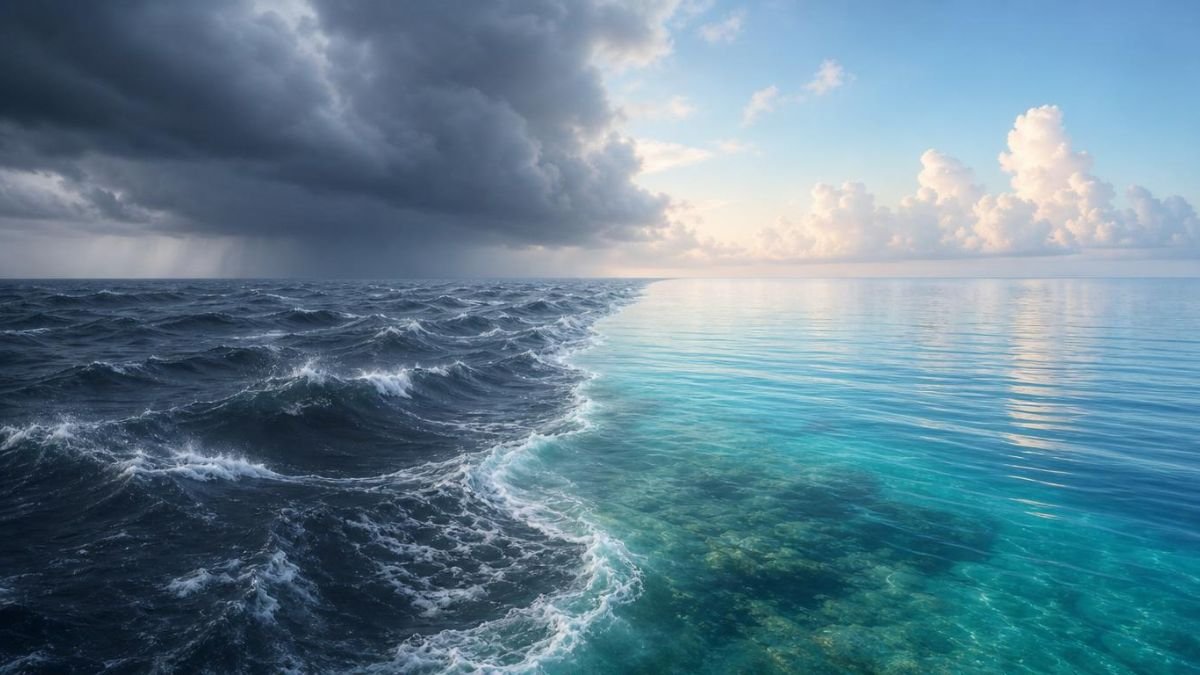
Has there been a transformation in your life that wasn't just a change in circumstances — but a change in you, at the deepest level?
Not a new job or a new address. Something more fundamental. The kind of change that reaches down to who you are and rearranges things from the inside out.
That's a sea change. And it's one of the most beautiful expressions ever coined.
The phrase comes directly from Shakespeare — from The Tempest, written around 1610. A spirit named Ariel sings of a drowned man being transformed by the sea: "Full fathom five thy father lies; of his bones are coral made; those are pearls that were his eyes: nothing of him that doth fade, but doth suffer a sea change into something rich and strange."
A sea change. Something rich and strange. What a phrase.
In Shakespeare's original context, the sea doesn't just kill — it transforms. The ordinary becomes extraordinary. Bones become coral. Eyes become pearls. The sea takes what it receives and, through its depth and power and slow alchemy, makes something entirely new. Something that could not have existed without the transformation. Something rich and strange.
We use the expression today to mean any profound, fundamental transformation — in a person, an organization, a society, a field of thought. Not a tweak or an update, but a sea change: the kind of shift that alters the underlying nature of something, not just its surface appearance.
Think about what distinguishes a sea change from ordinary change. Regular change happens on the surface — you update, you adjust, you respond. A sea change goes all the way down. It works at the level of identity, assumption, core belief. The person who goes through a sea change doesn't just behave differently. They see differently. They value differently. They are, in some essential way, someone who could not have existed before the transformation took them.
Grief can be a sea change. So can love — the real kind, the kind that asks something of you. A serious illness. A long journey, literal or metaphorical. Years of hard work in a discipline that eventually rewires how you think. The encounter with an idea, a person, or a place that shifts your entire orientation to the world.
What's most beautiful about the Shakespeare original is the word "rich." The transformation is not just strange — it's enriching. The bones don't just change; they become coral — something that sustains whole ecosystems. The eyes don't just change; they become pearls — objects of luminous value. The loss becomes abundance. The dissolution becomes creation.
That is the deepest meaning of a sea change: that what emerges from transformation can be more than what went in. Richer. Stranger. More fully itself.
The sea doesn't transform gently. But it transforms completely.
Here's your question: What has been your sea change — the transformation that made you into something rich and strange you couldn't have been before it?








0 Comments