
Have you ever had a moment where something you absolutely believed to be true suddenly stopped being true — and the world never looked quite the same again?
That's a paradigm shift. And it's one of the most powerful experiences a mind can go through.
The term comes from philosopher and historian of science Thomas Kuhn, who introduced it in his 1962 book The Structure of Scientific Revolutions. Kuhn used "paradigm" to mean the set of shared assumptions, frameworks, and methods that define how scientists work within a particular field at a given time. And a paradigm shift, for Kuhn, was not gradual progress — it was a revolutionary rupture. A moment when the existing framework could no longer explain the anomalies piling up around it, and a new framework had to replace the old one entirely.
Think of it this way: for centuries, everyone operated on the Ptolemaic paradigm — the Earth at the center of the universe, the sun and planets orbiting it. This wasn't stupidity. It was a sophisticated, working framework with mathematical precision. Then Copernicus proposed heliocentrism. Then Galileo observed it. Then Newton gave it physics. And the old paradigm didn't just update — it shattered. The ground moved. Everything had to be re-understood from a completely different center.
That is a paradigm shift.
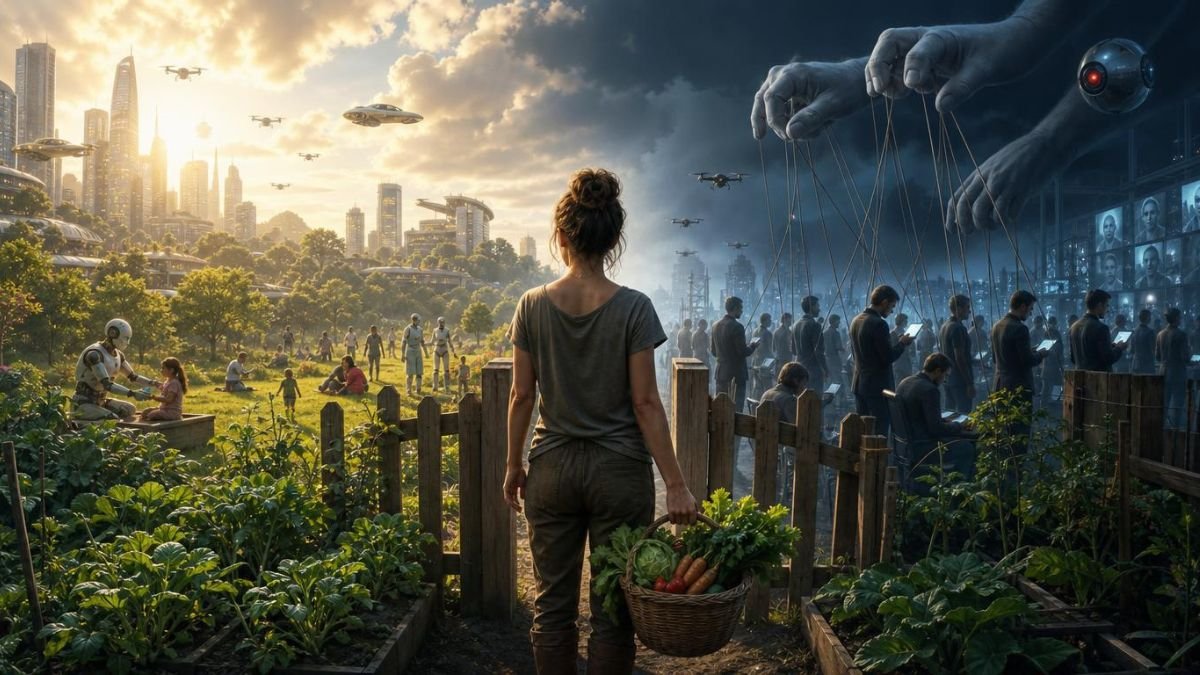
Now, the phrase has moved beyond science into everyday life. And rightly so. Because paradigm shifts happen at the personal level too — and they're just as disorienting, just as liberating, just as transformative.
The moment you realize your difficult childhood, rather than being your wound, has been your source of strength. That's a paradigm shift. The moment you stop seeing a career as a ladder to climb and start seeing it as a landscape to explore. That's a paradigm shift. The moment you understand that a person who frustrated you for years was operating from their own pain, not malice. That's a paradigm shift.
In each case, the facts didn't change. The framework changed. And a new framework reveals entirely different things from the same reality.
This is what makes paradigm shifts so unsettling at first. You didn't get new information — or not just new information. You got a new set of eyes. And once you've seen something through those eyes, you can't fully go back. The old way of seeing is still technically available to you, but it no longer feels true.
There's a beautiful irreversibility to a genuine paradigm shift. Which is why Kuhn called them revolutionary rather than evolutionary. They don't build on what was before — they replace the foundation itself. And building on a new foundation, even when it's more accurate, means a period of real disorientation.
But on the other side of that disorientation? Usually, extraordinary clarity. A paradigm shift doesn't leave you with less — it leaves you with more, and more honestly.
Here's your question: Can you name a paradigm shift you've experienced personally? A moment your whole way of seeing something changed — and stayed changed?
I'd love to hear about it in the comments. Every word is a door, and some of them open onto entirely new worlds.








0 Comments