The Story
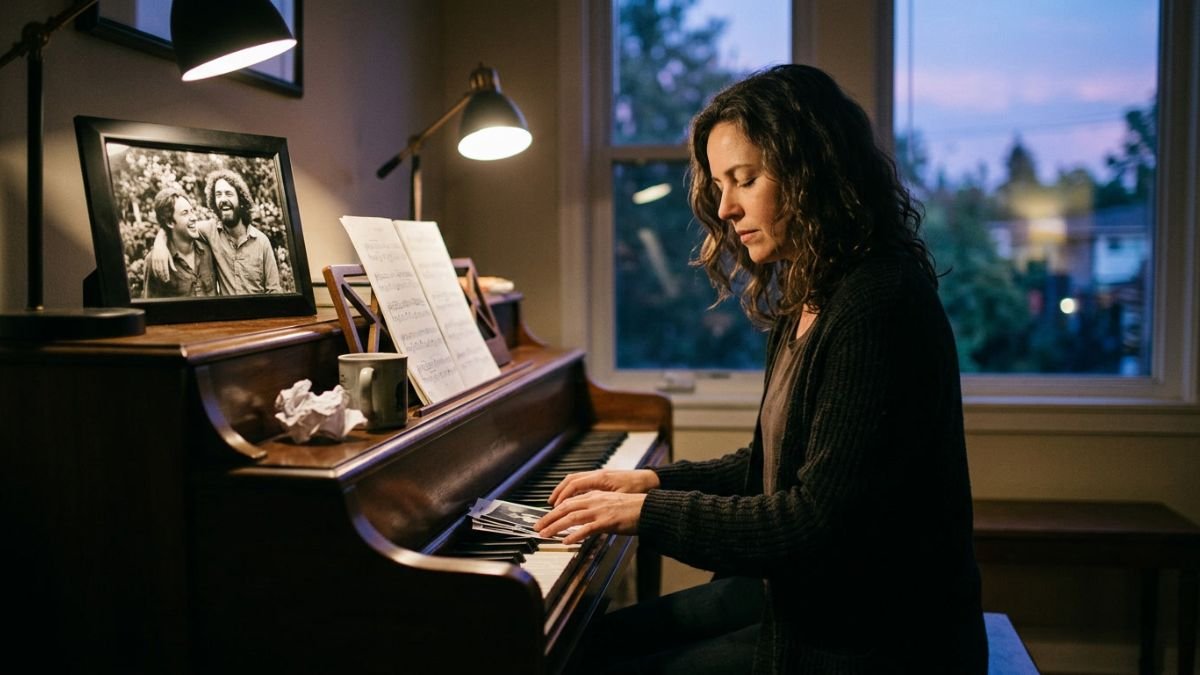
The piano was in the corner of the apartment Yusra Halabi had moved into after the funeral, because the old apartment had too many doorways Khalid had walked through. The new place had no history yet. The piano did, but only its own.
She sat down at it on a Tuesday afternoon in the unhurried light of late autumn, when the city outside Beirut's eastern hills was doing its slow, indifferent business of being a city. She had not played for a year. Her hands felt borrowed.
She wanted, she had decided that morning, to write the farewell she had never given him.
Khalid had died on a Thursday. She had been in Vienna for a residency. The last thing she had said to him, over a bad phone connection two days earlier, was that she would call him back. She had not called him back. He had gone to sleep on the Wednesday and not woken on the Thursday, and the call she had not made had become, in the year since, the largest object in her life. It cast a shadow over rooms.
She placed her right hand on the keys. She placed her left hand on the keys. She did not play.
She wanted, she thought, to find a single chord. Not a song. Songs were dishonest, they had beginnings and endings, they made promises about meaning. A chord was different. A chord was a held moment. A chord could be a person.
She tried C minor first. Too obvious. Grief in a paperback.
She tried a suspended fourth. Too pretty. Khalid had not been pretty. He had been tall and slightly stooped, with a laugh that started in his shoulders and worked its way down to his voice, and he had told her once, in a kitchen in Hamra at three in the morning, that he believed sadness was a kind of attention. "You only mourn what you actually saw", he had said. "Most people don't mourn much because most people don't see much."
She tried a chord with a flatted ninth. Too clever. Khalid had hated cleverness. He had said cleverness was what people did when they were afraid of being honest.
She lifted her hands.
The room was very quiet. Outside, a moped went past. A woman called her son in from a balcony three buildings away. The radiator clicked its small private clicks.
Yusra remembered the first time she had played for him. She had been twenty-two, terrified, in a music school recital hall with maybe fourteen people in the audience. He had been one of them, brought by a mutual friend. After the concert he had come up to her and said, with a seriousness that embarrassed them both, "You played the rest in the second movement as if you owed it money." She had not known whether it was a compliment. Years later she had decided it was the best thing anyone had ever said about her playing.
She placed her hands again.
She thought, suddenly, of his hands. They had been large and clumsy and stained, often, with whatever ink he was working with. He had been a printmaker. He had pressed paper into copper for a living and had once said, in the same kitchen, that everything he did was about leaving a clear impression on a soft surface before time got to it. "The world is mostly soft surfaces", he had said. "And mostly we leave nothing."
The chord she wanted, she realized, was not a chord. It was the moment before a chord. It was the breath in the room when the hands were lifted and the listener was leaning forward and nothing had happened yet, and anything still could.
She tried to play it. She pressed five keys very softly. D, F, A flat, B, E. The notes sounded together. They were ugly. They were beautiful. They did not resolve to anything. They were a question with no grammar.
She held the keys down.
She did not lift her hands.
She thought, "This is the call I did not make."
The chord went on. The radiator clicked. The moped, several streets away now, downshifted. The chord went on. The sustain pedal was under her right foot, pressed all the way to the floor, and the strings inside the piano kept their small, unresolved argument among themselves.
She began, finally, to cry. Not the large wet crying of the first weeks. The other kind. The kind that arrives like weather.
She did not lift her hands until the strings had nearly given up their sound, and even then she lifted them slowly, the way one lowers a sleeping child, so that the room would not notice the loss.
The chord was gone.
The chord, she understood, would always be gone.
But she had played it.
She sat at the piano for a long time afterward, in the unhurried autumn light, and after a while she said his name out loud, the way she had not been able to for a year. She said it once. She said it twice. The room did not answer. The room had never been going to answer.
She closed the lid.
She left it closed, but only for that day.
Author's Commentary
This story sat inside me for years before I knew how to write it. It is, in part, about a friend I lost too quickly to say the things I had been saving up to say, and it is, in part, about every reader who has carried a similar unfinished sentence around like a stone in a pocket. We all have one. The conversation we did not have. The hand we did not hold. The Thursday that arrived without warning.
I wanted to write about the specific cruelty of an unresolved chord, because music understands grief better than language does. A song with a tidy ending is a song that does not believe you. A song that hangs in the air, refusing to land, is closer to the truth of what it feels like to lose someone you were not finished knowing. Yusra cannot bring Khalid back. She cannot even, properly, say goodbye to him. What she can do is hold down five keys and let the strings argue among themselves until they tire, and call that a kind of honesty.
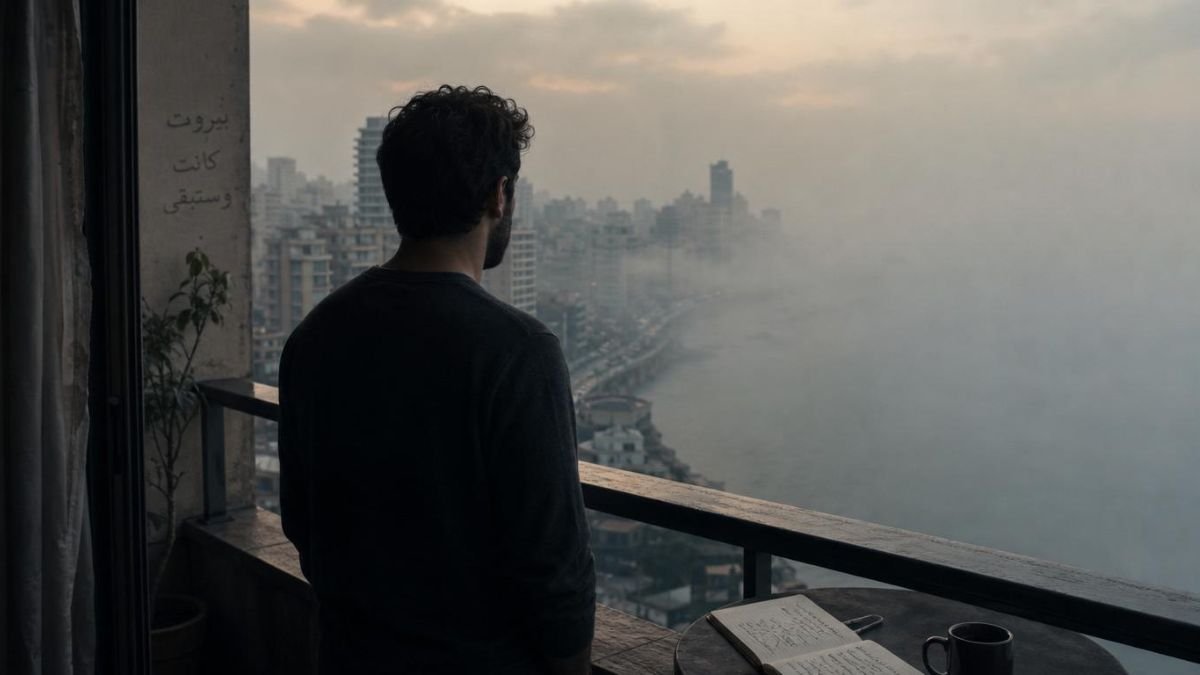
There is a Lebanese tenderness in this story that I cannot translate cleanly into English. The kitchen at three in the morning. The moped on the street. The radiator clicks. These are not decoration. They are the soft surfaces Khalid speaks about, and they keep going whether or not we leave a clear impression on them.
I think the only farewell we are ever really given, in the end, is the one we choose to make ourselves, late and incomplete and largely for our own sake.
Discussion Questions
What is the conversation you have not had with someone you have lost, and what would it cost you to have it now, even alone, even into an empty room? Do you believe that art can hold grief without resolving it, and is that enough? Have you ever tried to translate a feeling into a form, like music or writing, and what did the translation cost you?
A Small Call to Action
This week, find one small private way to say what you did not get to say. Write the letter and do not send it. Play the chord and do not finish it. Say the name into the quiet of your kitchen. The room will not answer. It was never going to. But you will have spoken, and that is more than nothing.



0 Comments