
I have a confession to make.
Last Tuesday, at approximately 2:14 PM, I was staring at a spreadsheet of our content analytics, nursing my third cup of coffee, and I seriously considered selling my soul to the digital devil.
I was looking at the numbers for a deeply researched, carefully nuanced piece I had just published. It explored the historical context of a major geopolitical event, taking great pains to show the humanity on all sides, the economic undercurrents, and the psychological burdens carried by the people involved. It was a beautiful piece. It was truthful. It was empathetic.
And it was getting absolutely crushed in the algorithm.
Meanwhile, my feed was flooded with videos of people screaming at each other in parking lots, sensationalized headlines predicting the immediate collapse of civilization, and ten-second hot takes completely stripping incredibly complex issues of any recognizable context. Millions of views. Millions of comments. A veritable tsunami of digital engagement.
Sitting there, bathed in the glow of my monitor, a very dark, very tempting thought crossed my mind.
I know how to do that.
I know the recipe. It’s not a secret. If I wanted to double our audience by next week, I know exactly what buttons to push. I wouldn't write about the intricacies of the human condition; I would write an article titled, "The Hidden Agenda: Why Everything You Love is Being Destroyed by [Insert Vague Group Here]." I wouldn't talk about the slow, methodical process of scientific discovery; I would pick a fringe conspiracy theory, validate it just enough to incite panic, and hit publish. I would stop trying to explain the world, and start trying to make you incredibly angry at it.
It would work. I know it would work. You know it would work.
So... why don't I do just that?
Why do I keep coming back to this microphone, week after week, to talk about the things I think are genuinely important? Why do we keep diving into poverty, psychology, war, peace, culture, science, and philosophy—knowing full well that these topics, treated with the respect they deserve, are the digital equivalent of eating your vegetables? Does anyone even care anymore?
Pull up a chair, my friends, get comfortable, and let’s have a real conversation about the outrage machine, the comfortable lie of black-and-white thinking, and why the messy, murky grey area is the only place left worth living in.
The Anatomy of the Outrage Machine
To understand why it is so difficult to talk about what actually matters, we have to look at the mechanics of the world we are currently communicating in.
We live in an attention economy. But that’s a polite way of putting it. We actually live in an emotion economy, and the algorithms that govern our digital lives have discovered a very uncomfortable truth about human neurology: nothing captures our attention quite like a perceived threat.
Our brains, wonderful as they are, are still running on software optimized for an ancient epoch. If you were a hunter-gatherer and someone told you a beautiful, nuanced story about a sunset, that was nice. If someone screamed, "TIGER!", you snapped to attention. Your amygdala fired, cortisol flooded your system, and you were ready to fight or run.
The social media platforms of today are giant, algorithmic tiger-screamers.
They have realized that the easiest way to keep you scrolling is to keep you slightly threatened, slightly indignant, and intensely polarized. Controversy is cheap to produce and incredibly profitable to distribute. It creates a neat, easily digestible narrative: There is a Good Guy, there is a Bad Guy, and you, dear consumer, are the brilliant Good Guy who sees the truth.
This is why nuance is the enemy of the algorithm. Nuance creates cognitive friction. Nuance asks you to pause. Nuance suggests that maybe the "villain" is actually a complex human being reacting to systemic pressures, trauma, and historical baggage. Nuance suggests that the solution isn't just to shout louder, but to sit down and do the incredibly hard, boring work of untangling the mess.
The algorithm hates that. It doesn't want you to sit and ponder. It wants you to share, quote-tweet with a fiery insult, and keep moving.
And so, we are left with a culture that elevates the loudest, most extreme voices, while the thoughtful, measured voices are drowned out in the noise. It is profoundly discouraging. It is the reason I look at my analytics spreadsheet and sigh.
But it is also the exact reason we cannot give up.
The Tragedy of Oversimplification
Let’s look at the topics we try to tackle here at English Plus. Let's look at why they matter, and why oversimplifying them is not just lazy, but actually dangerous.
Take poverty. The viral, polarized version of poverty gives us two distinct, diametrically opposed narratives. Narrative A says that people are poor because they are fundamentally lazy, make bad choices, and just need to pull themselves up by their bootstraps. Narrative B says that people are poor entirely because a cartoonishly evil cabal of billionaires is actively stealing from them in a rigged system where personal agency doesn't exist.
Both of these narratives are incredibly satisfying if you want to be angry. They give you a clear target.
But neither is the truth. The truth is found in a murky, complex swamp of behavioral psychology, generational trauma, zoning laws, educational funding algorithms, geographical luck, and yes, individual choices and systemic inequities working in a tangled, chaotic dance. Understanding poverty requires a degree in empathy and the patience to read municipal tax codes. It’s not sexy. It won't go viral on TikTok. But if we want to actually solve it, we have to live in the grey area.
Or consider the great tragedies of war and peace. The most seductive lie ever told is that history is a struggle between absolute good and absolute evil. It’s a great plot for a Hollywood blockbuster, but it is a disastrous lens for viewing geopolitics.
When we look at conflict, the viral instinct is to pick a team like we are watching a football match. But the reality is that almost no one wakes up in the morning and thinks, "I am the villain of this story. Let's do some evil." People act out of fear. They act out of perceived historical slights. They act out of a desperate need for security, driven by narratives they have been fed since childhood.
If you want to understand a conflict, you have to do the agonizing work of understanding that the other side has a story to tell. You don't have to agree with it. You don't have to justify terrible actions. But you must understand it. Because the moment you strip an adversary of their humanity and reduce them to a pure, unadulterated "monster," you have closed the door on any possibility of peace. Peace doesn't happen when one side obliterates the other; peace happens when both sides trudge into the uncomfortable, muddy middle ground and acknowledge each other's pain.
And then there is science. Oh, how the modern internet has mangled science.
The viral version of science is either "Coffee Cures Cancer!" or "Coffee Causes Cancer!" It is absolute certainty. But real science? Real science is the most humble, uncertain, hesitant endeavor in human history. It is built on phrases like, "The data suggests," "Within a margin of error," and "More research is needed."
Science is fundamentally about acknowledging what we don't know. It is about testing hypotheses, failing, adjusting, and trying again. It is incredibly tedious. But when we abandon the boring reality of the scientific method for the thrill of conspiracy theories—because a conspiracy theory offers certainty and makes you feel like you are in on a secret—we lose our grip on reality itself.
The Beauty of the Murky Grey Area
So, if the truth is so murky, so complicated, and so decidedly un-viral... why do I bother? Why do any of us bother?
Because I refuse to accept that humanity is as shallow as our algorithms suggest we are.
I know the techniques of the outrage merchants. I know damn well how to incite hatred and feed polarization. But to use those techniques is to fundamentally disrespect you. It is to treat you not as a thinking, feeling intellect, but as a reactionary animal to be prodded for engagement metrics.
When content creators choose controversy over nuance, they are essentially saying, "I don't think my audience is smart enough, or patient enough, to handle the truth. So I will feed them junk food."
I believe you deserve better than junk food.
We all have a psychological breaking point where it is just easier to give in to complacency and laziness. It is intellectually exhausting to hold two opposing ideas in your head at the same time and retain the ability to function. It is much easier to just pick a side, put on the team jersey, and start yelling.
But giving in to that laziness is how societies decay.
When we stop trying to understand the psychology behind why people do what they do, we lose our empathy. When we stop studying the intricate, non-linear realities of history, we are doomed to repeat it. When we reject philosophical inquiry because it doesn't fit into a 280-character limit, we lose the very tools we need to find meaning in our lives.
The truth is rarely a pristine, white mountaintop. It is usually a murky, messy place in the middle. But that grey area? That is where the actual work of being human happens.
It’s where forgiveness lives. You can't forgive someone if you view them in black and white; you can only forgive them if you understand the grey, flawed, complex reality of their humanity.
It’s where innovation lives. Breakthroughs don't happen in echo chambers; they happen when disparate, colliding ideas are allowed to interact in the messy middle.
And most importantly, it is where genuine connection lives. You cannot truly love another person, or a community, or a country, if you only love an idealized, simplified version of them. True love, and true understanding, requires looking at all the messy, complicated, contradictory parts and saying, "I see you. All of you. And I'm still here."
A Sanctuary for the Sane
Does anyone care anymore? That was the question I asked myself staring at that spreadsheet.
The answer, I have come to realize, is yes. You care.
The people who crave outrage are just louder. They comment more. They share more. They are a highly visible, highly agitated minority.
But there is a quiet, vast majority of people out there who are exhausted by the yelling. There are millions of you who are tired of being manipulated, tired of being told who to hate, and tired of having your intelligence insulted by oversimplified narratives.
You are the people who listen to a 45-minute podcast about behavioral economics while doing the dishes. You are the people who read a long-form article about the history of the Silk Road on your lunch break. You are the people who, when confronted with a complex social issue, pause and say, "Let me read a bit more about this before I make up my mind."
You are the quiet resistance. And you are the reason I do this.
I have made my peace with the fact that English Plus might never go viral in the way a celebrity scandal or a political meltdown goes viral. And that is perfectly fine. I am not trying to build an empire of fleeting, angry attention. I am trying to build a sanctuary for the sane.
I am trying to build a space where we can take a deep breath, look at the incredibly complex, beautiful, terrifying world around us, and try to make sense of it together.
I keep talking about what is important because the moment we stop talking about it, the outrage machine wins. The moment we surrender the digital public square to the extremists and the clickbait artists, we lose our culture.
We need voices that advocate for the grey area. We need content that says, "It's complicated, and that's okay." We need spaces that remind us that we are all inextricably linked, that my poverty affects your economy, that your psychology affects my community, and that our shared history is the foundation upon which we are building our future.
The Challenge Moving Forward
So, I will not be writing any clickbait. I will not be telling you who to hate today. I will not be flattening the beautiful complexity of the human experience into a neat, easily consumable pill.
I will keep doing the hard work of research. I will keep writing these editorials, and long-form articles, and deep-dive episodes. I will keep striving to bring you the best, most nuanced, most thought-provoking content about language, life, history, and the human condition.
Because what we do here is important. And what you do here, by reading, by listening, by engaging your critical thinking skills, is profoundly important.
When you choose to engage with nuanced content, you are casting a vote for the kind of world you want to live in. You are retraining your own brain to resist the cheap dopamine hits of the outrage cycle. You are building your own cognitive endurance.
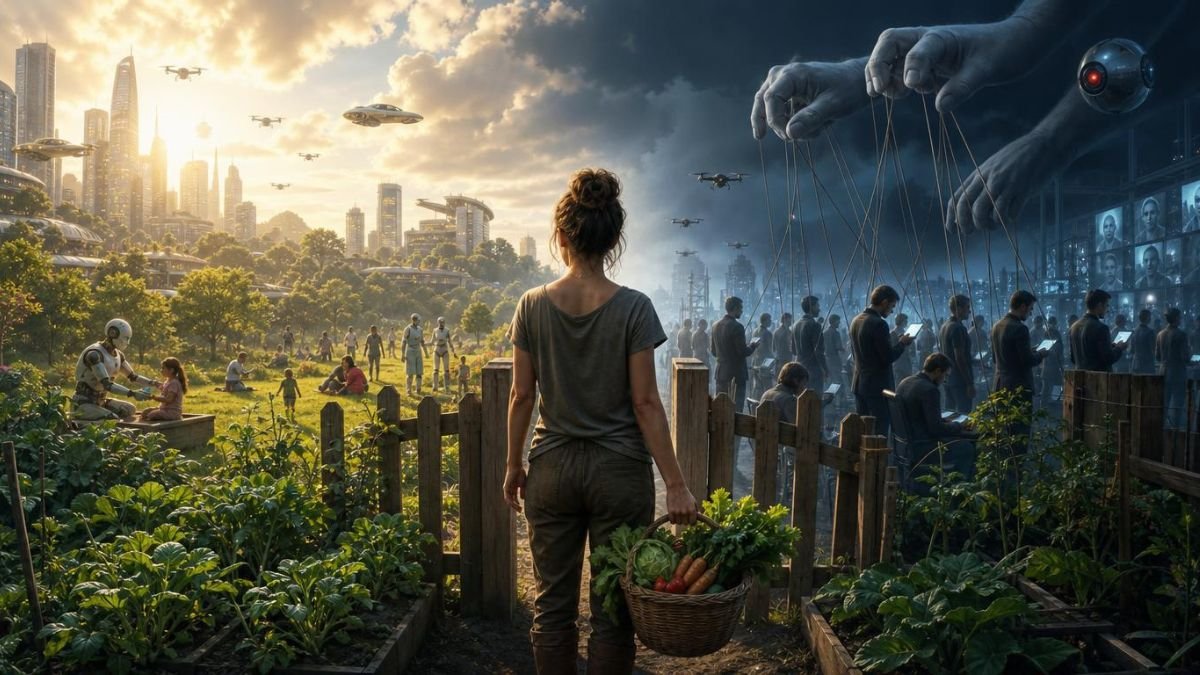
We cannot control the algorithms that govern the internet. But we can control where we direct our attention. We can choose not to feed the bears. We can choose to water the gardens instead.
Let's Keep the Conversation Going
Thank you for being here, for your time, and for your willingness to wade into the murky grey waters with me. As always, I want to leave you with a few questions to think about, and I would genuinely love to hear your perspectives.
Questions to Ponder:
- The Outrage Audit: Think about the last time a piece of content on social media made you feel instantly, righteously angry. Looking back, do you feel that piece of content gave you the full, nuanced picture, or was it designed to trigger exactly that reaction?
- The Comfort of Black and White: Is there a specific issue in your life, or in society, where you have realized that holding a "black-and-white" view was actually just a way to avoid doing the hard work of understanding the complexity?
- The Value of the Grey Area: Can you think of a time when learning the "other side's" story—even if you fundamentally disagreed with it—changed your perspective or softened your heart?
Call to Action:
I have a favor to ask you this week. It’s not about buying anything or subscribing to anything.
My challenge to you is to be an active patron of the grey area. Find one piece of content this week—an article, a podcast, a documentary—that explores a complex issue from multiple angles without trying to make you angry. Consume it slowly.
And then, share it.
The algorithms won't distribute nuance, so we have to do it manually. Send it to a friend. Post it on your feed. Tell someone, "Hey, this is long, it doesn't have an explosive headline, but it really made me think."
Let's start rewarding the people who are doing the hard work of thinking deeply. Let's prove that there is still a massive, hungry market for the truth, in all its complicated, messy glory.
Drop a comment on our website, reply to our social media posts, or send us an email. Let me know I’m not just shouting into the void.
Until next time, keep seeking the truth, embrace the complexity, and never apologize for thinking deeply.
Danny Ballan
Editor-in-Chief
English Plus Podcast






0 Comments