SparkCast Episode
The SparkCast episode is not just a reading of the article below; it's a lively discussion based on the topic of the article, so you don't want to miss it!
[ppp_patron_only level=5]
Ad Astra per Aspera_ The Rough Road to the Stars Transcript: Click to Open
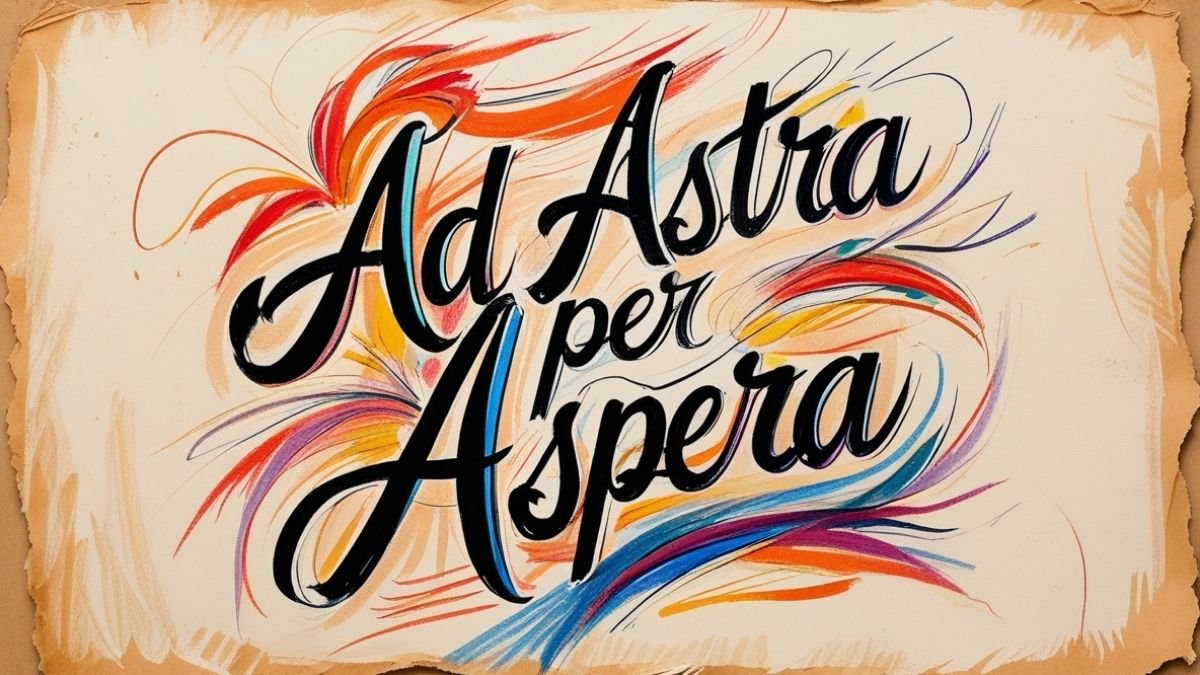
Ad Astra per Aspera The Rough Road to the Stars
What if the biggest challenges you faced weren't just obstacles, but actually like the very path you needed to take? Could your toughest moments be the secret ingredients to your greatest successes? It's a powerful thought. And what if an ancient Latin phrase, one we found looking through the materials you sent, holds the key to transforming how you view every single setback? Welcome to a new Sparkcast from English Plus Podcast. Welcome to the deep dive.
Okay, so today we're looking at the stack of sources you shared, articles, notes, history bits, and trying to pull out the real gems. Yeah, there's a lot there. There is.
But one idea really, really jumped out. It kind of runs through everything. A timeless concept, captured in just four Latin words, ad astra per espera.
Now, the basic translation is pretty straightforward. A rough road leads to the stars. Simple enough.
Seems simple. But digging into the context, you know, the materials, it's way more than just a catchy phrase. It's this deep philosophical idea.
It can completely reframe how you see your life's journey. It really can. And what's fascinating is just how old this idea is.
I mean, truly ancient. Some of the texts link it back to figures like Virgil, Seneca the Younger, thinkers from the Roman Empire. Wow.
Okay. And these weren't guys sitting in ivory towers, you know. They lived through massive changes, personal struggles.
It really shaped stoic thinking, this idea of embracing hardship as a path to virtue. So it's battle-tested, essentially. Exactly.
It's survival speaks volumes, right? It's been a motto for families, cities. Kansas even has it on its state seal, which is interesting. No kidding.
Kansas? Yep. And space programs, like NASA, very literally to the stars through hardship. That NASA connection is powerful, especially when you think about, say, the Apollo 1 fire.
Absolutely. Unimaginable loss. That was the aspera, the roughness in its most brutal form.
Right. But the reviews, the incredibly painful reassessment that followed, that was the rough road. And it directly led to changes, safety protocols that ultimately got them to the moon.
So the setback paved the way. It forged the path. As the materials keep saying, greatness, real achievement.
It rarely comes from taking it easy. It really makes you look at that roughness differently because, let's be honest, modern culture often pushes us the other way. Definitely.
Avoid pain, find the shortcut. Exactly. This first part, aspera, it means hardships, difficulties, roughness.
We're not just talking a bad day here. No. We mean the big stuff, failure, loss, betrayal, that gnawing self-doubt, the things we're taught to, well, run from.
Right. But ad astra per aspera just flips that entirely. It says, no, that hardship, that is the path.
Not a detour. Not a detour. The struggles aren't just annoying obstacles to get past to reach the good part.
They're the actual tools, the mechanisms that shape you, strengthen you. So it makes you ask yourself, you know, what struggles are you seeing as just like a roadblock right now? I mean, maybe, maybe they're actually your direct route forward. That's, yeah, that's a big shift.
Almost counterintuitive, given how we usually react to tough times. But practically speaking, when you're in it, when things are hard, how do you actually start seeing it as the path instead of just this overwhelming thing? That's the challenge, isn't it? The idea of hardship forging strength. It reminds me of transformation, like raw materials being changed.
Any analogies come to mind? Oh, for sure. Yeah. The classic one, and it pops up in some of the reading, is the blacksmith forging a sword.
Oh, okay. Yeah. You start with this lump of raw iron, right? Pretty useless on its own.
Right. Then it goes into the fire, intense heat, then hammered relentlessly, plunged into cold water again and again. Sounds stressful.
Violent, even. It is stressful. But that whole process, the fire, the hammer, the cooling, that's what turns that useless lump into a strong, sharp, resilient blade.
Okay. I see the connection. Our hardships, they're like our fire and hammer.
Facing failure, it knocks you down. Sure. But getting back up, that teaches resilience.
You actually learn it. You earn it. You earn it.
Navigating loss. Yeah. It hurts deeply, but it often carves out this space for empathy, understanding others' pain in a way you couldn't before.
And getting through those really big challenges, that builds this deep, unshakable confidence. A core belief in yourself, you just can't get any other way. Yeah.
Book learning can't give you that. Exactly. Yeah.
So the rough road, it forces you to find strengths you didn't even know were in you. Can you think of a time like that, when a hard period revealed something unexpected about yourself? Oh, absolutely. Looking back, there are definitely moments where I think, wow, I wouldn't have this strength if I hadn't gone through that.
Strange how it works. Okay. So that's the aspera, the rough road.
Let's talk about the destination, the astra, the stars. What are the stars? And these aren't just literal stars in the sky. In this context, they stand for your biggest goals, your highest dreams, your best self, maybe.
Could be anything, really. Yeah. Like starting that business you always dreamed of.
Or maybe mending a broken relationship. Or finding inner peace, wisdom, a sense of purpose. And that's key.
The stars are personal. Your stars might look very different from mine. True.
But the message is universal. You get there through the aspera, through the hardship. It's not just wishing on a star.
No, definitely not. One of the articles put it nicely, something like, the journey to your stars isn't a flight, it's a climb. A climb up a rough mountain.
Often a very rough mountain, yeah. So thinking about that, what are your stars? What are you aiming for? And maybe what rough roads might actually be preparing you for that climb right now. That's a good question for everyone listening to Ponder.
So, okay, we have this ancient wisdom. How do we actually use it day to day in our modern lives? Well, a lot of it seems to boil down to perspective, shifting how you frame things. Like instead of why me? Exactly.
Instead of why is this awful thing happening to me? Try asking, okay, what is this trying to teach me? Or what strength is this forging in me right now? Seeing the lesson in the struggle. Yeah. And looking at the scars, whether they're emotional or whatever, not seeing them as damage, but as like proof you survived, proof of resilience.
Okay. It's choosing to see that rough road, not as punishment, but as your training ground. Training for the stars.
Training for your stars. And look, this isn't about pretending everything's fine when it's not. It's not just toxic positivity.
Right. An important distinction. It's more like a philosophy of grit, real resilience, and actually a kind of profound optimism, weirdly enough.
It's believing that challenges are opportunities for growth. But is there a point where the road is just too rough? Where it stops being formative and just becomes destructive? How do you tell the difference? That's a really crucial question. And I think the philosophy isn't about seeking pain.
Definitely not. It's about how you respond. When difficulty inevitably finds you.
Okay. It's about finding that inner grit to keep putting one foot in front of the other, even when it's exhausting, knowing, or at least hoping, that it's shaping you for something better. And maybe that's where looking at others helps.
Yeah, I think so. Like the prompt suggests. Think about someone you know, or maybe a public figure, who really embodies this, who went through hell and came out stronger, closer to their stars.
What is it about their journey that inspires you? Seeing it in others makes it feel more possible for ourselves, maybe. Yeah, definitely. It makes it tangible.
And sharing your story, your own ad astra per aspera moments, that could be incredibly powerful too. It could be exactly what someone else needs to hear to keep going on their own rough path. That ripple effect.
Exactly. Actually, here's a little practical thing you could try. Like a mini pep talk for yourself, or maybe for a friend who's struggling.
Okay. First, just acknowledge the struggle. Wow, I know things are really hard right now.
This road feels incredibly rough. Validate it. Right, don't minimize it.
No. Then, maybe introduce the idea. But there's this old saying, ad astra per aspera.
It means a rough road leads to the stars. All this difficulty, maybe it's not for nothing. And then connect it.
This is forging something in you, a strength you'll carry. This is the path to your stars. Keep going.
Just practicing saying that, even to yourself, with conviction. It can be surprisingly powerful, both to give and receive. A way to internalize the perspective shift.
I like that. Practical tool. Yeah, something concrete.
And this was another Sparkcast from English Plus Podcast. Don't forget to check out the full article on our website, englishpluspodcast.com, for more details. Thank you for listening.
Stay curious and never stop learning. We'll see you in the next episode.
[/ppp_patron_only]
What If Your Obstacles Are Actually the Way?
Think about the toughest period of your life. The time you felt most lost, most challenged, most broken. It probably felt like an impassable wall, a dead end. But what if that wall was actually a doorway? What if the struggle itself was the very thing you needed to grow? There’s a beautiful, ancient Latin phrase that captures this idea perfectly: Ad Astra per Aspera. It translates to "a rough road leads to the stars," and it is one of the most powerful and inspiring philosophical ideas ever packed into four little words.
A Motto Forged in Grit
This phrase isn't some modern, feel-good affirmation. It's old. Really old. It's been attributed to poets like Virgil and Seneca the Younger, thinkers who lived through the turmoil and triumphs of the Roman Empire. It's been adopted as a motto by countless families, cities, and even the state of Kansas. It's also a motto used by space programs, including NASA, which is beautifully literal. The phrase has endured for centuries because it speaks to a fundamental truth of the human condition: greatness is not born from comfort.
The "Aspera": Embracing the Rough Road
Let's break it down. The "Aspera" part means "hardships," "difficulties," or "roughness." This isn't just about minor inconveniences. It refers to the real, gritty, painful struggles of life—failure, loss, betrayal, doubt. Our modern culture often teaches us to avoid pain at all costs, to seek the smoothest, easiest path. But "Ad Astra per Aspera" challenges that notion. It suggests that the "Aspera" is not a detour from the path; it is the path. The struggles are not just obstacles to be overcome; they are the very tools that shape us.
How Hardship Forges Us
Think of a blacksmith forging a sword. The steel is heated in a blazing fire, hammered relentlessly, and plunged into cold water. It's a violent, stressful process. But it's this very process that transforms a raw lump of iron into a strong, sharp, resilient blade. Our hardships are our fire and hammer. Facing failure teaches us resilience. Navigating loss teaches us empathy. Overcoming challenges builds a deep, unshakeable confidence that you can't get any other way. The "rough road" forces you to develop strengths you never knew you had.
The "Astra": What Are Your Stars?
The "Astra" part of the phrase means "the stars." The stars represent your highest aspirations, your biggest dreams, your best self. It could be a specific goal, like starting a business or healing a relationship. Or it could be a state of being, like finding peace, wisdom, or purpose. The beauty of the phrase is that "the stars" are personal to you. But the message is universal: you don't reach those stars by accident. You reach them through the "Aspera." The journey to the stars is not a flight; it's a climb up a jagged mountain.
Living the Motto
So how do we apply this ancient wisdom to our frantic, modern lives? It starts with a shift in perspective. When you face a setback, instead of asking "Why is this happening to me?" you can try asking, "What is this trying to teach me? What strength is this forging in me?" It means seeing your scars not as marks of damage, but as proof of your resilience. It's about choosing to see the "rough road" not as a punishment, but as your training ground for reaching the stars. It’s a philosophy of grit, resilience, and profound optimism.
Final Thoughts
Think about a "rough road" you've traveled in your own life. Looking back, what "stars"—what strengths, wisdom, or achievements—did you reach because of that hardship? Share your "Ad Astra per Aspera" moment in the comments below. Your story of resilience could be the inspiration someone else needs to keep climbing.
Discussion Questions
- Do you believe that all suffering leads to growth, or are some hardships simply destructive? Where do you draw the line?
- Our culture often celebrates "overnight success." How does the idea of "Ad Astra per Aspera" challenge this modern narrative?
- Who is someone (either in your personal life or a public figure) who you feel truly embodies the spirit of "Ad Astra per Aspera"? What about their journey inspires you?
Speaking Challenge
Here is a speaking challenge to help you internalize this powerful idea. Take one to two minutes and give a mini "pep talk" to yourself or a friend who is going through a tough time, using the theme of "Ad Astra per Aspera."
- Hint 1: Acknowledge the struggle. "I know things are really tough right now. This road is rough, and it feels like it will never end."
- Hint 2: Introduce the philosophy. "But there's this ancient idea, 'Ad Astra per Aspera,' which means 'a rough road leads to the stars.' All of this difficulty, all of this struggle, it's not for nothing."
- Hint 3: Connect the struggle to the growth. "This is forging a strength in you that you'll carry with you long after this is over. This is the path to your stars. Don't give up."
Practice saying it with conviction. It's a powerful message to give and to receive.





0 Comments