- Introduction
- Quick Overview
- Understanding Demonstrative Pronouns: From Elementary to Advanced
- Elementary Level: Introducing This and That (Singular, Near vs. Far
- Pre-intermediate Level: Introducing These and Those (Plural, Near vs. Far
- Intermediate Level: Using Demonstrative Pronouns to Refer to Ideas and Situations
- Upper-intermediate Level: Demonstrative Pronouns as Determiners
- Advanced Level: Nuances and Emphasis
- Outro
Introduction
Hello, English learners! Have you ever pointed at something and said "this one" or "that one"? These little words – this, that, these, those – are demonstrative pronouns, and they're super useful for pointing out specific nouns. Understanding how to use them correctly, especially in different contexts, will make your English clearer and more precise. Let's explore how these pronouns work to "demonstrate" what we're talking about!
Quick Overview
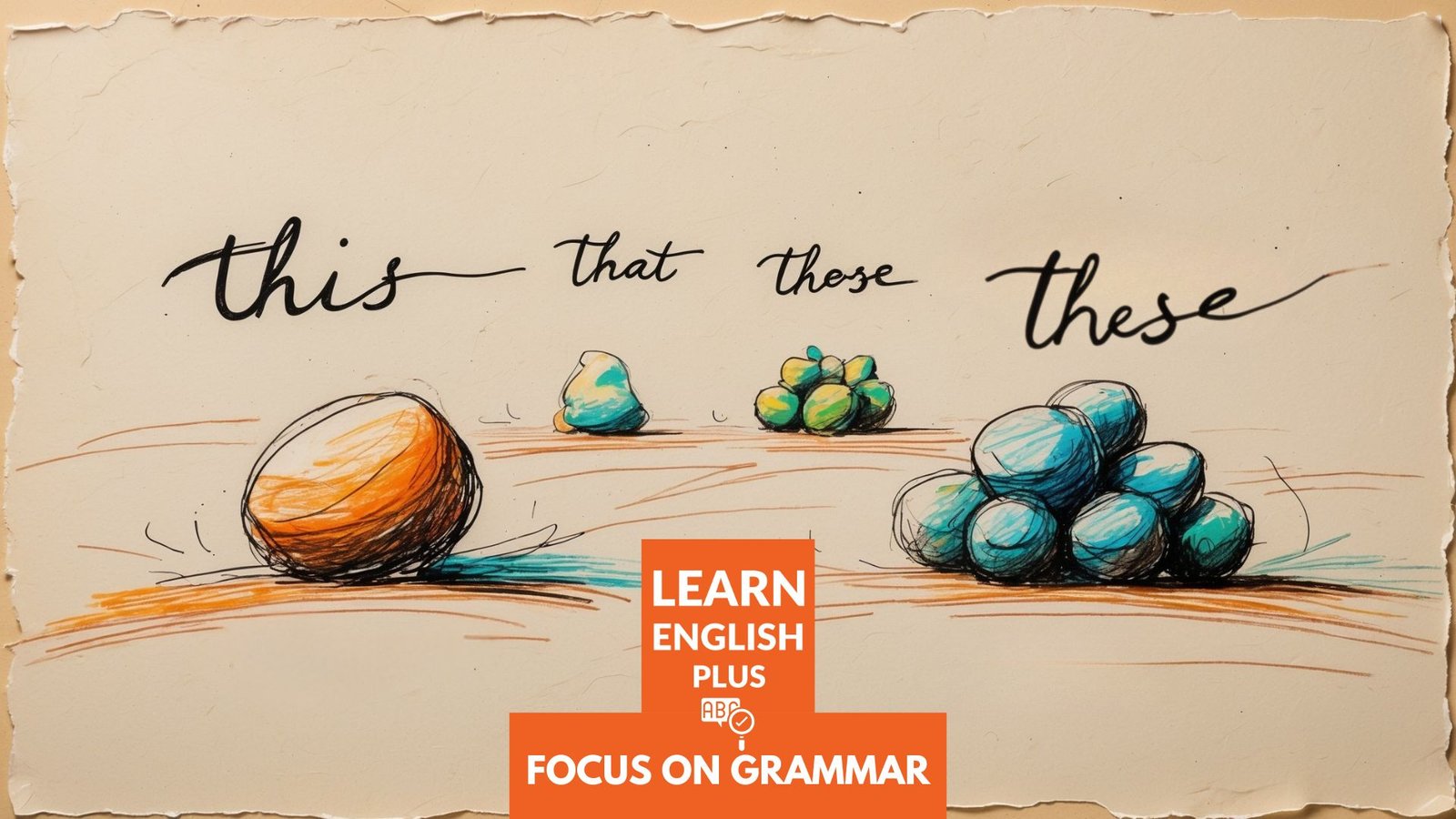
Demonstrative pronouns help us indicate specific people or things. They can refer to things that are near or far in space and time, and they can be singular or plural. "This" and "these" usually refer to things that are close to the speaker, while "that" and "those" refer to things that are further away. Let's see how well you can use them in context!
Understanding Demonstrative Pronouns: From Elementary to Advanced
Let's break down how to use the demonstrative pronouns – this, that, these, those – effectively, considering context and level of English learning.
Elementary Level: Introducing This and That (Singular, Near vs. Far
At the beginning, you learn the two singular demonstrative pronouns:
- This: Used for something singular that is close to the speaker in space or time.
- "This is my book." (holding the book
- "This morning was cold." (referring to the current morning
- That: Used for something singular that is further away from the speaker in space or time.
- "Look at that bird." (pointing to a bird far away
- "That was a good movie." (talking about a movie seen previously
Think of "this" as "here" and "that" as "there" for singular items.
Pre-intermediate Level: Introducing These and Those (Plural, Near vs. Far
Next, you'll learn the plural forms:
- These: Used for multiple things that are close to the speaker in space or time.
- "These are my pens." (holding the pens
- "These days are busy." (referring to the current period
- Those: Used for multiple things that are further away from the speaker in space or time.
- "Who are those people?" (pointing to a group in the distance
- "Those were fun times." (talking about past events
Think of "these" as "here" and "those" as "there" for plural items.
Intermediate Level: Using Demonstrative Pronouns to Refer to Ideas and Situations
Demonstrative pronouns can also refer to abstract things like ideas, situations, or previous statements:
- "I don't understand this." (referring to an idea or concept being discussed
- "That's a good idea." (referring to a suggestion someone made
- "He said he was tired. This surprised me." (referring to the previous statement
- "The traffic is terrible. That's why I'm late." (referring to the situation
Upper-intermediate Level: Demonstrative Pronouns as Determiners
Remember that "this," "that," "these," and "those" can also function as determiners (like articles or possessives) when they come before a noun:
- "This book is interesting." ("This" modifies the noun "book"
- "Look at that tree." ("That" modifies the noun "tree"
- "These shoes are comfortable." ("These" modifies the noun "shoes"
- "I like those flowers." ("Those" modifies the noun "flowers"
The meaning remains the same – pointing out specific nouns based on proximity and number.
Advanced Level: Nuances and Emphasis
At a more advanced level, you'll notice subtle ways demonstrative pronouns are used for emphasis or contrast:
- "I like this one, not that one." (contrasting two singular items
- "Give me these, not those." (contrasting two plural items
- Sometimes, "that" can be used to refer to something well-known or already established in the conversation: "That we already know."
Also, be aware of using "this" to introduce a new topic or person and "that" to refer back to something already mentioned.
Outro
Mastering demonstrative pronouns will make your English sound much more natural and precise. You'll be able to clearly point out exactly what you're talking about, whether it's physically close or far away, singular or plural, or even an abstract idea. Keep practicing using "this," "that," "these," and "those" in different contexts, and you'll find yourself using them confidently in no time! You'll hear and read them everywhere, and now you'll have a solid understanding of how to use them effectively in your own communication. Keep up the excellent work!









0 Comments