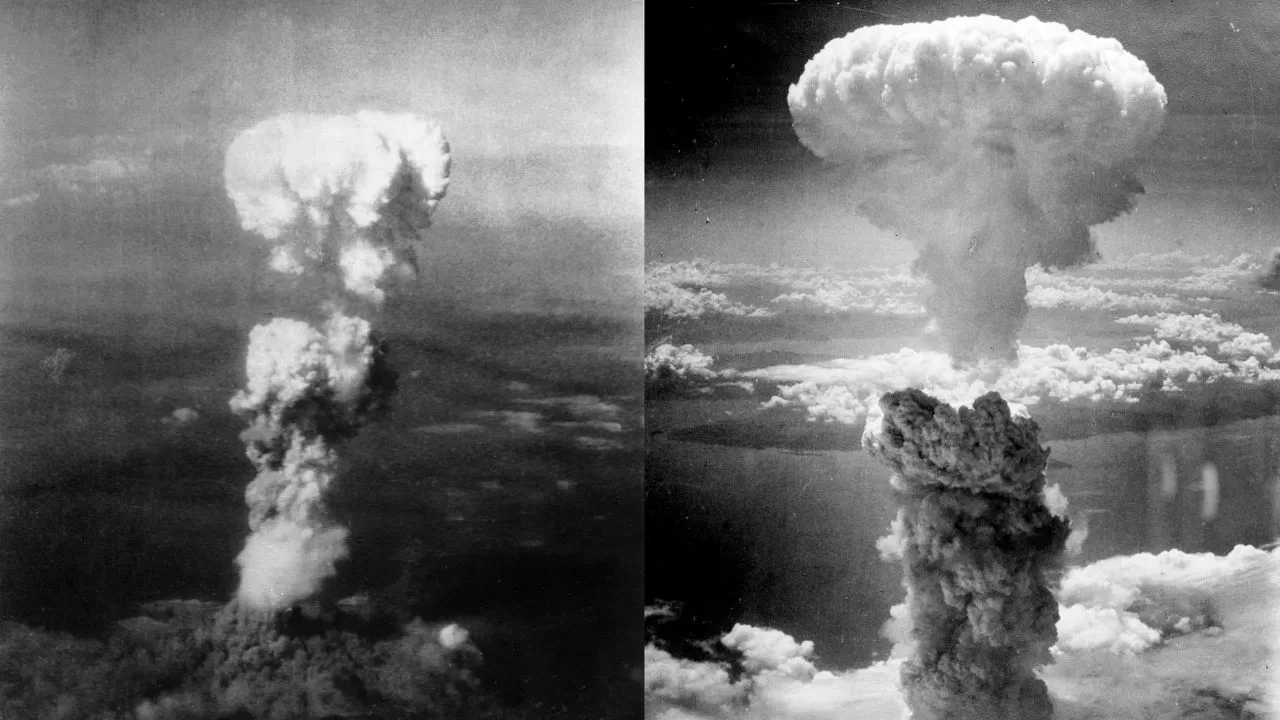
In the annals of human history, there exist events of such magnitude that their occurrence alone pivots the world, dictating a new narrative course. The twin bombings of Hiroshima and Nagasaki in August 1945 are counted amongst such junctures – cataclysmic moments that awakened a new era. Beyond the geopolitical and scientific implications, the profound human toll of these first uses of nuclear weaponry is an essential narrative to share.
The morning of August 6, 1945, dawned clear over Hiroshima, a vibrant city located in the Chūgoku region of Japan. As the day began to stir, there was nothing to herald the terror that would soon unfold. At precisely 8:15 AM, a solitary B-29 bomber named ‘Enola Gay’ released ‘Little Boy,’ an atomic bomb.
Upon detonation, a blinding light enveloped the city, followed by an earth-shattering explosion. The blast wave that followed razed buildings, toppling them like matchstick houses and igniting city-wide fires. The detonation unleashed a horrifying rain of radiation that scorched everything in its path.
In mere moments, Hiroshima ceased to exist as it was known. The city had become a gruesome tableau of destruction and death. It is estimated that approximately 140,000 people died as a result of the bombing by the end of 1945, many instantaneously, and others succumbing to their injuries or radiation sickness in the days, weeks, and months that followed.
Only three days later, another American B-29 bomber, ‘Bockscar,’ dropped ‘Fat Man,’ a more powerful plutonium bomb, on the city of Nagasaki. This attack resulted in a similar scene of obliteration and led to the deaths of another 70,000 people by the end of the same year.
However, the impact was not limited to the immediate death toll. The release of radiation had dire implications, both short and long term. Survivors, or ‘hibakusha’ as they were known in Japan, faced a horrific ordeal. They suffered from a host of health problems including acute symptoms such as nausea, vomiting, diarrhea, and fever, often leading to death.
The longer-term impact was even more insidious. Those exposed to the radiation, even those who initially appeared unharmed, had significantly higher risks of developing cancers, especially leukemia and cancers of the lung, breast, thyroid, and other organs. There were also increased risks of non-cancerous diseases such as cataracts and cardiovascular diseases. Furthermore, the psychological trauma endured by survivors is immeasurable. The dread of possible health issues and the social stigma faced by ‘hibakusha’ made their post-war life an ongoing struggle.
The generational impact of radiation exposure added another layer of complexity to the human cost. Many ‘hibakusha’ who were pregnant during the bombings gave birth to children with congenital malformations and other health issues. The fear of genetic defects continued to linger in subsequent generations.
Moreover, the bombings of Hiroshima and Nagasaki altered the cultural and societal landscape of Japan. The collective trauma affected the national psyche, pushing Japan toward a constitution that renounced war and fostered a unique perspective on peace and disarmament.
These narratives from Hiroshima and Nagasaki underscore the terrifying potential of nuclear weapons and the profound and lasting human impact of their use. They serve as stark reminders of the overwhelming human cost of war, particularly nuclear war, and the paramount importance of pursuing peace and nuclear disarmament.
The stories of Hiroshima and Nagasaki are more than historical records; they are a dire warning and a call to action for humanity. They represent the resilience and courage of the survivors, the ‘hibakusha,’ who despite their suffering, continue to share their experiences with the world. They bear their scars, telling their stories in hopes that no other city or people will have to endure what they did.
In an age where nuclear weapons have proliferated far beyond the powers of World War II, the tales of Hiroshima and Nagasaki must continue to be told. The lessons from these cities provide a poignant plea for peace, a call to move away from the precipice of nuclear warfare and towards a world free of nuclear weapons.
In the end, the narrative of Hiroshima and Nagasaki is not just a story of destruction, but also of hope and resilience. It is a reminder of our shared responsibility to remember the past and use its lessons to shape a better, more peaceful future. After all, in the face of nuclear warfare, there are no winners, only survivors.
Keywords:
- Annals: Historical records of events, often arranged in a yearly sequence.
- Cataclysmic: Referring to a large-scale and violent event in the natural world.
- Geopolitical: Relating to politics, especially international relations, influenced by geographical factors.
- Detonation: The action of causing a bomb or explosive device to explode.
- Radiation: The emission of energy as electromagnetic waves or as moving subatomic particles, especially high-energy particles which cause ionization.
- Hibakusha: In Japanese, this term refers to the surviving victims of the 1945 atomic bombings of Hiroshima and Nagasaki.
- Insidious: Proceeding in a gradual, subtle way, but with harmful effects.
- Congenital: Especially of a disease or physical abnormality present from birth.
- Malformations: An abnormally formed part of the body.
- Proliferated: Increase rapidly in numbers; multiply.
Key Takeaways:
- The atomic bombings of Hiroshima and Nagasaki in August 1945 marked a turning point in human history, causing an unprecedented level of destruction and loss of life.
- The immediate impact of the bombings was catastrophic, but the long-term effects, particularly due to radiation exposure, were even more damaging and far-reaching.
- The survivors of the bombings, known as ‘hibakusha’, faced a multitude of health issues, stigma, and psychological trauma.
- The bombings had a profound impact on Japan’s society and culture, leading to a strong emphasis on peace and disarmity.
- The narratives from Hiroshima and Nagasaki underscore the terrifying potential of nuclear weapons and serve as stark reminders of the overwhelming human cost of war.
- The stories of Hiroshima and Nagasaki are not just historical records; they are a dire warning and a call to action for humanity.
The Nuclear Age Articles
Unraveling The Atomic Age: The Life and Legacy of J. Robert Oppenheimer
Unveiling the Atom: The Manhattan Project’s Deep Impact on World History
Albert Einstein: The Maverick Mind that Revolutionized Physics
Leo Szilard: The Atomic Pioneer’s Crusade for Peace
The Ethical Odyssey: Exploring Morality in the Course of Scientific Discovery
Los Alamos National Laboratory: Navigating the Past, Present, and Future of Scientific Innovation
The Cold War: Superpowers in the Ballet of Weaponry
Nuclear Proliferation: The Ever-Present Global Challenge
Interplay of Science and Politics: The Unsung Dance of Progress
Enrico Fermi: Mastermind Behind the Nuclear Age
From Atomic To Thermonuclear: A Detailed Examination of Nuclear Weapon Evolution
The Unforgotten Echoes: Hiroshima and Nagasaki’s Tale of Nuclear Devastation and Human Resilience
Living Under the Mushroom Cloud: The Psychological Impact of the Nuclear Age
Nuclear Fallout: Unmasking the Invisible Threat to Health and Environment
The Power and Peril of Nuclear Energy: A Balanced Perspective
Radiation Sickness: Unveiling the Hidden Costs of the Nuclear Age
From Darkness to Light: Lessons from Chernobyl and Fukushima
Deciphering the Nuclear Waste Conundrum: The Path Towards Sustainable Solutions
Guarding the World from Nuclear Threats: International Laws for Nuclear Disarmament
Journey to Peace: Unraveling the Path to Global Nuclear Disarmament
Culture Echoes of the Atomic Age: Artistic Narratives in the Nuclear Era









0 Comments