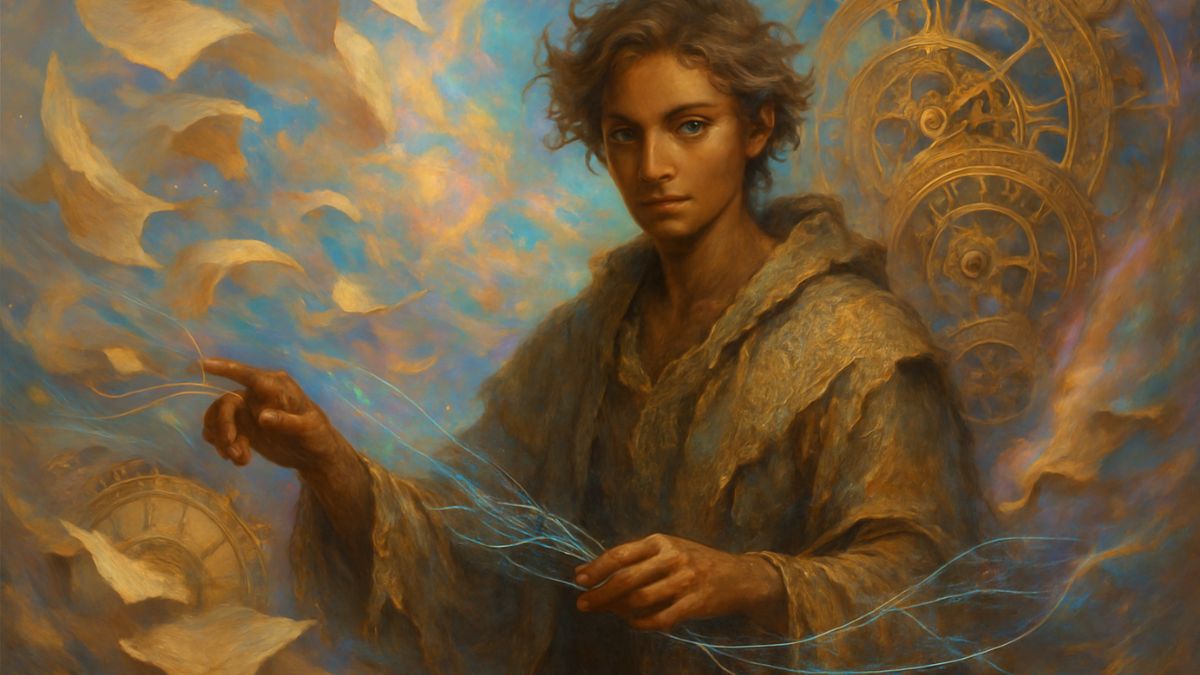
What if I told you that the sleek, powerful smartphone in your hand has its roots not just in a sterile Silicon Valley lab, but in the vibrant, slightly campy world of a 1960s sci-fi television show? The communicators in Star Trek were a wild fantasy then, and now, they’re mundane. This isn't a fluke. It's a pattern. Time and again, our reality has been shaped, molded, and revolutionized by people who dared to treat stories not as simple entertainment, but as blueprints for the possible. They asked the most powerful, creative, and fundamentally human question there is: Imagine what if? We’re often taught to put that question away with our childhood toys, to trade it for pragmatism and spreadsheets. But what if reclaiming that imaginative spark is the most practical and rebellious thing we can do?
The Sci-Fi to Wi-Fi Pipeline
Let's be honest, for a moment. The history of technological innovation is littered with nerds who desperately wanted the toys from their favorite books to be real. And I say that with the utmost love and respect. Before we had engineers, we had storytellers. Jules Verne wrote about a powerful electric submarine, the Nautilus, in 20,000 Leagues Under the Sea nearly a century before a nuclear submarine of the same name was launched. In Fahrenheit 451, Ray Bradbury described tiny "seashells" and "thimble radios" that fit in your ears, long before we were all walking around with AirPods, blissfully ignoring each other. H.G. Wells imagined automatic sliding doors. Arthur C. Clarke envisioned global communication satellites. The list goes on and on. This isn't prophecy. It's permission. These authors gave scientists and inventors a target to aim for. They created a vision so compelling that it inspired generations to say, "That’s cool. I want to build that." It’s a beautiful feedback loop: a writer imagines the impossible, and an innovator, inspired by the story, gets to work on making it possible.
Not Just Gadgets, but Social Blueprints
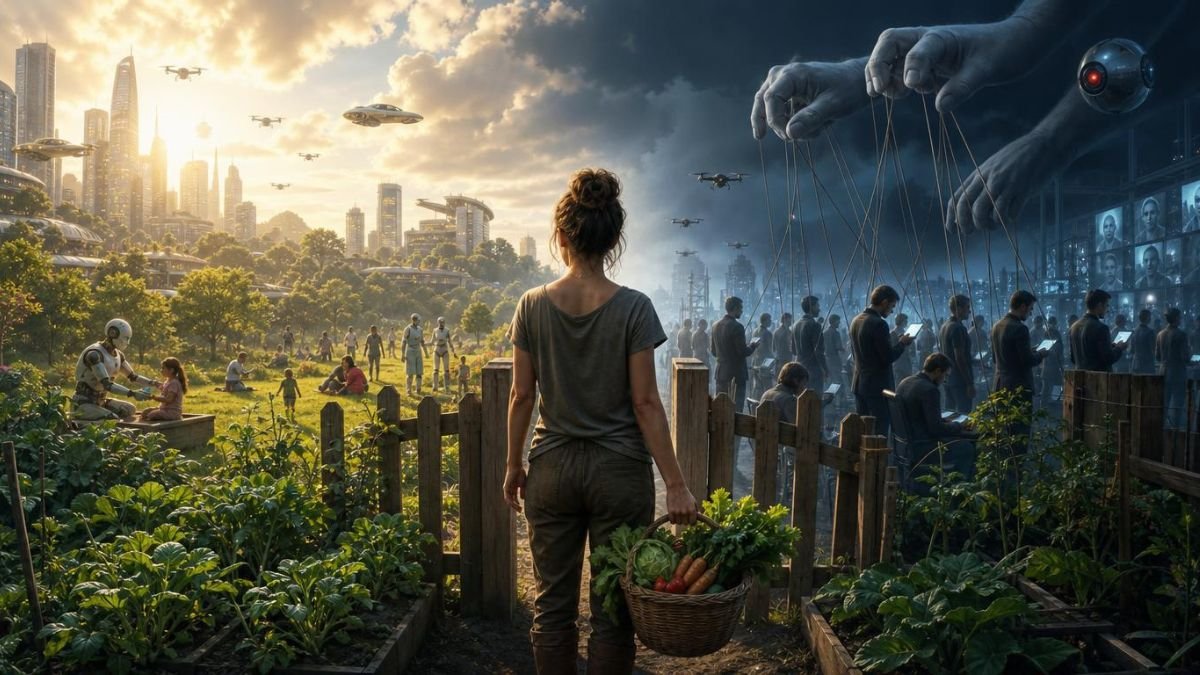
But the influence of "what if" goes so much deeper than just our tech. Literature, especially speculative fiction, is our societal thought experiment lab. It’s where we can build entire worlds to test out our biggest ideas and our deepest fears without breaking anything in the real world… at first. Dystopian novels like George Orwell’s 1984 or Margaret Atwood’s The Handmaid’s Tale are not crystal balls; they are mirrors. They take unsettling trends from our own society—surveillance, political extremism, the erosion of rights—and they push them to their terrifying, logical conclusions. They ask us, "Is this where we're headed? And if so, what are we going to do about it?" On the flip side, utopian stories, while often less dramatic, challenge us to imagine what a better world could actually look like. They force us to move beyond vague hopes for "peace and happiness" and grapple with the nuts and bolts of a more just, equitable, and compassionate society. These stories build our social and ethical imagination. They are a call to be vigilant, a summons to be better, a dare to believe we can architect a different kind of reality.
The Quiet Rebellion of Your Inner Child
Somewhere along the line, we get the message that imagination is the opposite of reality. It's frivolous, unproductive, childish. The "real world," we’re told, is about taxes, and traffic, and quarterly reports. There’s a quiet pressure to stop daydreaming and start being "realistic." But what is that, really? To me, abandoning your imagination isn't a sign of maturity; it's a form of surrender. The part of you that could see a fortress in a cardboard box or a magical potion in a mix of mud and leaves—that wasn't a silly kid. That was a genius. That was the raw, unfiltered human capacity for innovation and wonder. That inner child didn't disappear; it just learned to be quiet, buried under layers of responsibility and routine. Do you ever feel that part of you stir? When you're listening to a piece of music and your mind wanders off into a cinematic story? Or when you're staring out a window and you start to see shapes in the clouds? That isn't a distraction. That’s a pilot light. And the world, now more than ever, needs you to protect that flame. In a world that often feels relentlessly harsh and unchangeable, imagination is a quiet act of rebellion. It's the refusal to accept that "what is" is all that can be.
A Practical Guide to Rewriting Your Day
Okay, so how do we do this? You don’t have to start writing a 700-page fantasy epic to reclaim your imagination. The practice starts small. It’s about weaving "what if" into the fabric of your everyday life. The next time you're stuck in soul-crushing traffic, instead of fuming, pick a car. Imagine what if the person driving is a retired spy on one last mission? Or a baker rushing to deliver a wedding cake for two people who are madly in love? Suddenly, you're not in a traffic jam; you're in a collection of stories. Are you facing a problem at work that seems impossible? Get absurd. Imagine what if you had a shrink ray? Or a time machine? Or unlimited gummy bears? The ridiculous questions are designed to break the rigid, logical pathways in your brain and open up new, unexpected solutions. Look at a mundane object on your desk—a pen, a coffee mug, a paperclip. Imagine what if it were a magical artifact? What would its powers be? This isn't about escaping reality. It’s about enriching it. It’s about training your brain to see possibilities instead of just problems, to see magic instead of just monotony. It’s a muscle. And like any muscle, the more you use it, the stronger it gets.
We are born from stories, and we are made of them. The world as we know it is the product of a million "what ifs" stacked on top of each other. Every bridge, every song, every act of kindness, and every scientific breakthrough started as an idea—an image in someone’s mind of a reality that did not yet exist. We owe it to ourselves, and to the future, to keep asking that question. To look at a world full of challenges and have the audacity to imagine something better. To look at our own lives, with all their routines and limitations, and have the courage to imagine something more.
So, let's play. If you could take one piece of "magic" or one invention from any book, movie, or story and make it a real part of our world, what would it be? And why that one? I’m genuinely curious to see what kind of world you’d build. Share your thoughts in the comments below.



0 Comments