Literal, Literary, Literate: Don’t Mix Up These Words!

by Danny Ballan | Apr 10, 2024 | English Usage

Sorting Out "Literal", "Literary", and "Literate"

It's easy to stumble over "literal", "literary", and "literate." They sound similar, but their meanings are worlds apart. Let's break down the key distinctions and how to use them like a pro.

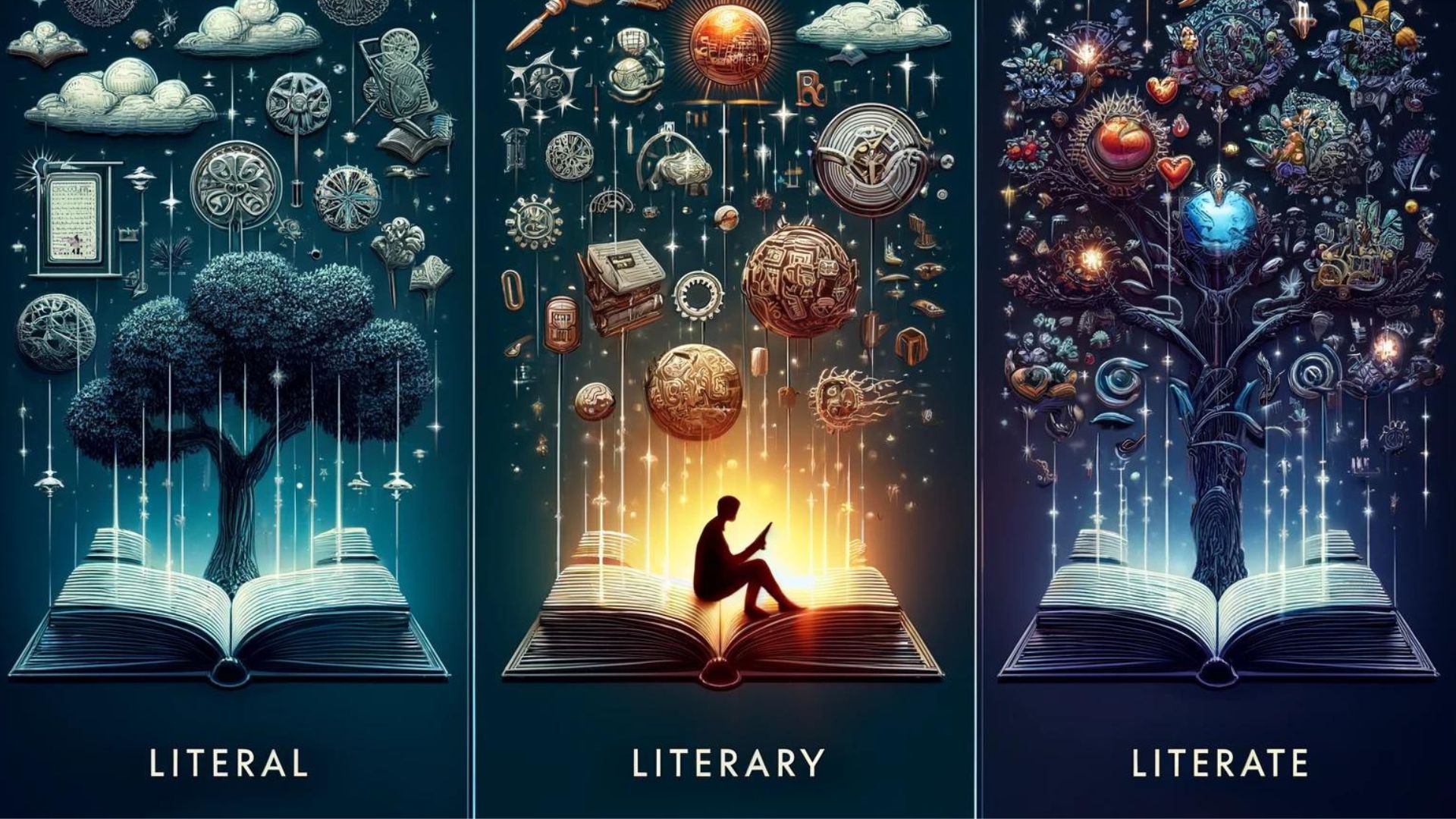
Literal: The Straight-up Facts

  • Meaning: Taking words at their primary, most basic dictionary definition. No exaggeration or figurative language.
  • Examples:
    • "I was so hungry I could literally eat a horse." (Incorrect – hyperbole, not meant to be taken literally)
    • "The sign said 'Road Closed.' I took that literally and turned around." (Correct – following the sign's precise meaning)

Literary: The World of Written Art

  • Meaning: Related to literature, which encompasses creative writing like novels, poems, and plays.
  • Examples:
    • "Her writing has a distinct literary style."
    • "He won the Nobel Prize for his literary achievements."

Literate: Reading and Writing Power

  • Meaning: Possessing the ability to read and write.
  • Examples:
    • "Improving literacy rates is vital for a society to thrive."
    • "They focused on making the software user-friendly for people with low literacy skills."

Bonus: "Figurative" vs "Literal"

The term "figurative" is the opposite of "literal." It describes language used metaphorically or symbolically, not for its precise meaning.

  • Example: "The news hit me like a ton of bricks." (Figurative – bad news is emotionally heavy, not literally the weight of bricks)

When Confusions Arise

Here's where people often trip up:

  • Mixing literal and figurative: "I'm literally dying of boredom." (Unless this is medically true, it's an exaggeration).
  • Using 'literate' broadly: Think twice before saying "computer literate" or "music literate". These terms are imprecise.

Master the Nuances

The better you understand the definitions of "literal", "literary", and "literate", the more precise and effective your communication becomes.


Related Posts

0 Comments

Submit a Comment

This site uses Akismet to reduce spam. Learn how your comment data is processed.

Recent Posts

A History of Sex as a Business

A History of Sex as a Business 09 | The Digital Turn: Platforms, Algorithms, and OnlyFans

This is part 9 of 10 in The Oldest Profession

The internet transformed commercial sex as radically as anything since the industrial revolution — enabling greater autonomy for some, creating new vectors for exploitation for others, and producing a legislative and ethical landscape that nobody has figured out how to navigate. This episode examines FOSTA-SESTA, OnlyFans, the trafficking-platform debate, and where we actually stand.

read more...
A History of Sex as a Business

A History of Sex as a Business 08 | The Business Model: How the Industry Actually Works

This is part 8 of 10 in The Oldest Profession

Beneath the historical narrative is an economic structure — one characterized by specific mechanisms of recruitment, control, and profit extraction that have remained remarkably consistent across centuries and continents. This episode examines the business of commercial sex as a business: how it actually operates, how exploitation is maintained, and where the money actually goes.

read more...
A History of Sex as a Business

A History of Sex as a Business 07 | The 20th Century: Wars, Migration, and the Criminalization Wave

This is part 7 of 10 in The Oldest Profession

The twentieth century saw two world wars that massively expanded military commercial sex economies, massive migration patterns that created new trafficking vulnerabilities, and a wave of criminalization campaigns that often made things worse for the people they claimed to help. This episode traces how the modern policy landscape was created.

read more...

Categories

Follow Us