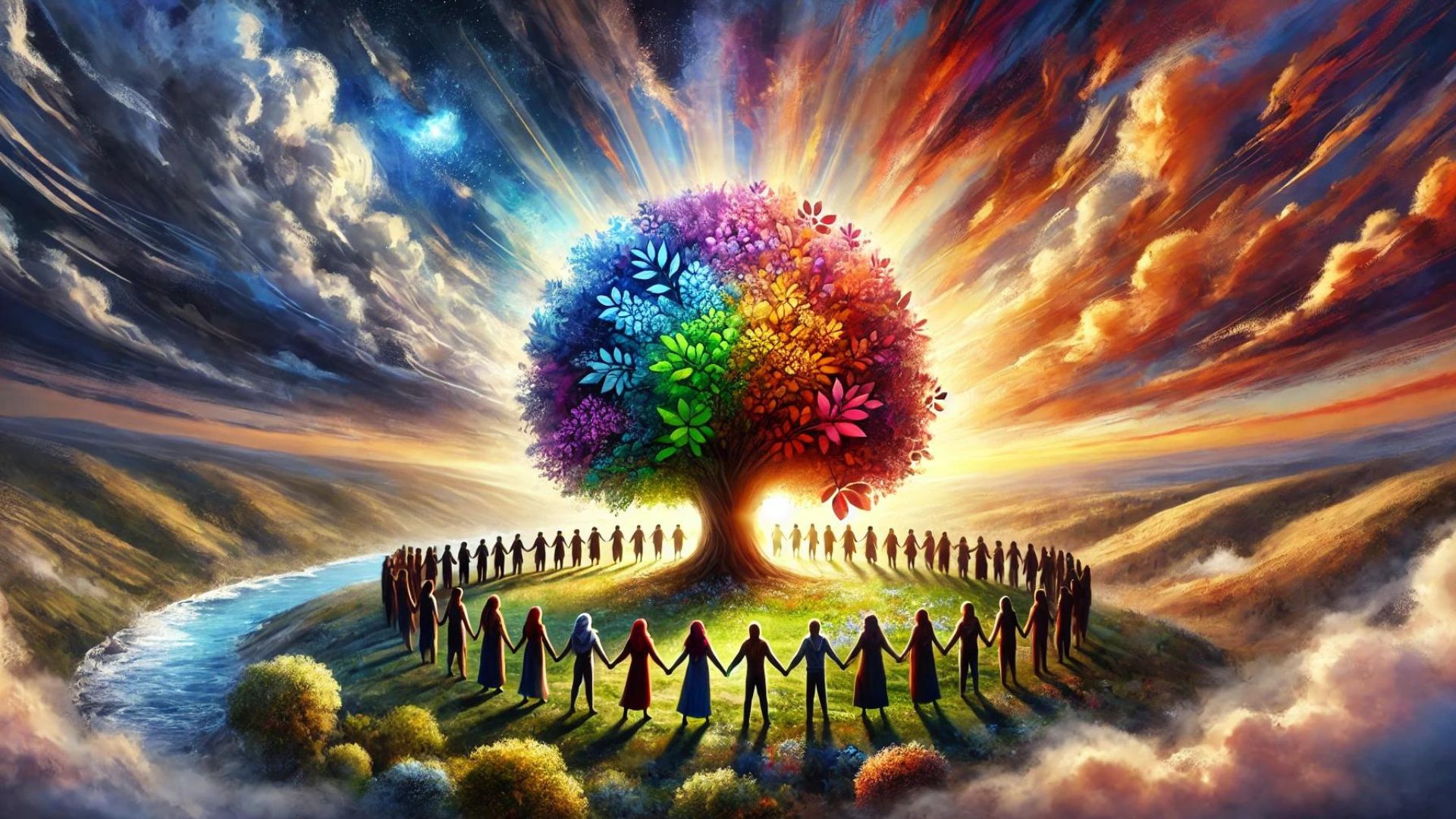
In the vast tapestry of human existence, our diverse beliefs and faiths form an intricate and beautiful mixture. Each thread represents the unique convictions and values that define us as individuals and communities. However, in our quest for freedom of expression, we sometimes forget that the essence of this freedom lies not in the right to belittle or insult, but in the ability to coexist harmoniously with those who hold different perspectives.
The cornerstone of a truly free society is the recognition that every person has the right to believe as they choose. This freedom, however, comes with a responsibility: to ensure that our beliefs and the expression thereof do not cause harm to others. Respecting others' faiths and beliefs is not a limitation on our freedom, but rather an extension of it. It is an acknowledgment that our freedom is interconnected with the freedom of those around us.
When we insult or demean others' beliefs, we do more than just express our own views—we undermine the very principles of respect and understanding that are essential for a cohesive society. Disparaging someone else's faith is a direct attack on their identity and values. It creates a divide, fostering an environment of hostility and intolerance, rather than one of mutual respect and acceptance.
Imagine a world where every belief was met with contempt and every faith with mockery. Such a world would be devoid of the rich diversity that makes our global community so vibrant. Instead of celebrating our differences, we would be trapped in a cycle of animosity and division. Freedom of belief would be reduced to an abstract concept, overshadowed by the constant conflict and disrespect.
To truly honor the freedom we cherish, we must embrace the idea that our beliefs are just one piece of the larger human experience. This means listening to and learning from those who see the world differently. It means engaging in dialogue, not with the intent to convert or criticize, but to understand and appreciate the multitude of perspectives that exist.
This is not to say that we must agree with all beliefs or practices. There will always be differences that challenge our own viewpoints. However, disagreement does not necessitate disrespect. We can hold firm to our own convictions while still recognizing and honoring the right of others to hold theirs. This delicate balance is the hallmark of a mature and truly free society.
The strength of our convictions is not measured by our ability to tear down the beliefs of others, but by our capacity to uphold our own principles while allowing others the same freedom. In this way, our diverse beliefs can coexist, each contributing to the rich tapestry of human culture and experience.
It is also important to recognize that many of the conflicts arising from religious or ideological differences stem not from the beliefs themselves, but from a lack of understanding and empathy. When we take the time to learn about others' faiths and the reasons behind their beliefs, we often find common ground and shared values. This understanding fosters a sense of community and reduces the inclination to view different beliefs as threats.
Promoting tolerance and acceptance does not diminish our own beliefs. Rather, it strengthens the bonds that hold us together as a society. It allows us to see the humanity in each other, beyond the labels and doctrines that often divide us. In this shared humanity, we find the true essence of freedom: the ability to live and let live, to believe and let believe.
In conclusion, the question is not whether we should insult each other's faiths to prove our freedom, but whether we can rise above such actions to truly embody the principles of respect and acceptance that define a free society. Our freedom is not in jeopardy when we choose to honor and respect others' beliefs. Instead, it is fortified. By embracing tolerance and fostering understanding, we pave the way for a more harmonious and inclusive world, where the freedom to believe is celebrated, not at the expense of others, but alongside them. Let us commit to building such a world, one where our diverse beliefs are seen not as points of contention, but as contributions to the rich mosaic of human experience.
Danny Ballan
Editor-in-Chief
English Plus Magazine






0 Comments