Introduction
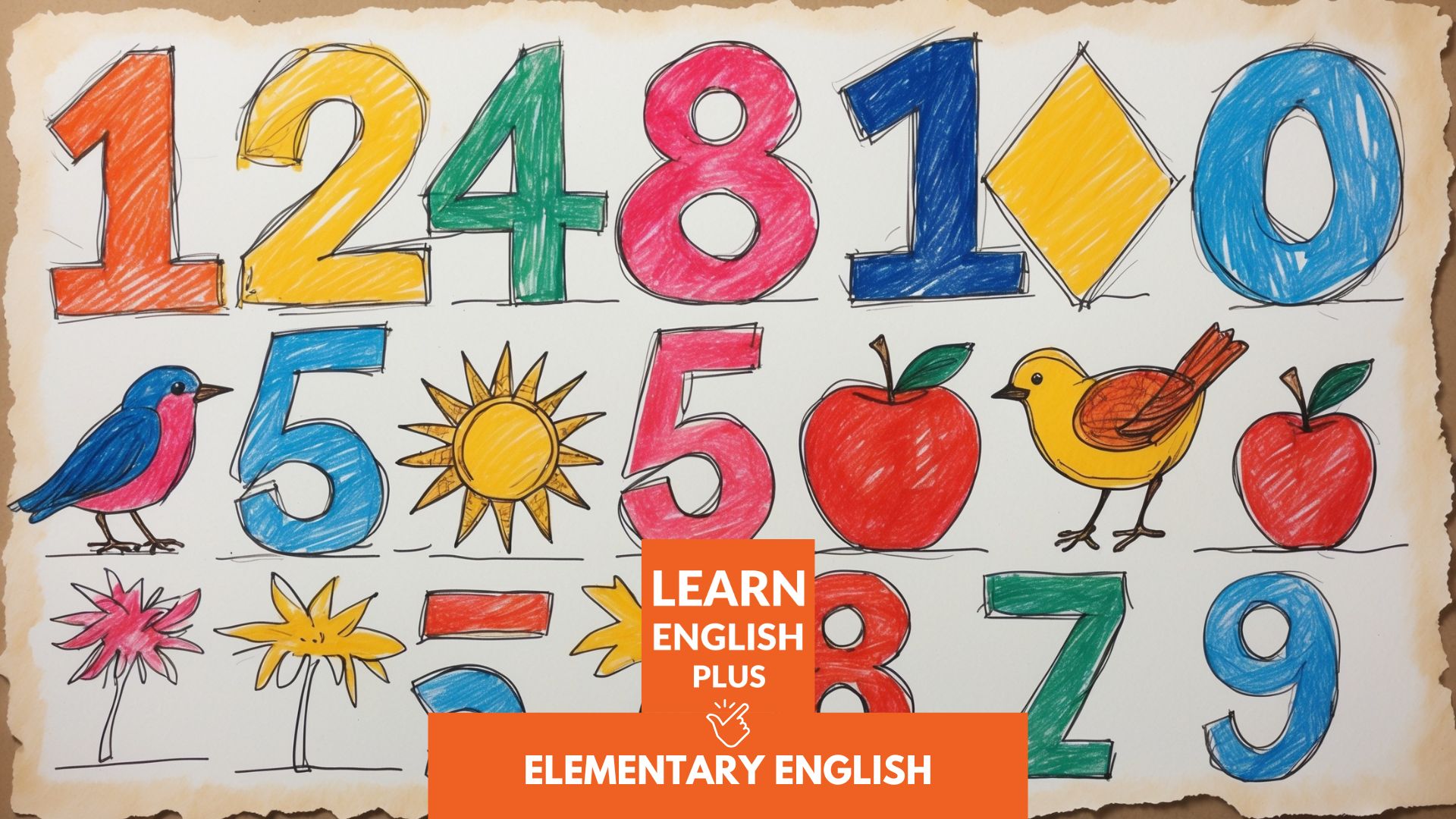
Hi again! You're making such great progress in English! Today, we're going to learn something really fundamental: numbers! Specifically, we'll be focusing on the numbers from one to ten. Knowing your numbers in English is super useful for all sorts of everyday things, like telling someone how many brothers or sisters you have, ordering food, or even just understanding prices in a shop. Think of this lesson as your fun guide to the world of English numbers 1 through 10. Ready to start counting with me? Let's go!
Counting from 1 to 10
Let's start by learning how to say each number. I'll write the number, the word, and give you a little tip to help you remember it. Say each number out loud with me!
- 1 - one: This is the first number. Think of the sun – there's only one sun!
- Practice: Say "one." Now say "one" again. Great!
- 2 - two: This number rhymes with "blue" and "shoe."
- Practice: Say "two." Now say "blue." Hear the similarity? Say "two" again. Good!
- 3 - three: This one starts with a "th" sound. Put your tongue lightly between your teeth when you say it.
- Practice: Say "three." Remember the tongue! Say "three" again. Well done!
- 4 - four: This number sounds like "for," but it's spelled differently.
- Practice: Say "four." Now say "for." They sound the same, right? Say "four" again. Fantastic!
- 5 - five: This number ends with a "v" sound.
- Practice: Say "five." Feel the "v" at the end? Say "five" again. Excellent!
- 6 - six: This is a short and easy one!
- Practice: Say "six." Now say "six" again. Easy peasy!
- 7 - seven: This number has two syllables.
- Practice: Say "se-ven." Hear the two parts? Say "seven" again. Good job!
- 8 - eight: This one starts with a silent "e."
- Practice: Say "eight." Don't say the "e" at the beginning! Say "eight" again. Perfect!
- 9 - nine: This number looks like an upside-down "6."
- Practice: Say "nine." Now say "nine" again. You're doing great!
- 10 - ten: This is the last number in our set for today.
- Practice: Say "ten." Now say "ten" again. Wonderful!
Let's Practice Counting!
Now, let's try counting from one to ten. Say these numbers out loud with me:
One, two, three, four, five, six, seven, eight, nine, ten.
Try it again, a little faster this time:
One, two, three, four, five, six, seven, eight, nine, ten.
You did it! See? It's not so hard.
Recognizing Numbers
Now, let's make sure you can recognize these numbers when you see them written as words:
Match the number to the word:
- 5 a) one
- 1 b) seven
- 7 c) five
- 3 d) three
(*1-c, 2-a, 3-b, 4-d
Did you get them right? Don't worry if you didn't get them all – we'll keep practicing!
Let's try another one:
- 9 a) ten
- 10 b) six
- 6 c) nine
- 2 d) two
(*1-c, 2-a, 3-b, 4-d
You're getting the hang of it!
Writing Numbers
Now, let's practice writing the words for these numbers. Try to write the word for each number below:
- 4: _________
- 8: _________
- 2: _________
- 6: _________
- 1: _________
- 9: _________
- 3: _________
- 7: _________
- 5: _________
- 10: _________
(Answers: 1. four, 2. eight, 3. two, 4. six, 5. one, 6. nine, 7. three, 8. seven, 9. five, 10. ten
How did you do? Remember, spelling takes practice, so don't worry if you made a few mistakes.
Using Numbers in Everyday Life
Knowing your numbers from 1 to 10 is useful in so many situations! Here are a few examples:
- Telling someone how many of something you have:
- "I have two brothers."
- "There are five apples on the table."
- "I want one cup of coffee."
- Practice: How many people are in your family? Say, "I have ______ people in my family." How many pets do you have? Say, "I have ______ pets." Great!
- Giving your age (if you're under 10!):
- "I am six years old."
- Practice: If you were between 1 and 10 years old, how would you say your age? Try it!
- "I am six years old."
- Ordering food or drinks:
- "Can I have three bananas, please?"
- "I'd like one sandwich."
- Practice: Imagine you're in a shop. What's one thing you might want to buy? Ask for it using a number from 1 to 10. For example, "Can I have two bottles of water, please?" Try it with something you'd like!
- Talking about time (sometimes):
- "It's ten o'clock."
- Practice: What time do you usually wake up? You could say, "I wake up at ______ o'clock." (If it's a number between 1 and 10!
- "It's ten o'clock."
Let's Play a Little Game!
I'm going to say a number, and you try to write it down as a word:
- 8: _________
- 3: _________
- 6: _________
- 1: _________
- 10: _________
(Answers: 1. eight, 2. three, 3. six, 4. one, 5. ten
Now, you say a number from 1 to 10 out loud, and try to write it down yourself!
You're Doing So Well!
You've now learned how to count, recognize, and write the numbers from one to ten in English! That's a fantastic achievement. Remember to keep practicing these numbers whenever you can. You'll see them and use them all the time in your English learning journey. Keep up the amazing work – you're a number whiz!






0 Comments