Discover the fiery intensity of the word “ardent.” Learn how to use it to express passion, enthusiasm, and unwavering dedication.


Discover the fiery intensity of the word “ardent.” Learn how to use it to express passion, enthusiasm, and unwavering dedication.

Learn the meaning of “commensurate” and how to use it correctly to describe things that are proportional, balanced, or corresponding in size.

Discover the meaning of “natty” and learn how to use it to describe sharp, sophisticated style. Boost your fashion know-how!

Enhance your vocabulary! Learn the nuanced meanings of “ponderous” and how to use it effectively in your writing and speech.

Discover the meaning of “duress,” its legal implications, and how force shapes behavior. Elevate your vocabulary with this Word of the Day episode!

Discover the meaning of “propinquity” and explore how nearness shapes our relationships, communities, and workplaces. Listen to the Word of the Day episode.

Explore the definition, usage, and fascinating origin of the word “maelstrom.” Enhance your vocabulary with this captivating Word of the Day episode!

Explore the meaning and usage of the word “proliferate” in this insightful Word of the Day episode. Learn how to use it effectively in your own writing and speech.

Discover the meaning of “insipid” and learn how to use this descriptive word to express your experiences more vividly.

Explore the word “diaphanous” – its meaning, uses in fashion, literature, and more. Discover where this word shines and where it might not fit.

Are you suffering from “Ethical Fading”? Discover actionable strategies to navigate a compromised world and cutthroat office politics without losing your soul or your competitive edge.

Why does disorder always increase? We break down the Laws of Thermodynamics, from energy conservation to the Heat Death of the universe, and why you can never win against entropy.
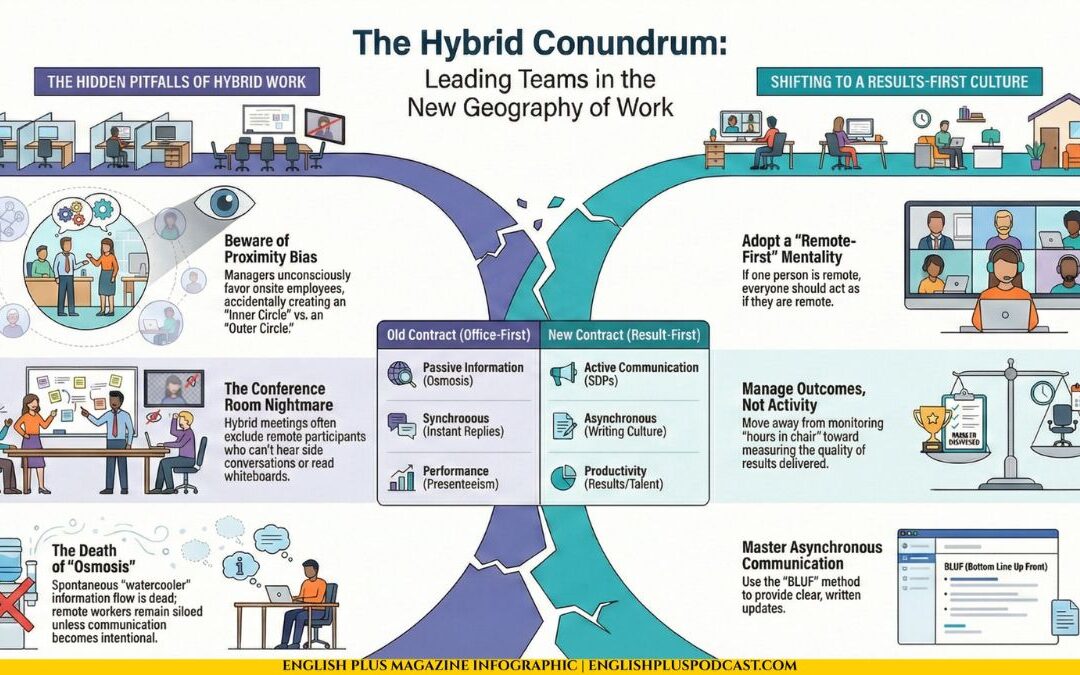
Are you struggling with a hybrid team? We explore Proximity Bias, the death of the watercooler, and why “Asynchronous Communication” is the secret to managing the chaos of the modern workplace.
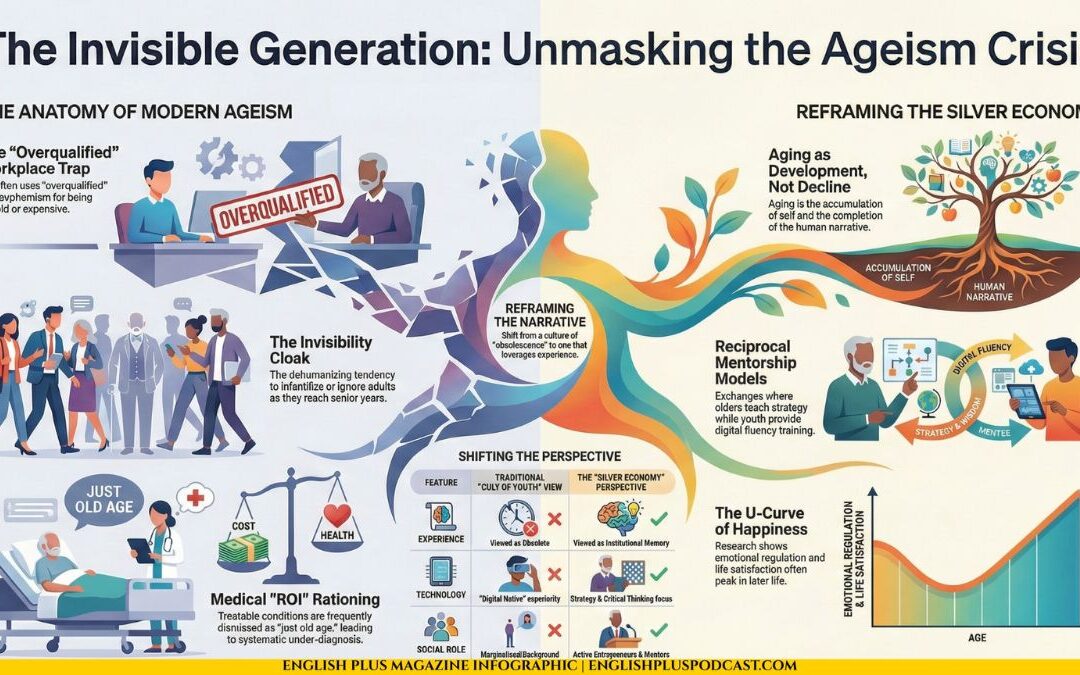
Ageism is the last acceptable prejudice. We explore the “cult of youth,” workplace discrimination, and the “Silver Economy,” challenging how society devalues the elderly.
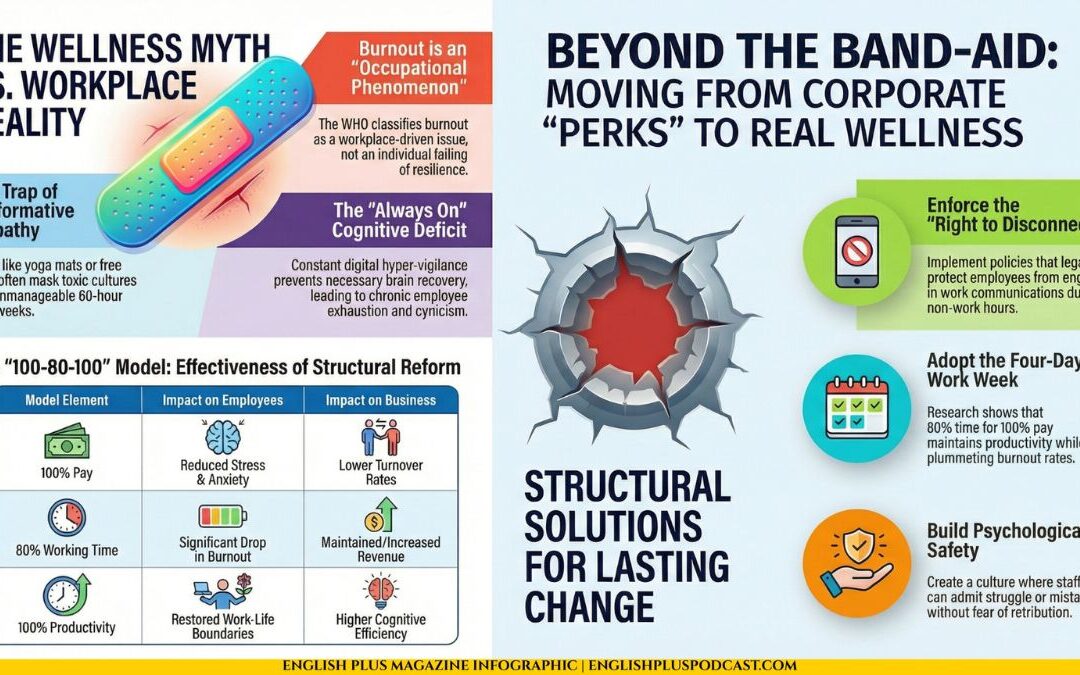
Is your company’s “Wellness Wednesday” actually helping, or just a Band-Aid on burnout? We analyze the disconnect between corporate mindfulness perks and the reality of the 80-hour work week.

After eight years of giving it all away, the internet has changed. To survive the noise of the AI era and build something truly lasting, English Plus must evolve from a public broadcast into an exclusive community.