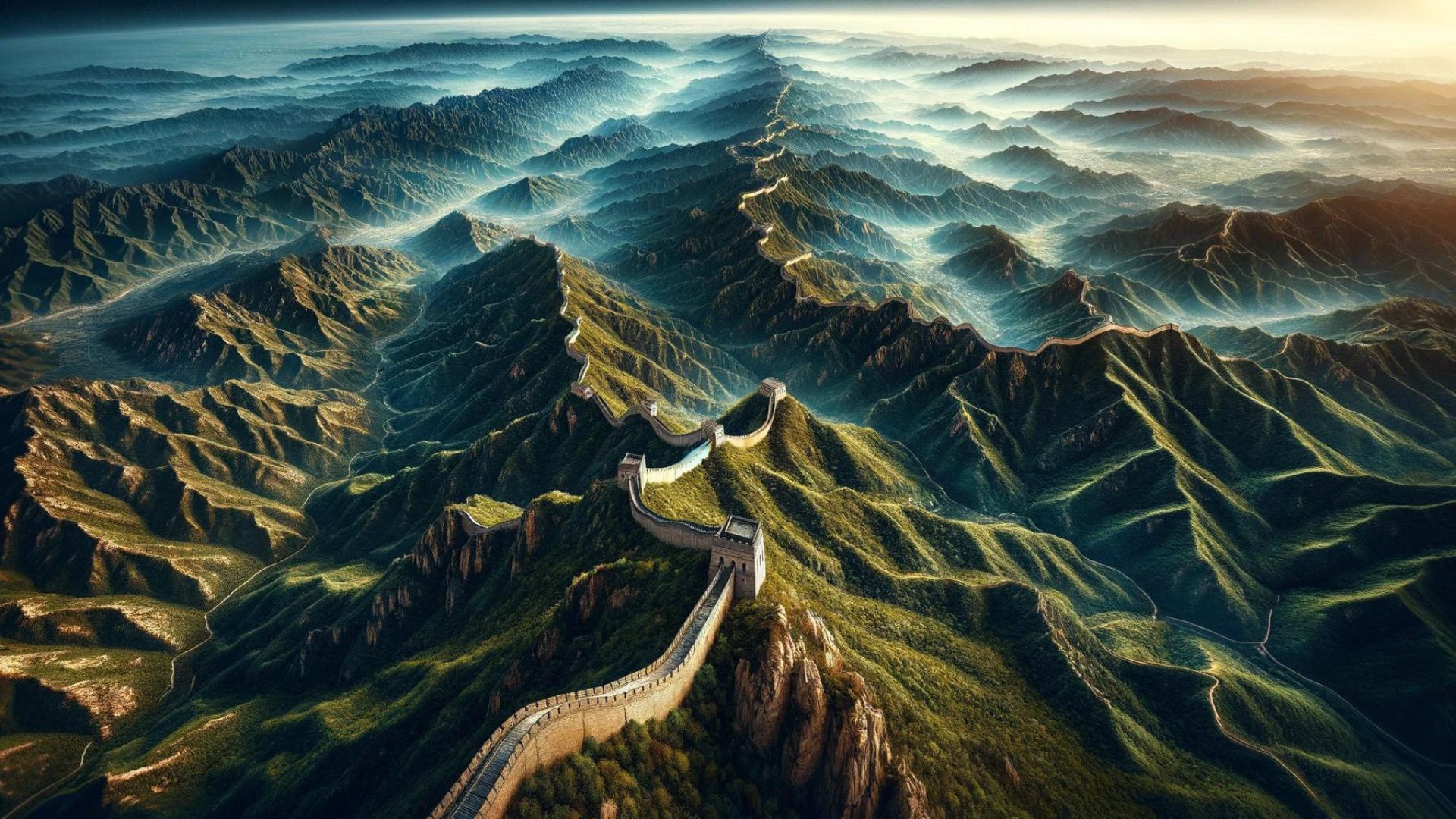
Busting the Myth of the Great Wall's Visibility
The Great Wall of China is a marvel of human ingenuity and an enduring symbol of resilience. This incredible structure has woven itself into our collective imagination, leading to the widespread belief that it's the only man-made object visible from space. But is this really true?
The answer, unfortunately, is no. Despite what you may have heard, the Great Wall's width and color blend it into the surrounding landscape, making it nearly indistinguishable from space with the naked eye. Astronauts have confirmed that it's impossible to see the Wall, particularly from the distances typical of lunar missions.
What Can You See from Space?
So if it's not the Great Wall, what can astronauts see from their unique vantage point? At orbital altitudes, cities at night gleam like constellations, highways appear as thin illuminated threads, and large-scale features like airports and agricultural patterns become remarkably clear. With the assistance of a camera's zoom lens, finer details become visible, but even then, the Wall of China is barely discernible.
Why Myths Matter
Myths hold an extraordinary power in our perception of the world. The idea of seeing the Great Wall of China from space speaks to the sheer scale and ambition of human accomplishment. Though untrue, it serves as a symbol of our interconnectedness and the impact we have on our planet.
Real-World Implications
Challenging such myths reminds us to think critically about what we hear. Misconceptions in our daily lives have real consequences; being careful about the information we accept helps us make informed decisions about everything from personal life to global issues.
Take Action: Question What You Know
What other commonly held beliefs might need further investigation? Don't be afraid to ask questions, test assumptions, and seek out reliable sources. Learning to separate fact from fiction empowers you to think more deeply and gain a fuller understanding of the world around you.
Why Should You Care?
- Critical Thinking: This myth exposes how easily beliefs can spread without verifying evidence. Learning to question popular ideas helps sharpen our critical thinking skills, essential in all aspects of life.
- Appreciating Scale: Debunking this myth helps us grasp the true scale of both human construction and the vastness of space. Understanding the limits of human perception expands our appreciation of the universe.
- The Dangers of Misinformation: Widely held misconceptions can misinform decisions and lead to misunderstandings. Tackling them reminds us of the importance of seeking reliable information.
Key Takeaways
- The Great Wall of China is NOT visible with the naked eye from space.
- From orbit, astronauts focus on larger geographic features and striking man-made patterns (cities, highways, etc.).
- This myth reinforces the grand scale of human achievement while providing a lesson in fact-checking.
Keywords
- Great Wall of China: Vast series of fortifications across northern China, built over centuries for defense and border control.
- Man-made structure: Any object built by humans, from small tools to giant monuments.
- Space: The vast expanse beyond Earth's atmosphere, encompassing stars, planets, and countless celestial bodies.
- Myth: A widely held but false belief or idea.
- Orbit: The curved path of an object (moon, satellite, etc.) around a celestial body due to gravity.
- Astronaut: Trained individuals who travel and work in space.
- Naked eye: Human vision without the aid of technology like telescopes or binoculars.
- Zoom lens: A camera lens capable of changing its focal length to make distant objects appear larger.
- Misinformation: Incorrect or misleading information, often spreading unintentionally.
- Critical Thinking: Analyzing information objectively to form judgments free of bias.
Frequently Asked Questions
- Where did the myth originate? It's hard to pinpoint, but early space observations mentioned large lines as potentially artificial, likely inspiring the more specific Great Wall idea.
- Why can't you see the Wall with a telescope? Home telescopes lack the resolving power for space observation. However, professional space telescopes can detect the Wall as a very faint line.
- If any structures were visible, which would they be? Extremely large features like superhighways, giant dam systems, or massive illuminated cities at night would stand out more readily.
Myth Buster
- Myth: The Great Wall of China is the only man-made object visible from space.
- Reality: Many structures are technically visible under the right conditions (zoom lenses, low orbit), though none as visually impactful as the myth suggests.
Let's Talk!
- Can you think of other widespread myths that turned out to be false?
- Have you ever questioned a popular belief and discovered the truth was different?
Share your thoughts and help continue to bust myths and spread accurate information!









0 Comments
Trackbacks/Pingbacks