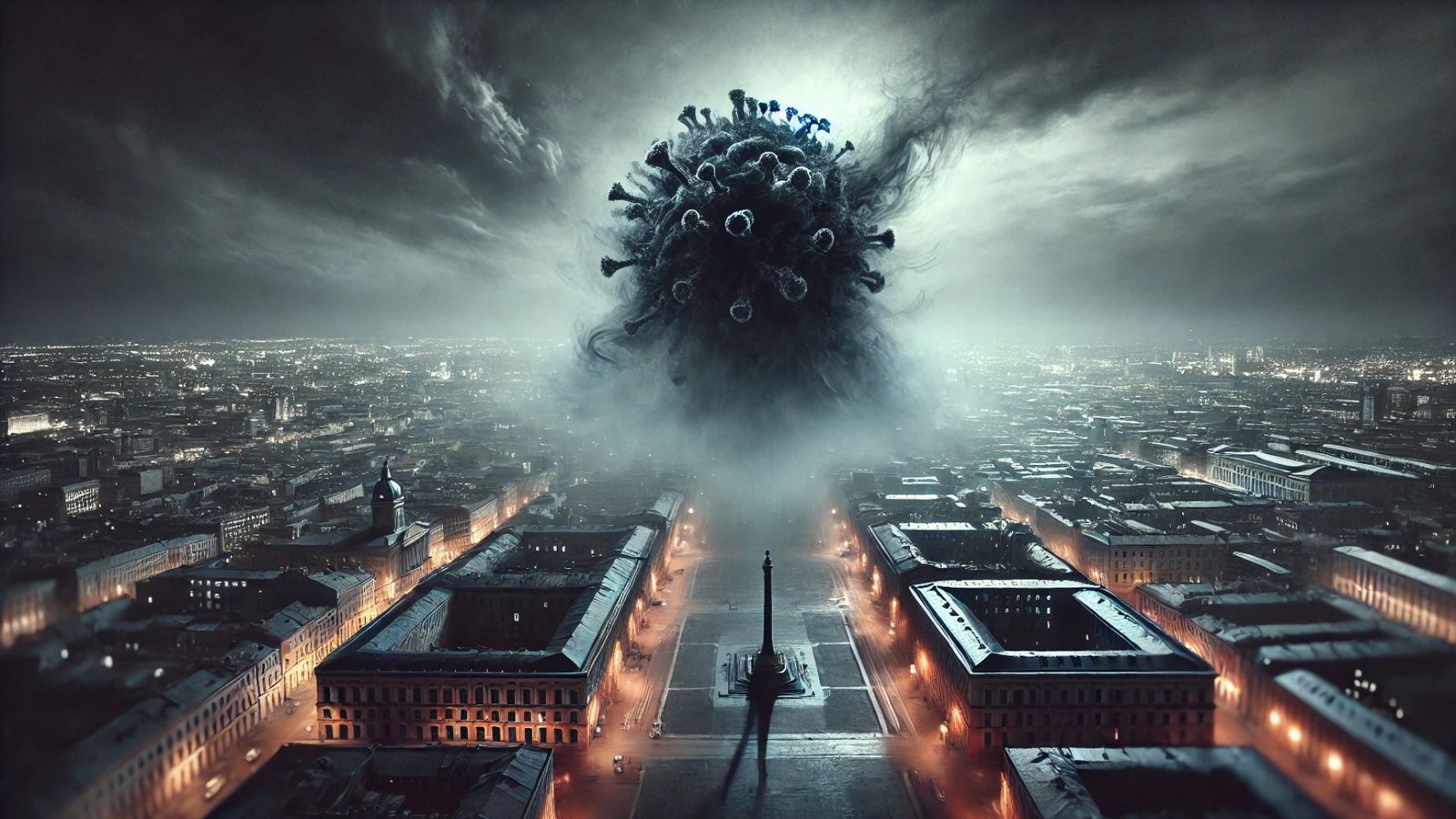
A Virus
A Poem by Danny Ballan from the Scream Poem Collection
They say it is a virus
gliding all over the air,
playing its wicked tunes
to torment the ones in paradise
and please the ones in hell.
Watch out! it can kill
playing your life a trill,
a devil embodied in tiny things
we cannot see, but feel
to devour our bodies
like a bone meal;
it feeds on our fear.

Look! it is a virus coming our way,
hide and lock yourself;
we cannot see it,
but it can see you; it can see me.
Do we have time to run?
A virus is coming our way.
We thought we could crush
all the small and hush
all the voices but our own—
a voiceless virus silenced us all.

It takes a virus to uncover the truth—
the ones who wait to see us undone,
the ones who pray
and our craving for everyone
to be near; too dark a battle,
being fought alone is even worse.
No money from anyone is in mind,
hatred and superiority are replaced
with companionship and trust
in ones we tend to ignore and forget,
to pray for salvation and a glorious battle
their hearts are so pure for the job—
only then we see the true color of our heart
we wage, we rage, we fight and conquer
the uninvited virus that came out of nowhere.

The virus is out now watching,
what happens after it’s gone.
It listens to exactly the same man it’s been killing
giving the instructions of the aftermath:
“make sure you don’t return calls
I was too weak to be who I was.
If animals hide in a cave from the storm,
we all breathed the same thin air
shared the same food and prayer,
now that it’s clear, they should not forget
the one and only lion;
their knives ready to stab my back;
they all long for something I possess—
push them away back to their stinking pits
the stench of their breath still hurts my taste;
to have spent that time with them around
was such a waste. Do not answer them.”
The virus is out there watching
smiling laughing crying in dismay—
it has just met the strongest of its kind.
Poem Insights
A Virus Among Us: A Literary Commentary on Danny Ballan’s Poem
Poetry often acts as a mirror, reflecting the world in ways we might not always recognize at first glance. Danny Ballan’s poem, "A Virus," takes a simple, familiar concept—a virus—and transforms it into something much larger than biology. Through his words, the virus becomes a symbol, a force, an interrogator of human nature. It isn’t just an infection that spreads through the air; it spreads through society, through our fears, our relationships, and ultimately, our very identities.
The Virus as a Metaphor
The poem begins with an ominous yet rhythmic tone:
They say it is a virus
gliding all over the air,
playing its wicked tunes
to torment the ones in paradise
and please the ones in hell.
Here, the virus is more than an illness—it is a performance, a haunting melody playing across society. Who, then, are those in paradise, and who are those in hell? Is it a matter of wealth, privilege, or power? Or does paradise and hell exist within us, dictated by our own fears and moral failings?
The virus "feeds on our fear," an idea that resonates far beyond pandemics. Fear can be more contagious than any disease. It spreads misinformation, divides people, and makes them act in ways they otherwise wouldn’t. But what does fear reveal about us? Does it expose our true nature or distort it?
Silence in the Face of Crisis
We thought we could crush
all the small and hush
all the voices but our own—
a voiceless virus silenced us all.
One of the most striking lines in the poem, this stanza speaks to human arrogance. We often believe we are in control, that we can dictate the world around us, silencing anything that does not serve our purpose. And yet, something as invisible as a virus proves otherwise. What does it say about humanity that something without a voice can render us speechless? Have we built a world where only the loudest voices matter, only to be undone by silence?
The Shift in Human Connection
It takes a virus to uncover the truth—
the ones who wait to see us undone,
the ones who pray
and our craving for everyone
to be near; too dark a battle,
being fought alone is even worse.
This stanza reveals the unexpected consequences of crisis: the reshuffling of priorities, the unveiling of true intentions. When faced with something beyond our control, we start to see clearly who stands with us and who waits for us to fall. Why does it take disaster for us to value human connection? Why do we neglect the people around us until we need them?
The poem acknowledges this shift—not with sentimentality, but with realism. The virus forces us into companionship, trust, and reliance on those we often overlook. Yet, if catastrophe is required to remind us of our shared humanity, what does that say about the way we live in ordinary times?
The Aftermath: Did We Learn Anything?
The final section of the poem is perhaps the most unsettling:
The virus is out now watching,
what happens after it’s gone.
It listens to exactly the same man it’s been killing
giving the instructions of the aftermath:
Here, the virus is personified as a spectator, observing whether humanity has truly changed. The instructions that follow paint a grim picture: instead of learning, the speaker returns to old ways—rejecting, excluding, reclaiming a false sense of superiority.
push them away back to their stinking pits
the stench of their breath still hurts my taste;
to have spent that time with them around
was such a waste. Do not answer them.
The virus, almost amused, sees that it is not the deadliest force in the world. It has met the strongest of its kind—human selfishness, tribalism, and forgetfulness. The very thing that should have united people instead becomes just another chapter in history.
And so, we are left with haunting questions: If a disaster does not permanently change us, what will? Are we doomed to cycle through history, learning nothing? Or does each catastrophe at least leave behind a trace of wisdom for those willing to see it?
The Questions We Must Ask Ourselves
The poem doesn’t give us answers—it gives us a mirror. It doesn’t offer solutions—it offers observations. And from these observations, we are left to ask ourselves:
- Does fear reveal our true selves, or does it distort us?
- Why does it take a crisis for people to come together? Shouldn't compassion be constant rather than situational?
- If silence is powerful enough to humble humanity, what does that say about the way we usually live?
- Are we truly capable of change, or do we simply revert to old habits once the immediate threat is gone?
- Who are we once the virus is no longer the enemy? Do we turn back to fighting each other?
These questions are not comfortable. But that is the role of poetry—not to comfort, but to provoke. Not to give answers, but to remind us to keep searching for them.
"A Virus" is not just a reflection of the pandemic; it is a reflection of human nature itself. The virus may disappear, but what it reveals about us remains.
This poem is from Danny’s The Scream poem collection, which is available to buy on Amazon.





0 Comments