- Podcast Episode
- The Tilt, The Turn, and The Longest Night
- The Misunderstanding of “Dead” Winter
- The Etymology of Standing Still
- Practical Ways to Honor the Standstill
- The Inevitability of the Return
- Focus on Language: Vocabulary and Speaking
- Focus on Language: Grammar and Writing
- Let’s Think Critically
- Check Your Understanding
- Let’s Play & Learn
Podcast Episode
The Tilt, The Turn, and The Longest Night
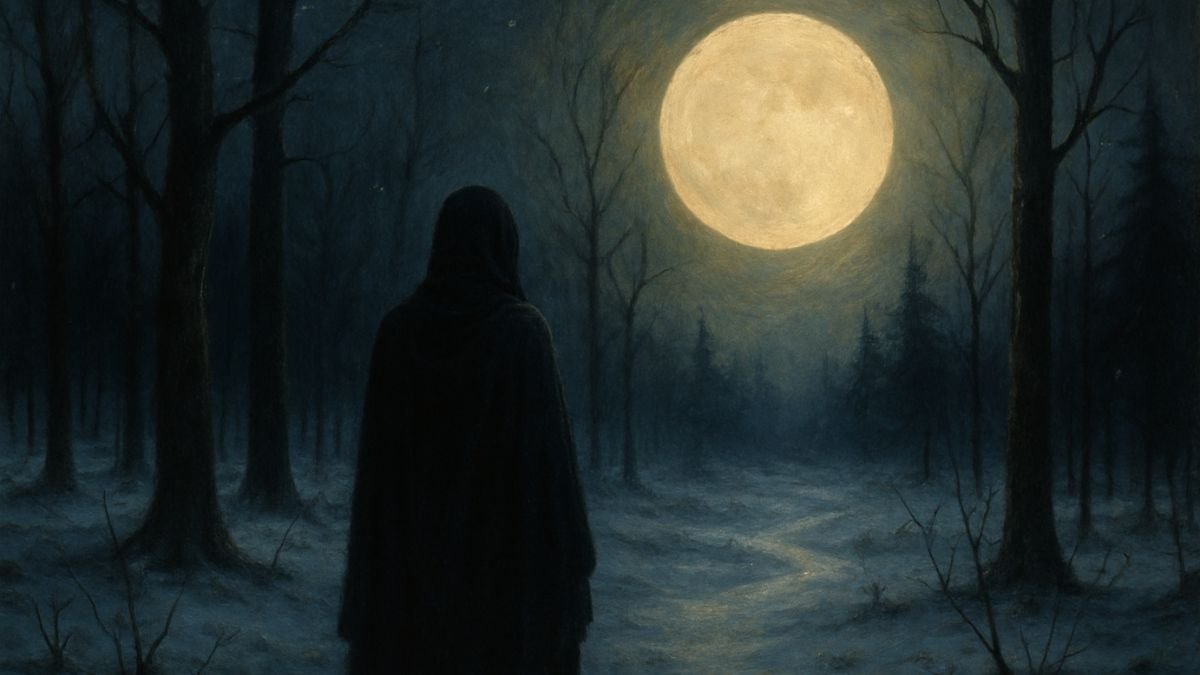
There is a precise moment when the Northern Hemisphere leans as far back from the sun as it possibly can. It is a celestial shrug, a leaning away, a deep breath taken by the planet itself. We call this the Winter Solstice. Astronomically, it is simply geometry—an axial tilt of 23.5 degrees maximizing the shadow. But culturally, psychologically, and biologically, it is something far more profound. It is the longest night. It is the shortest day. It is the tipping point where the darkness reaches its peak volume before breaking into the whisper of returning light.
We live in a world that is terrified of the dark. We banish it with streetlights, with the blue glare of smartphones, with the relentless neon of 24-hour convenience. We treat darkness as a problem to be solved, an error in the code of our productivity. But the Solstice asks us to stop fighting the dark and instead sit with it. It asks us to consider that the dark is not an adversary, but a container.
The Misunderstanding of “Dead” Winter
Walk through a forest in late December. The branches are bare, skeletal fingers scratching against a grey sky. The ground is hard, perhaps frozen, covered in the decaying mat of last autumn’s leaves. To the untrained eye, this looks like death. It looks like the end of the line. We look at nature in winter and we see absence. We see a lack of life.
This is a fundamental misunderstanding of how life works. Winter is not death; it is dormancy. And dormancy is not an absence of activity; it is a different kind of activity. Deep beneath that frozen soil, there is a massive amount of work happening. Roots are strengthening, conserving sugars, repairing cellular structures, and preparing for the explosion of energy required for spring. The soil itself is resting, allowing microbial life to break down old matter into new nutrients.
If the soil did not rest, if the trees did not shed their leaves and go dormant, they would not survive. They would exhaust their resources trying to maintain a summery façade in the face of limited light and warmth. They would burn out.
Humans Are Not Machines
Yet, we humans refuse to accept this biological reality for ourselves. We are nature, too, despite our concrete cities and climate-controlled offices. We have circadian rhythms regulated by sunlight. When the light fades, our bodies want to slow down. They want to sleep more. They crave heavier foods. They want to turn inward.
But modern culture screams the opposite. December is often the most chaotic month of the year—a frenetic sprint of shopping, parties, deadlines, and the pressure to manufacture “joy” on an industrial scale. Then, immediately after the Solstice, we are hit with the “New Year, New Me” propaganda, urging us to launch massive self-improvement projects, join gyms, and start businesses in the dead of winter.
It is madness. We are trying to bloom in January. We are forcing flowers through the snow. No wonder we are exhausted. No wonder we are anxious. We are fighting the gravity of the season. The Solstice invites us to stop swimming upstream and just float for a moment. It suggests that maybe, just maybe, you aren’t “lazy” or “unproductive” because you want to hibernate. You are just a mammal responding to the tilt of the Earth.
The Etymology of Standing Still
The word “Solstice” comes from the Latin solstitium, which translates roughly to “the sun stands still.” For a few days around the event, the sun appears to rise and set at the same place on the horizon, pausing its southward march before reversing direction.
The sun stands still. Why can’t we?
There is a distinct spiritual power in silence and stillness. In a world that values noise—the noise of opinions, the noise of news, the noise of our own ambition—silence feels dangerous. Silence forces us to confront the things we usually drown out. When we stop moving, we have to sit with our thoughts. We have to sit with our grief, our confusion, our fatigue.
This is why we avoid the quiet. It’s why we listen to podcasts while we do the dishes and scroll through social media while we watch movies. We are terrified of what we might hear if the background noise stops. But the Solstice teaches us that the quiet is necessary. It is in the quiet that the “soil” of our soul regenerates. You cannot process the events of the year if you never stop running. You cannot integrate the lessons of your failures and your victories if you don’t take the time to sit in the dark and let them settle.
The Darkness as a Womb, Not a Tomb
We need to reframe our relationship with the dark. We often view darkness as a tomb—a place of endings. But in nature, darkness is almost always a womb—a place of beginnings. Seeds germinate in the dark. Babies grow in the dark. Ideas incubate in the dark subconscious before they burst into the light of conscious thought.
The Winter Solstice is the great cosmic womb. It is the pregnant pause. It is the deep breath before the singer begins the aria. If we skip the breath, the song has no power. If we skip the winter, the spring has no depth.
This is a time for what I call “productive non-doing.” It isn’t about watching TV for twelve hours (though that has its place). It is about intentional rest. It is about staring at a candle flame. It is about reading a book slowly, not to learn something, but just to enjoy the language. It is about walking in the cold air and noticing how the silence of the snow changes the acoustics of the world.
Practical Ways to Honor the Standstill
So, how do we actually do this in a world that demands we keep moving? We can’t all just quit our jobs and move to a cabin in the woods for three months (tempting as that sounds). We have to find ways to integrate the Solstice energy into our modern lives.
The Art of Lighting a Candle
It starts with light. Not the harsh overhead LEDs of the office, but living light. Fire. There is a primal reason humans gather around fires. For thousands of years, the hearth was the center of survival during the winter. Lighting a candle or a fire is a ritualistic acknowledgement of the returning sun.
Try this: On the longest night, turn off the electric lights. All of them. Light a few candles. Notice how your voice naturally drops to a whisper. Notice how your body relaxes. Watch the shadows dance. It changes the texture of time. An hour by candlelight feels longer and richer than an hour under fluorescent bulbs.
The Journaling of Release
Spring is for planting intentions. Winter is for clearing the field. Before you make your resolutions, you need to do your compost work. What needs to die? What habits, relationships, fears, or narratives are you carrying that are simply dead weight?
Use this time to write them down. Be ruthless. Acknowledge that they served a purpose once, just as the leaves served the tree in the summer, but now they are brittle and finished. Imagine them falling away. You don’t need to force the new growth yet. Just clear the ground.
Embracing Hygge (Without Buying More Stuff)
We can’t talk about winter without mentioning hygge (pronounced hoo-ga), the Danish concept of coziness. But beware: marketing has hijacked this term to sell you $50 wool socks and expensive blankets. Hygge isn’t about buying things. It is about the feeling of safety and presence.
It is drinking tea from your favorite chipped mug. It is wearing the ugly sweatpants that are perfectly broken in. It is gathering with friends, not for a loud party, but for a quiet dinner where you actually talk. It is the deliberate creation of warmth in the face of the cold. It is an act of defiance. The world outside is freezing and hostile? Fine. I will make this corner of the sofa the warmest, softest place in the universe.
The Inevitability of the Return
The beautiful paradox of the Solstice is that the moment the darkness is total is also the moment the light begins to return. The pendulum swings back. The days will get longer. It is imperceptible at first—a minute here, a minute there—but it is inevitable.
This offers a massive psychological comfort. No matter how dark it gets, the geometry of the universe ensures that the light comes back. No winter lasts forever. No depression lasts forever. No grief lasts forever. The wheel turns.
But we must not rush the dawn. If we try to wake up at 3 AM because we are impatient for the sunrise, we just end up tired and groggy. We have to wait. We have to trust the cycle.
So, as the sun dips low and the shadows stretch out to their impossible lengths, do not despair. Do not fight the urge to slow down. Wrap yourself in the velvet cloak of the long night. Let your roots go deep. Rest. The sun is coming back. It always does. But for now, the dark has a few things to teach you, if you are quiet enough to listen.
Focus on Language: Vocabulary and Speaking
Let’s dive into the mechanics of the language we just used. When we talk about abstract concepts like seasons, emotions, and time, we often rely on specific, high-level vocabulary to paint the picture. I want to look at ten keywords and phrases from the article that act as the structural beams for these ideas. I want you to really understand not just what they mean in a dictionary sense, but how they feel in a sentence.
First, we have Solstice. This is the anchor of the whole piece. We know it means the astronomical event, but in conversation, you can use it to describe a turning point or a peak moment of stillness. You might say, “I felt like I reached a personal solstice, where everything just paused before changing direction.” It implies a pivotal moment of maximum intensity followed by a shift.
Then we have the word Dormancy. This is crucial. It refers to a period where biological functions are suspended or slowed down—like a deep sleep for plants. But here is how you use it in real life: use it to describe a project, a talent, or a feeling that isn’t dead, just sleeping. “My painting skills are in a state of dormancy right now.” It’s a much more hopeful word than “gone” or “forgotten.” It implies that it will wake up again.
Next is Celestial. This relates to the sky or outer space. It elevates the conversation. Instead of saying “space event,” we say “celestial event.” You can use it to describe something that feels otherworldly or incredibly beautiful. ” The music had a celestial quality to it.” It makes the ordinary sound divine.
We used the word Introspection. This is the examination of one’s own mental and emotional processes. It is looking inside. Winter is the season of introspection. You might say, “After the breakup, I spent a lot of time in deep introspection.” It’s better than just saying “thinking about things.” It implies a structured, deep dive into your own soul.
Let’s look at Cacophony. A harsh, discordant mixture of sounds. We contrasted the silence of the solstice with the cacophony of modern life. Use this when things are loud and chaotic. “The meeting was a cacophony of shouting voices.” It’s not just noise; it’s ugly, clashing noise.
Then there is Equilibrium. A state in which opposing forces or influences are balanced. The solstice is a disruption of equilibrium that eventually leads back to balance. You can use this for your work-life balance. “I’m trying to find some equilibrium between my job and my family.” It sounds more scientific and precise than just “balance.”
We have the word Ephemeral. Lasting for a very short time. We didn’t use this explicitly in the text, but it is the ghost behind the text—the light is ephemeral, the season is ephemeral. Use this to describe moments that are beautiful because they don’t last. “The joy of a sunset is ephemeral.” It adds a poetic touch to your speech.
Hibernation. We know bears do it. But humans do it metaphorically. “I’m going into social hibernation for the weekend.” This is a fantastic, relatable phrase to tell your friends you aren’t going out. It frames your absence as a biological need rather than a rejection of them.
Cyclical. Occurring in cycles; recurrent. The seasons are cyclical. History is cyclical. Use this when you want to remind people that bad times (or good times) come and go. “Don’t worry about the market downturn; the economy is cyclical.” It offers perspective.
Finally, Tipping Point. The point at which a series of small changes or incidents becomes significant enough to cause a larger, more important change. The Solstice is the tipping point of the dark. Use this in business or personal habits. “I think I’ve reached a tipping point with my fitness; it’s finally becoming a habit.”
Now, let’s move to the Speaking Section.
Knowing the words isn’t enough; you have to own them. The biggest mistake learners make with high-level vocabulary is using it stiffly. They sound like they swallowed a thesaurus. The key is to blend these “fancy” words with simple, conversational structure.
Notice how I said: “My painting skills are in a state of dormancy right now.” The structure is simple. Subject + Verb + Object. I didn’t say, “My artistic capabilities are currently exhibiting dormancy.” That sounds robotic.
Speaking Technique: The “Reframe”
I want you to practice a technique called “The Reframe.” This is where you state a simple, perhaps negative fact, and then “reframe” it using our new vocabulary to give it more depth or dignity.
- Simple: “I’m just sitting at home doing nothing.”
- Reframe: “I’m embracing a period of dormancy and introspection.”
- Simple: “It’s really loud in here.”
- Reframe: “The cacophony in here is overwhelming.”
- Simple: “I’m taking a break from people.”
- Reframe: “I’m going into hibernation to restore my equilibrium.”
The Challenge:
Here is your assignment. For the next 24 hours, whenever you feel tired, lazy, or bored, I want you to refuse to use those words. Instead, I want you to describe your state using the words dormancy, incubation, or pause. Record yourself explaining your day to a friend (or just to your phone). “Hey, I’m not lazy today; I’m just letting my ideas incubate.” See how it changes how you feel about yourself? That is the power of language. It changes your reality.
Focus on Language: Grammar and Writing
We are going to shift gears to the written word. Writing about nature and abstract concepts like “time” and “silence” requires a specific set of tools. If you use simple, active sentences for everything (“The sun went down. It was dark. I felt tired.”), your writing will feel choppy and shallow. To achieve that “rich and deep” tone we established in the article, we need to master a few sophisticated structures.
The Writing Challenge:
I want you to write a 300-word piece titled “A Manifesto of Rest.”
In this piece, I want you to describe a winter scene (real or imagined) and then transition into a declaration of why you are choosing to slow down.
- The Constraint: You must describe the scene without using the words “cold,” “snow,” or “dark.” You have to use other sensory details to convey the season. Then, you must use at least three of the vocabulary words we learned.
Grammar Lesson: The Tools You Need
To succeed in this challenge, and to write like a pro, let’s look at three grammatical concepts: Inversion for Emphasis, Participial Phrases, and The Passive Voice (The Right Way).
Inversion for Emphasis
In standard English, we go Subject-Verb-Object. “The night has never been so long.”
But to add poetry and drama, we can invert the subject and the auxiliary verb, usually after a negative adverb.
- Standard: “I have rarely seen such a quiet street.”
- Inverted: “Rarely have I seen such a quiet street.”
- Standard: “The sun did not rise until 9 AM.”
- Inverted: “Not until 9 AM did the sun rise.”
- Why use it? It forces the reader to slow down. It puts the emphasis on the time or the condition (Rarely, Not until) rather than the person. It sounds literary and grand. Use this in your manifesto. “Never have I felt such a need for silence.”
Participial Phrases for Flow
Short sentences kill the “vibe” of a nature piece. To connect ideas and create that flowing, liquid feeling, use participial phrases (verbs ending in -ing or -ed used as adjectives).
- Choppy: The trees stood in the yard. They looked like skeletons. They were waiting for spring.
- Flowing: Standing in the yard like skeletons, the trees waited for spring.
- Or: The trees stood in the yard, waiting for spring, strippped of their leaves.
- Why use it? It allows you to pack more imagery into a single sentence without it becoming a run-on. It creates a rhythm. “Sitting by the fire, watching the shadows, I realized I was tired.”
The Passive Voice (The Artistic Defense)
Teachers always tell you “Don’t use the passive voice!” They are wrong. In nature writing, the passive voice is essential because often the agent doesn’t matter, or the agent is “nature” or “the universe.”
- Active: The cold wind stripped the branches.
- Passive: The branches were stripped bare.
- Why use it? The focus here is on the branches and their state of nakedness, not on the wind. The passive voice emphasizes the result of the action. It creates a sense of stillness, of things being done to the world. “The world was wrapped in silence.” This is much better than “Silence wrapped the world.”
Tips for the Challenge:
- Show, Don’t Tell: Since you can’t use “cold,” describe the steam rising from a cup of tea. Describe the sound of boots crunching on hard ground. Describe the way your breath creates a cloud.
- Rhythm: Alternate between long, flowing sentences (using participial phrases) and short, punchy statements. “The world, wrapped in its winter coat, slept. I listened.”
- Personification: Give human qualities to nature. “The wind whispered.” “The shadows danced.” This is a hallmark of creative non-fiction.
Go ahead. Write your manifesto. reclaim your right to rest.
Let’s Think Critically
Let’s Discuss
We have covered the science, the philosophy, and the language. Now, let’s get critical. Here are five questions to spark a fire in the comments section. I want you to read these and debate them with yourself or a friend.
Is “Dormancy” a Privilege?
The article talks about resting as if it’s a choice. But for gig workers, single parents, or those working three jobs, “slowing down” might mean not eating. Is the concept of “winter rest” purely a luxury for the middle and upper class? How can someone with zero time still honor the solstice?
The Fear of Silence vs. The Fear of Loneliness.
We claimed that people avoid silence because they fear their own thoughts. But is it possible that people avoid silence because humans are social creatures and modern “silence” often just means “isolation”? Is there a difference between solitude (being alone by choice) and loneliness (being alone by force)?
Does the “Return of the Sun” matter in a 24-hour illuminated world?
We have conquered the night with electricity. Does the biological impact of the Solstice even exist anymore? Or is it just a placebo effect—a story we tell ourselves? If we live in climate-controlled boxes with artificial sun lamps, are we disconnected from these cycles permanently?
Toxic Positivity vs. Seasonal Affective Disorder (SAD).
The article romanticizes the dark. But for millions, the lack of light causes severe chemical depression (SAD). Is it dangerous to tell someone with SAD to “embrace the dark”? Where is the line between “spiritual acceptance” and a medical condition that needs treatment?
Why do we moralize “Doing Nothing”?
Why do we feel guilty when we rest? Where does that guilt come from? Is it capitalism? Puritan work ethic? Parental pressure? Why is “productivity” the only metric of a valuable day? Discuss how to separate your self-worth from your output.
Critical Analysis
We spent a lot of time praising the dark and the quiet. And while that is a beautiful sentiment, we need to acknowledge the elephant in the room: Biology doesn’t care about your poetry.
The article suggests that you can just “decide” to reframe winter. But let’s look at the chemistry. The lack of sunlight increases melatonin (the sleep hormone) and decreases serotonin (the mood-regulating neurotransmitter). This isn’t just a “vibe”; it is a physiological alteration of your brain state. For some people, “embracing the dark” is chemically impossible because their brain is literally starving for lumens.
We also missed the historical context of fear. We talked about modern people being afraid of the dark because of “distraction.” But historically, the Solstice was a terrifying time. If the food stores ran out, you died. If the fire went out, you froze. The celebration of the Solstice wasn’t just “yay, the sun is coming back”; it was a desperate plea: “Please, god, don’t let the sun die forever.” Our modern “cozy” view of winter is sterilized. We have forgotten the teeth of the wolf.
Furthermore, we need to critique the “New Year New Me” bashing. Yes, it’s annoying. But for some people, January 1st provides a necessary psychological “fresh start” date. Taking action against the lethargy of winter can be a survival mechanism for mental health. Sometimes, “forcing the flower” is the only way to keep the gardener sane.
So, while the article encourages a “go with the flow” approach, critical thinking suggests a middle path: Respect the dormancy, yes, but do not surrender to the abyss. Keep one foot in the rest, and one foot firmly planted in the discipline that keeps you moving. Balance—or equilibrium—is key.




0 Comments