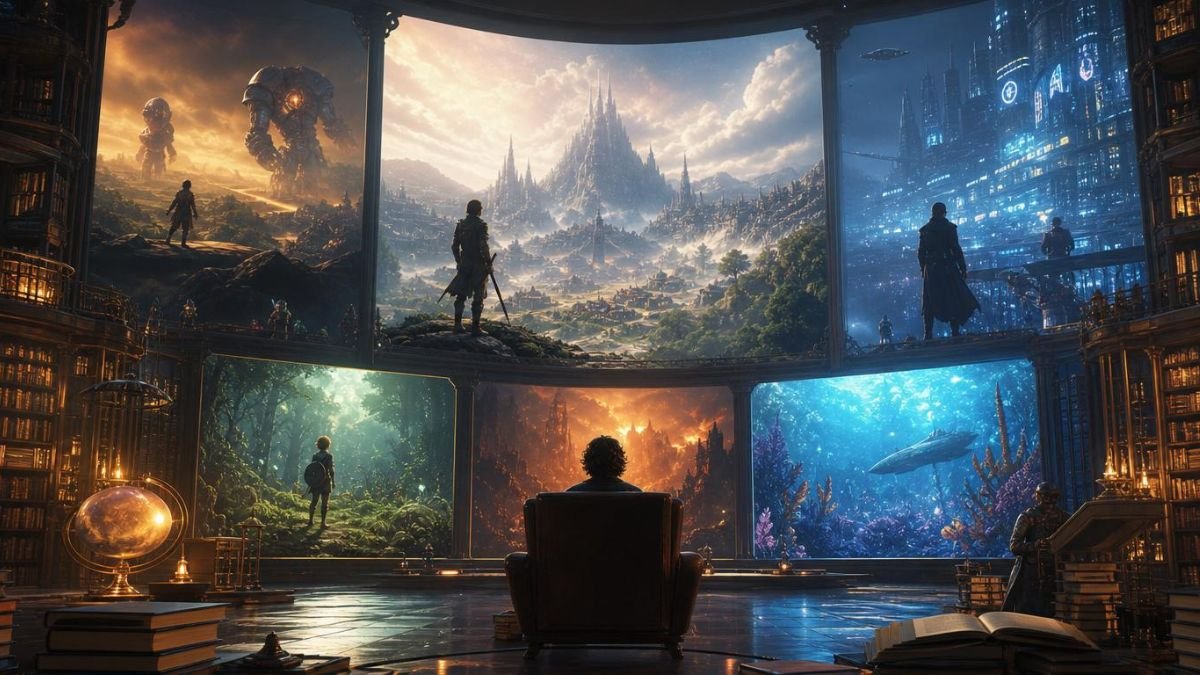
- The Wrong Question, Asked With Great Confidence
- What We Actually Mean When We Say "Literature"
- The Thing Only Games Can Do
- Empathy as a Verb
- Critical Thinking, Smuggled In As Play
- The Canon Is Already Forming, Whether We Approve or Not
- So What Do We Actually Do With This?
- Let's Get Critical
- The Fantastic Guest
- The Story | Co-op
- Author's Commentary
- Language Focus: Vocabulary and Speaking
- Language Focus: Grammar and Writing
- Let's Discuss
- What Now?
- The Glossary
The Wrong Question, Asked With Great Confidence
Let me start with a confession that will probably cost me some credibility with a certain kind of reader. I think the "screen time" debate, the one we have been having for roughly two decades now, is one of the least useful conversations of our era. Not because screens don't matter. They do. But because the question "how much screen time is too much?" is a little like asking "how much reading time is too much?" without ever pausing to ask what is being read.
A child who spends three hours staring at a slot-machine app designed by behavioral psychologists to drain a wallet is not having the same experience as a child who spends three hours inside a sprawling, melancholy, beautifully written story about loss and survival. Both are "screen time." Lumping them together is not caution. It's a category error wearing the costume of responsibility.
So I want to do something a bit reckless in this issue. I want to set the timer debate aside entirely, just for a while, and ask a different question. Not "how long," but "what." What are the most ambitious story-rich video games actually doing? And when I look closely, when I really look, I keep arriving at a conclusion that still feels mildly heretical to say out loud: some of them are doing literature. Not "like" literature. Not "almost" literature. Literature, period, in a new and genuinely native form.
If that claim makes you bristle, good. Hold onto that resistance. We're going to test it together, and I promise not to ask you to surrender it cheaply.
What We Actually Mean When We Say "Literature"
Before we can argue about whether games qualify, we have to be honest about what the word even means, because most of us are carrying around a definition we never bothered to examine.
The Definition We Pretend We Have
If you stop a hundred people on the street and ask them to define literature, you'll get a vague gesture toward old books, difficult books, books assigned in school, books with a certain prestige. Literature, in the popular imagination, is what you were made to read and didn't enjoy, plus whatever you read voluntarily that you'd like other people to think you enjoyed.
That's not a definition. That's a status marker. And status markers are precisely how every new narrative medium gets kept out of the club for a generation or two before being quietly let in through the back door.
The Definition We Actually Use
When literary scholars get serious, the working definition is more interesting and far more demanding. Literature is writing, or now, I'd argue, narrative, that does several things at once. It builds characters with genuine interiority, people who feel like they contain more than the plot needs them to. It engages moral complexity rather than dispensing easy answers. It uses the formal tools of its medium deliberately, so that how the story is told is inseparable from what it means. And, crucially, it produces in the audience something that goes beyond consumption: a kind of expansion, an enlargement of the moral and emotional imagination.
That last part is the one I want you to keep in your pocket. The great claim made on behalf of serious narrative, going back at least to Aristotle, is that it does something to us. It rehearses us in feelings and situations we haven't lived, and, in doing so, it makes us more capable of recognizing the inner lives of other people. The fancy word for that machinery is catharsis, but the everyday word is empathy. Literature, at its best, is an empathy engine.
Now hold that definition up against a handful of games made in the last decade and watch what happens.
The Thing Only Games Can Do
Here is where the conversation usually goes wrong, so let me be careful. The case for games as literature is not that they're as good as novels, or that they replace novels, or that we should all stop reading novels and pick up a controller. That would be a silly argument, and I have no interest in making silly arguments at length.
The interesting case is different and, I think, much stronger. It's that games can do something no novel, no film, no play has ever been able to do, and that this something is deeply, recognizably literary in its aims even though it is brand new in its method.
The Reader Who Cannot Stay Safe
When you read a novel, you are, for all your emotional involvement, fundamentally safe. You are a witness. You watch Raskolnikov raise the axe; you do not raise it. You watch a character betray a friend; the betrayal is theirs, not yours. This distance is not a flaw. It is part of how literature works, and some of the most powerful effects in fiction depend on it.
But there is a kind of moral experience that witnessing simply cannot deliver, and that is the experience of being the one who decides. A game that hands you a genuine, consequential choice, and then refuses to let you off the hook for it, places you in a relationship to the story that no other medium can replicate. You are not watching the protagonist make an impossible decision. You are the protagonist, and the decision is yours, and the game will remember.
This is the property that makes the whole conversation worth having. The technical word is agency, and it is the single most underappreciated literary innovation of our lifetime. Agency turns the reader from a spectator into a participant, and in doing so it transforms empathy from something you feel into something you do.
When the Story Makes You Complicit
Let me give you the version of this that actually keeps me up at night.
The most sophisticated narrative games have learned to use your agency against you, and they do it on purpose. They set up a situation, hand you control, and then arrange consequences so that you discover, after the fact, that you have become complicit in something you would have condemned in a heartbeat if you'd merely read about it.
You make a choice that feels reasonable, even kind, in the moment. Three hours later the game shows you the cost, and the cost has your fingerprints all over it. You can't blame the author. You can't blame the protagonist. The protagonist was you. This is a profoundly literary maneuver, the kind of moral ambush that the greatest novels attempt through identification and that games achieve through participation. The feeling it produces is not the comfortable catharsis of watching tragedy from a safe seat. It is something more visceral, a discomfort that lodges in the body, because the medium has closed the gap between the audience and the act.
I have felt more genuine moral vertigo from a handful of games than from most of the prestige films I've dutifully admired. Not because the games are wiser, but because they implicate me. And implication, it turns out, is a teacher.
Empathy as a Verb
We talk about empathy as if it were a feeling, a soft warm thing you either have or lack. But the research, and frankly the experience, suggests empathy is closer to a skill, something built through practice, through the repeated act of inhabiting a perspective that isn't yours.
This is the oldest argument for literature in the book, literally. We hand children stories so they can practice being other people in the safety of their imaginations. The story of a frightened animal teaches a four-year-old that other creatures have inner weather too. The novel of a life unlike yours rehearses you in the strange, difficult art of taking another person seriously.
The Difference Between Watching and Carrying
Story-rich games extend this rehearsal in a direction print never could. When a game asks you to play as a character whose circumstances are nothing like your own, and to make that character's choices under that character's pressures, with that character's limited information and impossible trade-offs, you are not watching empathy modeled. You are running the simulation in your own nervous system.
There's a particular kind of game that drops you into the role of someone the world has written off, a refugee, a caretaker, a person grinding through a system designed to grind them down, and instead of telling you about their exhaustion, it makes you feel the exhaustion mechanically. The resources are scarce because they're scarce. The choices are cruel because the situation is cruel. You don't sympathize from a distance. You carry the weight, decision by decision, and you put it down at the end understanding something in your hands that you could not have understood in your head alone.
That is empathy as a verb. And I'd argue it's one of the most important pedagogical tools to emerge in a hundred years, sitting almost entirely unexamined because we've been too busy arguing about how many minutes of it are healthy.
Critical Thinking, Smuggled In As Play
Here's a turn that surprises people. The interactive structure that makes games such powerful empathy engines also makes them, almost accidentally, superb trainers of critical thinking.
A System You Have to Read
To play a complex game well, you have to do something that looks a lot like literary analysis and a lot like scientific reasoning at the same time. You observe a system. You form hypotheses about how it works and what it values. You test those hypotheses through action. You revise your model when the world pushes back. And in the richest games, the system you're reading isn't just mechanical. It's moral. The game has a worldview baked into its rules, and learning to perceive that worldview, to notice what the design rewards and punishes and quietly assumes, is a genuine act of interpretation.
A young person who has learned to ask "what does this game actually want me to believe, and do I agree?" has acquired a transferable habit of mind. That is the same muscle you use to read an advertisement, a political speech, a news feed, a textbook. The game is a low-stakes gym for the high-stakes skill of refusing to take a system's framing at face value.
The Failure That Teaches
There's a second mechanism here, and it's one our schools are often weirdly bad at. Games normalize productive failure. You try, you fail, you analyze, you adjust, you try again, and crucially, the failure carries no shame because it is built into the loop. The whole architecture treats failure as information rather than verdict.
Compare that to how we usually structure learning, where failure arrives with a red mark and a permanent record, and you start to see why so many young people who seem allergic to "studying" will voluntarily, joyfully, spend forty hours mastering a system of staggering complexity. The difference isn't the kids. It's the framing of failure. There's a lesson there for every teacher reading this, and it has nothing to do with screens.
The Canon Is Already Forming, Whether We Approve or Not
Every new narrative medium goes through the same humiliating ritual. It arrives, the gatekeepers sneer, a generation grows up loving it anyway, and eventually the academy clears its throat and admits, with great dignity, that perhaps there was something to it all along.
The novel was once disreputable, a frivolous indulgence that would rot the minds of impressionable young women, according to people who took themselves very seriously. Film was a fairground curiosity. Jazz was a moral menace. Comics were going to produce a generation of delinquents; there were Senate hearings about it. In each case, the medium was judged not on its best work but on its most disposable, and the prestige came only after the gatekeepers who'd resisted were safely retired or dead.
Judging the Medium by Its Best, Not Its Worst
We don't dismiss literature because airport thrillers exist. We don't dismiss cinema because most movies are forgettable. We judge a medium by its summit, by what its most ambitious practitioners prove is possible. Apply that same fairness to games and the conversation changes overnight. Yes, most games are toys, and that's fine; most books are not War and Peace either. But the summit of the medium is now occupied by works of real moral seriousness, structural daring, and emotional depth, and the only reason we hesitate to call them literature is a trope so old it's embarrassing: the new thing can't possibly be art because the old gatekeepers haven't blessed it yet.
The paradigm is shifting under our feet. There are now university courses, scholarly journals, and serious critical traditions devoted to these works. The nuance the field has developed about how interactive narrative produces meaning is, frankly, more advanced than most casual skeptics realize. The canon is forming. The only question is whether the people responsible for young minds will help shape that canon thoughtfully or stand on the sidelines reciting the word "screen time" until the conversation passes them by.
So What Do We Actually Do With This?
I don't want to leave you with a thesis and a shrug, because the practical stakes here are real, especially if you're a parent or a teacher.
The shift I'm asking for is not "let kids play unlimited games." It's something more demanding and more interesting: replace the quantity question with a quality question, and then do the work the quality question requires. Stop asking only "how long were you on that screen?" and start asking "what was it, and what did it ask of you, and what did you make of it?" Those are the questions we already know how to ask about books. We just have to be brave enough, and curious enough, to ask them about a medium we didn't grow up with.
Because here's the thing I keep coming back to. The discomfort many of us feel about games is not really about games. It's about the unfamiliar. The works are genuinely doing literary labor, complex characterization, moral ambiguity, formal experimentation, the cultivation of empathy and judgment, and they're doing it in a form that didn't exist when most of us were forming our sense of what counts as culture. That unfamiliarity is not evidence against their value. It's just the feeling of standing at the front edge of where the canon goes next.
The screen time debate asks you to be a timekeeper. The better debate asks you to be a critic, a curator, and a curious human being. I know which one I'd rather be, and I suspect, if you've read this far, so do you.
Take This Package With You
Read this study package free below, or get the clean, ad-free PDF and EPUB, plus extra worksheets and audio, on Patreon.
Let's Get Critical
I just spent some time building a case I genuinely believe. So now let me do the thing that actually keeps an argument honest: turn around and attack it. Because the fastest way to spot a weak idea is to fall in love with a strong one and stop checking its work.
Let's start with the biggest crack in my own thesis. I leaned hard on the word "literature," and I used it as a compliment. But why should "literature" be the ceiling that games aspire to? There's a quiet condescension hiding in my whole argument, the assumption that the highest praise I can offer a game is to say it's secretly a book. That's exactly the move people made when they called early films "filmed plays," and it took decades to realize that the most interesting thing about cinema was everything that wasn't theatrical. Maybe by reaching for the prestige of the novel, I'm doing games a disservice. Maybe the genuinely radical claim isn't "games are literature too," but "games are something the word literature was never built to hold, and we should stop trying to smuggle them into a category that flatters our existing tastes." I argued for letting games into the club. The braver position might be questioning why the club gets to set the terms.
Here's a second problem, and it's a serious one. I made the empathy machinery sound like an unambiguous good, and I waved my hands at "research" without slowing down to admit how contested that research actually is. The claim that fiction builds empathy, that reading novels makes you a kinder person, is intuitively gorgeous and empirically shaky. The studies are mixed, the effects are often small, and the causation runs in directions nobody has cleanly untangled. Do empathetic people seek out emotionally rich stories, or do the stories make them empathetic? Probably both, in a tangle we can't easily separate. If the empathy case for novels is wobbly, then the empathy case for games, which simply borrows the same logic and adds a controller, inherits all that wobbliness and then some. I sold you a beautiful machine. I should at least tell you the warranty is disputed.
And while we're being skeptical, let's talk about that word I was so proud of: complicit. I argued that games make you complicit in moral choices, and that this implication is a powerful teacher. But is it? There's a real possibility I have the psychology exactly backwards. Maybe rehearsing terrible choices in a consequence-free simulation doesn't sensitize us to them. Maybe it desensitizes us. Maybe the gap between pressing a button and committing an act is so wide that the "moral vertigo" I described is just a pleasant aesthetic shiver, the emotional equivalent of a roller coaster, thrilling precisely because it's safe and therefore teaching us nothing except how to enjoy the simulation of weight without ever carrying any. I felt something real when I played those games. But "I felt something real" is exactly what every person says about every immersive experience, including the ones we all agree are junk.
Then there's the uncomfortable economic truth I conveniently skipped. Novels are not engineered to be addictive. Many games, including some narratively brilliant ones, absolutely are. The same studios capable of genuine artistry are also running sophisticated behavioral-retention systems designed to keep you playing past the point of meaning, and these two things often live inside the same product. A novel doesn't have a team of psychologists working to make sure you can't put it down for reasons that have nothing to do with how good the prose is. When I tell a parent to ask "what is it and what does it ask of you?" I'm assuming the game's design serves the story. Sometimes the story is the bait and the design serves the quarterly revenue target. That's not a small caveat. It might be the whole game.
I'll give you one more, and it's the one I find hardest to dismiss. My entire argument is available only to people with the time, money, hardware, and uninterrupted attention to experience these forty-hour masterpieces in the first place. A great novel costs almost nothing and asks only literacy and light. The literary games I'm celebrating sit behind expensive consoles, fast connections, and luxurious blocks of free time that most people on earth simply do not have. So when I wax lyrical about games as the next chapter of the canon, I should be honest that I'm describing a canon with a very high cover charge, and that there's something a little tone-deaf about declaring a new democratic art form that, in practice, is gated by privilege I happen to possess.
None of this demolishes the original argument. I still think the best of these games are doing real, important, recognizably artistic work, and I still think the screen time framing is lazy. But notice what just happened. Every one of those counterarguments is itself debatable. The desensitization worry has counter-evidence. The "high cover charge" point ignores how quickly access expands. The "games aren't literature, they're something new" objection might just be a more sophisticated way of dodging the question. The point of this section was never to tell you what to conclude. It was to show you that a confident argument and a true argument are not the same thing, and that the distance between them is exactly where your own thinking is supposed to live. So don't take my thesis. Don't take my objections to my thesis either. Take the habit of suspecting both.
The Fantastic Guest
For this issue, I wanted a guest who wouldn't simply agree with me, because agreement is boring and I've had quite enough of my own opinions for one article. I wanted someone who spent his life thinking about exactly the thing the screen time debate refuses to think about: not how much we consume, but what a medium does to us simply by being the kind of medium it is. There is really only one person to call. He coined the phrase "the medium is the message," he predicted the internet decades before it existed, he was famous enough to play himself in a Woody Allen film and prickly enough to enjoy it, which makes him exactly the sort of guest this section was built for. Please welcome the patron saint of media theory, Marshall McLuhan.
Danny: Professor McLuhan, thank you for crossing several decades and at least one metaphysical boundary to be here. I have to confess I'm a little nervous.
McLuhan: You should be more nervous than you are, and for the wrong reasons. You're nervous about me. You should be nervous about the sentence you just wrote, the one calling video games "literature." You've spent your whole article trying to give the new medium a knighthood by dressing it in the old medium's clothes. It's a very natural mistake. It's also the exact mistake everyone makes at the start, every single time.
Danny: Well. I was going to ease into the disagreement, but I see we're skipping the small talk.
McLuhan: Small talk is a print-era courtesy. We're past it.
Danny: Then let's go straight in. You're saying I got it wrong by calling games literature. But my whole point was that they do what literature does, build empathy, complexity, moral seriousness.
McLuhan: And my whole point, the only point I ever really made, is that what a medium does what it does matters far less than what it is. You keep staring at the content. The content is the juicy piece of meat the burglar carries to distract the watchdog of the mind. While you're busy admiring the story inside the game, the actual transformation is happening in the form. The game is not reshaping you through its plot about a sad man and his daughter. It's reshaping you through the simple, total fact of interactivity, through the way it makes you reach into the frame instead of sitting outside it. That restructuring of your senses happens whether the story is profound or idiotic.
Danny: So you'd say a brilliant narrative game and a mindless one are doing the same thing to us?
McLuhan: At the level you should care about most? Largely, yes, and it terrifies people to hear it. The novel trained the eye to march in a straight line, left to right, one thing after another, in private silence. That linear, sequential, individual habit of mind built your entire civilization, your assembly lines, your bureaucracies, your notion of the lone reader having his own private opinion. The game trains something else entirely. It trains a mind that acts inside a system, that learns by doing rather than by being told, that lives in feedback rather than in sequence. That is the message. The story is just the bait.
Danny: I notice you've managed to agree with the part of my article I was most pleased with, the bit about games being a system you have to read and act inside, while informing me it's for completely different reasons than the ones I gave.
McLuhan: Yes. It's one of my favorite things to do. You arrived at a true observation by a sentimental road. I'm just repaving the road.
Danny: Fair enough. Let me push back, though. You're famous for the line "the medium is the message," but I've always suspected it of being a brilliant exaggeration. Surely content matters. A game that makes me play as a refugee is not morally interchangeable with one where I shoot everything that moves, even if the form is similar.
McLuhan: Of course content matters, to you, as a moralist, in the moment. I never said it didn't matter at all. I said it doesn't matter at the level where the real work is done. Look. A light bulb is pure medium with no content whatsoever, and yet it utterly reorganized human life. It abolished the night. It created the night shift, the late dinner, the city that never sleeps. Where is the "content" of the light bulb? There isn't any. The medium was the message. Your beloved narrative games could tell a hundred different stories, and the deepest change they work on the young nervous system would be roughly the same: the change from witnessing to participating. You wrote a lovely paragraph about that. You called it "agency." And then you immediately filed it under "literature," which is like discovering electricity and filing it under "candles."
Danny: That's a devastating little line and I resent how good it is.
McLuhan: I rehearsed it in the afterlife. There's a great deal of free time.
Danny: Let me try a different angle, because I think there's a real tension in your work that bears on this. You divided media into "hot" and "cool." Hot media are high-definition, they fill in everything and leave little for you to do, film, radio, the photograph. Cool media are low-definition, sketchy, demanding, they require you to fill in the gaps, the cartoon, the telephone, the seminar. Which is a video game?
McLuhan: Now you're asking a real question, and I'll reward you for it by complicating your life. A video game is the most aggressively cool medium ever invented, and that's precisely why it's so engrossing and so misunderstood. Heat repels participation, it finishes the experience for you, hands it to you complete, and lets you sit back. A cool medium is full of holes you have to leap into. The game is nothing but holes. It refuses to proceed until you participate. It is structurally incapable of leaving you alone. That's why people fall into it for forty hours. Not because the writing is good. Because the form demands their continuous completion of it. The novel asks for your imagination. The game asks for your hands, your eyes, your decisions, your time, and your nervous system, all at once, and it does not move an inch without them.
Danny: So when I described that "moral vertigo," the feeling of being complicit, you'd say that's not really about the story's moral weight at all.
McLuhan: I'd say the story is taking credit for the form's labor. The vertigo you felt is the vertigo of any cool medium that's pulled you all the way in. It would feel almost as intense in a game with the moral content of a cereal box, as long as the form had its hooks in you. You're a sensitive man, so you attributed the feeling to the depth of the writing. A less sensitive man would have attributed it to the boss fight. You were both reacting to the same thing: total participation. The medium. The message.
Danny: I want to be a good host, so let me give you the floor to be wrong for a moment. The skeptics of your work, and there were many, said you were a poet pretending to be a scientist, that you made dazzling aphorisms that couldn't be tested and dodged every demand for evidence. When I make a claim in my article, I at least pretend to gesture at studies. You never did. Doesn't that make you exactly the kind of seductive, unfalsifiable thinker that a critical-thinking section is supposed to warn people about?
McLuhan: Oh, that's good. You roasted me with my own method. I approve.
Danny: I learned from the best, who is currently sitting across from me complaining that I learned the wrong lesson.
McLuhan: Let me answer it honestly, because it deserves honesty. Yes. I am a probe, not a proof. I made instruments for noticing, not theorems for proving. I'd rather hand you a phrase that makes you see your whole environment differently for the rest of your life than a footnoted study you'll forget by lunch. But you've caught me in a real danger, and your critical-thinking section caught the same danger about your own argument, which is why I read it with grudging respect. A line like "the medium is the message" is so satisfying that it can switch your brain off instead of on. People repeat it the way they repeat a prayer, without examining it. The honest user of an aphorism holds it the way you should hold a thesis: as a lens to look through, not an idol to bow to. The moment my line stops helping you see and starts helping you feel clever, throw it away. I'd say the same about your word "literature." It made you feel cultured. Did it make you see?
Danny: Less than I'd like to admit, now that you put it that way.
McLuhan: Growth. Lovely.
Danny: Let me bring us to the children, because half my readers are parents and teachers, and they're worried. They hear "screen time" and they panic, partly because the screen is genuinely new to them and partly because the worry gives them something to do. What would you actually tell a parent?
McLuhan: I'd tell them their panic is the most predictable thing in the world, and that's how I'd console them. Every generation experiences the new medium of the young as a kind of barbarian invasion, because they're driving through the rear-view mirror. They march backward into the future, eyes fixed on the road they've already traveled, certain that whatever's new must be a degraded version of what they knew. The parent who reads Dickens by the fire and frets about his son's game is reenacting, beat for beat, the parent who feared the novel would rot his daughter's brain, who feared the printing press would empty the churches, who feared writing itself would destroy memory. Plato has Socrates worry that writing would make men forgetful and give them the conceit of wisdom without the reality. The fear is always the same. The medium is always different. And the fear is always aimed at the wrong target.
Danny: What's the right target?
McLuhan: Attention. Not duration, attention. The parent keeps asking "how many hours," which is a clock question, an industrial question, a question shaped by the very assembly-line mentality the new medium is dissolving. The better question, and I'm pleased you stumbled onto it, is about the quality of participation. Is the child completing a rich system or being completed by a cheap one? Is the medium asking the child to think, to decide, to read the world, or is it a slot machine wearing a story like a mask? You can't answer that with a timer. You can only answer it by sitting down beside the child and paying attention to what the medium is doing to him while he does it. Which, by the way, no parent wants to hear, because it's much more work than confiscating a console at nine o'clock.
Danny: You're describing something a lot harder than a screen time rule.
McLuhan: Everything true is harder than the rule that lets you avoid it. The rule is a substitute for attention. That's its entire appeal.
Danny: I have to ask the question I've been saving. If you were alive now, with all of this in front of you, the immersive worlds, the moral simulations, the global village fully arrived and considerably angrier than you predicted, would you play these games?
McLuhan: I'd study them the way a fish, if it were clever, would finally study water. The most invisible thing in any era is the medium everyone's swimming in. You can see the novel clearly now precisely because you've climbed out of it onto the bank of the new medium. You're standing on the game looking back at the book and seeing the book at last. But you cannot see the game, not really, because you're standing in it. Your grandchildren will see it, from whatever they climb onto next, and they'll find your screen-time panic as quaint as you find the people who feared the waltz would corrupt the youth.
Danny: So my whole article is just a fish discovering water and getting very excited about it.
McLuhan: Your whole article is a fish discovering water, getting very excited, and then calling the water "literature" so the other fish would take him seriously at parties. But here's the part that should comfort you. Noticing the water at all puts you a full century ahead of the people still arguing about how many hours of water is too much. You asked the wrong question beautifully, which is infinitely better than asking the boring question correctly.
Danny: That might be the kindest insult I've ever received.
McLuhan: I have a whole afterlife to refine them. Now go rewrite your title. "As Modern Literature" is you bowing to the old king. Something with "medium" in it would be braver, and bravery ages better than flattery.
Danny: I'll think about it. Professor McLuhan, thank you. This was every bit as destabilizing as I hoped.
McLuhan: Destabilizing is the only honest gift one mind can give another. Pleasant is what you give people you've already given up on. Goodnight, Danny. Mind the water.
The Story | Co-op
The generator kicked in at 9:40, the way it always did, with a cough and then a steadiness, and the lamp in the corner of Rami's room came back to a dirty yellow. He didn't look up. He was already wearing the headset, already three minutes into the cave, waiting on the loading bar that connected Beirut to a basement in Montréal where his brother lived now with a woman Rami had met exactly once, on a phone screen, for ninety seconds, before the call dropped.
"You there?" Karim's voice came thin and slightly delayed, the way it had for two years. "Rami. You there or did your power die again."
"I'm here. Generator just came on."
"Of course it did." A pause that wasn't really a pause, just the lag. "You eat?"
"I ate."
"What."
"I ate, Karim. Are we playing or are you going to be Mama tonight."
He heard his brother laugh, that short exhale that used to come from the bunk above him and now came from a hemisphere away, and something in Rami's chest did the small painful thing it always did at the start, before the game absorbed it.
They had found the game by accident. Karim had left in the bad autumn, the one Rami didn't talk about, and for months the brothers had managed only the dead exchanges that distance forces on people. How are you. Fine. How's Mama. The same. Did you find work. Some. It was Karim who had mailed him the code, no note, just a string of letters in a message at three in the morning Beirut time, which meant their distance had folded itself into his brother's insomnia. Rami had redeemed it without asking why. And then there had been a world to walk into together, and for the first time since the airport they had something to do with each other instead of something to say.
Tonight the world was the cave, and the cave was flooding.
It was that kind of game. You and one other player, no one else, crossing a country that kept trying to kill you, and the genius of it, the thing Rami had never managed to explain to their mother when she stood in his doorway with her arms folded asking when he would stop, was that it made you responsible for the other person. In this game, if Karim went down, you had to decide whether to reach him through the gunfire or hold the position, and you had about two seconds, and the game would not pause to let you feel noble about it. It would simply remember what you did.
"Left passage," Karim said. "The water's rising on the right."
"I see it. Go, I'll cover."
They moved. They were good at this now, the wordless choreography of two people who had once shared a room and knew each other's rhythms in their bones. Rami's character crouched at the mouth of the passage and held the line while his brother's figure splashed ahead into the dark, and for a while it was only the work, the lovely emptying work of a system that asked everything of your hands and nothing of your grief.
Then they reached the boy.
The game called him a Companion. He had joined them an hour back, a frightened character the size of a child, and the game had been quietly teaching them to care about him in the way it taught you everything, not by telling but by making you protect him over and over until protecting him felt like instinct. Now the boy was on the wrong side of a collapsing floor, and the water was coming up fast, and the only path forward was a gate that needed someone to hold a lever down from this side while the others crossed.
Whoever held the lever could not cross.
The game did not announce this. It simply made it true, the way it made everything true, and let the brothers discover it in the rising panic of the water.
"Okay," Karim said, fast. "Okay, I'll hold it. You take him across."
"You can't hold it, the gate closes if you let go, you'll be stuck behind."
"I know how it works, Rami, I'm telling you to take the boy and go."
Rami's hands had gone still on the controller. On screen his character stood frozen at the lever while the water climbed past the boy's knees, and something about the boy's small animated face turned up toward him had stopped being pixels for a moment and become a weight, an actual weight, located somewhere behind Rami's sternum.
"Why is it always you," he said.
"What?"
"The one who leaves. The one who stays behind so everyone else gets across. Why is it always you."
The lag stretched the silence into something enormous. Out in the kitchen the generator hummed its ugly note. Rami could hear his brother breathing in a basement an ocean away, and he understood that they were not talking about the boy anymore, and that they had not been for some time, and that maybe they never had been.
"Rami." Karim's voice had changed. The game-voice was gone, the strategy was gone. "Take him across."
"You held the gate for everybody," Rami said, and his throat did something stupid. "The whole family. You held it and you let us all cross and then there was no one to come back for you, you just stayed there in the dark with the water coming up, in a city where it snows, with a woman I met for ninety seconds, and you call me at three in the morning to mail me a code because that's the only way you know how to say—"
"Say what." Very quiet. "Say what, Rami."
"That you're drowning. That you've been drowning the whole time and you held the gate anyway."
The water on screen reached the boy's chest.
"I'm going to lose the Companion," Karim said, and his voice broke on the silly word, the game's word, and that was the thing that undid them both, that the official term for a small frightened person you've sworn to protect was Companion, and that they had both been trying so hard not to lose theirs.
"Then don't hold the lever," Rami said. "For once in your life don't be the one who stays behind. Come across. We'll lose the gate, we'll find another way, the game always has another way, you taught me that, you're the one who taught me there's always another route if you're willing to die a few times figuring it out. Come across, Karim."
He heard his brother make a sound he had not heard him make since they were boys, since before the airport, since before any of it.
On screen, Karim's character let go of the lever.
The gate slammed down. An alarm the game used for failure began its rising whine. The boy, the Companion, was lost on the far side, swallowed by the dark water, and a message bloomed across both their screens in calm white letters informing them that they had failed the section and could load their last save.
Neither of them reached for the save.
They sat in it, the two of them, in the failure, in the drowned dark, in the two cities, and for a long moment the only sound was the generator and the lag and two grown men not quite managing to keep it together over a headset.
"We lost the boy," Karim said finally, wrecked and laughing at the same time.
"We'll get him next time," Rami said. "We'll find the other route."
"There's another route?"
"There's always another route. Some idiot told me that once."
Karim laughed properly then, wet and real, and somewhere in the laugh was every word the brothers had not been able to say since the bad autumn, every I miss you and I'm sorry and come home and I can't come home and I know, all of it carried in the only language they had managed to keep between them, which was this, two figures in an invented dark, refusing to leave each other behind.
"Reload it," Karim said. "Come on. I want the boy."
"You sure? It's late. It's, what, four in the afternoon there."
"It's four in the afternoon and there's snow and I have nothing to do until tomorrow except hold gates for people," Karim said. "Reload the save, Rami. Let's go get him."
Rami pressed the button. The white letters faded. The cave reassembled itself around them, the water drained back down to where it had been, the boy stood once more on the wrong side of the floor, alive again, frightened again, turning his small face toward them in the dark and waiting to see what they would do.
"Okay," Rami said, and his hands were steady now, steadier than they had been in two years. "Left passage. I'll cover you."
In the next room their mother stood in the doorway she had stood in a hundred times, the way she did when she heard him up so late, ready with the speech about the hour and the screen and the eyes he would ruin. But she did not give the speech. She stood there in the dark hall and listened to her younger son talking to her older one, listened to them laugh, listened to the impossible ordinary sound of her two boys being in a room together, which they had not been and could not be and somehow now were, and she put her hand over her mouth, and she went quietly back to bed, and she let them play.
Author's Commentary
Let me pull up a chair and tell you what I was actually doing in that story, because the fun of a commentary is that I get to break the magician's code on my own trick.
The first decision, and the one everything else hung on, was that I refused to let the story be about video games. That sounds strange, given the topic of this entire issue, but it's the most important choice I made. The moment a story about games starts arguing that games are good, it stops being a story and becomes a pamphlet with characters glued on. I've read those pamphlets. You can feel the author tugging your sleeve. So I made a rule for myself: the game in "Co-op" is never defended, never praised, never analyzed. It's just furniture. It's the kitchen table the family happens to be sitting at while the real thing happens. If I did my job, you never once stopped to wonder whether the brothers' hobby was healthy, because you were too busy worrying about whether they'd save the boy.
That worry, by the way, is the whole argument of the article smuggled in through the back door. The entire issue claims that games can do something novels can't, which is to make you complicit through participation, to collapse the distance between watching a choice and making one. I could have written three more paragraphs defending that claim. Instead I tried to give you the feeling of it. When the water rises and the lever has to be held and somebody has to be the one who stays behind, I wanted you to feel the two-second pressure of it, the way the brothers feel it. That's me trying to practice what the article preaches. Show, don't tell, is not just a writing rule. In this case it was the thesis acting itself out.
The second choice was to make the game's mechanic and the family's wound the exact same shape. This is the spine of the story and I'll confess it's a slightly ruthless piece of engineering. The game presents a problem, someone must hold the gate so the others can cross, and that mechanical problem is identical to the unspoken family fact, that Karim is the one who left, who "stayed behind" emotionally so everyone else could move on with their lives. I never explain this. I just let the two meanings sit on top of each other and trust you to feel the click when they line up. The moment Rami says "Why is it always you, the one who stays behind," the game has stopped being a game and become the only language these two brothers have left for the thing they can't say directly. That's the real subject of the story: not gaming, but the way people who love each other invent private languages when the plain ones have failed them.
I set it in Beirut on a generator for a reason that's probably obvious to some of you and invisible to others. The power cut at 9:40, the generator's ugly note, these aren't decoration. They're a quiet argument with the article's own blind spot, the one I admitted in the critical thinking section, that these "literary games" assume comfort and infrastructure most of the world doesn't have. I wanted the story to live in the gap between the privilege the medium assumes and the reality a lot of my readers actually inhabit, where the lights go out at a scheduled hour and the only reason the boy gets played at all is that somebody is paying for diesel. The game connects two brothers across an ocean, yes, beautifully, but it does so on top of a generator, and I didn't want you to forget the generator.
Now, the ending. I agonized over the ending, and I want to tell you about the version I threw away. In the first draft, they reload the save and they win. They get the boy across, the music swells, the brothers cheer, and it's lovely and it's a lie. Because the story isn't about winning. So I cut it. The version you read ends before they try again, on the image of the boy alive once more, frightened once more, waiting to see what they'll do. I wanted the door left open, not closed. Real reconciliation between two people who've hurt each other isn't a saved game where the good ending unlocks. It's the willingness to load the save and try the impossible section again, knowing you'll probably fail, knowing there's "always another route if you're willing to die a few times figuring it out." That line is doing double work, obviously. It's gaming advice. It's also the truest thing I know about repairing a relationship.
The mother is the piece I'm proudest of, and she's barely in it. She appears for exactly two beats, the doorway at the start and the doorway at the end, and she's the whole article compressed into one human being. She is the screen time debate. She's every parent standing in the doorway with the speech loaded, ready to ask when he'll stop ruining his eyes. And the small revolution of the story is that at the end she does the hardest thing a worried parent can do: she pays attention to what the screen is actually doing instead of how long it's been on, she hears that it has become the only room where her two sons can be together, and she puts her hand over her mouth and goes quietly back to bed. She doesn't give the speech. She looks. If I could put one image in front of every anxious parent who reads this issue, it would be that one. Not a rule. A mother, in a dark hallway, choosing to see.
One last secret, and then I'll let you go. The word "Companion," capitalized, the game's official term for the boy, is the hinge the whole emotional climax swings on. Karim breaks on that silly bureaucratic word because of the gap between how clinical it sounds and how much it means. I love that gap. It's where most of the real feeling in life actually hides, in the distance between the flat word and the enormous thing the word is failing to hold. Which, now that I say it, is more or less what this entire issue has been about. We had a flat little phrase, "screen time," and we let it stand in for an enormous thing it was never built to carry. The whole article, and the whole story, was just me trying to close that gap.
Language Focus: Vocabulary and Speaking
Word Power
Let's slow down and pocket ten words that did real work in this issue, because these aren't decorative vocabulary. They're the words you actually need to talk about art, choice, and the inner life of a story like an educated adult, and once they're yours, you'll find them useful far beyond video games.
Start with immersive, because it's the one everybody reaches for and half of them misuse. When I called those games immersive, I didn't just mean "fun" or "involving." Immersive means the experience surrounds you so completely that you stop noticing the boundary between yourself and it, the way water surrounds a swimmer. The root is literally about being plunged under, submerged. So when you say a novel was immersive, you mean you forgot you were reading. When you say a conversation was immersive, you mean an hour vanished. Use it for experiences that swallow you, not just ones you enjoyed. The noun is immersion, as in "the immersion of a good story," and notice it's the same word used for learning a language by living inside it. That's not a coincidence. In French it's immersif (im-mair-SEEF); in Spanish inmersivo (een-mair-SEE-voh); in Italian immersivo (eem-mair-SEE-voh); and in Arabic غامر (ghāmir), or for total immersion, الانغماس (al-inghimās).
Next, catharsis, a word with three thousand years of pedigree that people throw around as if it just means "a good cry." It's richer than that. Catharsis is the emotional release and cleansing you get from experiencing strong emotions through art, the purging of feeling that leaves you somehow lighter and clearer afterward. Aristotle invented the idea to explain why watching a tragedy, something that should be miserable, leaves audiences feeling strangely better. So you don't get catharsis from happy things. You get it from facing fear or grief safely, through a story, and coming out the other side. The adjective is cathartic: "crying at that ending was weirdly cathartic." In French catharsis (ka-tar-SEES); Spanish catarsis (ka-TAR-sees); Italian catarsi (ka-TAR-see); Arabic التطهير (at-taṭhīr), literally "the purification."
Then there's agency, the quiet hero of this whole issue. In ordinary speech an agency is a company, but in this richer sense, agency means your capacity to act, to make choices and have them matter, to be a cause rather than only an effect. When I said games give you agency, I meant they let you be the one who decides, not just the one who watches. It's a word you need for talking about freedom, responsibility, and power. "She felt a loss of agency at her job" means she felt she had no real say. Treasure this word; it's one of the most useful abstract nouns in English. French capacité d'agir (ka-pa-see-TAY da-ZHEER) or the borrowed agentivité; Spanish agencia or more precisely capacidad de actuar; Italian capacità di agire; Arabic القدرة على الفعل (al-qudra ʿalā al-fiʿl).
Visceral is a word that should live in your body, because that's exactly what it describes. Something visceral is felt deep in your gut, instinctively and physically, not thought through but felt. The viscera are literally your internal organs. So when I said a game produced something more visceral than a film, I meant the discomfort was bodily, not intellectual. Use it for reactions that bypass the brain: "a visceral fear of heights," "a visceral reaction to the smell." It's the opposite of cerebral. French viscéral (vee-say-RAL); Spanish visceral (bees-the-RAL); Italian viscerale (vee-sheh-RA-leh); Arabic حشوي (ḥashawī) or, more naturally, غريزي عميق (gharīzī ʿamīq), "deeply instinctive."
Now nuance, possibly the most adult word on this list. A nuance is a subtle, delicate difference in meaning, tone, or shade, the small distinction that a careless eye misses entirely. When I praised the field's nuance, I meant its capacity for fine distinctions rather than blunt verdicts. The adjective nuanced describes thinking that holds complexity: "a nuanced argument" refuses the easy yes-or-no. If you want to sound thoughtful in English, learn to say "that's more nuanced than it looks." French nuance (it's a French word; nü-AHNSS); Spanish matiz (ma-TEES); Italian sfumatura (sfoo-ma-TOO-ra); Arabic فارق دقيق (fāriq daqīq), "a fine difference."
Protagonist trips people up constantly, so let's fix it. The protagonist is the main character, the central figure whose story we follow, and it is not a synonym for "hero" or "good guy." A protagonist can be wicked; the word just means central. The opposite is the antagonist, the one who opposes them. When I wrote "you are the protagonist," I meant you occupy the center of the story, for better or worse. The roots are Greek: protos, first, plus agonistes, actor. French protagoniste; Spanish protagonista; Italian protagonista; Arabic الشخصية الرئيسية (ash-shakhṣiyya ar-raʾīsiyya), "the main character," or البطل (al-baṭal) when heroism is implied.
Empathy we used constantly, so let's make sure it's precise. Empathy is the ability to understand and share another person's feelings from the inside, to imagine your way into their experience. It differs from sympathy, which is feeling for someone from a distance. Sympathy says "I'm sorry for your loss." Empathy says "I feel, with you, the shape of what you're carrying." The adjective is empathetic (or empathic). French empathie (ahm-pa-TEE); Spanish empatía (em-pa-TEE-a); Italian empatia (em-pa-TEE-a); Arabic التعاطف (at-taʿāṭuf), or more precisely التقمص العاطفي (at-taqammuṣ al-ʿāṭifī), "emotional embodiment."
Paradigm sounds intimidating and isn't. A paradigm is a whole framework or model of thinking, the underlying pattern through which we see a subject. When I said "the paradigm is shifting," I meant the entire way we frame the question is changing, not just a detail. A paradigm shift is a wholesale change in how a field understands itself. Watch the pronunciation: the g is silent, PA-ra-dime. French paradigme (pa-ra-DEEG-muh); Spanish paradigma (pa-ra-DEEG-ma); Italian paradigma; Arabic نموذج (namūdhaj) or, for the framework sense, الإطار المعرفي (al-iṭār al-maʿrifī).
Trope is the word that makes you sound like you've taken a film class, in a good way. A trope is a common, recurring device, theme, or cliché, a familiar pattern that shows up again and again across stories. When I called "the new thing can't be art" a trope, I meant it's a worn-out recurring move, predictable as the sunrise. Tropes aren't automatically bad; they're just the conventions a medium reaches for by default. French trope or cliché; Spanish tropo or cliché; Italian cliché or topos; Arabic النمط المتكرر (an-namaṭ al-mutakarrir), "the recurring pattern."
And finally complicit, the word I confessed kept me up at night. To be complicit is to be involved in or partly responsible for something wrong, to share in the guilt of an act even if you didn't fully commit it alone. When games make you complicit, they make you a partner in the wrongdoing, not just a witness. The noun is complicity. It's a heavy, precise word; use it when you mean genuine shared responsibility, not mere presence: "by staying silent, he became complicit." French complice (kohm-PLEESS), with the noun complicité; Spanish cómplice (KOM-plee-the), noun complicidad; Italian complice (KOM-plee-cheh), noun complicità; Arabic متواطئ (mutawāṭiʾ), with the noun التواطؤ (at-tawāṭuʾ).
Guided Vocabulary Builder
Now let's make these yours, because reading a definition and owning a word are two completely different things. I'm going to put you in real situations and ask you to reach for the right word. Don't rush. The stopping is the whole point.
Picture this. Your friend just finished a long novel and tells you, "I read it for eight hours straight, I completely forgot where I was, I forgot to eat." You want to describe that quality of being swallowed whole by an experience. Which of our words fits? Stop and choose before you read on.
You wanted immersive, of course, or the noun immersion: "That sounds incredibly immersive." Now your challenge: describe a place, not a book, that has that same swallowing quality for you, a market, a forest, a city street, using the word immersive. Say the sentence out loud. Stop and do it now.
Here's another. You watched a devastating film about loss, the kind that wrecks you, and yet afterward you felt oddly cleaner, lighter, like something had been released. Your friend asks why you'd watch something so sad. What word explains the strange relief you felt? Pause and decide.
The answer is catharsis, or the adjective cathartic: "It was sad, but watching it was cathartic, it let something out." Your turn: think of a real time a sad song or film left you feeling lighter, and explain that to an imaginary friend using the word cathartic. Stop for the challenge.
Now a harder one. You're describing a video game, or honestly a job, where your decisions actually changed the outcome, where you weren't just along for the ride but genuinely shaping things. You want one precise abstract noun for that power to act and matter. Which is it? Think before you continue.
That's agency: "What I loved was the sense of agency, my choices actually mattered." Now flip it. Describe a situation where you felt the opposite, where you had no say at all, using the phrase "a loss of agency." Say it aloud. Stop and try.
Let's test a subtle one. Your colleague describes an argument as "complicated, you can't just say one side is right, there are these tiny differences in meaning everywhere." You want the adjective that captures that refusal of easy verdicts. Pause and pick it.
You're looking for nuanced: "Yes, it's a nuanced situation." And the noun for those tiny differences themselves is nuance. Your challenge: take a topic where most people pick a side too quickly, and begin a sentence with "It's more nuanced than that, because..." Finish it out loud. Stop now.
One more, the heavy one. Imagine someone watched a wrong happen, said nothing, and benefited from it. They weren't the main villain, but they shared the guilt. You want the precise word for that shared responsibility. Decide before reading on.
That's complicit: "By saying nothing, she was complicit." The noun is complicity. Here's your final, slightly uncomfortable challenge, the kind that makes a word permanent: think of a small, real, everyday way people become complicit in something they disapprove of, and describe it in one careful sentence using the word. Take your time. This one's worth getting right, because the day you can use "complicit" accurately is the day your English stopped being a student's and started being an adult's.
The Speaking Challenge
Here's how you turn all of that into actual speech, because vocabulary trapped in your head is just decoration. The trick with advanced words is discourse framing, learning the little phrases that let you deploy a big word smoothly so it sounds natural rather than memorized. Phrases like "what struck me was..." (then your word), "I'd put it more precisely: it was..." (then your word), and especially "it's more ___ than people give it credit for." These frames are the runway that lets a sophisticated word land without a thud.
So here's your challenge, and I want you to actually do it, not just read it. Pick any piece of culture you genuinely love, a game, a film, a book, a show, anything, and talk about it out loud for two full minutes, to a friend, to a camera, or to your own reflection if that's what it takes. Your only rule: you must naturally use at least five of our ten words, immersive, catharsis, agency, visceral, nuance, protagonist, empathy, paradigm, trope, complicit, and at least one of them has to be the abstract, harder kind, agency, nuance, paradigm, or complicit. Don't force them all in at once; let them arrive where they fit.
Then do the brave version. Record yourself, listen back, and notice the two or three moments where you reached for a simple word when a precise one was right there. Redo it. That second take, where you swap "really into it" for "immersive," "main guy" for "protagonist," "kind of guilty" for "complicit," is where your spoken English actually levels up. Nobody becomes fluent by reading lists. You become fluent by reaching for a better word in real time and missing, and reaching again, and one day landing it without thinking. Two minutes. Five words. Out loud. That's the whole challenge, and it's harder and more useful than it sounds.
Language Focus: Grammar and Writing
The Writing Challenge
Here's your prompt, and I've designed it to force exactly the grammar we're about to learn. Write a 300-to-400-word persuasive argument defending a piece of culture that most people dismiss. Not games, necessarily, choose anything: a "trashy" reality show, a comic book, a pop song, a so-called guilty pleasure. Your job is to argue, with a straight face and real conviction, that it deserves more respect than it gets. You must make a genuine case, acknowledge the strongest objection to your case, and then answer that objection. That three-part shape, claim, concession, rebuttal, is the spine of every persuasive essay worth reading, and it's the structure I used in the article's critical thinking section. Now you'll build it yourself.
Turning the Challenge Into a Lesson
To pull this off, you need three specific grammar structures, and once you see them, you'll never write a flat argument again.
The first is the concessive clause, and it's the secret weapon of persuasive writing. A concession is where you admit your opponent has a point before you knock it down, and English has a beautiful set of words for doing this gracefully: although, while, even though, granted, admittedly, despite, whereas. The structure looks like this: "Although most people see this show as mindless, it actually rewards careful attention." Notice the shape. The concessive clause ("Although...") sets up the objection, and the main clause ("it actually...") delivers your counterpunch. Weak writers skip the concession and just assert. Strong writers concede first, because conceding makes you sound fair, and sounding fair makes you persuasive. A tip on punctuation: when the concessive clause comes first, you need a comma before the main clause. When it comes second, often you don't: "It rewards attention even though most people dismiss it." Master this one structure and your arguments instantly sound a decade more mature.
The second structure is the conditional, especially the kind that invites your reader to imagine. Persuasion often works by getting someone to picture a possibility, and that's what conditionals do. The first conditional handles real possibilities ("If you actually sit down and watch it, you will notice the craft"), while the second conditional handles the hypothetical and is wonderful for challenging assumptions ("If we judged novels the way we judge this, we would throw out half the canon"). That second-conditional move, if + past tense, would + base verb, is exactly how I argued in the article: "We don't dismiss literature because airport thrillers exist." Use it to expose your reader's double standards. Few rhetorical tools are sharper.
The third is hedging and intensifying language, the controlled use of words that adjust the strength of a claim. This is where so many learners either overclaim ("this is obviously the greatest art ever made," which nobody believes) or underclaim into mush ("maybe it could possibly be sort of good"). The skill is calibration. Hedges soften: arguably, in some respects, it could be said that, tends to, often. Intensifiers strengthen: undeniably, precisely, genuinely, profoundly, without question. A persuasive paragraph breathes by alternating them: hedge when you're on shaky ground, intensify when you're on solid ground. "Arguably, the writing is uneven; but the emotional payoff is undeniably earned." That sentence is honest and forceful at once, and that combination is the whole game.
Now a few craft tips that sit on top of the grammar. First, vary your sentence length on purpose. A long, winding sentence that builds and qualifies and accumulates evidence lands much harder when it's followed by a short one. Like that. The rhythm itself is persuasive. Second, prefer concrete nouns and strong verbs over piles of adjectives. "The show dissects class anxiety" beats "the show is very interesting and deep about class." Verbs carry the weight; let them. Third, open with a hook that surprises, the way good arguments do, and close with a sentence that reframes rather than merely repeats. My article opened with a "confession" and closed by reframing the whole debate from timekeeper to critic. Steal that move.
One last thing, and it's the most important. Read your draft out loud before you call it finished. Your ear catches what your eye forgives, the clunky repetition, the sentence that ran out of breath, the claim that sounded brave in your head and limp on the page. Persuasive writing is closer to speech than to silence; it's an argument you're making to someone. So make it to someone. Write your three hundred words, build them on those three structures, concede then rebut, condition then convince, hedge then intensify, and read the whole thing aloud to one real person. If they argue back, you've succeeded. A persuasive essay that provokes no argument hasn't persuaded anyone; it's only agreed with people who already agreed.
Let's Discuss
Here's the thing nobody tells you about learning a language, or learning anything, really: the knowledge you keep is the knowledge you use, and the fastest way to use an idea is to argue about it out loud with another human being. You can read this entire issue twice and remember almost none of it. But pick one of these questions, take it to a friend, a classmate, a comment thread, your stubborn uncle, and defend a position on it, and suddenly the vocabulary sticks, the ideas sharpen, and your English climbs a rung it could never have climbed in silence. So don't just read these. Fight about them, kindly. Here are five to start with.
First: I spent this whole issue arguing that the best story-rich games qualify as literature, and then my guest, Marshall McLuhan, told me that calling them "literature" was a failure of nerve, a way of flattering games by dressing them in the novel's old clothes. So who's right? When you call a new art form by an old form's name, are you honoring it or insulting it? To dig in, try applying the question somewhere safer first: was it fair to call early films "filmed plays"? What did that label help people see, and what did it hide? Then bring it back to games, and notice which side you instinctively land on, and ask yourself whether that instinct is about the games or about your own age.
Second: I claimed that being made complicit in a moral choice teaches you something a novel can't. The critical thinking section then suggested the opposite might be true, that rehearsing terrible choices in a consequence-free simulation might desensitize you rather than deepen you. Which matches your actual experience? Think of a specific moment, in a game, a book, a film, when a story made you feel responsible for something. Did it leave you more sensitive to that kind of situation in real life, or did it just give you a safe little thrill? Be honest, even if the honest answer is unflattering.
Third: the mother in "Co-op" chooses, at the end, not to ask "how long have you been on that screen" but to pay attention to what the screen is doing. That's easy to applaud in a story. Is it actually realistic? Push on it: do parents and teachers genuinely have the time, energy, and knowledge to evaluate every game, video, and app a young person touches? Is "pay closer attention" a real solution or a privileged fantasy available only to people with hours to spare? And if a simple time limit is "lazy," as I claimed, is it possible that lazy rules exist precisely because attention doesn't scale? Argue both sides before you pick one.
Fourth: McLuhan insisted that the content of a medium barely matters compared to the form, that a brilliant narrative game and a mindless one are doing roughly the same thing to your nervous system. That's a genuinely unsettling idea. Test it against something you know well. Take two very different examples of the same medium, a thoughtful film and a dumb one, a great novel and an airport thriller, and ask: are they really shaping you in the same way at some deep level, just because they share a form? Or is McLuhan overstating it for effect? Where exactly does his aphorism stop being true?
Fifth, and this one's for keeps: think about a piece of culture you were once told would rot your brain, or one you were embarrassed to admit you loved. What was it, and who told you to be ashamed of it, and were they right? Now think about what young people love today that you are tempted to dismiss. Notice the symmetry. The real exercise here isn't deciding whether games are art. It's catching yourself in the act of becoming the very gatekeeper you used to resent, and deciding, consciously, whether you want to be that person. Bring a real example. Vague agreement teaches nobody anything. The story you're slightly embarrassed to tell is the one worth telling.
What Now?
Let me try to leave you with something you can actually hold, because a thesis you can't use is just a pleasant noise.
A Balanced Framework
Everything in this issue points toward a single replacement. Retire the quantity question and adopt a quality question, but, and this is where I have to honor the critical thinking section, do it without pretending the quantity question was entirely stupid. Time still matters. Sleep still matters. A body still needs to move. So the framework isn't "throw away the clock." It's "stop letting the clock do all the thinking."
I'd organize it around three honest questions you ask of any narrative experience, screen or page.
The first is the participation question: what does this thing ask of me? Does it ask me to think, decide, interpret, and complete it, or does it ask me only to sit back and be fed? This is McLuhan's "cool versus hot" wearing work clothes. A demanding experience earns more of your time than an easy one, regardless of medium.
The second is the design honesty question, and it's the one the skeptics earned for us: is this thing built to serve its story, or built to serve a retention metric? A great novel doesn't have engineers working to make sure you can't stop. Some games do. Learn to feel the difference between an experience that respects your time and one that's engineered to steal it, and treat them completely differently.
The third is the integration question: does this experience connect to the rest of a life, conversation, reflection, other people, or does it wall the person off inside it? "Co-op" passed this test. A game that connects two estranged brothers is doing something a game played in total isolation isn't. The same game can pass or fail depending on how it sits inside a life.
Run anything, a game, a show, a book, a feed, through those three questions, and you'll make better decisions than any timer ever gave you. That's the framework. Now here's the week.
A 7-Day Action Plan
Day one. Pick one narrative experience you've dismissed without examining, a game, a graphic novel, an animated series, whatever you've filed under "not for serious people." Just choose it. Write down, in one sentence, why you dismissed it. Be honest about whether the reason is the work or your habits.
Day two. Spend forty-five minutes actually engaging with it. Not skimming a review of it. Engaging. If it's a game and you don't play, watch someone play it attentively, or sit beside someone who does. Take three notes on what it's doing, not whether you like it.
Day three. Run it through the three questions. What does it ask of you? Is its design honest? Does it connect to anything? Write a short paragraph. This is the single most valuable habit in the whole plan, so don't skip the writing. The writing is where the thinking happens.
Day four. Find a young person, your kid, a student, a niece, a neighbor, and ask them to show you the story-rich game they care about most. Then do the hard thing: ask questions and shut up. "What happens in it?" "Why does that part matter to you?" "Was there a choice you regretted?" You're practicing the mother's move from "Co-op." You're learning to look instead of time.
Day five. Read or reread something everyone agrees is literature, a short story, a chapter, a poem, and consciously notice the machinery: characterization, moral complexity, form. Then notice which of those same tools showed up in the game from day two. Make a list of the overlaps. You'll be surprised how long it gets.
Day six. Have the argument. Take any "Let's Discuss" question to a real person and defend a position out loud for ten minutes. If you're a language learner, do it in English on purpose, stumbling and all. The stumbling is the workout.
Day seven. Decide one thing you'll change. Maybe it's a single sentence you'll stop saying ("it's just a game," "that's too much screen time") and a better question you'll ask instead. Maybe it's a game you'll finally play with someone you've drifted from. Maybe it's nothing more than the resolution to judge the new by its best and not its worst. Small is fine. The point of a week like this was never to convert you. It was to make you a more attentive, less reflexive, slightly braver consumer of culture than you were seven days ago, whatever you ended up concluding. Which is the only kind of growth that ever sticks.
The Glossary
Thirty words, phrases, and ideas that ran through this issue, explained the way I'd explain them to you across a table, with how they showed up here and how you can put them to work in your own life.
Immersive — I used this for experiences that swallow you whole. It means so absorbing that the boundary between you and it dissolves. In real life, call a museum, a hike, or a conversation immersive when you completely lose track of time inside it.
Catharsis — The emotional cleansing you get from feeling strong emotions safely through art. I borrowed it from Aristotle. Use it when a sad film or a hard conversation leaves you somehow lighter: "I needed that good cry; it was real catharsis."
Agency — Your power to act and have your choices matter. The hero word of this whole issue. Use it for any situation involving real control or its absence: "Working there, I had no agency over my own schedule."
Visceral — Felt deep in the gut, instinctively and physically. I used it for the bodily discomfort games can produce. Use it for reactions that skip the brain: "a visceral dislike," "a visceral thrill."
Nuance — A subtle, fine distinction the careless eye misses. I praised it as the mark of grown-up thinking. Use it to resist oversimplifying: "There's a nuance here most people miss."
Protagonist — The central character of a story, not necessarily the good one. I said "you are the protagonist." Use it precisely; a villain can be a protagonist too.
Empathy — Understanding and sharing another's feelings from the inside, deeper than sympathy. The whole article rests on it. Use it when you mean genuine imaginative connection, not just pity.
Paradigm — A whole framework for seeing a subject. I said the paradigm is shifting. Use it for big-picture changes in thinking: "a paradigm shift in how we work."
Trope — A familiar, recurring device or cliché. I called "the new thing can't be art" a trope. Use it to name patterns you spot across stories: "the wise mentor is a classic trope."
Complicit — Sharing in responsibility for a wrong, even partially. The word that haunted me. Use it for genuine shared guilt: "silence can make you complicit."
Interiority — The inner life of a character, the sense that they contain more than the plot requires. I used it to define literature. Use it in any discussion of well-drawn characters: "the novel's strength is its interiority."
Ambiguity — Openness to more than one interpretation; the refusal of easy answers. I praised "moral ambiguity." Use it to describe rich, unresolved situations: "the ending's ambiguity is the point."
Gatekeeper — A person or group that controls access to status or legitimacy. I used it for those who decide what counts as art. Use it for anyone guarding the velvet rope: "the gatekeepers of the industry."
Canon — The collection of works officially regarded as important and worth studying. I argued games are joining it. Use it for any agreed-upon "essential" list: "that album belongs in the canon."
Heretical — Going against accepted belief, in a daring way. I called my own claim mildly heretical. Use it for opinions that challenge orthodoxy: "a heretical idea in that field."
Condescension — Talking down to people as if they're beneath you. I confessed to a "quiet condescension" in my own argument. Use it to name patronizing behavior: "I hated the condescension in his tone."
Desensitize — To make someone less sensitive or responsive over time, usually to something disturbing. The critical section raised it as a worry. Use it for numbing through repeated exposure: "constant bad news can desensitize us."
Steelman — To represent an opposing argument in its strongest possible form before responding to it. The opposite of strawman. I asked you to steelman the other side. Use it in any honest debate: "let me steelman your point first."
Rebuttal — Your answer that refutes an objection. Part of the claim-concession-rebuttal spine. Use it in argument: "her rebuttal was devastating."
Concession — Admitting your opponent has a valid point. The secret weapon of persuasion. Use it when you grant ground strategically: "I'll make one concession."
Medium — The particular form or channel through which something is communicated, print, film, game. McLuhan's obsession. Use it when distinguishing form from content: "the medium shapes the message."
Aphorism — A short, memorable, pointed statement of truth. McLuhan was a machine for them. Use it for quotable wisdom: "'less is more' is a famous aphorism."
Interactivity — The quality of responding to a user's input, of being shaped by participation. The core of what makes games distinct. Use it for anything that talks back: "the app's interactivity keeps users engaged."
Spectator — One who watches without participating. I contrasted it with participant. Use it for passive observation: "she refused to be just a spectator."
Consequential — Having important consequences; significant. I described "consequential choices." Use it for decisions that genuinely matter: "a consequential election."
Vertigo — A dizzying sense of disorientation. I used "moral vertigo" for the unsteady feeling of being implicated. Use it literally or figuratively: "a vertigo of too many options."
Prestige — Respect and status earned through reputation. I noted games lack the prestige of novels. Use it for earned social standing: "the prestige of an old university."
Disreputable — Not respectable; having a bad reputation. I noted the novel was once disreputable. Use it for things society looks down on: "a disreputable little bar."
Pedagogical — Relating to teaching and education. I promised not to make the story pedagogical. Use it when discussing how things teach: "the game's pedagogical value."
Discourse — Serious, extended communication or discussion on a topic; also the way language works in real conversation. I mentioned "discourse framing." Use it for the level of public conversation: "this raised the discourse."
Take This Package With You
If this package helped you, you can take it with you. Become a Companion on Patreon for $5 a month to get the clean, ad-free PDF and EPUB, along with extra worksheets, workbooks, and audio. Everything here stays free either way.




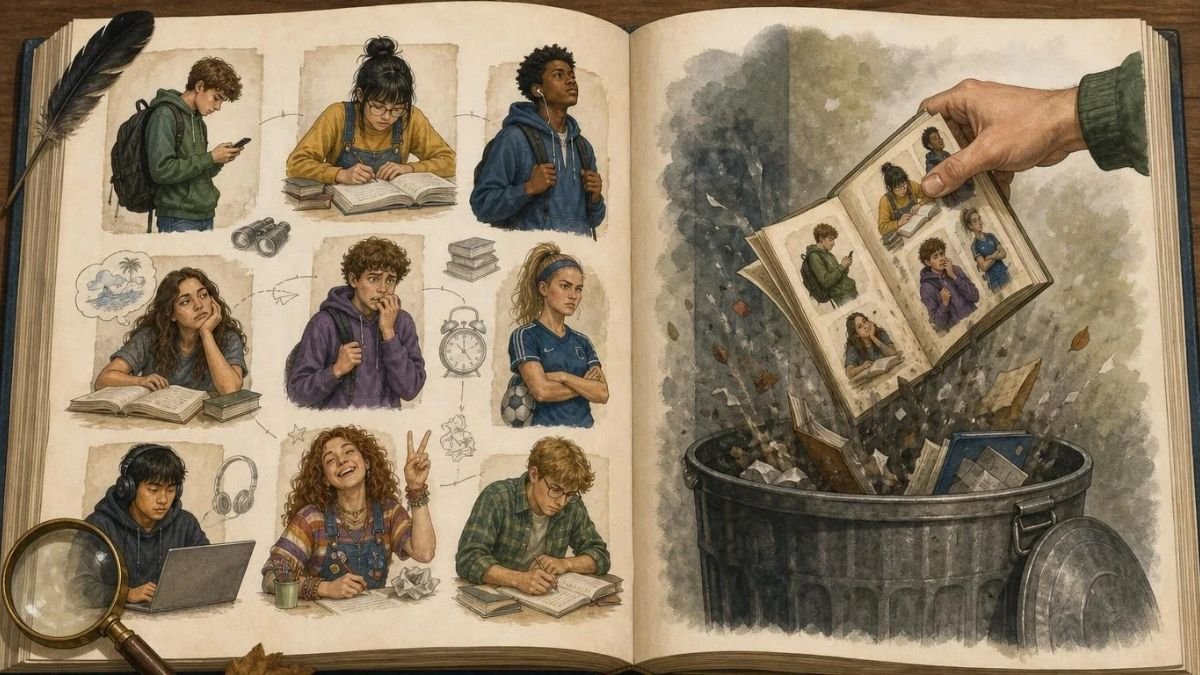


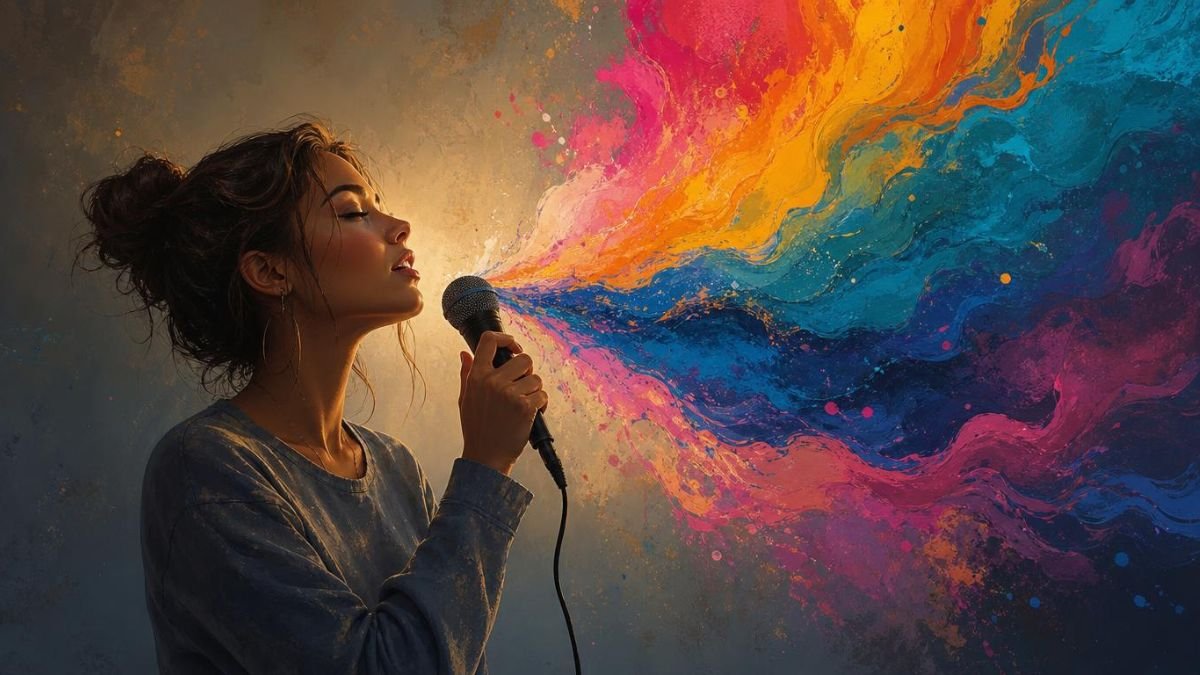
0 Comments