Tibetan Sand Mandalas: Where Art Meets the Sacred
In the world of Tibetan Buddhism, art and spirituality intertwine in a mesmerizing practice – the creation of sand mandalas. These intricate, vibrantly colored artworks hold deep symbolism and offer a unique glimpse into Buddhist philosophy.
What is a Mandala?
The word "mandala" in Sanskrit translates to "circle." Mandalas are circular diagrams with complex geometric patterns and vibrant colors. In Tibetan Buddhism, they represent the universe and the enlightened state of mind. Each element in a mandala – shapes, colors, symbols – carries a specific meaning.
Sand Mandalas: A Labor of Love and Devotion
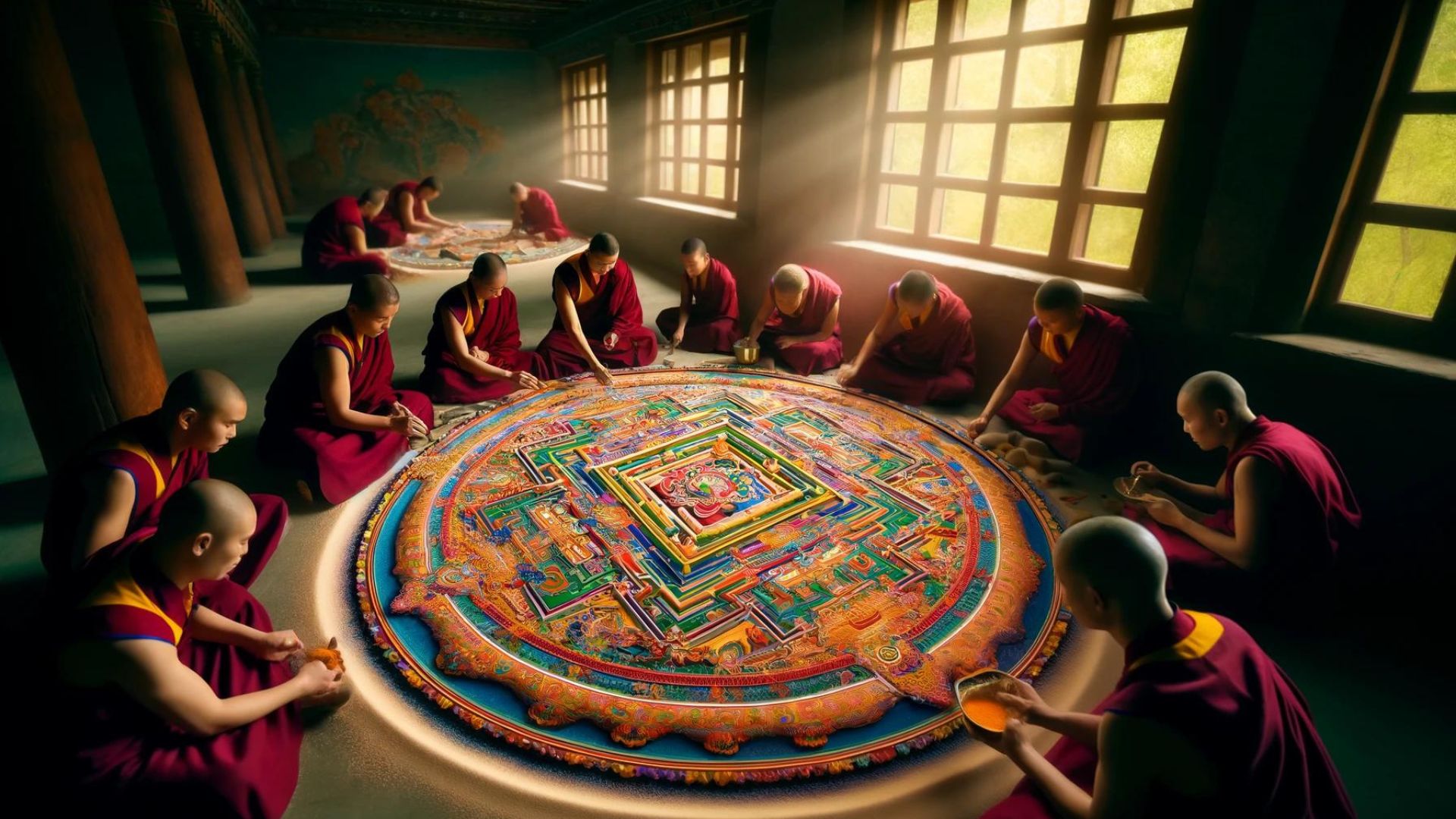
Tibetan Buddhist monks spend countless hours painstakingly creating sand mandalas. Using fine metal funnels called 'chak-pur', they delicately lay down grains of colored sand, following a precise blueprint. The process requires immense focus, patience, and skill.
Symbolism and Spirituality
Sand mandalas are more than just beautiful artworks. They are visual representations of Buddhist teachings:
- Impermanence: The most poignant aspect of sand mandalas is their deliberate destruction. After days or even weeks of meticulous creation, the mandala is ceremonially swept away. This act symbolizes the Buddhist concept of impermanence – a reminder that everything in the material world is fleeting.
- Compassion and Detachment: The dismantling of the mandala teaches non-attachment and fosters compassion. It highlights the importance of letting go of worldly possessions and focusing on inner spiritual development.
Witnessing a Sand Mandala
If you have the opportunity to witness the creation or destruction of a sand mandala, consider yourself fortunate. It's a meditative and often moving experience that transcends simple aesthetics. Many museums and Buddhist centers offer such opportunities.
The Power of the Ephemeral
Tibetan sand mandalas offer a profound lesson in the beauty of the ephemeral. They remind us to appreciate the present moment, let go of attachments, and recognize the ever-changing nature of our existence.







0 Comments