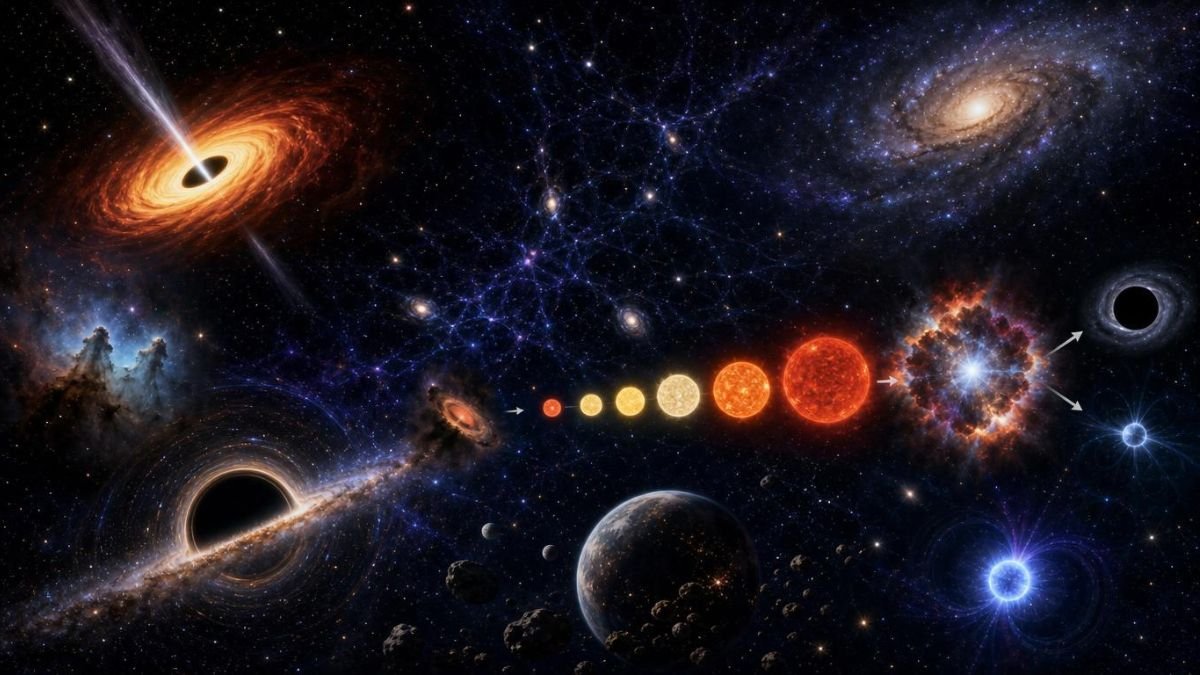
- The Wrong Way to Look Up
- A Star Is a Controlled Catastrophe
- How to Die If You're a Star
- The Point of No Return
- The Universe Is Mostly Missing
- Why Any of This Should Matter to You
- What We Actually Know Versus What We Like to Say
- Let's Get Critical
- The Fantastic Guest
- The Story | Apparent Magnitude by Danny Ballan
- Author's Commentary
- Let's Discuss
- What Now?
- Language Focus: Vocabulary and Speaking
- Language Focus: Grammar and Writing
- The Glossary
The Wrong Way to Look Up
Go outside tonight, assuming the power is on and the sky is clear, and look up. What you'll see, if you're lucky and far enough from a city, is a few thousand points of light. It feels like a lot. It feels, on a good night, like almost too much, like the sky is showing off.
Here is the first thing astrophysics does to you. It takes that feeling and gently informs you that you are looking at the rounding error.
Every star you can see with your naked eye lives in our galaxy, the Milky Way, and almost all of them are practically next door in cosmic terms. The galaxy itself holds somewhere between one hundred and four hundred billion stars, the overwhelming majority of which you will never see as individual points of light. And the Milky Way is one galaxy among something like two trillion in the observable universe. The math gets silly fast. There are more stars in the sky than there are grains of sand on every beach on Earth, and it isn't close.
But that's the easy awe, the postcard awe, the kind that fits on a fridge magnet. The genuinely strange part, the part that took scientists most of the twentieth century to accept, is this: all of that, every star and galaxy and glowing cloud of gas, every luminous thing you could ever point a telescope at, adds up to less than five percent of what the universe is made of. The other ninety-five percent is invisible. We've named it, which makes us feel better, but naming a thing and understanding it are very different achievements, as anyone who has ever been diagnosed with "non-specific lower back pain" can tell you.
So we're going to do three things in this article, and they're more connected than they look. We're going to talk about how stars live and die, because that turns out to be the story of where you came from, atom by atom. We're going to talk about black holes, the places where the rules we trust most seem to break. And we're going to talk about dark matter, the invisible scaffolding holding the whole thing up. By the end, I want the night sky to look different to you, not smaller, not scarier, but more honest.
Let's start with the lights you can actually see, and the surprising fact that every one of them is, right now, in the middle of dying.
A Star Is a Controlled Catastrophe
We use the word "star" so casually that it's easy to forget what one actually is. A star is not a thing so much as an argument. It is a sustained, billion-year argument between two forces that want very different things, and the star exists only for as long as the argument stays balanced.
On one side, you have gravity. Take an enormous cloud of gas, mostly hydrogen left over from the early universe, and gravity does what gravity always does: it pulls everything toward the center. The more mass collects in the middle, the harder it pulls, which collects more mass, which pulls harder still. Gravity is patient and it is inexorable. Left alone, it would crush that cloud down to a point.
On the other side, you have pressure. As the gas gets squeezed, it gets hot, the way a bicycle pump gets warm when you compress the air inside it. Squeeze hard enough, and the center of that collapsing cloud reaches a temperature that does something almost magical. Hydrogen nuclei, which normally repel each other fiercely because they carry the same electric charge, get slammed together so violently that they fuse. Four hydrogen nuclei become one helium nucleus, and in the process, a tiny bit of mass is converted into a tremendous amount of energy. This is nuclear fusion, and it is the engine of every star, including the one your survival depends on.
The Long, Stable Middle
That fusion does two things at once. It releases the energy we see as starlight, and it generates an outward push, a pressure, that resists gravity's inward crush. When those two forces balance, the star settles into a long, stable adulthood that astronomers call the main sequence. Our sun has been doing this for about four and a half billion years and has a comparable stretch still ahead of it.
I find something quietly moving about this. A star is not a serene object. It is a controlled catastrophe, a thermonuclear explosion that's been talked into holding still. The reason it doesn't fly apart is that gravity is squeezing it exactly as hard as the explosion is pushing out. The sun is calm the way a person carrying two heavy suitcases of identical weight is calm, perfectly balanced and working extremely hard to look like nothing is happening.
And here's the part that determines everything that follows. How a star lives, how long it lives, and how it dies are all set by a single number: its mass. Mass is destiny for a star. A small, dim, red star can sip its fuel for trillions of years, far longer than the current age of the universe, so not a single one of them has ever died of old age. A massive, brilliant blue star burns through its fuel in a frantic few million years, living fast and dying young and loud. The brighter the star, the shorter the life. The universe charges interest on luminosity.
How to Die If You're a Star
Eventually, every star runs out of hydrogen in its core. The argument can't continue forever, because one side runs low on ammunition. And when fusion in the core stutters and the outward push weakens, gravity, which never gets tired and never runs out, starts to win. What happens next depends entirely on that one number, the mass, and it splits stars into wildly different fates.
The Quiet Ending
A star like our sun goes out with more whimper than bang, though it's a dramatic whimper. As the core's fuel runs low, the star swells into a red giant, bloating up so enormously that when the sun does this, it will likely swallow Mercury and Venus and possibly the Earth. Then it sheds its outer layers in a slow, glowing exhale, creating one of the most beautiful objects in the sky, a planetary nebula, which has nothing to do with planets and was just named badly a long time ago and we're all stuck with it now.
What's left behind is the core, a dense, hot ember called a white dwarf. No more fusion, just a slowly cooling cinder about the size of the Earth but containing much of the mass of a star. A single sugar-cube-sized piece of it would weigh as much as a car. It will sit there cooling for billions upon billions of years, an ephemeral light replaced by a near-eternal dark.
The Limit That Decides Everything
But there's a threshold. A young astrophysicist named Subrahmanyan Chandrasekhar worked it out in the 1930s, partly while on a long boat journey from India to England, which is a more productive use of a commute than most of us manage. He calculated that a white dwarf can only hold itself up against gravity if its mass stays below about 1.4 times the mass of our sun. This is the Chandrasekhar limit, and it is one of the most consequential numbers in all of science.
Below the limit, you get a white dwarf, that quiet cooling ember. Above it, gravity overwhelms even the fierce resistance of densely packed matter, and the dying is anything but quiet.
The Crucible and the Explosion
For a star much heavier than the sun, the core's collapse triggers the most violent event in the modern universe, a supernova. In a matter of seconds, the core implodes and the outer layers detonate outward, briefly outshining an entire galaxy of billions of ordinary stars. One dying star, for a few weeks, glowing brighter than a hundred billion of its neighbors combined.
And this is where the story circles back to you, personally. Inside ordinary stars, fusion builds light elements: hydrogen into helium, helium into carbon and oxygen. But the heat and pressure of a supernova act as a crucible, forging the heavier elements, and the explosion then scatters them across space. The carbon in your pencil, the oxygen you're breathing, the iron in your blood, the calcium in your teeth, all of it was manufactured inside stars and flung outward when those stars died. You are not metaphorically made of stardust. You are made of it in the most literal, chemical, periodic-table sense. Every atom in your body heavier than hydrogen was once inside a star that died so the rest of us could happen. The most generous thing in the universe is a dying star.
What's Left in the Wreckage
After a supernova, the leftover core can take one of two paths, and again it comes down to mass. If the remnant is dense but not overwhelming, the collapse jams protons and electrons together into neutrons, packing them so tightly that the entire mass of a star is squeezed into a sphere about the size of a city. This is a neutron star, and its density is genuinely hard to hold in your head. A single teaspoon of neutron star material would weigh roughly as much as a mountain.
But if the core is heavy enough, even neutrons can't hold the line. Gravity wins completely, totally, with no remaining force in the known universe able to stop it. The matter collapses past every limit we understand. And that's where we get the strangest objects in physics, the ones that have haunted and delighted people for a century. That's where we get black holes.
The Point of No Return
Let's clear up what a black hole actually is, because popular culture has done it dirty. A black hole is not a cosmic vacuum cleaner roaming the galaxy looking for things to suck up. If you replaced our sun with a black hole of exactly the same mass, the Earth's orbit wouldn't change at all. We'd freeze to death in the dark, obviously, but we wouldn't get sucked in. Gravity only depends on mass and distance, and from a safe distance, a black hole pulls exactly as hard as any other object of the same mass. It is not voracious in the way the movies suggest. It's just extremely, locally, uncompromising.
The Horizon
What makes a black hole a black hole is that all its mass has collapsed into an unimaginably small region, which means that very close to it, gravity becomes overwhelming. There's a boundary around it called the event horizon, and it's less a physical surface than a point of no return. Cross it, and the escape velocity, the speed you'd need to get away, exceeds the speed of light. Since nothing travels faster than light, nothing that crosses the event horizon can ever come back out, not light, not information, not your increasingly poor life choices. That's why it's black. It's not that the object is dark. It's that no light can ever leave.
The event horizon isn't huge, by the way. For a black hole the mass of our sun, it would be only about six kilometers across. The drama isn't the size. It's the finality.
Spaghetti, Unfortunately
If you fell toward a smaller black hole feet first, the gravitational pull on your feet would be so much stronger than the pull on your head that you would be stretched out into a long, thin strand. Physicists, who occasionally have a sense of humor, officially call this spaghettification. It's a real term in real papers. You would, in the most technical sense available, become pasta. For larger black holes the stretching near the horizon is gentler, which is cold comfort, but I promised you honesty.
The Paradox That Won't Go Away
Here's where it gets philosophically vicious. One of the deepest principles in physics is that information is never truly destroyed. In theory, if you burn a book, the information isn't gone, just hopelessly scrambled into smoke and ash and heat; with perfect knowledge you could in principle reconstruct it. The universe, we believe, keeps its receipts.
But a black hole seems to break this rule. Throw a book in, and the information appears to be gone, sealed behind a horizon from which nothing returns. Worse, the physicist Stephen Hawking showed that black holes slowly evaporate over unfathomable stretches of time, leaking away as faint radiation until, eventually, they vanish entirely. So if the black hole disappears, where did the information go? This is the black hole information paradox, and it pits two of our most trusted theories against each other in a way that still isn't fully resolved. It is a genuine, open, load-bearing crack in our understanding, and some of the smartest people alive have spent their careers staring into it. I find that thrilling. The universe still has secrets that good.
The Universe Is Mostly Missing
Now for the part that should genuinely unsettle you, because it unsettled the people who discovered it.
In the 1930s, an astronomer named Fritz Zwicky, who we'll be hearing a great deal more from later and who was not a man burdened by humility, looked at a cluster of galaxies and measured how fast they were moving. The galaxies were zipping around so quickly that, based on the visible matter, the gravity holding the cluster together should have been nowhere near enough. The whole thing should have flown apart. Yet there it was, holding together. Something invisible was supplying the extra gravity. Zwicky called it dark matter and was, in the grand tradition of being right too early, mostly ignored for forty years.
The Spinning Galaxies
Decades later, the astronomer Vera Rubin found the same problem in a completely different place, and her evidence was harder to wave away. She measured how fast stars orbit within individual galaxies. By the ordinary rules, stars far from the bright, crowded center should orbit slowly, the way distant planets orbit the sun more slowly than close ones. Instead, the outer stars were moving just as fast as the inner ones, as if held by far more gravity than the visible matter could possibly provide. Galaxy after galaxy told the same story. Either our theory of gravity was wrong, or there was a vast amount of unseen mass, a halo of invisible material wrapped around every galaxy, outweighing the stars several times over.
What We Know and What We Really Don't
So here's the current scoreboard, and it's humbling. Everything we can see, every star, planet, galaxy, and glowing cloud, all the ordinary matter, makes up only about five percent of the universe. Dark matter, the invisible stuff supplying the missing gravity, makes up about twenty-seven percent. And the remaining sixty-eight percent or so is something even stranger called dark energy, a mysterious pressure that seems to be pushing the universe to expand faster and faster.
Read that again. The familiar universe, the one with all the stuff in it, is the five percent. We are a thin film of visible matter on an ocean of we-don't-know. We don't know what dark matter is made of. We have ruled out a lot of possibilities, built detectors deep underground to catch it, and so far it has elusively declined to introduce itself. We don't know what dark energy is at all; calling it "energy" is mostly a placeholder for our ignorance. The honest summary of modern cosmology is that we've built a stunningly precise map of a universe whose main ingredients we cannot identify. We know the recipe makes the cake. We have no idea what's in it.
Why Any of This Should Matter to You
You might reasonably ask what any of this has to do with your Tuesday. You have a job, or classes, or a family, or all three, and dark matter is not going to help with your commute.
Here's my honest answer, and it comes from my background, which is in education and psychology rather than physics. The value of astrophysics for a normal human life is not informational. It's psychological. It's a calibration tool for the sense of scale.
The Useful Smallness
We carry around a wildly inflated sense of the size of our problems. That's not a character flaw, it's how attention works; whatever is in front of you fills the whole frame. But the mind also has a counterweight, an experience psychologists study under the unglamorous name of awe, the feeling of encountering something vastly larger than yourself. And it turns out awe is good for you. People nudged into a state of awe tend to feel they have more time available, behave more generously, and report a quieter, less grasping relationship with their own ego. The feeling of being small, properly understood, is not a diminishment. It's a relief.
When you genuinely sit with the fact that the atoms in your hand were forged in a dying star, that the ground you stand on is orbiting a controlled thermonuclear catastrophe, that the galaxy you live in is held together by a substance no one has ever seen, the missed email shrinks to its correct size. Not to nothing. Your life still matters; it matters more, arguably, for being so improbable. But it stops crowding out the sky.
The Discipline of Not Knowing
There's a second gift here, and it's intellectual. Astrophysics is a masterclass in living comfortably with uncertainty. These are some of the most rigorous, mathematically precise people on Earth, and their honest position on the majority of the universe is a confident, well-funded "we don't know yet." They've made not-knowing into a discipline, a thing you can do carefully and productively rather than anxiously.
That's a skill worth borrowing. Most of the hard questions in an ordinary life, about a relationship, a career, a child, a country, don't come with answer keys either. The astronomer's posture, holding the question open, gathering better evidence, resisting the urge to pretend to certainty just to make the discomfort stop, is one of the most useful mental habits a person can build. The universe models it for us at the largest possible scale.
What We Actually Know Versus What We Like to Say
Before we move on, one honest caveat, because the surest sign that someone doesn't understand science is that they talk about it like a finished book rather than an ongoing argument.
Much of what I've told you is solid. The lifecycle of stars is observed, measured, and confirmed in thousands of cases. We have photographed the shadow of a black hole, twice now, in two different galaxies. Gravitational waves from colliding black holes have been detected directly. This is not speculation; it's some of the best-tested physics we have.
But the edges are genuinely soft, and I want you to hold both things at once. We don't know what dark matter is. We don't know what dark energy is. We don't fully understand what happens at the center of a black hole, where our equations stop giving sensible answers and simply hand back infinity, which in physics is usually nature's way of telling you that your theory has reached the end of its competence. The model is magnificent and incomplete, both, at the same time.
I think that's the right note to end on, and the right note to carry into everything that follows. The point was never to make you feel like you now know the universe. The point was to make you feel, accurately, how much there still is to know, and how strange and generous and unfinished the whole thing is. Now let's complicate it, because every story this clean deserves to be poked at.
Take This Package With You
Read this study package free below, or get the clean, ad-free PDF and EPUB, plus extra worksheets and audio, on Patreon.
Let's Get Critical
I just spent some time selling you on the beauty and rigor of astrophysics, so let me now spend some more time undermining myself, because that's the only intellectually honest thing to do and, frankly, it's the more interesting conversation.
Let's start with the phrase I leaned on hardest: dark matter. I presented it as a discovery, a thing astronomers found. But notice what actually happened. We observed galaxies behaving in a way our theory of gravity couldn't explain, and rather than concluding our theory might be wrong, we concluded that there must be a vast amount of invisible stuff making the theory work. That's a reasonable move. It's also, if you squint, a little suspicious. When your model fails to predict reality, you have two options: change the model, or invent new, unobservable material that rescues the model. Science has a long and embarrassing history of choosing option two and being wrong. Astronomers once invented a planet called Vulcan to explain wobbles in Mercury's orbit. They were certain it was there. It wasn't. The wobble turned out to be a sign that Newton's gravity itself needed replacing, which is exactly what Einstein did.
So here's the uncomfortable question almost nobody raises at the dinner table: what if there is no dark matter, and our theory of gravity is simply incomplete at galactic scales? A minority of serious physicists pursue exactly this idea, under approaches like modified gravity. They are not cranks. The mainstream thinks they're probably wrong, and the evidence does lean heavily toward dark matter being real stuff. But "probably wrong" is not "certainly wrong," and the fact that we've been hunting for dark matter particles for decades and caught precisely nothing should keep us at least a little humble. I told you dark matter "elusively declined to introduce itself." A skeptic would say: maybe it keeps not showing up because it isn't there.
Now let me turn the same skepticism on the line I was proudest of, the "you are made of stardust" idea. It's true. It's also, let's be honest, a phrase that has been polished by so many science communicators, myself now included, that it functions less as a fact and more as a feeling. It's designed to give you a pleasant chill. And there's a quiet danger in science that flatters you. The actual nucleosynthesis is staggeringly complicated, full of competing processes and unsolved questions about where exactly the heaviest elements come from. "You are stardust" smooths all of that into a greeting-card sentiment. I'm not saying don't enjoy it. I'm saying notice when a true thing has been sanded down into a comfortable thing, because that's exactly the moment your critical guard drops.
And then there's the awe argument, the one where I told you that feeling small is good for you. I believe it. But I want to flag how conveniently that lands. "Contemplate the vastness of the cosmos and your problems will shrink" is a lovely sentiment that can also double as a way to talk people out of caring about real, fixable injustices. Your problems shrinking in your own mind doesn't make them smaller in the world. A person worried about rent is not actually helped by being reminded that the rent, cosmically speaking, is insignificant. Awe is a genuine psychological good. It's also, in the wrong hands, a sedative. The cosmos can grant perspective, but perspective is not the same as solution, and any worldview that uses the night sky to make you stop fighting for things on the ground deserves a hard second look.
Finally, let me question the whole framing of this article, including the part where I praised astrophysics for its comfort with uncertainty. I made "we don't know" sound noble. And it often is. But there's a version of "we don't know" that's genuine humility and a version that's a field protecting itself from accountability. When ninety-five percent of your subject is unexplained and you've named the unexplained parts in ways that sound like knowledge, "dark matter," "dark energy," there's a real risk of mistaking a vocabulary for an understanding. We have given names to our ignorance and then arranged those names into elegant equations, and the elegance can fool us into thinking we've explained more than we have. The map is gorgeous. We should not confuse a gorgeous map for having actually been to the territory.
None of this means the science is bad. It's spectacularly good, which is precisely why it's worth holding to a high standard. The point of thinking critically about ideas you find beautiful isn't to destroy them. It's to make sure you love them for what they actually are, evidence and argument and honest gaps, rather than for the pleasant feeling they give you. The universe doesn't owe us a story that resolves. The least we can do is resist the urge to pretend it already has.
The Fantastic Guest
For this one, I wanted someone who saw the invisible universe before anyone was ready to believe him, and who would have absolutely no patience for the polite way I've packaged it. There was really only one choice. Fritz Zwicky, the Swiss-Bulgarian-American astronomer who coined the term dark matter in the 1930s, predicted neutron stars and supernovae, anticipated gravitational lensing, and spent his career being decades ahead of a field that mostly found him insufferable. He famously called colleagues he disliked "spherical bastards," on the grounds that they were bastards no matter which way you looked at them. He died in 1974. He has agreed, in whatever sense the dead agree to anything in a magazine feature, to join us. I am bracing myself.
Danny: Dr. Zwicky, thank you for being here. I have to say, I'm a little nervous.
Zwicky: Good. Nervousness in the presence of a superior mind is the beginning of education. Most of your colleagues never get that far. Sit up straight. What did you want to ask me that the others were too timid to?
Danny: Well, let's start at the source. In 1933, you looked at the Coma cluster of galaxies and concluded there had to be a huge amount of invisible matter holding it together. The field essentially ignored you for forty years. How does that feel, being right that early?
Zwicky: How does it feel. You ask how it feels, like a journalist, not how it was done, like a scientist. But I will indulge you. It felt like watching a room full of men trip over a treasure chest, look down, decide it was furniture, and keep walking. I measured the velocities of the galaxies in that cluster. I applied a theorem any competent student could apply. The visible mass was not nearly enough to hold the thing together. The conclusion was forced. There had to be dark matter, dunkle Materie, vastly outweighing what shone. This was not a guess. It was arithmetic. And the great men of the day filed it under "interesting" and went to lunch.
Danny: To be fair to them, your number was off. Early estimates of how much dark matter there was turned out to be too high, partly because the distance scale of the universe wasn't pinned down yet.
Zwicky: To be fair to them. Listen to you, defending the people who were wrong against the man who was right, on a technicality about calibration. Yes, my number was off. The distance scale was wrong for everyone, not just me, and when it was corrected, the dark matter did not politely vanish. It remained. It is still there. It is, by your own article's accounting, twenty-seven percent of everything. I was wrong about the size of the iceberg. I was not wrong that the ship was going to hit it. There is a difference, and a serious person respects it.
Danny: That's fair. Let me push on something, though. In my "Let's Get Critical" section, I raised the possibility that dark matter doesn't exist at all, that maybe our theory of gravity is just wrong at large scales. Does that idea offend you, or do you respect it?
Zwicky: It does not offend me. Almost nothing offends me except laziness and Walter Baade, and Baade is a separate conversation. The idea that gravity might be wrong is a serious idea, and a serious idea deserves a serious test, not a sneer. This is more than I can say for how my ideas were treated. But here is the thing your skeptics must answer, and they do not enjoy answering it. Modified gravity can be tuned to fit the spinning of a single galaxy. Fine. But the universe is not one galaxy. You have galaxy clusters, you have the bending of light, you have the great web of structure, you have the afterglow of the early universe. Dark matter, one idea, explains all of them together. The competing idea must be patched and re-patched for each new case. When one explanation covers many phenomena and the rival needs a new excuse for every phenomenon, the betting man knows where to put his money. I am, among my other talents, a betting man.
Danny: You sound very confident for someone whose field still can't say what dark matter actually is.
Zwicky: And you sound very pleased with yourself for noticing. Confidence and complete knowledge are not the same thing, young man. I am confident there is a great mass of unseen material. I do not claim to know its nature. These are different sentences. The failure to hold two such sentences in the head at once is, I have observed, the central disease of the mediocre mind. They think if you do not know everything you must know nothing. I knew there was a hole in the floor decades before anyone could tell you what the hole was made of. Knowing the hole is there is what keeps you from falling in.
Danny: Let's talk about neutron stars, because this is one of the most remarkable predictions in the history of science. In 1934, you and Walter Baade, the colleague you keep mentioning with such warmth, proposed that when a massive star explodes as a supernova, it can leave behind a star made entirely of neutrons. People thought that was insane.
Zwicky: They thought it was insane because they had small imaginations and large pensions. Baade and I coined the word supernova, by the way. Super. Nova. We named the most violent event in the modern cosmos, and I will take credit for that until the heat death of the universe and beyond. We said: here is the explosion, here is where the energy comes from, the collapse of a star into a body of nuclear density, a star the size of a city, and here is the remnant, the neutron star. We said this in 1934. The neutron itself had been discovered two years earlier. Two years. We did not wait for permission. The first neutron star was observed in 1967, by a brilliant young woman named Jocelyn Bell, thirty-three years after we told everyone exactly where to look and what they would find.
Danny: And Jocelyn Bell, famously, did not get the Nobel Prize for that discovery. Her supervisor did.
Zwicky: Yes. Now you have found the one subject on which Fritz Zwicky and the establishment agree, which is that the establishment is run by spherical bastards. She did the work. She saw the signal. She was right. And the prize went up the ladder, as prizes do, to the men standing on the shoulders of the people who actually climbed. I have some experience being the climbed-upon. So we are, she and I, members of the same wounded fraternity, except she had the additional handicap of being correct while also being a woman, which in that era was considered nearly as suspicious as being correct while also being foreign. I was merely foreign and abrasive. She had it worse.
Danny: That's a more generous answer than I expected from you.
Zwicky: You expected me to be a monster. I read your introduction. "Not a man burdened by humility." Cute. I will tell you something, and you may print it. The abrasiveness was not a character flaw I failed to fix. It was a tool I chose. I was surrounded by men who would smile at your idea, shake your hand, and bury it. Pleasant men. Agreeable men. Men who got along. And being agreeable, in a field that was ignoring the most important facts in front of it, would have made me complicit. So I made myself impossible to ignore. If they would not engage with my ideas, they would at least have to engage with the unpleasant Swiss man shouting them in the hallway. You can call it ego. I called it strategy. I notice my ideas survived and the agreeable men are forgotten. Draw your own conclusion.
Danny: Let me sit with that, because it's actually a serious point about the psychology of science. You're saying collegiality can be a way of suppressing inconvenient truths.
Zwicky: I am saying exactly that, and you, with your background in psychology, should have reached it before I did. A field is a social organism. It rewards people who make the other members comfortable. But the universe is under no obligation to be comfortable, and the most important discoveries are almost always the ones that make everyone in the room shift in their seats. So a field optimized for comfort will systematically reject its most important ideas, and it will feel virtuous while doing it, because rejecting them feels like maintaining standards. I made people uncomfortable on purpose, as a corrective. I am not recommending my personality to you. It cost me a great deal. I am telling you it was not an accident.
Danny: All right, I want to test your range. The article also covers black holes, which you didn't work on directly. But your neutron star prediction is one step on the staircase, because if a stellar remnant is too heavy even to be a neutron star, it collapses into a black hole. What do you make of the black hole information paradox, the idea that black holes might destroy information in a way physics says is impossible?
Zwicky: I make of it that it is the healthiest thing in your entire article. You spent paragraphs on the beauty of stars and the comfort of awe, very nice, very suitable for the magazine. But the information paradox is where the real action is, because it is a place where two of your best theories openly contradict each other and neither side will back down. That is not a flaw in physics. That is physics doing its job. A contradiction at the heart of your theories is a signpost reading "dig here." Every great advance in my lifetime came from precisely such a contradiction. The man who is upset by the paradox does not understand the game. The paradox is the game. If I were alive and young, I would not be writing soothing articles about stardust. I would be standing at the edge of that paradox with a shovel.
Danny: I'll take the hit on the soothing article.
Zwicky: Take it gracefully. It is a good article. It is just an article for people, and people need to be soothed before they can be provoked. I never learned that order. I went straight to provoking, and it cost me an audience. You have the audience and you are too gentle with them. Between us we would make one complete scientist, which is a depressing thought for both of us.
Danny: Before we get to the big closing question, I want to push you on the stardust idea, because in my critical section I confessed that "you are made of stardust" has been polished into a greeting card. You named supernovae. You know better than almost anyone what they actually are. Is the sentiment dishonest?
Zwicky: It is not dishonest. It is incomplete, which in the hands of a sentimental man becomes dishonest, but the fact itself is iron. The heavy elements are forged in the explosions I named. This is true. Your blood is iron, your bones are calcium, and these were cooked in stellar death and scattered. True, true, true. What I object to is the tone. People say "you are stardust" and they mean it as a caress, a way to feel cosmically loved. But look at the mechanism. You are stardust because a star died violently and was torn apart, and the wreckage drifted for an age, and some of it happened to assemble into you, and one day you will come apart and drift again. The fact is not a caress. It is a notice of impermanence. The same sentence that tells you where you came from tells you where you are going. The greeting-card people keep the first half and throw away the second, and that is the dishonesty. Not the fact. The editing of the fact.
Danny: That's darker and, I think, truer than the version I usually tell.
Zwicky: Of course it is truer. I am dead. We have a perspective on impermanence that the living find tasteless. But you wanted honesty, so there it is. The stardust line is correct and the comfort people take from it is a comfort they have smuggled in. The universe did not promise it. The universe forged you in a catastrophe and will reclaim the materials. Whether that is beautiful or terrible is your decision, not the universe's. I happen to find it magnificent. But I would never insult a reader by deciding it for them.
Danny: One more before the closing question. The article mentions dark energy, this mysterious force pushing the universe to expand faster and faster. That was discovered after your death. If I could show you one result from after 1974, that might be the one. What would you make of an accelerating universe?
Zwicky: You think you are doing me a kindness, showing the dead man the new toy. Let me tell you what I would make of it. I would make of it a second helping of exactly the lesson I spent my life trying to teach, and which you people apparently needed taught twice. Once again, the cosmos is dominated by something invisible. Once again, it is the larger share, not the smaller. Once again, you have named it before you understood it, "dark energy," very poetic, very empty. The pattern of my career is the pattern of your cosmology. The visible is the minority. The decisive thing is always the thing you cannot see, and the field is always astonished, every single time, as if it had not just been astonished by the previous invisible thing. I would not be surprised by dark energy. I would be surprised that anyone was still surprised. The universe has been telling you the same joke for a century. The punchline is that the important part is dark. You laugh, you forget, and it tells you again.
Danny: You're saying the field keeps relearning the same lesson.
Zwicky: I am saying the field has a short memory and a long ego, which is a dangerous combination in a discipline whose entire subject is the things it cannot yet see. Humility about the invisible should have been the founding posture. Instead it has to be rediscovered with every generation, usually by some difficult person nobody wants at the conference dinner. There is always such a person. There has to be. I was simply the one for my era, and I was, I will admit, unusually well suited to the role.
Danny: Let me ask you something I sometimes ask my guests in some form. If you could correct one thing the public believes about your work or your field, what would it be?
Zwicky: That discovery is a moment. The lightning bolt, the apple, the bath, eureka, the lone genius struck by inspiration. Nonsense. Cinema for children. Discovery is a method. I developed something I called the morphological approach, a systematic way of laying out every conceivable possibility for a problem so that you cannot overlook the true answer simply because it is strange. Most people miss the right answer not because it is hard but because it is unfamiliar, and they have no method that forces them to consider the unfamiliar. Dark matter was unfamiliar. Neutron stars were unfamiliar. The method does not care what is familiar. It only asks what is possible and then what is true. If I gave the world one thing, I would rather it be the method than any single result. A result feeds you for a generation. A method feeds you forever. But of course the world remembers the results and ignores the method, because the results are exciting and the method is work.
Danny: That's genuinely beautiful, and I did not expect "beautiful" to be a word I'd use about this conversation.
Zwicky: Because you expected a brawler and I gave you a philosopher. I contain both. Most interesting people do. You spend your life letting people believe you are only the loud part because the loud part is useful and the quiet part is nobody's business. But you asked good questions, eventually, after the timid ones, so I will give you the quiet part for free. I was not angry at individuals. I was angry at waste. I saw a universe full of plain, available truths, lying in the open, and I saw clever men walk past them out of habit and fear and the desire to be liked. That is the only thing I have ever found genuinely offensive. Not rudeness. Waste. The waste of a true thing left lying on the ground because no one had the nerve to pick it up.
Danny: Dr. Zwicky, I came in nervous and I'm leaving humbled, which I suspect is exactly the result you engineer in everyone you meet.
Zwicky: Now you understand the method. Make them nervous, then humble them, then, if they have earned it, teach them something. You earned it. Go and be a little less gentle with your readers. The universe is not gentle with anyone, and pretending otherwise is the one lie a science writer must never tell. That is my fee. Pay it.
The Story | Apparent Magnitude by Danny Ballan
The power went out at 9:40, which Maya knew because the screen of her phone, the only light in the room, told her so before it told her she had eleven percent battery left and no way to charge it.
"There it goes," her father said from the other side of the dark living room. She heard the creak of his chair. "Right on schedule."
"It's not on a schedule. That's the whole problem."
"Everything's on a schedule. You just have to be patient enough to see it."
She didn't answer. The apartment was already getting warm, the fan slowing from a hum to a tick to nothing, the heat of the July night leaning in through the open balcony door like something that had been waiting outside. She could hear the building settling into the dark around them: a baby starting up two floors below, somebody's generator failing to catch, a man swearing at it with real feeling.
"Ahmad's generator's down again," her father said.
"You can tell whose generator it is by the sound?"
"I've lived in this building twenty-six years, Maya. I can tell whose footsteps are on the stairs. I can tell when the Haddads are fighting by which window they slam. I knew you were going to be difficult tonight before you got home from your shift. I could tell by how you put your keys down."
"I'm not being difficult. I'm being hot." She peeled herself off the couch. Eleven percent. She turned the phone off to save it, and the room went truly black, the kind of black that the city used to never have, back before the country forgot how to keep its own lights on. "I'm going up to the roof. It's cooler."
"I'll come."
"You don't have to."
"I know I don't have to." She heard him stand, heard the small grunt he made now when he stood, a sound that was new this year, or maybe she'd only started noticing it this year. "I want to. Indulge your old father. There's nothing else to do anyway. The phone's dead, the television's dead, the lights are dead. We are reduced to each other's company. It's medieval."
They climbed the seven flights in the dark, her father's hand on the rail, her hand out in front of her, the stairwell so black that she navigated by memory, by the cool patch of wall where the window was, by the particular give of the eleventh step that had been loose since she was a child. At the top, the metal door to the roof stuck the way it always stuck, and her father put his shoulder into it the way he always did, and it gave the way it always gave, and they stepped out.
Maya stopped.
"Oh," she said.
The sky was full of stars.
Not the four or five smudges she was used to, the brightest survivors that managed to push through the orange glow the city threw up every night. The whole sky. Thick with them, crowded, careless, spilled. A pale river of them ran from one horizon to the other, dust and light and more light, as if someone had taken the lid off something.
"There it is," her father said quietly, behind her. "That's the one good thing about the dark. Look at that. You can't see that any other night of the year. The city's too bright. You have to wait for the whole city to fail before the sky will show you what it's been doing the whole time."
She didn't say anything. She walked to the low wall at the edge of the roof and put her hands on the still-warm concrete and tipped her head back until her neck complained.
"That band there." Her father came and stood beside her, pointing, though she couldn't really see his arm, only sensed it. "That's the galaxy. We're inside it. We're looking at it from the inside, edge-on, so it looks like a road. Everything you can see up there is our own neighborhood. The rest is too far to see at all."
"When did you learn all this?"
"I didn't learn it. I had it. When I was your age I wanted to be an astronomer." He laughed, short and not entirely happy. "There were no astronomers here. There was barely a country here, the way things were going. My father said, an astronomer, what is that, a man who looks at the sky for money? Be an engineer. So I was an engineer, and then there wasn't engineering either, the way things went, and then I sold air conditioners, which is at least honest work in a country this hot." He shrugged in the dark; she felt it more than saw it. "But I kept the books. I still have them. They're in the box under the bed, the gray one. You've seen it."
"I thought that was tax stuff."
"It's not tax stuff." He sounded almost offended. "Tax stuff. It's Sagan, it's a star atlas older than you, it's my own notebooks from when I was sixteen and thought I'd discovered a comet. I hadn't. It was a smudge on the lens. But I wrote four pages about it. I was so sure."
Maya turned to look at the shape of him against the stars. In nineteen years she had never heard about the box, or the comet, or the four pages. She had a whole father she'd never met standing right next to the one she'd known her whole life, and the only reason she could see him at all was that the lights had gone out.
"Why didn't you ever tell me any of this?"
"When?" he said. "When would I have told you? In the morning, running to school, running to work? At dinner, with the television on? You've had your phone in your hand since you were twelve. There's no room. The light's always on. You can't see the small things when the big lights are on, that's the whole, that's the entire." He stopped. "I'm not blaming you. I had my phone in my hand too. We all did. The lights were on. You stop looking up because there's nothing to see, and you forget there ever was."
Below them the man was still cursing his generator. A motorcycle went by somewhere, too fast, its engine fading. The baby had stopped crying. The heat was lifting off the concrete now, rising past them into all that open sky, and for the first time all day Maya wasn't uncomfortable.
"Tell me one thing," she said. "One thing from the box."
He was quiet for a moment, choosing.
"All right. You see how some of them are brighter than others?"
"Obviously."
"Don't 'obviously' me, you'll ruin it. You'd think the bright ones are the close ones and the faint ones are far away. That's what anyone thinks. But it's not true. Some of those faint little ones are giants, monsters, a thousand times brighter than the bright ones, but so far away that they barely reach us. And some of the bright ones are nothing special, just close. So you can't tell, looking up, what's actually big and what's just nearby." He paused. "There's two words for it. How bright a star looks to you, from here, that's one thing. How bright it actually is, what it's really putting out, that's another thing entirely. They taught me those words when I was sixteen and I have never forgotten them. You can spend your whole life thinking something is small because it's far away from you. Or thinking something is important because it happens to be close. And you'd be wrong both times."
Maya looked at the sky and tried to pick out a faint star and imagine it was actually enormous, an inferno, screaming with light across a distance she couldn't hold in her mind, and reaching her as nothing, as a pinprick, as the least thing up there.
"That's kind of sad," she said.
"Is it?"
"That you can't tell. That something can be huge and you'd never know."
"I don't think it's sad." He leaned on the wall next to her, and their shoulders were almost touching, and neither of them moved away. "I think it means you should be careful what you decide is small. That's all. The thing that looks like nothing from where you're standing." He was quiet. "Your grandfather looked like nothing to me for years. A man who sold things, who said no to the sky. And then he died and I found out he'd kept every report card I ever brought home, in order, in a folder, for forty years. A man I thought was just close, just there, just my difficult father. Turned out he'd been putting out a lot more light than I could see from where I was standing."
Maya didn't trust herself to say anything. She looked very hard at the stars so that her father wouldn't be able to see her face, and then remembered he couldn't see her face anyway, that the dark was total, that this was the entire reason any of this was possible.
They stood without talking for a while. Then her father said, not quite to her, "Your mother used to make me come up here. Did you know that? Every summer, the first real heat, she'd drag me up. I'd complain. There's nothing up here, I'd say, it's just hot. And she'd say, there's everything up here, you just stopped looking." He was very still. "After she got sick we stopped coming. And then after, I couldn't. The roof was hers. I'd come up to fix the water tank and I'd do it fast and go back down without looking up once. Three years, Maya. I haven't looked up from this roof in three years."
Maya had been four floors away in her own grief for those three years, in her room, behind her door, behind her screen, and it had never occurred to her that her father had been carrying his somewhere too, in the dark, fixing water tanks without looking up. They had been in the same building the whole time, orbiting the same absence, and neither of them had felt the pull of the other through it. The thing that had held the three of them together had gone out, and they had drifted, and they had each assumed the other was simply far away, when really they had only stopped being able to see.
"She was right," Maya said. "About the roof."
"She was right about most things." His voice was rough. "That was the irritating part."
"The box," she said finally. "The gray one. Can we look at it? When the lights come back?"
"We can look at it now," her father said. "I don't need the lights for that. I know every page. I'll tell you and you'll see it better in the dark than you would on paper. Trust me. Some things you see better when everything else goes out."
He started to talk. He told her about the comet that was a smudge, and the four pages he wrote about it, and how his teacher had been kind about it instead of cruel, which he said was the reason he kept loving the sky even after he gave up on it. He told her the names of stars, the Arabic ones, because half the bright stars in the sky carry Arabic names, named by people on this same coast a thousand years ago looking up at this same sky on nights when their lights, too, had gone out, or had never come on, or were only ever fire. He told her how a star his size, their sun, would end, slowly, swelling and shedding and cooling into a small dense ember, and how a bigger one would not go quietly at all, would tear itself apart and throw its insides across space, and how the iron in the blood moving through her hand on the concrete had come from exactly that, from some star that had died screaming before the sun was even born.
"You're making that up," she said.
"I'm not making it up. I couldn't make that up. Nobody's imagination is that good. The iron in your blood was made inside a dying star. Look it up when your phone charges. I'll wait. I've been right about it for forty years, I can wait one more day to be believed by my daughter."
The power did not come back for three more hours. They stayed on the roof the whole time. At some point her father went down and came back up, slow on the stairs, carrying the gray box and two glasses and a bottle of water gone warm, and they sat on the concrete with their backs against the wall and he opened the box by feel and handed her things she couldn't see and described them to her one by one until she could.
When the streetlights finally stuttered back on, all at once, the whole city flickering awake below them, Maya felt something she didn't expect, which was disappointment. The stars dimmed and shrank and pulled back behind the orange glow, retreating, until only the four or five brightest were left, the close ones, the ones that had been there all along and that she had always, wrongly, assumed were all there was.
"There they go," her father said. "Hiding again."
"They're not hiding. We just can't see them."
"That's what hiding is, habibti." He stood, with the grunt, and put out his hand to pull her up. "When you stop being able to see something. It doesn't mean it left."
He carried the box back down ahead of her, and she lit the stairs for both of them with the last nine percent of her phone, and neither of them said anything else, and it was one of the best nights of her life, and she did not fully understand why for several more years.
Author's Commentary
Let me pull back the curtain on "Apparent Magnitude," because I made some deliberate choices and I think they're more interesting if you can see the wiring.
The first decision was the setting, and it wasn't a hard one. I'm writing from Lebanon, where the power going out isn't a plot device I had to invent; it's Tuesday. And it gave me something I genuinely needed. The single biggest obstacle to writing a story about stars is that most of my readers, like most people alive today, live under so much artificial light that they have never actually seen the night sky. The Milky Way is invisible to most of humanity now. So I needed a believable reason to switch off an entire city, and the blackout handed it to me for free. The thing that's a daily frustration here became the only door through which the sky could enter the story. I liked that quiet irony, that the failure of the lights is what makes the looking-up possible. I didn't want to point at it. I just wanted to let it sit there.
The title is the one place I let myself be a little clever, and I'll confess it openly since you've read the story now. In astronomy, "apparent magnitude" is how bright a star looks from Earth, and "absolute magnitude" is how bright it actually is. The entire emotional engine of the story lives in that gap. A faint star can be a giant that's simply far away. A bright one can be ordinary and merely close. I gave that fact to the father as the "one thing from the box," and then I let it quietly become the thing the whole story is about, without ever saying so. The grandfather who looked like nothing turned out to be putting out more light than anyone could see from where they stood. The father, whom Maya thought she knew completely, turns out to contain a sixteen-year-old who wrote four pages about a comet that was a smudge. The point was never to explain the astronomy term. The point was to let you feel it before you noticed it was a metaphor.
Now, the choice I want to talk about most, because it's the one I almost didn't make. The mother. In the first version of this story, there were only two people on that roof, a father and a daughter, and it worked fine. But it was missing a center of gravity. So I introduced a third character who never appears, who has, in fact, already died before the story begins, and I made her the reason the roof had gone unused, the reason the father and daughter had drifted into separate rooms of the same apartment. I did this because the science section of this whole package keeps circling one idea, that the most important thing in a system is often the thing you can't see. The mother is the unseen mass in that family. She was the thing holding the two of them in orbit around each other, and when she was gone, they didn't fly apart dramatically; they just slowly stopped feeling the pull, stopped being able to detect each other through the dark. I never wanted to write the sentence "she was like dark matter." That would be death. I just wanted to build a family that behaves like a galaxy missing its halo, and trust you to feel the wrongness of it without a diagram.
The dialogue carries almost all the weight, and that was intentional. I'm wary of stories about big cosmic ideas, because they tempt the writer into giving someone a speech, and a speech is where a story goes to die. So I made a rule for myself: the father can only teach Maya things in the dark, where neither of them can see the other's face. That constraint did something nice. It meant every piece of astronomy in the story had to be spoken, out loud, between two people who love each other and are a little awkward about it, rather than narrated at you by me. When he tells her the iron in her blood came from a dying star, she says "you're making that up," because that's what a real nineteen-year-old says, and his answer, "nobody's imagination is that good," is the most honest thing in the piece. The science is true and it sounds like a lie, and I wanted a character to say so.
I worked hard to keep the father from being wise. Wise fathers in stories are unbearable. He's not dispensing cosmic wisdom; he's a man who wanted to be an astronomer and sold air conditioners instead, who didn't tell his daughter the most important things about himself because the lights were always on and there was never room. His regret is ordinary and specific. The smallest detail I'm proudest of is the grunt he makes now when he stands, the sound that's "new this year, or maybe she'd only started noticing it this year." That's the lifecycle of a star, smuggled into a single body. He is aging in front of her and she is only now, in the dark, with the phone off, able to perceive it. The whole package is about stars living and dying and the long timescales on which that happens. I just wanted one of those timescales to be a father's body, and one of those acts of perception to be a daughter finally looking.
The ending resists the tidy reunion on purpose. The lights come back, the stars vanish, and Maya feels disappointment, which surprised even her. I didn't want the blackout to magically fix their relationship. The lights returning is the world reasserting itself, the phones recharging, the screens relighting, all the ordinary brightness that makes it so hard to see what's actually there. The father's last line, that hiding is just when you stop being able to see something and it doesn't mean it left, is the closest the story comes to stating its theme, and I let him say it because it's also about the mother, and about the stars, and about him, and because a father is allowed exactly one almost-too-much line per story and that was where I spent mine.
And the final clause, that she didn't fully understand why it was one of the best nights of her life for several more years, is me being honest about how meaning actually works. We rarely understand our important nights while we're in them. The light takes time to reach us.
Let's Discuss
Here's the thing nobody tells you about learning. You don't actually own an idea until you've said it out loud to another human being and watched them push back. Reading is input. Understanding starts when you have to defend, explain, or argue your way through something with someone who sees it differently. So treat these five questions as an invitation, not a worksheet. Discuss the following questions with anyone you know, disagree with them, and notice how much sharper your thinking gets the moment it has an real outlet that can talk back. Your English gets sharper the same way, by the way. The two improvements arrive together.
Question One
Fritz Zwicky argued that being agreeable in science can make you "complicit" in suppressing important truths, and that he made himself abrasive on purpose, as a strategy. Do you buy it? When you discuss this, try to separate two things that usually get tangled: whether his ideas were right, and whether his behavior was justified. It's tempting to forgive bad behavior in people who turn out to be correct. Push on that. Can you think of someone in your own workplace or family who was difficult and right, and someone who was difficult and just difficult? What's the actual difference, and could you tell at the time?
Question Two
The article claims that feeling small, in the face of the cosmos, is good for you. The critical section then warns that this same feeling can be a sedative that talks people out of fixing real problems. Which pull do you feel more strongly, and why? Try to argue the side you don't naturally land on. If awe calms you, make the case that it's a distraction. If you're suspicious of cosmic perspective, make the case for its genuine value. The goal isn't to win; it's to feel how both can be true at once.
Question Three
We've named the majority of the universe "dark matter" and "dark energy" without knowing what either one is. Is naming something you don't understand a useful step toward understanding it, or a way of fooling yourself into feeling like you understand it? Bring this down to earth. Think of a label from your own field, your job, or medicine, that sounds like an explanation but might just be a sophisticated way of saying "we don't know." How would you tell the difference?
Question Four
In the short story, the father never told his daughter the most important things about himself because "the lights were always on and there was never room." What are the "lights" in your own life that keep you from seeing the people closest to you clearly? Be specific and be honest. Then flip it: is there someone whose true "magnitude" you've misjudged because they happened to be close and familiar, or distant and quiet?
Question Five
The whole package treats "we don't know" as a sign of intellectual health rather than failure. But where's the line? At what point does an honest "we don't know" become an excuse to stop trying, or a way for experts to avoid being held accountable? Discuss a situation, in science, politics, or your own life, where you think "we don't know" was used honestly, and one where you suspect it was used as a shield.
What Now?
It would be easy to close a piece like this with "go look at the stars" and call it inspiration. But you've trusted me this far, so let me give you something with more structure, a balanced way to actually fold this into a life that already has too much in it.
The Framework
Hold three things in tension, because all three are true and they pull in different directions.
First, the awe is real and worth seeking. The science backs this up: deliberately encountering vastness measurably lowers stress, loosens the grip of ego, and expands your sense of available time. This isn't mysticism. It's a usable psychological lever, and most people never pull it on purpose.
Second, awe is not a substitute for action. The critical section earned this caveat. Perspective that makes your problems feel smaller in your head does nothing about them in the world. So the goal is to use cosmic scale as a tool for calm and clarity, then return to your actual life and do the actual work, rather than using the sky to float away from it.
Third, the most valuable thing here isn't a fact, it's a posture. The astronomer's comfort with "we don't know," held alongside a relentless effort to know more, is the real transferable skill. You're aiming to become someone who can sit with an open question without either pretending to certainty or giving up. That posture is useful everywhere: in a diagnosis, a disagreement, a decision about a kid or a career.
So the balanced position is this. Seek the awe on purpose. Let it calibrate the size of your problems. Then come back down and act, carrying the astronomer's honesty about what you do and don't know. Wonder and rigor are not opposites. The whole field is proof that they travel together.
Your Seven-Day Plan
Day One. Find out what's actually above you. Download a free sky map app, go outside tonight, and identify three things: one planet, one bright star, and the direction of the galactic center. Five minutes. The goal is to convert the sky from wallpaper into a place with features and names.
Day Two. Chase down one fact until it's really yours. Pick a single claim from this article, that the iron in your blood was forged in a dying star, say, and read about it until you could explain it to a ten-year-old. Depth in one spot beats a shallow sweep across everything.
Day Three. Practice scale, physically. Look up how long light from the sun takes to reach you, about eight minutes, and the nearest star beyond it, over four years. Then, at some ordinary moment, your commute, the kitchen, deliberately remember that the sunlight on your hand left its source eight minutes ago. You're training the awe response to fire in daily life, not just on mountaintops.
Day Four. Find the blackout. If you can, get somewhere darker than usual, even a park, even a balcony with the lights off, and let your eyes adjust for a full fifteen minutes. No phone; the screen resets your night vision instantly. See how much more appears once you stop flooding your own eyes with light. The metaphor will arrive on its own.
Day Five. Have the conversation. Take one of the Let's Discuss questions to a real person, in real time, out loud. A friend, a colleague, your kid, a stranger if you're brave. The point is to feel your own thinking change under pressure.
Day Six. Practice the posture. Pick one thing in your life you've been pretending to be certain about, and try saying, out loud, "I actually don't know yet, and here's how I could find out." Notice how uncomfortable it is, and notice that the discomfort doesn't kill you.
Day Seven. Look up one more time and reflect. Same sky, seven days smarter. Ask yourself one question: did anything in your ordinary life feel differently sized this week? Write down the answer in two sentences. That's your evidence, gathered like an astronomer, about whether any of this is doing something for you. If it is, keep going. If it isn't, you've lost a week of five-minute habits and gained a sky you can read. Not a bad trade either way.
Language Focus: Vocabulary and Speaking
Word Power
Let's slow down and actually live with ten of the words that did the heavy lifting in this package, because rich vocabulary isn't about hoarding fancy terms, it's about having the exact right word ready when you need to say something precise. We'll take them one at a time, in context, and I'll show you how each one travels far beyond astrophysics into the language you can use this week.
Start with cataclysmic. I described a supernova as the most cataclysmic event in the modern universe. A cataclysm is a sudden, violent upheaval, a disaster on a grand scale, and cataclysmic is its adjective. The word carries a sense of totality, of something that doesn't just damage but transforms or destroys an entire order of things. You don't use it for a flat tire. You use it for the event that splits your life into before and after. "The 2008 crash was cataclysmic for the housing market." "Losing that client wasn't just a setback, it was cataclysmic for the firm." Notice the scale the word demands; use it too casually and it loses its punch, which is the fate of every powerful word that gets overused. In French this is cataclysmique, in Spanish cataclísmico, in Italian cataclismico, and in Arabic كارثي (kārithī), or more vividly مُدمِّر (mudammir), meaning devastating.
Then there's luminous, which I used for every star you could ever point a telescope at. Literally it means giving off light, bright, shining. But the beautiful thing about luminous is how readily it goes figurative. A person can have a luminous smile. Prose can be luminous, meaning it seems to glow with clarity and intelligence. A performance can be luminous. When you call something luminous in this figurative sense, you're saying it has a radiance, an inner light that draws the eye and the mind. "Her luminous explanation made the hardest part feel simple." It's a word that compliments deeply. In French it's lumineux, in Spanish luminoso, in Italian luminoso, and in Arabic مُضيء (muḍīʾ) or منير (munīr).
Now, inexorable, which I attached to gravity, because gravity is patient and it is inexorable. Something inexorable cannot be stopped, slowed, or persuaded; it continues regardless of anything you do. The word has a cold, relentless quality, a sense of a process grinding forward that no plea will interrupt. "The inexorable rise of automation." "Aging is inexorable, which is why denial is such a popular hobby." It's one of the most useful advanced words you can own, because life is full of inexorable processes and most everyday vocabulary is too weak to name them properly. In French, inexorable or implacable; in Spanish, inexorable or implacable; in Italian, inesorabile; in Arabic, حتمي (ḥatmī), meaning inevitable, or the phrase لا يُمكن إيقافه (lā yumkin īqāfuhu), meaning cannot be stopped.
Ephemeral did quiet work in the article, describing a white dwarf's light as ephemeral, soon replaced by the dark. Ephemeral means lasting for a very short time, fleeting, transient. It has a delicate, slightly melancholy beauty to it, the feeling of a thing you can't hold onto. Cherry blossoms are ephemeral. Fame can be ephemeral. A perfect afternoon is ephemeral. The word doesn't just say "short," it says "short and therefore precious, or short and therefore not worth chasing," depending on how you aim it. "Social media fame is ephemeral; build something that lasts." In French, éphémère; in Spanish, efímero; in Italian, effimero; in Arabic, زائل (zāʾil) or عابر (ʿābir), both carrying that sense of passing away.
Elusive earned its place describing dark matter, which has elusively declined to introduce itself. Something elusive is hard to catch, hard to find, or hard to pin down, whether it's a physical thing, an idea, or a feeling. A criminal can be elusive. So can a memory you can't quite recall, or a concept that keeps slipping away as you try to define it, or success that always seems just out of reach. "The solution proved elusive." "He has that elusive quality you can't quite name." It's the perfect word for anything that resists your grasp. In French, insaisissable; in Spanish, esquivo or escurridizo; in Italian, sfuggente; in Arabic, مُراوِغ (murāwigh), or the phrase بعيد المنال (baʿīd al-manāl), meaning out of reach.
A threshold is a point of entry or beginning, the level at which something starts to happen. I used it for the Chandrasekhar limit, the mass threshold that decides a star's fate, and for the event horizon, the threshold of no return. Originally a threshold is the strip of floor under a doorway, the thing you step over to enter a room, and that physical image lives inside every figurative use. A pain threshold, a threshold of tolerance, being on the threshold of a discovery. "We've crossed a threshold; there's no going back to how things were." In French, seuil; in Spanish, umbral; in Italian, soglia; in Arabic, عَتَبة (ʿataba), which also literally means the step at a doorway, a lovely parallel.
Crucible is one of my favorites, and I used it for the heart of a supernova, the crucible that forges heavy elements. A crucible is literally a container that can withstand extreme heat, used for melting metals. Figuratively, it's a situation of severe trial in which something new is created or someone is transformed. A war can be the crucible in which a nation is forged. Medical school is a crucible. The word carries both suffering and creation at once, the idea that intense heat makes something new. "Those early failures were the crucible that made the company what it is." In French, creuset; in Spanish, crisol; in Italian, crogiolo; in Arabic, بَوتَقة (būtaqa), the same dual sense of a melting vessel and a transformative trial.
Paradox ran through the black hole section, the information paradox. A paradox is a statement or situation that seems to contradict itself, yet may be true, or that combines two opposite qualities at once. Black holes destroying information that physics says can't be destroyed, that's a paradox. But the word is everywhere in ordinary thought. "It's a paradox that the more choices we have, the less satisfied we feel." "He's a walking paradox, ferociously private and constantly online." Owning this word lets you name the strange, true contradictions that simpler language just stumbles over. In French, paradoxe; in Spanish, paradoja; in Italian, paradosso; in Arabic, مُفارَقة (mufāraqa), or the phrase تناقض ظاهري (tanāquḍ ẓāhirī), an apparent contradiction.
Scaffolding is a word I borrowed from my own field and used for dark matter, the invisible scaffolding holding the universe up. Literally it's the temporary framework of poles and platforms put up around a building under construction. Figuratively, and this is huge in education and psychology, it means a temporary support structure that helps something or someone grow until they can stand on their own. A good teacher provides scaffolding, support that's gradually removed as the learner gains independence. "We built scaffolding into the onboarding so new hires aren't thrown in cold." It's a precise, professional, deeply useful word. In French, échafaudage; in Spanish, andamiaje; in Italian, impalcatura; in Arabic, سِقالة (siqāla), or the phrase هيكل داعم (haykal dāʿim), a supporting structure.
Finally, voracious, which I used to correct the myth that black holes are voracious cosmic vacuum cleaners. Voracious means having a huge appetite, consuming things eagerly and in great quantity. You can be voracious for food, but more interestingly, voracious for things you devour with the mind. A voracious reader. A voracious curiosity. A voracious appetite for work. The word carries an intensity, an almost hungry eagerness, that "enthusiastic" can't match. "She has a voracious appetite for new ideas and burns through books like firewood." In French, vorace; in Spanish, voraz; in Italian, vorace; in Arabic, نَهِم (nahim) or شَرِه (sharih), both describing a powerful, greedy appetite.
Guided Vocabulary Builder
Now we make these words yours, which is a different thing entirely from recognizing them. You recognize thousands of words you'd never actually produce in conversation. The goal here is to move these ten from your recognition vocabulary into your production vocabulary, and the only way to do that is to use them, deliberately, in contexts that matter to you. So we're going to work through some situations together. I'll set a scene, point you toward the right word, and then hand you a challenge. Don't just read past the challenges. Actually stop and form the sentence in your head, or better, out loud. The stopping is the whole exercise.
Picture this. Your friend has just been through a brutal divorce that upended everything: the house, the finances, the kids' schedules, the friend group, all of it. You want a single word that captures how total and transformative the upheaval was, not just "hard" but world-splitting. Which of our ten words reaches for that? Stop and think before you read on.
It's cataclysmic. "The divorce was cataclysmic; nothing in her life looked the same afterward." Now here's your challenge. Think of one genuine before-and-after event in your own life or in the news, something that didn't just hurt but rearranged the landscape, and build a sentence around cataclysmic. Say it out loud. Stop here and do it.
Next scene. You're describing a colleague who explains complicated things so clearly that people leave her meetings actually understanding, and she seems to light up the room while doing it. You want a word warmer and brighter than "clear" or "smart." Which one? Think first.
Luminous. "Her presentations are luminous; she makes the impossible feel obvious." Your challenge now: describe a teacher, writer, or friend whose intelligence or warmth seems to glow, using luminous. Picture the real person. Build the sentence. Stop and say it.
Here's another. You're talking about climate change, or aging, or the slow loss of a language as elders pass away, some process that grinds forward no matter how much anyone wishes it wouldn't. You want to capture that unstoppable quality. Which word? Pause.
Inexorable. "The inexorable loss of the old dialect, one funeral at a time." Now you try. Name a process in your own world that moves forward regardless of anyone's wishes, and use inexorable. Stop and build it.
Let's keep going. You're warning a younger person not to chase online clout because it disappears so fast, here today, forgotten next week. You want a word that captures fleeting, short-lived, gone-in-a-blink. Which of ours? Think.
Ephemeral. "Don't build your self-worth on something this ephemeral." Your challenge: think of something in modern life you find beautifully or frustratingly short-lived, and frame it with ephemeral. Say it aloud before moving on.
Now, a tricky one. You've been trying to define exactly what makes a piece of writing "good," and every time you think you've got it, the definition slips away. You want a word for something that keeps escaping your grasp. Which word fits both ideas and feelings that won't be pinned down? Stop and choose.
Elusive. "The definition of good prose is maddeningly elusive." Try it yourself now: name something, a goal, a memory, a feeling, that keeps slipping out of reach for you, and use elusive. Build the sentence and say it.
One more pairing, because these two are close in spirit. Imagine you're describing the moment a hard experience transformed someone, the pressure-cooker situation that made them who they are. And separately, imagine describing someone with an enormous, eager appetite for learning. Two words from our list, one for each. Think before reading on.
The first is crucible. "Those years abroad were the crucible that made him." The second is voracious. "He returned with a voracious appetite for every subject he'd once ignored." Now combine them in a single short story about a real or imagined person: a crucible that forged them, and a voracious hunger they carry now. Stop, build two sentences, and say them out loud. If you do this for all ten words, even once, you'll find them surfacing in your real conversations within days, which is the entire point.
Speaking Challenge
Here's where we turn vocabulary into voice. Knowing words on a page is one thing; producing them under the mild pressure of a real conversation, with someone looking at you, waiting, is the skill that actually changes how people perceive your English. So let's build that muscle directly.
First, a few discourse tips that matter more than any single word. When you reach for an advanced word like inexorable or cataclysmic in speech, give it a tiny beat of emphasis. Native speakers instinctively slow down and lean on their best word, because the word is doing important work and deserves the spotlight. Rushing past your strongest vocabulary is like whispering your punchline. Second, learn to scaffold your own speech with signposting phrases: "What I find paradoxical about this is," or "The really inexorable part is," or "Here's what's so elusive about the whole question." These frames buy you thinking time and make you sound fluent and organized even while you're assembling the sentence. Third, don't be afraid to define your fancy word in the same breath, the way I've been doing all along. "It's almost voracious, this hunger he has for new projects." Pairing the rich word with a plain-language gloss is not a weakness; it's exactly what skilled communicators do, and it makes you sound generous rather than show-offy.
Now the challenge itself. I want you to talk, out loud, for two full minutes, about a single question: what's the most cataclysmic change you've lived through, and what survived it? Set a timer. Two minutes is longer than you think when you're speaking alone, and that's deliberate, because the discomfort is where the growth lives. Your goal is to work in at least five of our ten words naturally: maybe the change was cataclysmic, maybe something you thought was permanent turned out to be ephemeral, maybe what survived was a relationship whose true magnitude had been elusive to you until then, maybe the experience was a crucible, maybe meaning has been inexorably arriving in the years since.
Record yourself on your phone. I know, nobody enjoys hearing their own voice; do it anyway. Then listen back once, and ask three questions. Did the advanced words sound natural or bolted on? Did you pause to emphasize your strongest words, or rush them? Did you ever talk yourself into a sentence you couldn't finish, and how did you recover? That last skill, recovering gracefully from a sentence that runs out of road, is one of the truest marks of an advanced speaker, and you can only practice it by speaking long enough to get into trouble.
If you have a willing partner, do a second round as a real conversation. Have them ask you the Let's Discuss questions, and challenge yourself to deploy these words live, without planning. The leap from rehearsed to spontaneous is the final one, and it only happens through reps. Aim for three speaking sessions this week. By the third, I promise at least two of these words will have escaped the exercise and shown up in your actual life, which is the moment a word stops being vocabulary and becomes part of how you think.
Language Focus: Grammar and Writing
The Writing Challenge
Here's your prompt, and I've designed it to force exactly the grammar we're about to study. Write a 400 to 600 word persuasive piece arguing for or against this claim: "Contemplating the vastness of the universe makes people better, not more passive." You read both sides in this package; the article sold you on awe, the critical section warned that awe can be a sedative. Your job is not to sit on the fence. Pick a side and argue it, but, and this is the hard part, you must fairly acknowledge the strongest version of the opposing view before you dismantle it. A persuasive essay that pretends the other side is stupid persuades no one. A persuasive essay that grants the other side its best point and then explains why your side still wins, that's the one that changes minds.
Why This Prompt Needs Specific Grammar
To argue well here, you need to do three grammatical things skillfully: concede a point without surrendering your position, talk about hypothetical and conditional situations, and control the strength of your claims so you sound confident but not naive. Let's build each one.
Concession Structures
The heart of fair-minded persuasion is the concessive clause, the grammatical move that says "yes, but." English gives you a rich toolkit. The workhorses are although, even though, while, and whereas. "Although awe can become an excuse for passivity, the evidence that it lowers stress is genuinely strong." Notice the shape: you put the opponent's point in the subordinate clause introduced by although, then deliver your stronger point in the main clause. The grammar itself enacts the argument, the conceded idea is structurally subordinate to yours.
For more sophistication, reach for despite and in spite of, which are followed by a noun or an -ing form, not a full clause. This trips up a lot of advanced learners. You cannot write "despite awe can distract us." You must write "despite the risk of distraction" or "despite awe's capacity to distract us." The preposition needs a noun phrase, not a subject and verb. Master that distinction and you'll instantly sound more polished.
There's also the elegant "may well be true, but" construction for granting a point gracefully: "It may well be true that perspective can numb us to injustice, but numbness is a misuse, not a necessary result." Concede with may well, pivot with but. Keep that one in your pocket.
Conditionals for Hypotheticals
Persuasion lives in the world of "what if," so your conditionals need to be clean. The first conditional handles real future possibilities: "If people treat awe as a tool rather than an escape, it will sharpen them." The second conditional handles the hypothetical and unlikely: "If awe truly made us passive, we would expect astronomers to be the least active people alive, and they are not." Notice how that second conditional lets you set up a hypothetical and then knock it down with evidence, a devastating rhetorical move. The third conditional handles the unreal past, useful for reasoning about what didn't happen: "If cosmic perspective had really drained human ambition, we would never have built the telescopes that revealed the cosmos in the first place." Mixing these deliberately, rather than drowning in "if," makes your reasoning feel precise.
Hedging and Intensifying
Finally, calibrate your certainty. Overclaiming destroys credibility faster than anything else. Learn to hedge with care: tends to, is likely to, in many cases, arguably, suggests rather than proves. "Awe arguably tends to expand our sense of time" is far more defensible than "awe expands our sense of time," and sophisticated readers trust the hedged version more. But don't hedge everything into mush. When your evidence is strong, intensify deliberately: clearly, undeniably, the evidence strongly indicates. The skill is the contrast. Hedge the uncertain claims and assert the solid ones, and your reader learns to trust that you know the difference. That trust is what persuasion actually runs on.
Putting It Together
As you write, aim for at least two concessive clauses, a second conditional that sets up and demolishes a hypothetical, and a clear pattern of hedging weak claims while asserting strong ones. Open by stating your position plainly. Give the other side its best shot in a genuine concession. Then turn, with a strong "but" or "and yet," into your argument, and close by returning to your opening claim, now earned rather than merely asserted. Write the draft fast, then reread it hunting specifically for overclaims to soften and concessions to strengthen. That second pass, done with these structures in mind, is where an ordinary argument becomes a convincing one.
The Glossary
Thirty terms that showed up across this package, explained the way I'd explain them to you over coffee, with a note on how each one travels into everyday life.
cataclysmic. I used it for supernovae, the most cataclysmic events in the modern universe. It means catastrophic on a grand, transformative scale. In life: save it for the genuinely world-splitting, "a cataclysmic loss," not your minor inconveniences.
luminous. Every star you can see is luminous, giving off light. Figuratively it means radiant or glowing with brilliance. "A luminous performance," "a luminous mind." A high compliment when aimed at a person.
inexorable. Gravity is inexorable, unstoppable, indifferent to your wishes. Use it for any relentless process: "the inexorable march of time," "an inexorable decline."
ephemeral. A white dwarf's light is ephemeral, short-lived. Use it for fleeting, precious, or not-worth-chasing things: "ephemeral fame," "an ephemeral moment of perfect quiet."
elusive. Dark matter is elusive, hard to catch or pin down. Works for ideas, people, and goals: "an elusive answer," "elusive happiness," "an elusive memory."
threshold. The event horizon is a threshold, a point of no return. Use it for any level at which something begins: "a pain threshold," "on the threshold of a breakthrough."
crucible. A supernova is a crucible that forges heavy elements, a vessel of intense heat where something new is made. Figuratively, a severe trial that transforms: "the crucible of war," "those hard years were a crucible."
paradox. The information paradox is a true-seeming contradiction. Use it whenever two opposite things hold at once: "the paradox of choice," "she's a paradox, shy and bold by turns."
scaffolding. Dark matter is the universe's scaffolding. In education and work, it's temporary support that's removed as someone grows: "we scaffolded the training so newcomers aren't overwhelmed."
voracious. Black holes are mistakenly thought voracious, hungry and all-consuming. Best aimed at appetite, especially of the mind: "a voracious reader," "a voracious curiosity."
singularity. The center of a black hole, where matter collapses past every limit and the equations return infinity. Loosely, any point where the normal rules break down: "a technological singularity."
nucleosynthesis. The forging of elements inside stars. You won't use this at dinner, but knowing it means you understand the machinery behind "you are made of stardust," which you absolutely will use at dinner.
spectrum. Astronomers read starlight by spreading it into a spectrum, a band of component colors. In life: a range between two extremes, "a spectrum of opinions," "somewhere on the spectrum of difficulty."
fusion. The process powering stars, fusing light nuclei into heavier ones and releasing energy. Figuratively, a merging into one: "a fusion of styles," "the fusion of two teams."
collapse. What gravity does to a star when fusion stops. Useful broadly for sudden structural failure: "a market collapse," "the collapse of a plan," "emotional collapse."
remnant. What a star leaves behind: a remnant. It means a small remaining piece of something larger that's gone. "A remnant of an old tradition," "the last remnants of daylight."
halo. Dark matter wraps each galaxy in an invisible halo. Beyond astronomy, a halo is a ring of light or, figuratively, an aura: "a halo of goodwill," and in psychology, the "halo effect."
horizon. The event horizon is the boundary of a black hole. In life, a horizon is the limit of what you can see or imagine: "broadening your horizons," "on the horizon."
diffuse. Dark matter is diffuse, spread thinly over a vast space. As a verb, to diffuse is to spread out or soften: "diffuse the tension," "diffuse light." As an adjective, scattered and unfocused: "a diffuse argument."
annihilate. In physics, matter and antimatter annihilate, destroying each other completely. In ordinary speech, to defeat or destroy utterly: "the team was annihilated," used with deliberate drama.
conjecture. Much of cosmology's frontier is conjecture, an opinion or conclusion formed on incomplete evidence. "That's pure conjecture," meaning a guess, however educated. A precise word for "informed guess."
empirical. Good science is empirical, based on observation and evidence rather than theory alone. "Do you have empirical support for that, or is it a hunch?" A word that quietly raises the standard of a conversation.
inference. Dark matter is known by inference, a conclusion drawn from evidence rather than direct sight. "That's a reasonable inference," meaning a logical conclusion. Distinct from a guess; an inference has reasoning behind it.
relic. The cosmic background radiation is a relic of the early universe, a surviving trace of something ancient. "A relic of a bygone era," often with a faintly affectionate or ironic tone for something outdated.
ineffable. The scale of the cosmos verges on the ineffable, too great to be expressed in words. "An ineffable sadness," "the ineffable beauty of it." Reach for it when language genuinely falls short, not as decoration.
cosmic. Literally, relating to the cosmos. Figuratively, vast or of huge significance: "a cosmic joke," "cosmic irony," "thinking on a cosmic scale." Adds grandeur, sometimes wry.
profound. The questions here are profound, deep and far-reaching. Use it for genuine depth of thought or feeling: "a profound insight," "profound gratitude." Overuse cheapens it; reserve it.
density. A neutron star's density is staggering, how much mass is packed into a space. Figuratively, "the density of the prose," meaning how much is packed in. Also, informally, slowness to understand, "his density was infuriating," used carefully.
perturbation. In astronomy, a small disturbance in an orbit, a perturbation. More broadly, a minor disruption or state of worry: "a perturbation in the schedule," "visible perturbation on her face." A precise word for a small but real disturbance.
ubiquitous. Dark matter is ubiquitous, present everywhere throughout the cosmos. Wildly useful in daily life: "smartphones are ubiquitous," "ubiquitous surveillance." One of the most quietly impressive words you can deploy correctly.
Take This Package With You
If this package helped you, you can take it with you. Become a Companion on Patreon for $5 a month to get the clean, ad-free PDF and EPUB, along with extra worksheets, workbooks, and audio. Everything here stays free either way.
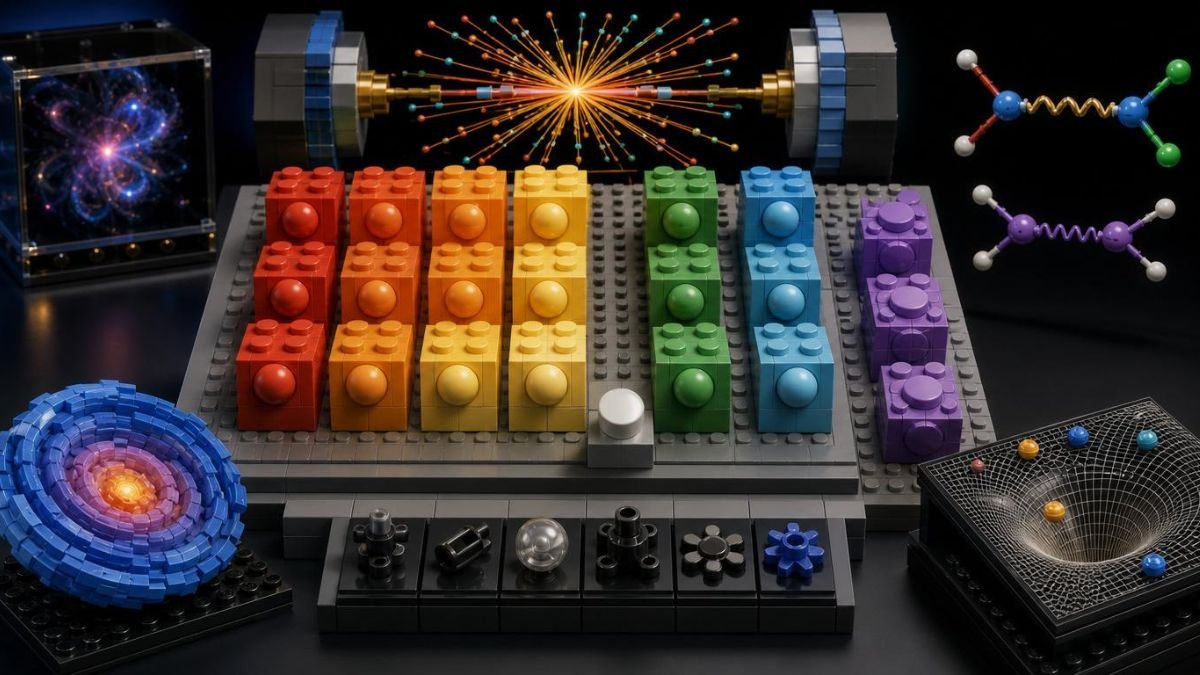
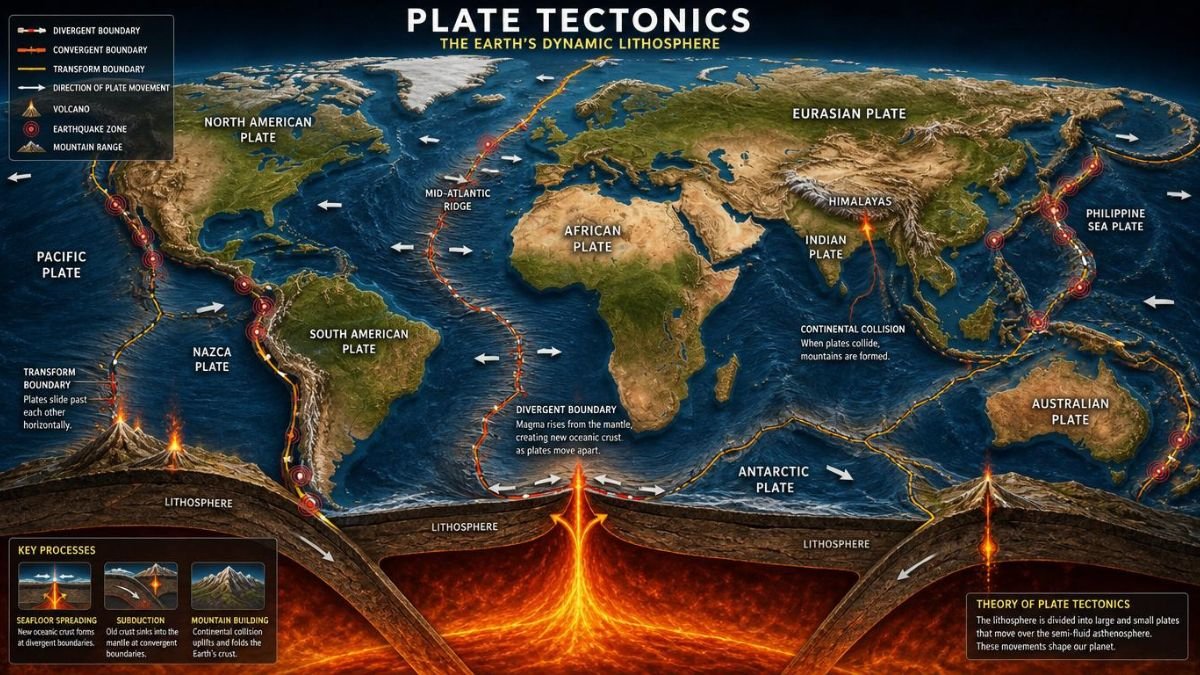
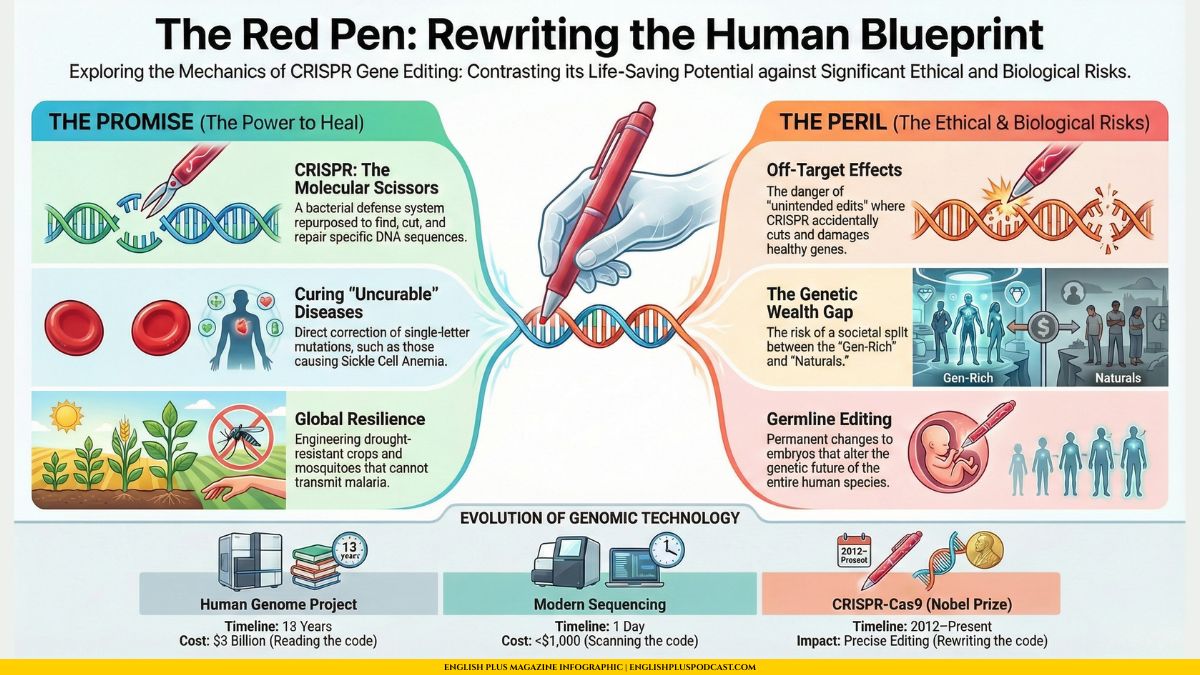


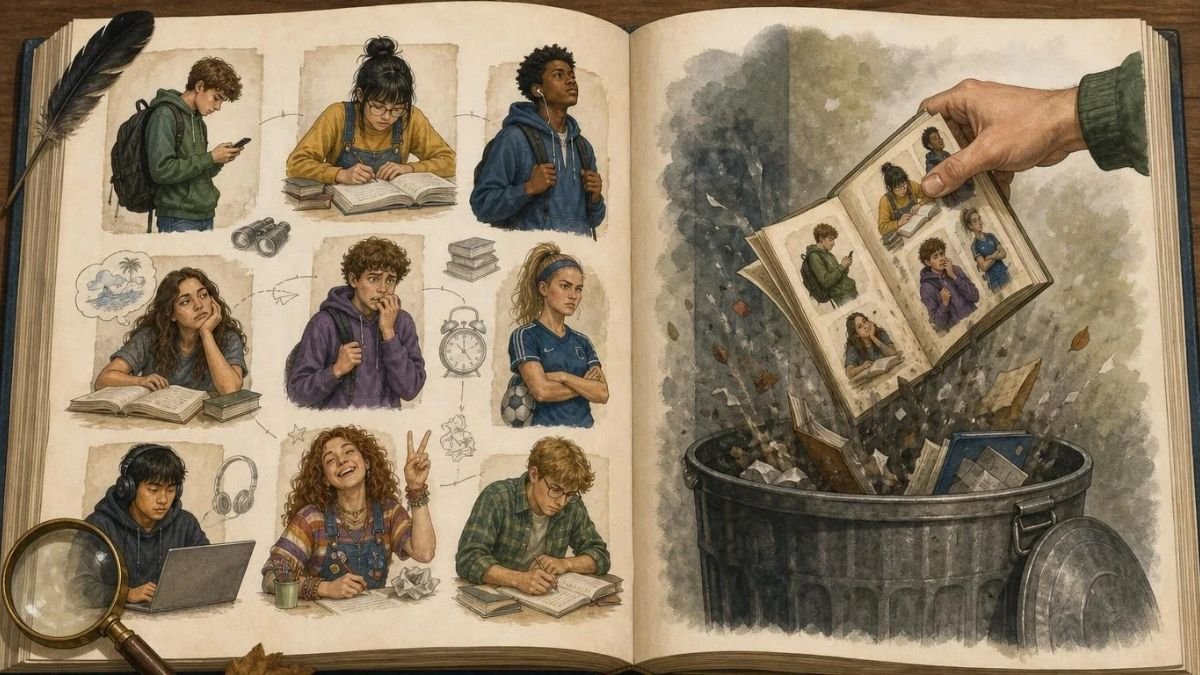



0 Comments