
- The Most Underrated Performance Enhancer in History
- The Architecture of the Night: It’s Not Just One Long Blackout
- The Glymphatic System: Taking Out the Trash
- The Memory Consolidation Factory
- The Hormonal Rollercoaster: Why Sleep Loss Makes You Fat and Sick
- The Emotional Fallout: The Amygdala Unchained
- The Cancer Connection and Immune Failure
- Microsleeps and the danger on the Road
- Reclaiming the Night
- Focus on Language
- Critical Analysis
- Let’s Discuss
- Let’s Play & Learn
The Most Underrated Performance Enhancer in History
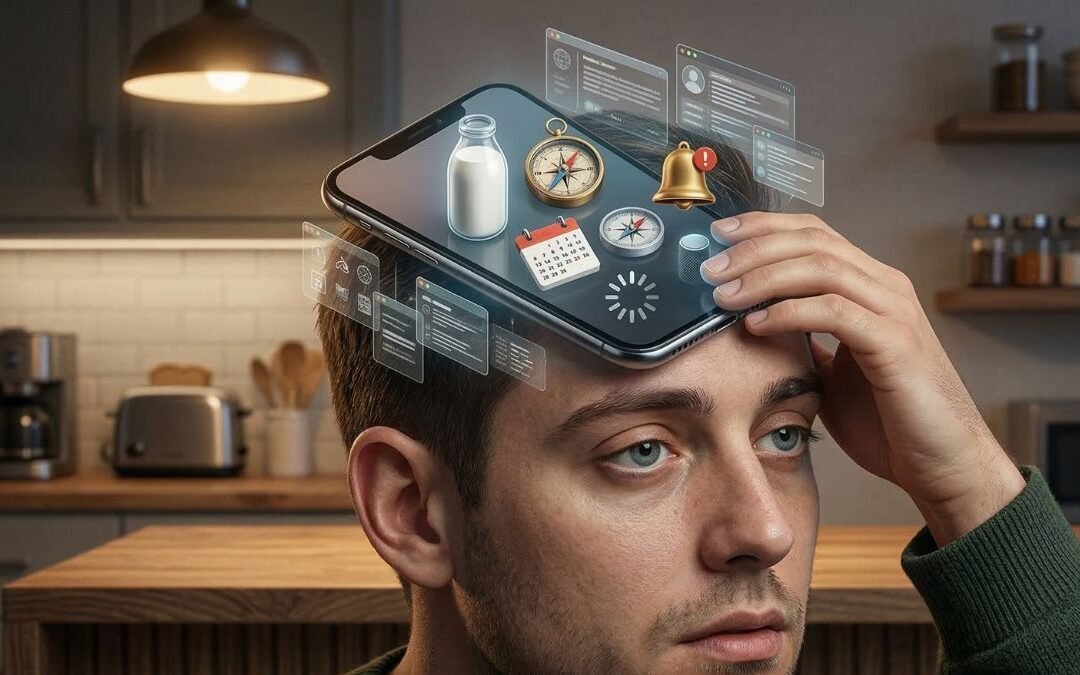
There is a strange badge of honor we wear in modern society, pinned proudly to our chests right next to our caffeine addictions and our perpetually full inboxes. It’s the “I’ll sleep when I’m dead” badge. We treat sleep like a negotiable commodity, a luxury for the lazy, or an unfortunate evolutionary glitch that wastes eight hours of potential productivity. We brag about pulling all-nighters as if destroying our own biology is a sign of dedication. But let’s be honest for a moment: if you treated your car the way you treat your brain—running it 24/7 without changing the oil or turning off the engine—it would explode on the highway. Yet, we expect our minds to perform this miracle every day.
Sleep is not the absence of wakefulness. It is not a passive state where you just shut down like a laptop closing its lid. It is a metabolically active, incredibly complex, and absolutely non-negotiable biological state. While you are drooling on your pillow, your brain is engaging in a series of intricate processes that are as vital to your survival as food and water. We are going to explore the architecture of the night, the chemical cleaning crews that scrub your brain while you dream, and the terrifying cascade of failures that occur when you decide to skip that seventh hour of rest.
The Architecture of the Night: It’s Not Just One Long Blackout
You might think you just close your eyes and wake up, but your brain is actually riding a rollercoaster all night long. We cycle through different stages of sleep, each with a specific job description. It is a highly orchestrated symphony of neurochemistry.
First, you drift into Non-REM (Rapid Eye Movement) sleep. This is divided into stages. Stage 1 is that light, “did I just fall asleep?” phase where you might jerk awake because you felt like you were falling. Stage 2 is where you spend a lot of the night; your body temperature drops, and your heart rate slows. But the real magic happens in Stage 3, or Deep Sleep.
Deep sleep is the mechanic’s shop. This is when your brain generates slow, high-amplitude delta waves. It’s during this phase that your body repairs tissues, builds bone and muscle, and strengthens the immune system. If you’re an athlete, this is where you get better. If you’re recovering from a cold, this is where you get well. It is a state of biological restoration so profound that it is actually difficult to wake someone up from it.
Then, about ninety minutes after you fall asleep, something bizarre happens. You enter REM sleep. Your brain activity shoots up, looking almost identical to when you are awake. Your heart rate increases, your breathing becomes irregular, and your eyes dart back and forth under your eyelids. But your muscles are completely paralyzed—a safety mechanism to stop you from acting out the vivid hallucinations we call dreams. REM is the therapist’s office. It is where we process emotional memories, make creative connections, and strip the painful sting away from traumatic events. It is emotional first-aid.
The Glymphatic System: Taking Out the Trash
For centuries, scientists wondered why we needed to lose consciousness to recover. Why couldn’t we just rest while awake? The answer was discovered relatively recently, and it is fascinating. It involves the glymphatic system.
Think of your brain like a bustling city. During the day, the neurons are firing, metabolizing energy, and creating waste products. One of these waste products is a sticky protein called beta-amyloid. If that sounds familiar, it’s because the accumulation of beta-amyloid is a hallmark of Alzheimer’s disease. During the day, this trash piles up in the streets (the spaces between your cells).
When you enter deep sleep, the glial cells—the brain’s support staff—actually shrink by up to 60%. This opens up the channels between neurons, allowing cerebrospinal fluid to rush through and wash away the metabolic toxins. It is literally a power wash for your brain. This cleaning process does not happen when you are awake. It cannot happen when you are awake. So, if you are chronically sleep-deprived, you are effectively living with a brain full of dirty dishwater. You aren’t clearing out the toxins that lead to neurodegeneration.
The Memory Consolidation Factory
Have you ever practiced a piano piece or a difficult level in a video game all day, failed miserably, went to sleep, and then woke up the next morning able to do it perfectly? That isn’t magic; that is memory consolidation.
Your brain is an information sponge during the day, absorbing facts, faces, and skills. But those memories are fragile. They are stored in the hippocampus, which is like a USB stick with limited storage. During sleep, specifically deep sleep, there is a transfer of data. The brain moves these memories from the temporary storage of the hippocampus to the long-term hard drive of the cortex.
But it does more than just move files. It edits them. Sleep intelligently strengthens the important memories and prunes away the useless ones. It integrates new information with existing knowledge, which is why “sleeping on it” is actually legitimate advice for problem-solving. Your sleeping brain is finding solutions that your waking brain was too distracted to see. Without sleep, the “Save” button in your brain is broken. You can study for ten hours, but if you don’t sleep, those files are corrupted by morning.
The Hormonal Rollercoaster: Why Sleep Loss Makes You Fat and Sick
Let’s talk about the body below the neck. Sleep deprivation wreaks absolute havoc on your hormonal balance. We often think of weight gain as a simple equation of calories in versus calories out, but sleep plays a massive role in that equation.
There are two key hormones that control hunger: ghrelin and leptin. Ghrelin is the gremlin; it tells you, “I’m hungry, eat everything in sight.” Leptin is the voice of reason; it says, “I’m full, put the fork down.” When you are sleep-deprived, ghrelin spikes and leptin plummets. Your biochemical signals are screaming at you to eat high-calorie, carbohydrate-rich foods. This is why you never crave a salad at 2:00 AM; you crave pizza and donuts. Your tired brain is desperate for quick energy, and your satiety signals are offline.
Furthermore, sleep deprivation makes your body insulin resistant. After just a few nights of short sleep, your cells stop responding properly to insulin, leaving glucose floating around in your bloodstream. This is a pre-diabetic state. We are seeing a terrifying correlation between the reduction in average sleep time over the last fifty years and the explosion of obesity and type 2 diabetes rates. We are eating ourselves into early graves because we are too tired to regulate our own biology.
The Emotional Fallout: The Amygdala Unchained
We have all been there—snapping at a partner, crying over a spilled coffee, or feeling a surge of irrational anger after a bad night’s sleep. This isn’t just you being “cranky.” It is a specific neurological failure.
The amygdala is the part of the brain responsible for strong emotional reactions, specifically fear and aggression. Usually, the prefrontal cortex—the logical, CEO part of the brain—keeps the amygdala in check. It’s the brakes on the car. But when you are sleep-deprived, the connection between the prefrontal cortex and the amygdala is severed. The brakes are cut.
Without the logical oversight of the prefrontal cortex, the amygdala becomes hyper-reactive. Studies show it can be up to 60% more reactive to negative stimuli. You become all emotional gas pedal and no brakes. You perceive the world as more hostile, negative, and stressful than it actually is. This is why sleep deprivation is strongly linked to mental health disorders like anxiety and depression. It is a bidirectional street: anxiety makes it hard to sleep, and lack of sleep drastically increases anxiety.
The Cancer Connection and Immune Failure
If the mental effects aren’t scary enough, let’s look at the immune system. We possess a type of immune cell called “Natural Killer cells.” Their job is exactly what it sounds like: they patrol the body and assassinate cancerous tumor cells and viruses. They are your secret service agents.
One study showed that after just one night of four hours of sleep, natural killer cell activity dropped by 70%. That is an immune deficiency state. You are leaving the gates of your fortress wide open. This is why the World Health Organization has classified night shift work as a “probable carcinogen.” We are diurnal creatures. When we fight our biological clock and deny ourselves rest, we are suppressing the very systems designed to keep us alive. The link between short sleep and various forms of cancer—bowel, prostate, breast—is becoming increasingly difficult to ignore.
Microsleeps and the danger on the Road
We need to address the immediate physical danger of sleep deprivation, specifically regarding driving. Drowsy driving kills. When you are overtired, your brain begins to experience “microsleeps.” These are moments where you lose consciousness for just a few seconds. You might not even close your eyes. Your brain just goes offline.
If you are driving at 60 miles per hour and you have a three-second microsleep, your car travels the length of a football field without a driver. There is no reaction time; there is no braking. You are a missile. Driving after being awake for 19 hours is the cognitive equivalent of being legally drunk. Yet, we would never let a friend drive drunk, but we constantly let friends, family, and employees drive while exhausted. We have a massive cultural blind spot regarding the lethality of fatigue.
Reclaiming the Night
So, why are we doing this to ourselves? Why do we wear exhaustion as a status symbol? Part of it is the modern economy, which demands 24/7 availability. Part of it is the artificial light that confuses our circadian rhythms, suppressing the release of melatonin—the vampire hormone that comes out at darkness to signal sleep. We stare at blue-light-emitting screens until the moment we close our eyes, tricking our brains into thinking it is high noon.
We need a revolution in how we value sleep. It is not “down time.” It is the time when the work gets done. It is the time when you are healed, cleaned, and updated. Getting eight hours isn’t self-indulgence; it is self-preservation. It is an act of defiance against a culture that wants to burn you out.
Prioritizing sleep involves “sleep hygiene.” It means keeping the bedroom cool and dark. It means disengaging from screens an hour before bed. It means keeping a regular schedule, even on weekends, to anchor your circadian rhythm. It means treating your bedtime with the same respect you treat a meeting with your boss. Because ultimately, the version of you that wakes up after a full night of rest is smarter, kinder, healthier, and more capable than the version of you running on fumes and caffeine. Sleep is the single most effective thing you can do to reset your brain and body health each day. It is Mother Nature’s best effort yet at immortality. Don’t ignore it.
Focus on Language
Let’s dive into the language we used to explore the science of sleep. Talking about biology and health requires a specific set of tools—words that convey process, necessity, and consequence. I want to highlight some of the heavy hitters we used in the article and break down how you can use them in your daily life, even when you aren’t talking about neuroscience.
First up, we have non-negotiable. We described sleep as a “non-negotiable biological state.” If something is non-negotiable, it means it is not open for discussion or modification. It is absolute. You can use this in business or relationships to set boundaries. “My weekends are non-negotiable; I don’t check emails.” It’s a strong, powerful adjective that commands respect. It says, “This is a hard line.”
Then we have metabolize. In the text, we talked about neurons “metabolizing energy.” Biologically, this means processing substances to maintain life. But metaphorically, we use it to describe processing information or emotions. If you receive some shocking news, you might say, “Give me a minute; I need to metabolize this.” It implies that the information is heavy and needs to be broken down and absorbed before you can react.
We used the word hallmark. We said beta-amyloid accumulation is a “hallmark of Alzheimer’s disease.” A hallmark is a distinctive feature or characteristic. It comes from the official mark stamped on gold and silver to prove its purity. You can use this to describe people or events. “Punctuality is a hallmark of her professionalism.” Or, “Chaos is the hallmark of his management style.” It identifies the core trait of a thing.
Let’s look at consolidation. We discussed “memory consolidation.” To consolidate means to make something physically stronger or more solid, or to combine a number of things into a single more effective whole. In business, you might hear about “debt consolidation” (combining loans). In learning, consolidation is that magic process where shaky information becomes permanent knowledge. “We need to consolidate our gains before moving to the next phase of the project.”
We used the term havoc. “Sleep deprivation wreaks absolute havoc on your hormonal balance.” Havoc is widespread destruction. To “wreak havoc” is a set phrase—we almost always use “wreak” with “havoc.” It implies chaotic damage. A toddler can wreak havoc in a living room. A computer virus can wreak havoc on a network. It’s a very evocative word for a mess.
We talked about being diurnal. We said, “We are diurnal creatures.” This is the opposite of nocturnal. Diurnal animals are active during the day. While this is a scientific term, using it in conversation adds a layer of sophistication. If you aren’t a party person, you could jokingly say, “I’m strictly diurnal; don’t ask me to go out past 10 PM.”
We mentioned the prefrontal cortex. Even though this is an anatomical term, it has entered common parlance as a metaphor for logic and self-control. When someone makes a rash, emotional decision, you might say, “His prefrontal cortex clearly wasn’t involved in that choice.” It refers to the “adult” part of the brain.
We used the word lethality. We spoke of the “lethality of fatigue.” Lethality is the capacity to cause death or serious harm. It sounds much more serious than “danger.” It implies a high probability of death. “The lethality of the new virus is concerning.” It adds weight to the risk.
We discussed sedentary. We didn’t explicitly use it in the excerpt above, but it often pairs with discussions on health and obesity. A sedentary lifestyle is one involving little exercise or physical activity. “My job is very sedentary, so I have to run in the mornings.” It’s the polite way of saying “sitting around all day.”
Finally, let’s look at deficit. We often talk about a “sleep deficit.” A deficit is the amount by which something is too small. It’s an accounting term applied to biology. If you sleep 5 hours instead of 8, you have a 3-hour deficit. You have to pay it back. We use this in finance, attention (Attention Deficit Disorder), and resources. “We are operating at a trust deficit” means people don’t trust us enough.
Now, let’s move into the speaking aspect. The challenge with scientific topics is that people often sound robotic when discussing them. They use the big words but lose the rhythm. To sound natural, you need to master The Analogous Bridge.
This is a technique where you state a complex fact, and immediately bridge it to a simple, real-world comparison using phrases like “It’s like…” or “Think of it as…”
In the article, I didn’t just say “Glymphatic clearance occurs.” I said, “Think of your brain like a bustling city… taking out the trash.”
Speaking Challenge:
I want you to take a complex concept from your own work or study—something technical. I want you to record yourself explaining it to a 10-year-old. You must use at least two of the vocabulary words we discussed (like non-negotiable or consolidate), but you must also use an Analogous Bridge.
For example, if you are an accountant, don’t say “We reconcile the ledger.” Say, “We consolidate the accounts. It’s like checking your receipt against your bank statement to make sure the store didn’t steal your money.”
If you are a programmer, don’t say “We debug the code.” Say, “We search for errors that could wreak havoc on the system. It’s like looking for a typo in a recipe that would make the cake explode.”
Record this. Listen to it. Does the analogy make sense? Does the vocabulary fit naturally? If you can explain the complex simply, you have mastered the language.
Critical Analysis
Now, let’s step back and look at our own article with a skeptical eye. I played the role of the sleep evangelist, but the reality of sleep science and its application in society is far messier than I made it sound.
First, we completely glossed over the Socioeconomic Privilege of Sleep. It is very easy to say “make sleep a priority” when you work a 9-to-5 job and live in a quiet neighborhood. But what about the single mother working two jobs? What about people living in noise-polluted inner cities or war zones? Sleep is becoming a luxury good. We framed sleep deprivation as a “choice” or a “badge of honor,” but for millions of people, it is a forced condition of poverty. By ignoring this, the article risks sounding tone-deaf to those who physically cannot choose to sleep eight hours.
Secondly, we presented the “8-hour rule” as gospel. The reality is more nuanced. There is a genetic component to sleep needs. There are “short sleepers” (a tiny percentage of the population with a genetic mutation) who function perfectly on four hours. There are others who need ten. By pushing a one-size-fits-all prescription, we might be causing Orthosomnia—an anxiety disorder where people obsess over getting “perfect” sleep data on their trackers, which ironically keeps them awake. We didn’t mention the danger of stressing out about sleep.
Third, we attacked artificial light and technology, but we didn’t mention how technology is also solving sleep issues. From CPAP machines for sleep apnea to white noise apps and smart mattresses that regulate temperature, technology is a double-edged sword. We took a very Luddite stance (“screens are bad”) without acknowledging the benefits of sleep tech.
Finally, we talked about dreams as “emotional first aid.” This is a leading theory (Matthew Walker’s theory), but it is not a proven fact. There are other theories that dreams are just random neuronal firing, or that they are simulations for threat perception. We presented a theory as a fact, which is a common trap in pop-science writing. We should have used more hedging language like “current theories suggest…”
Let’s Discuss
Here are some questions to keep you awake at night—in a good way. I want you to chew on these and discuss them in the comments.
Is the “9-to-5” workday incompatible with human biology?
Consider chronotypes (night owls vs. early birds). Schools and offices are designed for early birds. Is this a form of biological discrimination? Should we move to flexible hours based on sleep patterns?
Should “Drowsy Driving” carry the same legal penalties as “Drunk Driving”?
The lethality is similar, but the social stigma is different. If you kill someone because you fell asleep, is it an accident or negligence? How would police even test for “tiredness” at a roadside stop?
If a pill existed that replaced the need for sleep with no side effects, would you take it?
This gets to the heart of the human experience. Is sleep just a waste of time, or is the act of dreaming and resting essential to being human? What would you do with the extra 8 hours? Would corporations just make us work longer?
Is the “Badge of Honor” for sleeplessness finally dying out, or is it getting worse?
We see “hustle culture” on social media promoting 4 AM wake-ups. But we also see a “self-care” movement. Which one is winning in your circle of friends or workplace?
Do employers have a right to track your sleep data?
Some companies give employees sleep trackers to improve health. Is this helpful, or is it a terrifying invasion of privacy? If you sleep poorly, could they fire you for being a “risk”?
Are dreams meaningless noise, or do they have deep significance?
Science is split. Do you believe your dreams tell you something about your subconscious, or are they just your brain taking out the trash? Share a generic experience where a dream felt meaningful.
How has the invention of the electric light changed the human species?
Before electricity, we slept in two phases (biphasic sleep). Now we sleep in one block. Have we evolved to match our technology, or are we living in a constant state of “jet lag” compared to our ancestors?
Is “sleeping in” on weekends actually bad for you?
We talked about “social jetlag”—shifting your schedule on weekends. Do you feel better or worse when you sleep until noon on Saturday? Is consistency harder than it looks?
What is the strangest place you have ever fallen asleep?
Let’s get anecdotal. Microsleeps happen in weird places. Classrooms, cinemas, standing up on a bus? What does this say about our collective exhaustion?




0 Comments