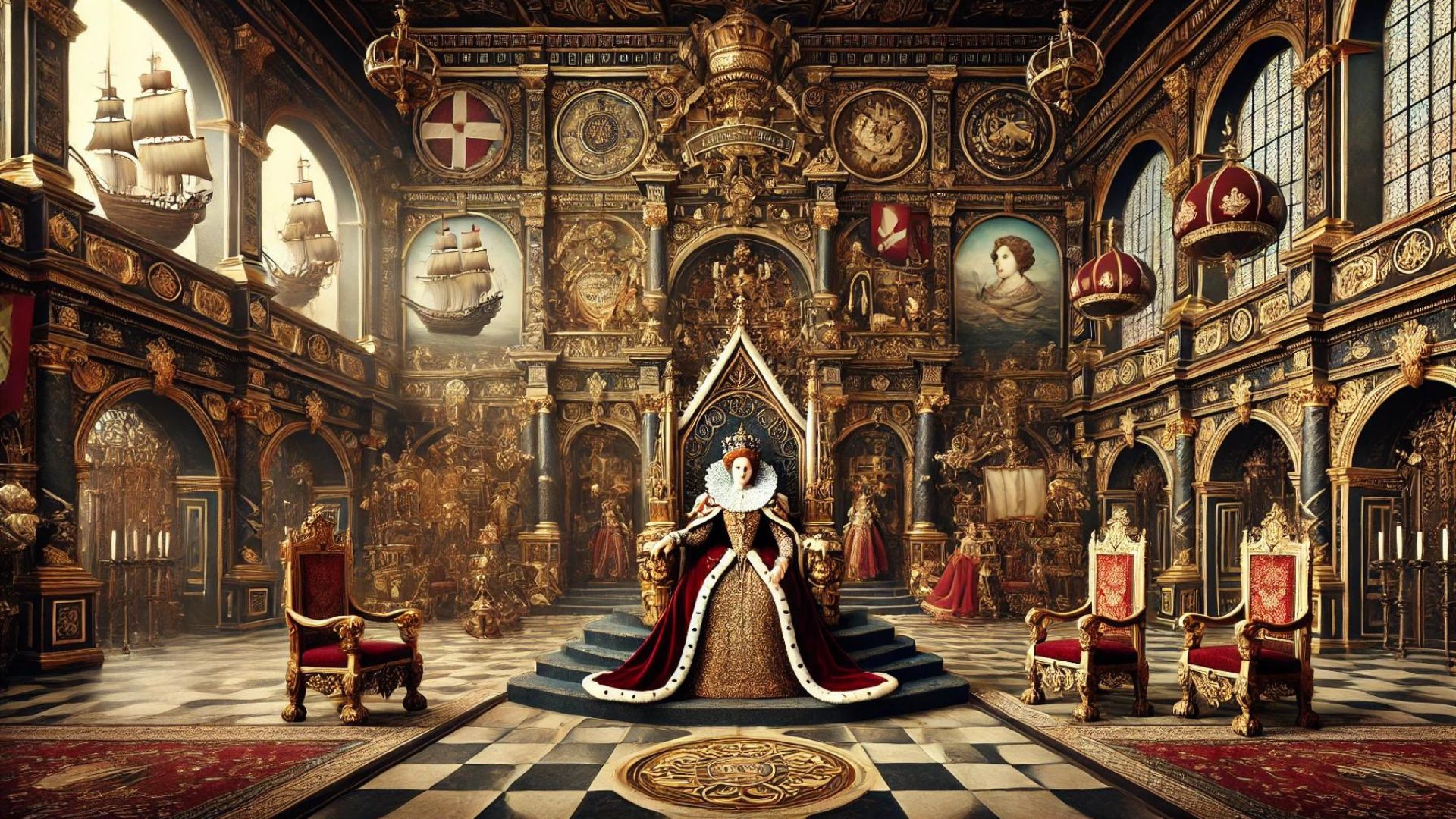
Queen Elizabeth I, often referred to as the “Virgin Queen,” ruled England from 1558 to 1603, a period that became known as the Elizabethan Era. Her reign is remembered for its extraordinary achievements in the arts, politics, and exploration. Elizabeth’s leadership not only stabilized a country torn by religious divisions but also positioned England as a formidable power on the world stage. Let’s dive into the story of her reign and explore how her influence endured for centuries.
The Early Years of Elizabeth’s Reign
Born in 1533 to King Henry VIII and Anne Boleyn, Elizabeth’s early life was marred by political turmoil. After her mother’s execution and the fluctuating religious politics of her half-siblings, Elizabeth’s path to the throne was anything but certain. Nevertheless, in 1558, at the age of 25, Elizabeth ascended to the throne, succeeding her half-sister Mary I.
One of her first significant acts as queen was to navigate England out of the religious conflicts that had destabilized the country for decades. Known as the Elizabethan Religious Settlement, she carefully crafted a compromise between Catholicism and Protestantism. By establishing the Church of England as the middle ground, Elizabeth ensured a more peaceful coexistence between factions, thus avoiding the violent religious upheaval that had plagued England during her predecessors’ reigns.
Example:
- Elizabeth’s religious policy was crucial in preventing the kind of civil unrest that could have torn England apart, marking a turning point in the nation’s religious history.
The Flourishing of the Arts and Culture
One of the most notable aspects of Elizabeth’s reign was the flourishing of arts and culture, a period often referred to as the Golden Age of English Literature. Under her rule, England saw the rise of William Shakespeare, Christopher Marlowe, and Ben Jonson—writers whose works would resonate throughout history.
Elizabeth herself was a great patron of the arts, and her court became a vibrant cultural hub. Plays, poetry, and music flourished, reflecting the optimism and confidence of the age. Shakespeare, in particular, immortalized the Elizabethan spirit in his plays, many of which were performed for the queen herself. The arts were not merely entertainment but a reflection of the growing English identity, one of pride and emerging global influence.
Example:
- The works of Shakespeare, such as Hamlet and Romeo and Juliet, are a direct result of the cultural renaissance that took place under Elizabeth’s patronage. The enduring popularity of these works highlights the lasting cultural influence of her reign.
The Defeat of the Spanish Armada
One of the most defining moments of Elizabeth’s reign came in 1588 with the defeat of the Spanish Armada. Spain, under King Philip II, had been one of England’s greatest rivals, both religiously and politically. When Spain attempted to invade England by sending a massive fleet, Elizabeth’s navy, though outnumbered, managed to repel the Spanish forces, marking a decisive victory for England.
This victory had profound consequences. It not only secured England’s independence from foreign powers but also bolstered the nation’s confidence. England’s success against Spain demonstrated the country’s growing naval strength, paving the way for future exploration and colonization.
Example:
- The defeat of the Spanish Armada marked England’s rise as a dominant sea power, setting the stage for the establishment of the British Empire in later centuries.
Exploration and the Birth of the British Empire
During Elizabeth’s reign, exploration became a defining characteristic of England’s foreign policy. Adventurers such as Sir Francis Drake, Sir Walter Raleigh, and Sir Humphrey Gilbert embarked on voyages that expanded England’s knowledge of the world. These explorers sought new trade routes, wealth, and territories, often funded by Elizabeth’s court.
The foundation laid during Elizabeth’s reign contributed to the establishment of England as a major colonial power in the 17th and 18th centuries. While Elizabeth did not live to see the full extent of the British Empire, her encouragement of exploration played a critical role in its rise.
Example:
- Elizabeth’s approval of Sir Francis Drake’s circumnavigation of the globe demonstrated her ambition to expand England’s influence, an ambition that would shape the future of British global dominance.
Elizabeth’s Legacy and Influence Over the Years
Queen Elizabeth I’s reign was transformative for England. Her ability to stabilize the country after years of religious conflict, her patronage of the arts, and her leadership during military conflicts left a lasting legacy. Elizabeth’s reign also marked the beginning of England’s shift toward becoming a global power, both culturally and politically.
Her leadership has inspired countless works of literature, film, and historical analysis. Today, Elizabeth remains a symbol of strength, intelligence, and resilience. Her ability to lead during challenging times and her vision for England as a prosperous and culturally rich nation still resonate today.
Example:
- Elizabeth’s image as a powerful and wise monarch is often invoked in popular culture, from films like Elizabeth starring Cate Blanchett to numerous books exploring her life and reign. Her story continues to captivate people across the globe.
The Enduring Legacy of the Virgin Queen
Queen Elizabeth I’s reign was one of the most significant periods in English history. Her ability to balance politics, religion, and culture set the stage for England’s future as a global power. The Elizabethan Era remains a symbol of national pride, and her influence can still be felt in the realms of art, politics, and exploration.
Elizabeth’s legacy is not just about the past—it’s about the enduring ideals of leadership, resilience, and cultural enrichment. Her reign shows us that great leadership can shape a nation for generations to come.
Now that you know about the reign of Queen Elizabeth I, consider how her legacy continues to influence modern leadership and cultural pride. What lessons can we learn from her ability to navigate complex political landscapes, and how can those lessons apply to the challenges we face today?
Expand Your Vocabulary
- Elizabethan Era
Meaning: The period during Queen Elizabeth I’s reign from 1558 to 1603, known for cultural, political, and economic growth in England.
Context: “The Elizabethan Era is remembered for its flourishing arts and the growth of England as a global power.”
Everyday Use: You can use this term when discussing periods of cultural significance, such as, “The Renaissance was similar to the Elizabethan Era in its focus on art and exploration.” - Religious Settlement
Meaning: A policy or agreement designed to resolve religious conflicts.
Context: “Elizabeth’s religious settlement helped create peace between Catholic and Protestant factions in England.”
Everyday Use: You might hear this in discussions about compromise, such as, “The religious settlement in the country helped ease tensions between different groups.” - Golden Age
Meaning: A period of great cultural achievement, prosperity, and stability.
Context: “Elizabeth’s reign marked a Golden Age of English literature, with writers like Shakespeare and Marlowe.”
Everyday Use: The term “Golden Age” is often used in pop culture, such as, “The 1950s were the Golden Age of Hollywood cinema.” - Patron
Meaning: A person who supports artists, writers, or other creators financially or through encouragement.
Context: “Queen Elizabeth I was a great patron of the arts, fostering the careers of many famous playwrights.”
Everyday Use: You can use “patron” to describe someone who supports any creative endeavor, like, “He became a patron of local musicians, helping them release their first albums.” - Armada
Meaning: A large fleet of ships, especially a war fleet.
Context: “The defeat of the Spanish Armada in 1588 was a turning point for England’s naval dominance.”
Everyday Use: Although mostly used historically, you could say, “They assembled an armada of vehicles for the parade,” to describe a large group. - Colonization
Meaning: The act of establishing control over foreign lands and settling them with one’s people.
Context: “Elizabeth’s reign laid the groundwork for England’s future colonization of the Americas and other parts of the world.”
Everyday Use: This term is relevant in historical contexts, like, “Colonization had a profound impact on indigenous cultures around the world.” - Renaissance
Meaning: A revival or renewed interest in art, culture, and learning, often associated with the period of European history following the Middle Ages.
Context: “The Elizabethan Era is often considered a renaissance in English arts and literature.”
Everyday Use: You might use “renaissance” in a personal context, like, “After years away from painting, she’s experiencing a creative renaissance.” - Circumnavigation
Meaning: The act of sailing or traveling all the way around something, typically the Earth.
Context: “Sir Francis Drake’s circumnavigation of the globe was a major achievement during Elizabeth’s reign.”
Everyday Use: In a figurative sense, you might say, “We circumnavigated the issue without ever really addressing it.” - Legacy
Meaning: Something handed down or left behind from the past, particularly in terms of achievements or values.
Context: “Elizabeth’s legacy of strong leadership and cultural enrichment continues to influence the world today.”
Everyday Use: You might discuss legacy in terms of family or work, like, “Her legacy at the company was her dedication to mentorship and innovation.” - Influence
Meaning: The capacity to have an effect on the character, development, or behavior of someone or something.
Context: “Elizabeth’s influence on the arts and politics shaped England’s future.”
Everyday Use: You can use this term to describe any effect one person has on another, such as, “His positive attitude had a great influence on the team’s morale.”
Let’s Talk
Now that you’ve learned about the reign of Queen Elizabeth I and the lasting influence of her leadership, here are some thought-provoking questions to reflect on and discuss with others:
- How do you think Queen Elizabeth’s ability to balance political and religious tensions contributed to her long and successful reign? Can you think of modern leaders who have achieved a similar balance?
- The arts flourished during the Elizabethan Era thanks to the queen’s patronage. Do you think leaders today should invest more in the arts? How does support for the arts impact a nation’s cultural identity?
- The defeat of the Spanish Armada is considered one of England’s greatest military victories. In what ways do military achievements influence national pride and identity today?
- Queen Elizabeth encouraged exploration, which laid the groundwork for future colonization. How do you think the exploration and colonization efforts of the Elizabethan Era continue to shape the world we live in today?
- Elizabeth’s legacy is still celebrated centuries later. What qualities of her leadership stand out to you, and how might they be applied to modern leadership challenges?
Feel free to share your thoughts in the comments or discuss these questions with friends and family. Understanding the impact of Elizabeth I’s reign helps us gain insight into how history influences our present and future!









0 Comments