SparkCast Episode
The SparkCast episode is not just a reading of the article below; it’s a lively discussion based on the topic of the article, so you don’t want to miss it!
[ppp_patron_only level=5]
[/ppp_patron_only]
Have You Ever Lost a Staring Contest with a Pot?
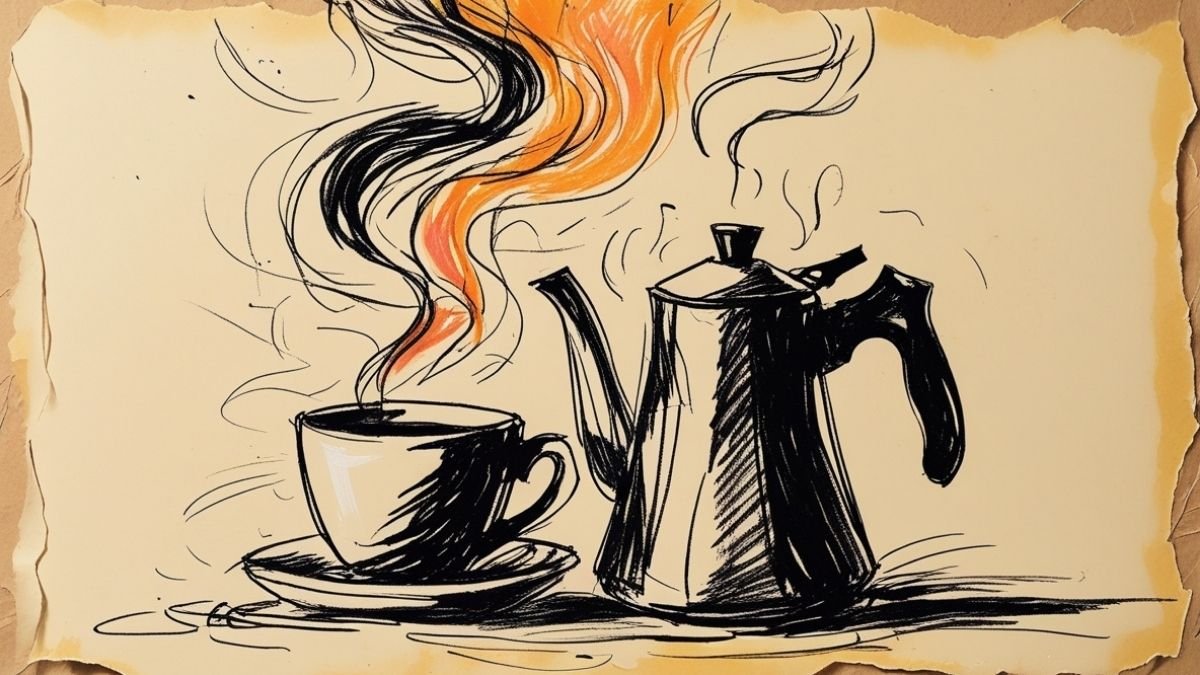
You know the scene. You’re making coffee on the stove—maybe a classic Turkish coffee or just reheating a mug. You’re watching it. Nothing. You’re still watching. Nothing. You turn away for what feels like a nanosecond to grab a spoon, and WHOOSH! A coffee volcano has erupted all over your clean stovetop. Why are some liquids, like coffee, so prone to this dramatic, sudden coffee overflow while a pot of plain water just bubbles away happily? It’s an intriguing kitchen mystery, and the answer lies in the secret lives of bubbles.
The Zen of Boiling Water
First, let’s look at what happens when you boil plain old water. As the water heats up, tiny bubbles of steam form at the bottom of the pot on microscopic imperfections called nucleation sites. These bubbles are light and free, so they rise to the surface, pop, and release their steam into the air. It’s a calm, orderly process. The bubbles escape as fast as they are made, so the water level stays put. Simple.
Enter the Troublemakers: Coffee and Starch
Now, let’s make coffee. When you add fine coffee grounds to the water, you introduce two troublemakers: particles and oils. These compounds do something fascinating to the water’s surface tension. They create a sort of elastic, stable film across the top of the liquid. The same thing happens when you boil pasta or potatoes; the starches released into the water create a similar film. This film is the villain of our story.
The Bubble Prison
Remember the free, happy bubbles in the plain water? In the coffee pot, they rise to the surface, but they can’t pop. The elastic film on top is too strong. Instead of escaping, they get trapped underneath it, like people crowding into an elevator. More and more bubbles rise up and get stuck, collecting together and pushing the film upwards from below. You’re essentially inflating a big, liquid balloon right inside your pot. The foam you see rising isn’t just bubbles; it’s a prison for bubbles.
The Eruption!
This is the moment of high drama. The heat is still on, creating more and more steam bubbles at an exponential rate. The pressure under that foam lid builds and builds until it reaches a critical point. Then, in a split second, the pressure becomes too much, and it shoves the entire mass of trapped foam and hot liquid up and out of the pot. It’s not a gradual rise; it’s a catastrophic failure of the surface film—a coffee volcano. This is exactly why that “kettle on fire” moment happens; the sudden overflow can hit the flame, causing a scary sizzle and flare-up.
How to Tame the Volcano
Luckily, you can fight back against the physics! Here are a few ways to prevent the dreaded boil-over:
- Keep a Close Watch: The most effective, if annoying, method. Don’t turn your back!
- Stir, Stir, Stir: Stirring physically breaks the surface film, allowing the trapped bubbles to escape before they can build up pressure.
- The Wooden Spoon Trick: Placing a wooden spoon across the top of the pot works as a bubble-popper. Any bubbles that rise to touch it will be broken, helping to destabilize the foam.
What’s your go-to trick for preventing a boil-over in the kitchen? Share your wisdom in the comments below!
Deep Discussion Questions:
- The boil-over is a small example of a “tipping point” system, where things are stable until they suddenly collapse. Can you think of other examples of tipping points in life, nature, or society?
- Now that you understand the science, does it make the phenomenon more or less frustrating? Why?
- What other everyday “Why does that happen?” questions do you have about the world around you?
Speaking Challenge:
You are a TV science host for a kids’ show. In 60 seconds, explain why coffee boils over using fun, simple language and sound effects. Your goal is to be both educational and entertaining.
Hint for English Learners: This is a great chance to use onomatopoeia (sound words) like “Whoosh!”, “Pop!”, “Sizzle!” and simple analogies. “The bubbles are like little prisoners trying to escape!” “The foam on top is like a big, stretchy blanket.”








0 Comments