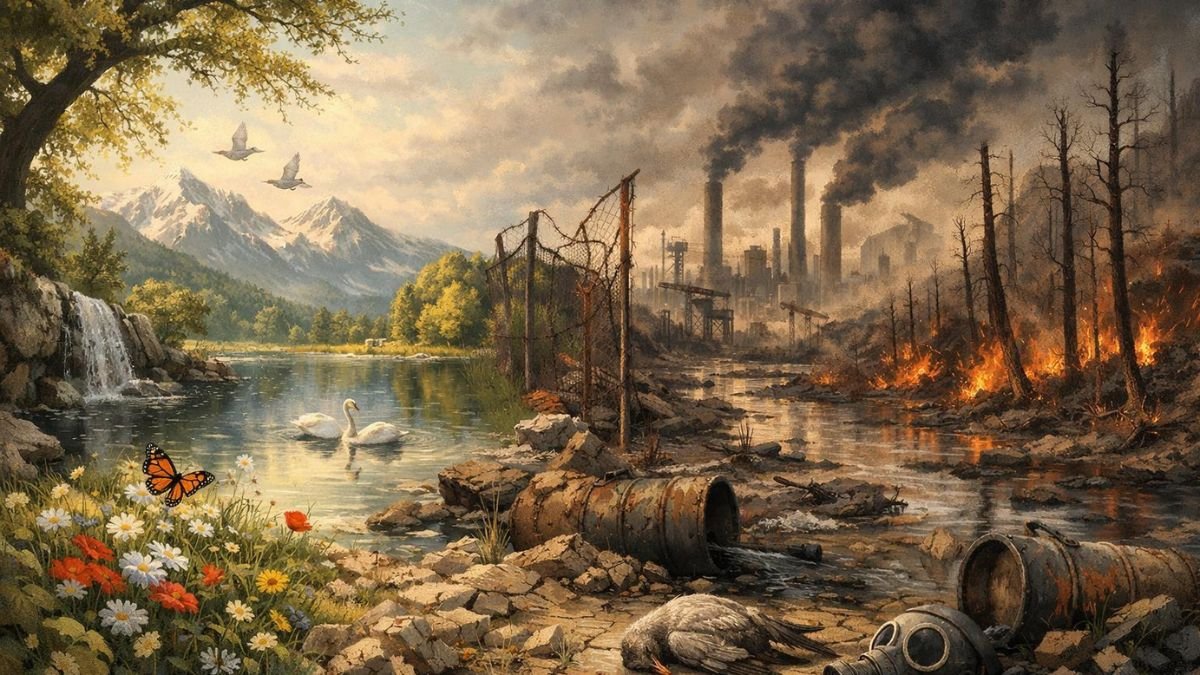
Imagine, if you will, the silence of a city just before the sun breaks the horizon. There is a specific quality to this silence, a heaviness that hangs in the air like a suspended breath. In the ancient cities of the world—places where the stones themselves seem to remember the footsteps of empires—this hour is usually the most honest. The frenetic energy of the market is asleep; the shouting of the politicians has ceased; the engines of industry are cold. All that remains is the skeleton of the place, stripped of its pretenses.
From a distance, if you were to stand on a hill overlooking such a city, it would look breathtaking. You would see the jagged silhouette of rooftops against a bruised purple sky. You would see the minarets and the steeples, the skyscrapers and the tenements, all blending into a single, jagged heartbeat. As the first light of dawn touches it, the city glitters. It looks like a jewel box spilled open on the velvet of the earth. It looks like a promise.
But come closer. Step down from the hill and walk into the streets as the light begins to reveal the details. This is where the tragedy lives. It is not in the grand sweep of the skyline, but in the cracks between the cobblestones. It is in the smell of jasmine struggling to survive the stench of uncollected garbage. It is in the gilded cage that we have built for ourselves, bar by golden bar, until we can no longer remember what it feels like to fly.
We speak often of corruption as a political issue, a matter of laws and ledgers, of bribes and kickbacks. But to view it only through the lens of economics is to miss the heartbreak of it. Corruption is not just a theft of money; it is a theft of beauty. It is a spiritual erosion that slowly, quietly, turns the vibrant colors of our humanity into a dull, monotonous gray. It is a requiem for the common man, a funeral song for the potential that is buried every single day under the weight of greed.
I want you to think of a young woman. Let’s call her Maya. She lives in a small apartment where the paint peels like sunburned skin from the walls. Maya has hands that were made for the piano. When she sits at the keys, something ancient and divine moves through her. She doesn’t just play notes; she weaves tapestries of sorrow and joy. She speaks a language that requires no translation, a language that could heal hearts and bridge divides.
Maya has a dream. It is a simple dream, really. She wants to study at the Conservatory, the great stone building with the heavy oak doors where the masters teach. She practices until her fingers bleed, until the cheap, out-of-tune upright in her living room groans under the intensity of her passion. She auditions. The music she plays that day is so beautiful it makes the dust motes in the air dance. The judges weep. They nod. They smile.
But then comes the whisper. It is always a whisper, isn’t it? It is never a shout. It is a soft, sliding sound, like a snake moving through dry grass. The administrator meets her eyes, his face a mask of polite regret. He tells her that the class is full. He tells her that there are “administrative fees.” He rubs his thumb against his forefinger, the universal sign language of the soulless. The fee is more money than Maya’s father makes in a year.
And so, the seat at the Conservatory goes to another. It goes to the son of a man who imports luxury cars. This boy does not love the piano. To him, music is a chore, a status symbol, a box to be checked on a list of aristocratic accomplishments. He will sit at that piano and he will play the notes, but he will not make music. He will bang against the keys with the clumsy entitlement of someone who has never known the ache of longing.
Maya walks away. She walks past the heavy oak doors, and she keeps walking. She takes a job answering phones in a gray office with fluorescent lights that hum like trapped insects. The music inside her does not die immediately. It lingers for a while, a ghost haunting the corridors of her mind. But slowly, over the years, the ghost fades. The symphony becomes a hum, the hum becomes a silence.
This is the tragedy of the gilded cage. It is not just that the wrong person got the seat; it is that the world was robbed of the beauty Maya would have created. We are all poorer because of it. Every time a bribe is paid, a poem is erased. Every time a connection is leveraged over merit, a painting is slashed. We are living in a museum of empty frames, walking past spaces where masterpieces should have hung, unaware of the profound loss we have suffered.
It feels like we are gardening in a graveyard. We plant our hopes in soil that has been poisoned by the toxic runoff of avarice. We water them with our tears, but nothing grows except the weeds of resentment.
And what of the gardeners of this poisonous soil? What of the men and women who hold the keys to the cage? We often look at them with anger, and rightfully so. But if you look deeper, past the rage, past the injustice, you will find a profound and terrible loneliness.
Think of the oligarch. Let’s imagine him in his tower. He is the modern-day King Midas. Everything he touches turns to gold, but he has forgotten that you cannot eat gold. You cannot drink gold. You cannot be held by gold.
He sits in a room that is temperature-controlled to a perfect, sterile coolness. The furniture is Italian leather, soft as butter, but it offers no comfort. He looks out the window at the city he owns. He sees the cranes building his new towers; he sees the ships carrying his cargo. He should feel like a god. But in the silence of his heart, there is a hollow echo.
He picks up his phone. There are hundreds of contacts, people who would jump at his command. But who can he call? Who can he trust? He knows, with a terrifying certainty, that if his fortune were to vanish tomorrow, his phone would stop ringing. He knows that the smiles directed at him are not for him; they are for his wallet. They are reflections in the gold, not connections to the soul.
He looks at his wife across the dinner table. She is beautiful, elegant, draped in silk that costs more than Maya’s education. But there is a glass wall between them. He wonders, “Does she love me? Or does she love the safety I provide?” He can never ask, because he is afraid of the answer. He has monetized his life to such a degree that he has devalued his own humanity. He has become a commodity in his own home.
This is the curse of Midas. The bread turns to hard metal in his mouth. The water turns to gold in his throat. He is starving in the midst of a banquet. He has built a fortress to keep the world out, but he has succeeded only in locking himself in. He is the prisoner of his own greed, the warden of his own solitary confinement.
The sadness of this system is that it severs the sacred thread that connects us to one another. In a world built on transactions, there is no room for grace. Grace is free. Grace is unearned. Grace is the beauty that flows when we give without expecting a return. But in the gilded cage, everything has a price. A kindness is just a down payment on a future favor. A smile is just a networking strategy. We have commodified the human spirit, turned our very souls into currency, and in doing so, we have bankrupted our hearts.
I walk through the streets of this metaphorical city, and I feel the weight of the potential that is rotting. I see it in the eyes of the young doctor who is leaving for another country because she cannot save lives in a hospital that has no medicine, while the minister of health builds a third villa. I see it in the slumped shoulders of the teacher who tries to ignite a spark in a classroom where the roof is leaking, knowing that the funds for repairs were siphoned off to pay for a gala dinner.
It is a slow, agonizing death. It is not a violent explosion; it is a rusting. It is the oxidation of hope.
And yet, even in the rust, even in the decay, there is a stubborn, heartbreaking beauty. Because the human spirit is not easily extinguished. It is like the green shoot that pushes through the asphalt.
I remember once, walking past a construction site where a grand old theater was being demolished to make way for a shopping mall. The wrecking ball had already done its work. The stage where actors had once wept and laughed was a pile of rubble. The velvet curtains were torn and dusty. But in the middle of that devastation, a worker was singing. He was a man with a face etched by sun and hardship, leaning on his shovel, singing an old folk song. His voice was rough, but it was true. It rose above the noise of the machinery, a defiant melody claiming the space for beauty, if only for a moment.
That song is the requiem. It is the song we must sing for the Maya who never played her concerto. It is the song we must sing for the city that could have been.
We must allow ourselves to grieve. In our rush to fix things, in our anger at the injustice, we often forget to mourn. We forget to stop and acknowledge the sheer scale of the loss. We need to weep for the art that was never made. We need to weep for the cures that were never discovered. We need to weep for the trust that was broken. Tears are not a sign of weakness; they are the water that cleanses the soul. They are the rain that washes away the dust of the gilded cage, allowing us to see the bars for what they are.
There is a concept in art called pentimento. It refers to a visible trace of earlier painting beneath a layer or layers of paint on a canvas. It comes from the Italian for “repentance.” It is when the artist changes their mind, paints over a figure, but time eventually makes the top layer transparent, and the ghost of the original image shines through.
Our cities, our societies, are full of pentimenti. The corruption is the crude top layer, the hasty, greedy brushstrokes that try to cover up the truth. But the original image—the image of a community built on trust, on merit, on compassion—is still there, underneath. It is waiting to be revealed. It is the ghost that refuses to leave.
We are the curators of this hidden masterpiece. It is our burden, and our privilege, to remember what lies beneath. When we refuse to participate in the lie, we are scratching away a piece of the false paint. When we choose integrity over easy gain, we are revealing a glimpse of the original beauty. When we help a young artist not because it benefits us, but simply because the world needs her art, we are restoring the canvas.
But oh, the ache of it. The ache of knowing how much time we have lost. Time is the one thing the oligarch cannot buy. It is the one thing the bribe cannot secure. The years that Maya spent answering phones are gone. They are leaves carried away by the river, never to return. We can never get back the symphony she didn’t write. That silence will endure forever.
And so, we stand in the twilight of the city. The sun is setting now, casting long shadows across the broken pavement. The gold of the skyline is fading into the blue of the night. The gilded cage loses its luster in the dark. It just looks like a cage.
In this quiet hour, let us make a pact with the silence. Let us promise not to become like the King in his tower, turning our hearts to metal in exchange for safety. Let us promise to keep our skin soft, our eyes open, and our hands ready to create, even if the world tells us it is futile.
Let us be the ones who hear the music that isn’t playing. Let us be the ones who see the colors in the gray. Let us be the ones who remember that the cage is made of gold, but the bird… the bird is made of starlight and breath and the terrible, beautiful desire to be free.
Listen. Can you hear it? It is faint, like a heartbeat under the floorboards. It is the sound of the common man, the dreamer, the artist, refusing to be forgotten. It is the sound of life, persisting in the cracks. It is the requiem, yes. But if you listen closely, very closely… it is also a lullaby for the morning that is yet to come.
As the night deepens, the fog rolls in from the sea. It wraps around the pillars of the bridges and softens the sharp edges of the skyscrapers. In the fog, the city feels timeless, suspended between what it was and what it has become. This is the hour of the ghosts.
I imagine the ghosts of this city are not scary specters. They are sad, gentle things. They are the ghosts of promises. They drift through the boardrooms where deals were struck that sold away the public parks. They float through the universities where admission letters were swapped for envelopes of cash. They hover over the hospitals where equipment sits in crates, unused, because the maintenance contract was never signed—the money for it having vanished into an offshore account.
These ghosts do not haunt us to terrify us. They haunt us to remind us. They are the memory of our better selves.
I think of the concept of “noble rot.” In winemaking, it is a fungus that attacks the grapes. It shrivels them, makes them ugly and gray. But if the conditions are right, it concentrates the sugar, and from those ruined grapes comes the sweetest, most complex wine in the world.
Can we find a noble rot in this decay? Is it possible that the suffering we endure, the heartbreak of watching our beautiful world be consumed by greed, is concentrating something in us? Is it distilling our longing for truth into something potent and undeniable?
Perhaps the pain is necessary. Perhaps we needed to see the ugliness of the cage to understand the value of the sky. When you have watched a talented friend give up on their dreams because the door was locked from the inside, you learn to cherish the open door. You learn that a fair chance is more precious than rubies. You learn that merit is not just a system; it is a sacred geometry of the soul.
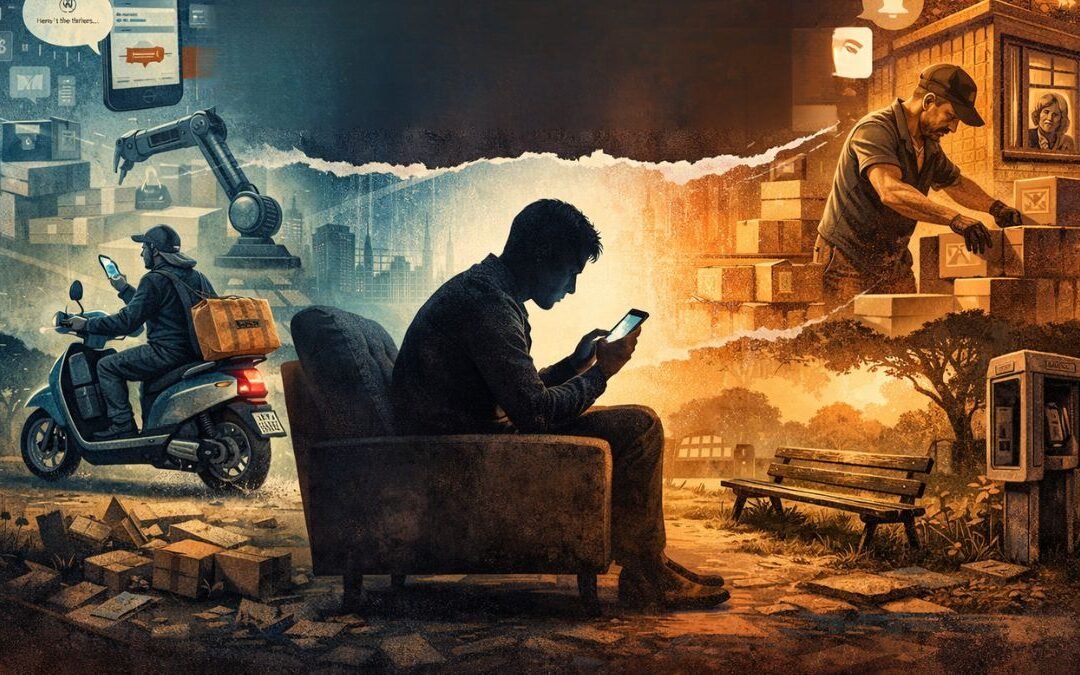
The emotional toll of living in a compromised world is exhaustion. It is a weariness that settles in the marrow of your bones. It is the fatigue of constantly having to navigate a maze of lies. “Is this real?” we ask. “Is this person genuine?” “Is this product safe?” The vigilance required to survive erodes our capacity for joy. We become hard. We become cynical. We build our own little walls to protect ourselves from the disappointment.
And that is the final victory of the corrupt. They don’t just steal our money; they steal our softness. They force us to become like them in order to survive. They make us believe that kindness is a weakness, that honesty is for fools, that the only way to win is to cheat.
But I refuse to believe that. I refuse to let the rust enter my heart.
I look at the moon rising over the city. It is the same moon that shone on this place a thousand years ago, before the towers, before the banks, before the bribes. It is indifferent to our petty squabbles. It bathes the beggar and the billionaire in the same silver light. It is a reminder of a higher order, a cosmic balance that cannot be rigged.
In the silence of this night, I want to offer a prayer. Not to a specific god, perhaps, but to the spirit of the city itself.
May we find the courage to be the anomaly. In a world of transactions, may we be the gift. In a world of noise, may we be the melody. In a world of gray, may we be the splash of crimson and gold—not the gold of coins, but the gold of the sunrise, the gold of the marigold flower, the gold of a heart that remains true.
For Maya. For the worker singing in the rubble. For the ghosts of the potential we lost. Let us remain brokenhearted, for a broken heart is an open heart. And it is only through the open heart that the light can finally, eventually, get in.
The cage may be gilded, but we are not the cage. We are the song inside it. And as long as we sing, even if it is a requiem, we are still alive. We are still beautiful. We are still free.
Danny Ballan (The Poet)
Editor-in-Chief
English Plus Magazine







0 Comments