The Shadow Games Series
Shadow Games Series: Episode 1 | The Fine Line: Lobbying vs. Bribery
Shadow Games Series: Episode 2 | The Shell Game: How Money Hides
Shadow Games Series: Episode 3 | The Oligarch’s Playbook: Consolidating Power
Shadow Games Series: Episode 4 | The Cost of Corruption: The Human Toll
Shadow Games Series: Episode 5 | Cleaning House: Can It Be Fixed?
Shadow Games Series: Episode 4 | The Cost of Corruption: The Human Toll
The Architecture of Neglect
For the past three episodes, we have floated in the stratosphere of high finance and political theory. We have discussed lobbying in the marble hallways of power, shell companies in the sunny Caribbean, and media monopolies in the boardrooms of skyscrapers. It is easy, when discussing corruption, to get lost in the abstraction of it all. We talk about “market distortions” and “regulatory capture” as if they are variables in a math equation—cold, bloodless, and distant.
But corruption is not a victimless crime committed by men in suits against lines on a spreadsheet. Eventually, gravity takes hold. The money that was siphoned off, the regulations that were ignored, and the corners that were cut—all of these abstract decisions eventually crash down into the physical world. And when they do, they do not hit the people who made the decisions. They hit you.
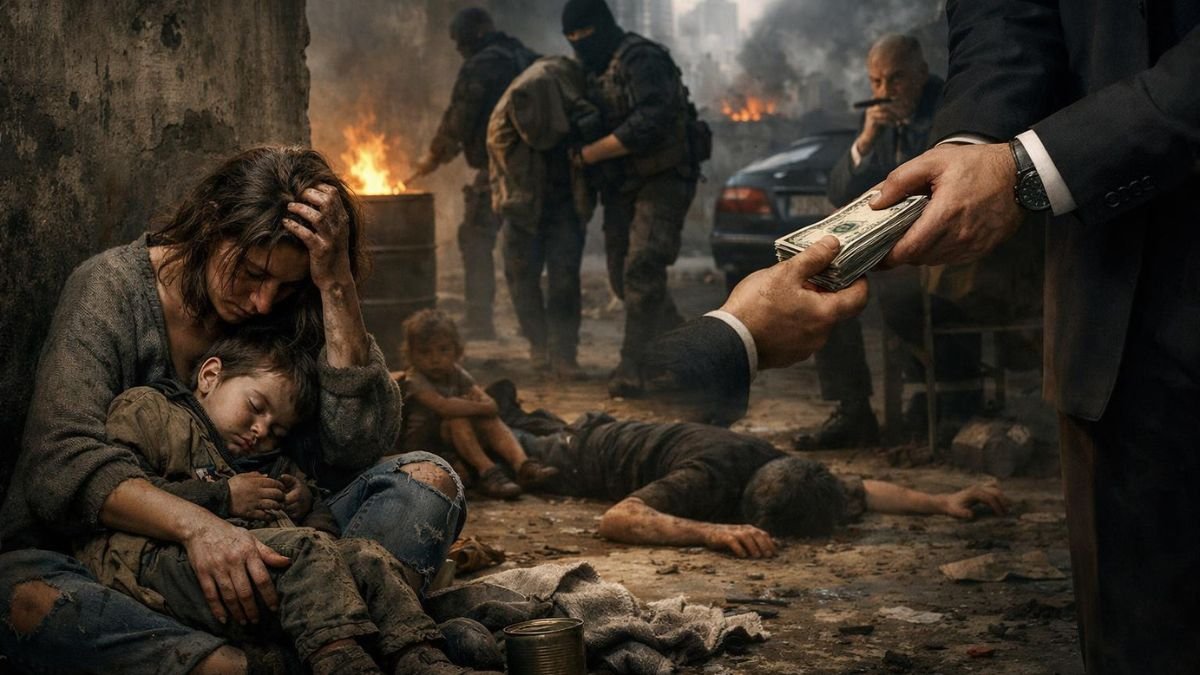
In this episode, we are leaving the theoretical behind. We are going to walk through the wreckage. We are going to look at what happens when the Shadow Game stops being a game and starts being a tragedy. We will examine the tangible, painful cost of corruption: the bridge that collapses, the hospital that has no medicine, and the brilliant young student who gives up on their future because they know the game is rigged.
When the Concrete Cracks
Let us begin with the most visible scar of corruption: infrastructure. We often assume that engineering is an exact science. If you need a bridge to hold a thousand cars, you calculate the load, you pour the concrete, and the bridge stands. Physics does not take bribes.
However, the contract to build the bridge does.
Imagine a government allocates one hundred million dollars to build a state-of-the-art highway. In a clean system, the contract goes to the company with the best track record and the most efficient plan. But in a corrupt system, the contract goes to the Minister’s brother-in-law.
The brother-in-law needs to make a profit, but he also needs to pay the kickback to the Minister. So, the one hundred million becomes eighty million. Then, he subcontracts the work to a friend’s construction firm, taking another cut. Now we are down to sixty million. The construction firm needs to save money, so they switch from high-grade steel to a cheaper, lower-quality alternative. They dilute the concrete mixture with too much sand. They bribe the safety inspector to look the other way when the foundations are poured too shallow.
On paper, the highway looks perfect. The ribbon-cutting ceremony is a grand affair. The Minister gives a speech about progress and modernization. But five years later, when the rainy season hits harder than usual, the physics finally catches up with the economics. A section of the road washes away. A bridge buckles. People are injured or killed.
This is not a hypothetical scenario; it is the recurring nightmare of the developing world and, increasingly, the developed one. When we read about a catastrophic infrastructure failure—a dam bursting, a building collapsing during an earthquake that neighboring buildings survived, a train derailing due to “deferred maintenance”—we are rarely looking at an accident. We are looking at a crime scene where the evidence was buried years ago in a procurement ledger.
The cost here is visceral. It is the loss of life, the destruction of property, and the terrifying realization that the built environment around you is a facade. The steel and glass that you trust to hold you up are, in reality, made of greed and compromise.
The Erosion of the Social Contract
Beyond the physical danger, corruption inflicts a deep, invisible wound on the psyche of a nation. It dissolves the glue that holds society together: trust.
Humans are social creatures. We cooperate on a scale that no other species can match, but that cooperation is entirely dependent on the belief that everyone else is playing by the same rules. We stop at red lights because we trust that the person coming the other way will also stop. We pay taxes because we trust the government will use that money to pave the roads and fund the schools.
Corruption is the acid that eats away at this trust. When you see the wealthy tax evader living in luxury while the public schools crumble, you stop wanting to pay your taxes. Why should you be the sucker who follows the rules? When you see the politician’s son driving a Ferrari while you struggle to afford the bus fare, you stop believing in the law.
This leads to a phenomenon known as “defensive cynicism.” It is a survival mechanism. If you believe the system is fair, you are vulnerable to disappointment. If you assume the system is rotten, you can never be let down.
But this cynicism is paralyzing. It stops people from voting because “they are all the same.” It stops people from reporting crimes because “the police are in on it.” It stops communities from organizing to improve their neighborhoods because “someone will just steal the funds.”
A society infected by high levels of corruption becomes atomized. People retreat into their private spheres, protecting their own families and viewing everyone else—especially the state—as a potential predator. The “Public Good” ceases to exist as a concept; there is only “My Interest” versus “Your Interest.” In this environment, democracy cannot breathe. Democracy requires participation, and corruption breeds apathy.
The Death of Meritocracy
Perhaps the most insidious cost of corruption is economic stagnation. We often hear that corruption “greases the wheels” of commerce, allowing business to bypass bureaucracy. This is a dangerous myth. In reality, corruption throws sand in the gears of the most powerful engine of economic growth: meritocracy.
Meritocracy is the simple idea that the best person should get the job, the best idea should get the funding, and the best product should win the market. When meritocracy works, society advances. Innovation happens because smart people are incentivized to solve hard problems.
In an oligarchy or a kleptocracy, merit is irrelevant. Connections are everything.
Consider two young graduates. One is a brilliant engineer with a revolutionary idea for clean energy, but she comes from a poor family and has no political connections. The other is a mediocre student who coasted through university, but his father is a powerful general.
In a corrupt system, the general’s son gets the government loan to start a business. He gets the license. He gets the contract. He produces a substandard product, but because he has a monopoly protected by his father, he becomes rich. Meanwhile, the brilliant engineer cannot get a permit. She is asked for bribes she cannot afford. She sees her path blocked by incompetent gatekeepers.
Eventually, she gives up. She takes a job below her skill level, or worse, she emigrates to a country where her talent will be recognized. This is the “Brain Drain.” It is the hemorrhage of a nation’s most valuable resource—its human potential.
When an economy rewards rent-seeking (extracting value through manipulation) rather than value creation (making something new and useful), the economy stops growing. It becomes a zombie economy. You see shiny skyscrapers and luxury malls, but they are built on a hollow foundation. There is no innovation, only extraction. The rich get richer not by making the pie bigger, but by slicing smaller and smaller pieces for everyone else.
The Inequality Trap
This dynamic creates a vicious cycle of inequality. As the “Shadow Game” consolidates wealth in the hands of the few, those few use their wealth to further rig the system (as we saw in Episode 3). They cut funding for public education and healthcare, arguing for “austerity,” while securing tax breaks for themselves.
This means the next generation has even fewer opportunities to rise based on merit. The ladder is pulled up. Social mobility freezes. You are born into your station, and you stay there.
The tragedy of corruption is not just that money is stolen; it is that future money is never made. The cure for cancer that wasn’t discovered because the researcher couldn’t get a grant without a bribe. The tech startup that never launched because the license fee was a year’s salary. The safe, efficient public transit system that was never built because the funds were diverted to a private jet.
Corruption is the thief of opportunity. It steals the future to pay for the present indulgences of a tiny elite. And the bill for that theft is paid by every child who goes to a school with no books, every patient who dies in a hospital with no oxygen, and every citizen who looks at their government and sees not a protector, but a parasite.
Understanding this human toll is essential. It transforms the fight against corruption from a technical problem of “good governance” into a moral imperative of human rights. It is not just about balancing the books; it is about saving the bridge, and the people standing on it.
Critical Analysis: The Devil’s Advocate
The Functional Utility of “Grease”
We have just delivered a scathing indictment of corruption, painting it as the root of all structural evil—a cancer that eats away at concrete, trust, and talent. It is a powerful moral argument, and in the long run, it is undoubtedly true. However, if we want to be rigorous intellectual explorers, we must pause and ask the uncomfortable question: Is corruption always dysfunctional? Or does it, in certain contexts, actually make the world go round?
Let us play the devil’s advocate. Let us step out of the idealized world of “high-trust” societies (like Scandinavia or New Zealand) and look at the reality of “low-trust” environments where bureaucracy is sclerotic and the rule of law is a suggestion.
In many developing nations, the official bureaucracy is not just slow; it is comatose. To get a business license might officially take 400 days and 50 signatures. If you follow the rules perfectly, your business will die before it is born. In this context, the “speed money” or “facilitation payment”—a small bribe to the clerk to move your file to the top of the pile—is not an act of destruction. It is an act of efficiency.
Economists have long debated the “efficient grease” hypothesis. The argument suggests that in a system with terrible, stifling regulations, corruption acts as a market mechanism to bypass the blockage. The bribe allows the most eager entrepreneur (the one willing to pay the most) to get to work. If we waved a magic wand and eliminated all bribery tomorrow without fixing the underlying bureaucracy, the economy might actually grind to a halt. Nothing would move.
Therefore, is the enemy the bribe, or is the enemy the red tape that makes the bribe necessary? A critical thinker might argue that attacking corruption without attacking the inefficient laws that breed it is futile.
The Stability of Patronage
We also lamented the “erosion of the social contract.” We argued that corruption destroys trust. But let’s look at it through the lens of anthropology and history. For most of human history, “corruption” was simply called “patronage,” and it was the primary way societies remained stable.
In a patronage system, a powerful leader (the patron) distributes resources (jobs, contracts, protection) to his supporters (clients) in exchange for loyalty. We call this “cronyism.” But for the people inside the network, it is “social security.”
If the state is weak and cannot provide a safety net, your only safety comes from your tribe, your clan, or your local strongman. When a politician gives a government job to his unqualified cousin, we call it nepotism. But the cousin calls it “family loyalty.” In many cultures, the obligation to help your kin outweighs the obligation to follow an abstract law written by strangers in the capital city.
If a leader refused to help his family and friends in favor of a “meritocratic” stranger, he would be seen as cold, untrustworthy, and morally bankrupt by his own community. Thus, what we label “corruption” is often just a clash between two different moral systems: the modern, impersonal “civic morality” versus the ancient, personal “kinship morality.” To eradicate corruption, you are asking people to betray their families for the sake of the state. That is a heavy ask.
The Tyranny of Meritocracy
Finally, let us challenge our glorification of “meritocracy.” We presented it as the antidote to corruption—the fair system where the best rise to the top. But is a purely meritocratic society actually a paradise?
Philosopher Michael Sandel argues that meritocracy creates its own kind of toxicity. In a rigged system, the poor can say, “I am poor because the system is unfair.” This allows them to keep their dignity. But in a perfect meritocracy, if you are poor, the system says, “You are poor because you lack merit. You are not smart enough. You did not work hard enough.”
This creates a society of winners and losers, where the winners believe they morally deserve their success and look down on the losers with disdain. This “meritocratic hubris” can be just as corrosive to social cohesion as corruption. It can lead to a governing elite that is technically brilliant but completely lacking in empathy for those who fall behind.
Furthermore, true meritocracy is an illusion. Can we ever really separate “merit” from privilege? The “brilliant student” usually had better nutrition, better tutors, and a stable home life—all things purchased with their parents’ money. Is that merit, or just inherited advantage disguised as talent?
So, while we fight against the Shadow Game of oligarchy, we must be careful not to replace it with a cold, ruthless sorting machine that leaves half the population feeling worthless. Perhaps the goal shouldn’t be a perfect meritocracy, but a society where even those without “merit” can still live with dignity and safety.
The Complexity of Reform
By considering these angles, we realize that “fighting corruption” is not just about arresting bad guys. It is about understanding why the corruption exists. Is it greasing a frozen wheel? Is it a form of primitive social security? Is it a clash of cultural values?
If we simply rip out the corrupt parts of the system without understanding their function, we might cause the bridge to collapse even faster. The challenge is to build a system that is efficient enough to not need grease, and compassionate enough to not need patronage. That is a much harder task than simply demanding “clean hands.”
Let’s Discuss
We have moved from the concrete to the philosophical. Now it is your turn to weigh in. Here are five questions to help frame the debate in the comments.
1. Is a “little bit” of corruption acceptable if it gets things done?
Imagine you need a permit to open a hospital that will save lives. The clerk asks for $100. If you don’t pay, the permit takes a year. If you pay, it takes a day. Do you pay? Is the moral purity of “not bribing” worth the delay in saving lives?
2. Is nepotism always bad, or is it just human nature?
Be honest—if you owned a company, would you hire a stranger with a slightly better resume, or your brother who needs a job and who you trust with your life? Why do we expect politicians to be less human than we are?
3. Does meritocracy actually exist, or is it a myth we tell ourselves?
Think about your own success. How much was hard work, and how much was luck/circumstance? If meritocracy is a myth, does that justify “affirmative action” or other non-meritocratic interventions?
4. Why do we tolerate corruption more when “our guy” does it?
We often forgive corruption if the politician delivers results (e.g., “He stole, but he built the roads”). Is this a pragmatic compromise or a dangerous slippery slope? Can a corrupt leader be a “good” leader?
5. How do you rebuild trust once it is broken?
Once a society becomes cynical (“They are all thieves”), how do you reverse that? Has anyone seen a real-world example of a corrupt institution becoming clean? What did it take?








0 Comments