What if everything you see right now — your screen, your room, the sky outside your window — is only a fraction of what’s actually there? What if reality is like an iceberg, and you’ve been living your entire life on the tip, convinced that the tiny piece above water is all there is?
The nature of reality is one of the oldest and most fascinating questions humanity has ever grappled with, and the more we learn — from philosophy, from neuroscience, from physics — the more it becomes clear that our everyday experience of the world is, at best, a highly edited version of something far stranger and more complex. So let’s take a trip down the rabbit hole. Fair warning: you might not look at the world quite the same way when we’re done.
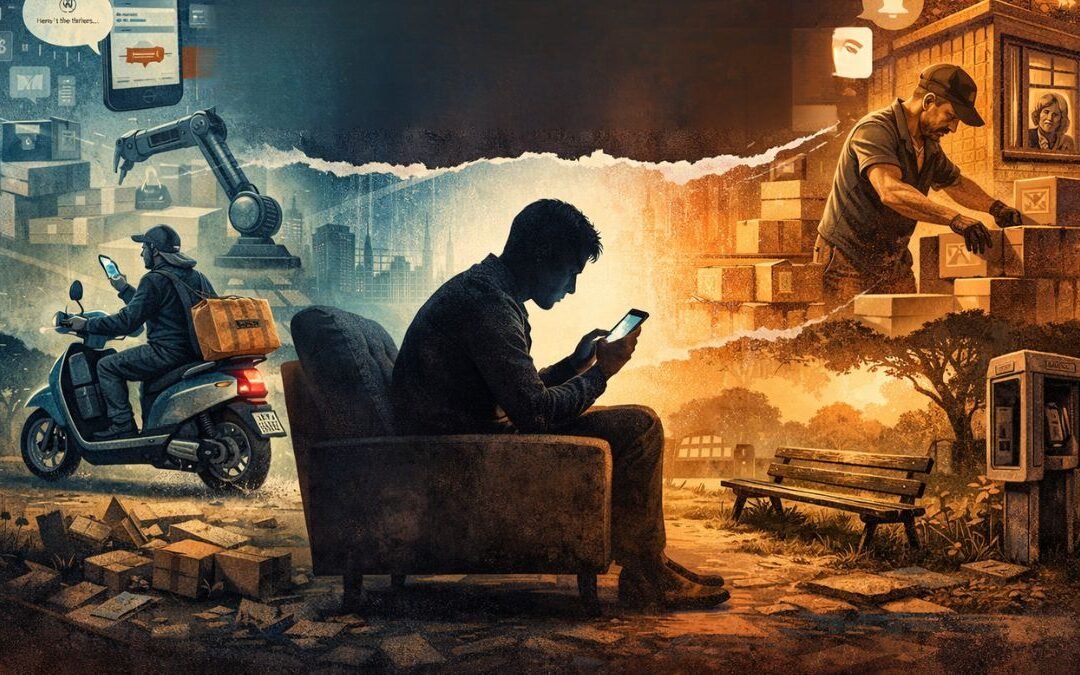
Let’s start with where this question first got serious. About 2,400 years ago, Plato wrote one of the most famous thought experiments in the history of philosophy — the Allegory of the Cave. Imagine prisoners chained inside a cave their entire lives, facing a blank wall. Behind them, a fire casts shadows of objects onto the wall, and these shadows are the only reality the prisoners have ever known. They name the shadows, discuss them, build an entire understanding of the world based on them. Then one prisoner breaks free, turns around, and sees the fire, the objects, and eventually makes it outside the cave into sunlight. The real world is overwhelming, almost incomprehensible — but it’s real. The shadows were just pale reflections of something much more vivid and true.
Plato was making a philosophical argument about knowledge and the world of forms, but the allegory resonates today more than ever. Because in a very literal sense, we are the prisoners. Not because some malevolent force is tricking us, but because our own biology limits what we can perceive.
Consider this: your eyes can detect only a narrow slice of the electromagnetic spectrum — what we call visible light. But visible light makes up less than 0.0035% of the entire electromagnetic spectrum. Radio waves, microwaves, infrared, ultraviolet, X-rays, gamma rays — they’re all around you right now, carrying information, passing through your body, and you can’t see any of them. A honeybee sees ultraviolet patterns on flowers that are completely invisible to you. A pit viper sees infrared heat signatures. A mantis shrimp has sixteen types of color receptors compared to our measly three. These creatures aren’t seeing a different world — they’re seeing more of the same world. We’re the ones with the limited view.
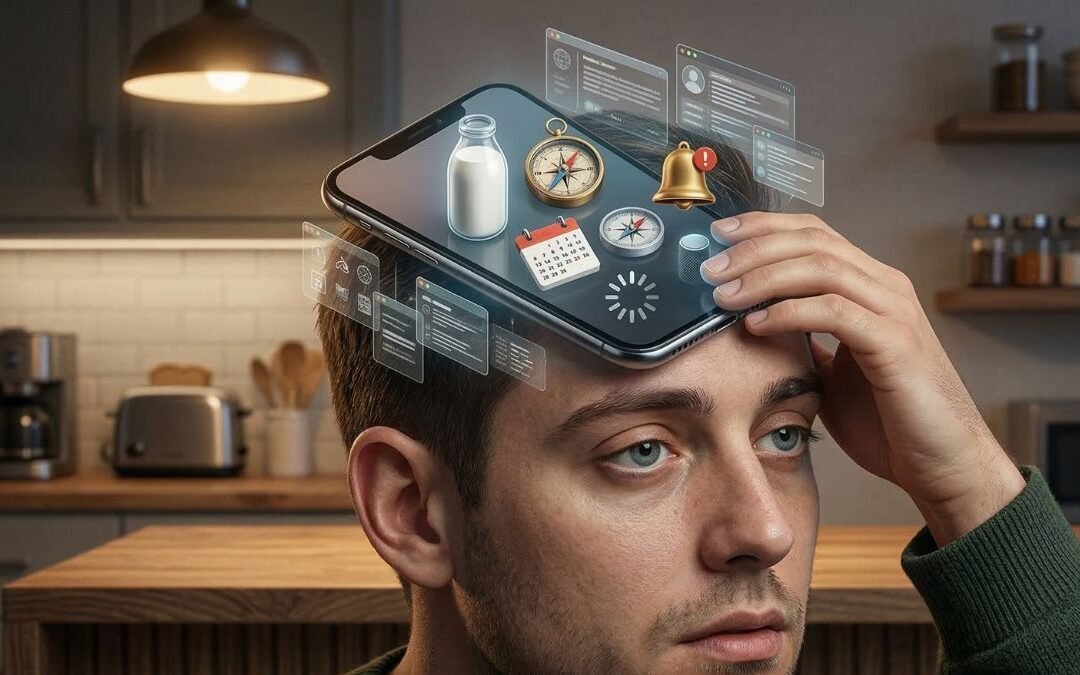
And it’s not just vision. Your brain constructs your experience of reality from sensory data that is, by necessity, incomplete and heavily processed. It fills in blind spots — literally; you have a blind spot in each eye where the optic nerve connects, and your brain just quietly wallpapers over it. It smooths out the jerky movements of your eyes into what feels like a seamless visual experience. It decides what’s worth paying attention to and filters out the rest, which is why you can be in a noisy room and suddenly hear your name spoken across the crowd — your brain was monitoring that background noise all along but only flagged it when something relevant appeared.
What this means is that your experience of reality isn’t a direct recording of the world. It’s a reconstruction — a best guess assembled by a three-pound organ working with limited inputs and a lot of shortcuts. Neuroscientist David Eagleman has compared the brain to a general locked in a bunker, receiving coded messages from scouts (your senses) and building a model of the battlefield based on those messages. The general never directly experiences the battlefield. Everything is mediated, interpreted, and potentially distorted.
Now, if that’s not unsettling enough, let’s throw some physics into the mix. At the quantum level — the realm of atoms and subatomic particles — reality behaves in ways that flatly contradict our everyday experience. Particles can exist in multiple states simultaneously until they’re observed, at which point they “choose” a state. This is the famous double-slit experiment, and it has baffled physicists for a century. It suggests that the act of observation itself plays a role in determining reality. Which raises an almost absurd question: does reality exist in a definite state when nobody’s looking?
Einstein hated this idea. He famously asked whether the moon exists only when someone looks at it. But the experimental evidence keeps stacking up in favor of quantum mechanics’ bizarre implications. Whatever reality is at its most fundamental level, it’s nothing like the solid, stable, predictable world we experience day to day.
And then there’s the simulation hypothesis — the modern philosophical thought experiment popularized by philosopher Nick Bostrom. The argument goes like this: if a civilization could create a sufficiently advanced computer simulation of consciousness, it probably would. And if it could make one, it would likely make many. Which means that the number of simulated conscious beings would vastly outnumber “real” ones. So statistically, any given conscious being — including you — is more likely to be a simulation than a biological original. It sounds like science fiction, but the logic is surprisingly difficult to refute, which is why serious thinkers from Elon Musk to Neil deGrasse Tyson have discussed it in earnest.
Now, before you spiral into an existential crisis, let me offer a different way to think about all of this. The fact that our perception of reality is limited and constructed doesn’t mean our experience is worthless. Quite the opposite. It means that the world is richer, deeper, and more mysterious than we can currently fathom — and that’s genuinely exciting. Every generation of humans has peeled back another layer: Galileo showed us planets we couldn’t see, Darwin revealed a history we didn’t know we had, Einstein bent the very fabric of space and time. The journey of discovery isn’t over. It’s barely begun.
And there’s something deeply empowering about recognizing the limits of your perception. When you understand that your view of reality is a construction, you become less rigid in your beliefs, more open to new information, more willing to entertain the possibility that you might be wrong about something fundamental. That’s not weakness — that’s intellectual courage. It’s the beginning of real wisdom.
So the next time you’re absolutely certain about something — about the world, about another person, about yourself — pause for just a moment and ask: is this the shadow on the wall, or is there something more behind me that I haven’t turned around to see?
Here’s my question for you: has there been a moment in your life when you realized that something you took as absolute reality turned out to be a limited or even false perception? I’d love to hear your stories in the comments below. The nature of reality is a conversation that never ends — and that’s the best thing about it.