English Activities | Code Breaker 10
Can you break the code and read the quote?
This quote is by Martin Luther King Jr.

This quote is by Martin Luther King Jr.

Author
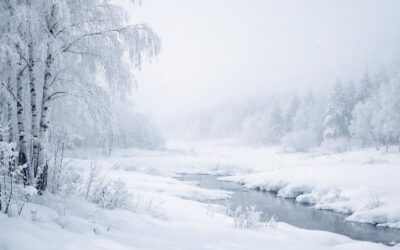
Frankfurt Airport is a cathedral of efficiency, designed to move millions without a hitch. But on Christmas Eve, a massive snowstorm has stopped the clock. At Gate Z-15, the mood is toxic: business travelers are shouting, tourists are hoarding power outlets, and the departure board is a sea of red ‘CANCELED’ signs. Then, the lights go out. In the sudden darkness, a low hum begins in the corner—a melody that transcends language. Join us for a story about what happens when our plans are ruined, and we are forced to find harmony in the delay.
Manila is usually a symphony of noise—firecrackers, karaoke, and celebration. But inside the Public General Hospital, the air is sterile and silent. Reya, a nurse on the night shift, watches over ‘Lolo Ben,’ a coma patient with no family to claim him. It is Noche Buena, the midnight feast, and Reya refuses to let him spend it in the dark. She hangs a small paper lantern on his IV pole and begins to read. But the hospital doors are about to open, bringing a reminder that even in the quietest rooms, we are never truly alone.
The cold in Moscow is a living entity, prowling the streets for any weakness. Ivan, a homeless veteran, sits on a steam grate behind a metro station, his only warmth coming from the mongrel dog, Laika, tucked inside his coat. When the Social Patrol van pulls up offering a warm bed in a shelter, there is a catch: no dogs allowed. Ivan looks at the open door of the van, and then at the loyal eyes of his companion. This is a story about the family we choose, and the lines we refuse to cross, even when the temperature drops to minus thirty.
Frankfurt Airport is a cathedral of efficiency, designed to move millions without a hitch. But on Christmas Eve, a massive snowstorm has stopped the clock. At Gate Z-15, the mood is toxic: business travelers are shouting, tourists are hoarding power outlets, and the departure board is a sea of red ‘CANCELED’ signs. Then, the lights go out. In the sudden darkness, a low hum begins in the corner—a melody that transcends language. Join us for a story about what happens when our plans are ruined, and we are forced to find harmony in the delay.
Manila is usually a symphony of noise—firecrackers, karaoke, and celebration. But inside the Public General Hospital, the air is sterile and silent. Reya, a nurse on the night shift, watches over ‘Lolo Ben,’ a coma patient with no family to claim him. It is Noche Buena, the midnight feast, and Reya refuses to let him spend it in the dark. She hangs a small paper lantern on his IV pole and begins to read. But the hospital doors are about to open, bringing a reminder that even in the quietest rooms, we are never truly alone.
The cold in Moscow is a living entity, prowling the streets for any weakness. Ivan, a homeless veteran, sits on a steam grate behind a metro station, his only warmth coming from the mongrel dog, Laika, tucked inside his coat. When the Social Patrol van pulls up offering a warm bed in a shelter, there is a catch: no dogs allowed. Ivan looks at the open door of the van, and then at the loyal eyes of his companion. This is a story about the family we choose, and the lines we refuse to cross, even when the temperature drops to minus thirty.
In Stockholm, the winter darkness arrives just after lunch, settling over the city like a heavy blanket. Astrid sits by her window, watching a candle burn down—a silent, stubborn signal to a son she hasn’t spoken to in two years. She calls it ‘waiting,’ but deep down, she knows it is pride. The candle is fading, and the silence of the phone is deafening. Tonight, Astrid faces the hardest journey of all: the distance between her hand and the receiver. A story for anyone who is waiting for the other person to blink first.
In this episode, we explore the danger of hoarding our grief and our joy. Through stories set in Dublin, Beirut, Hokkaido, and Berlin, we ask: What happens when we invite a stranger to the table, and why must we “break the seal” before the moment rots?
Berlin in December is gray, damp, and smells of wet wool. For Fatima, a refugee from Aleppo, the city feels impossibly cold and distant. Desperate for a sense of home on Christmas Eve, she opens a jar of seven-spice and begins to cook Maqluba, filling her apartment building with the rich, loud scents of the Levant. But when a sharp knock comes at the door, Fatima fears the worst. On the other side stands her stern German neighbor, Frau Weber. What follows is a story about the flavors that divide us, and the unexpected tastes that bring us together.
0 Comments