Pareidolia: Why We See Faces in Everything (Even Toast!)

by | Apr 16, 2024 | Know Yourself

The Face in the Floorboards: Understanding Pareidolia

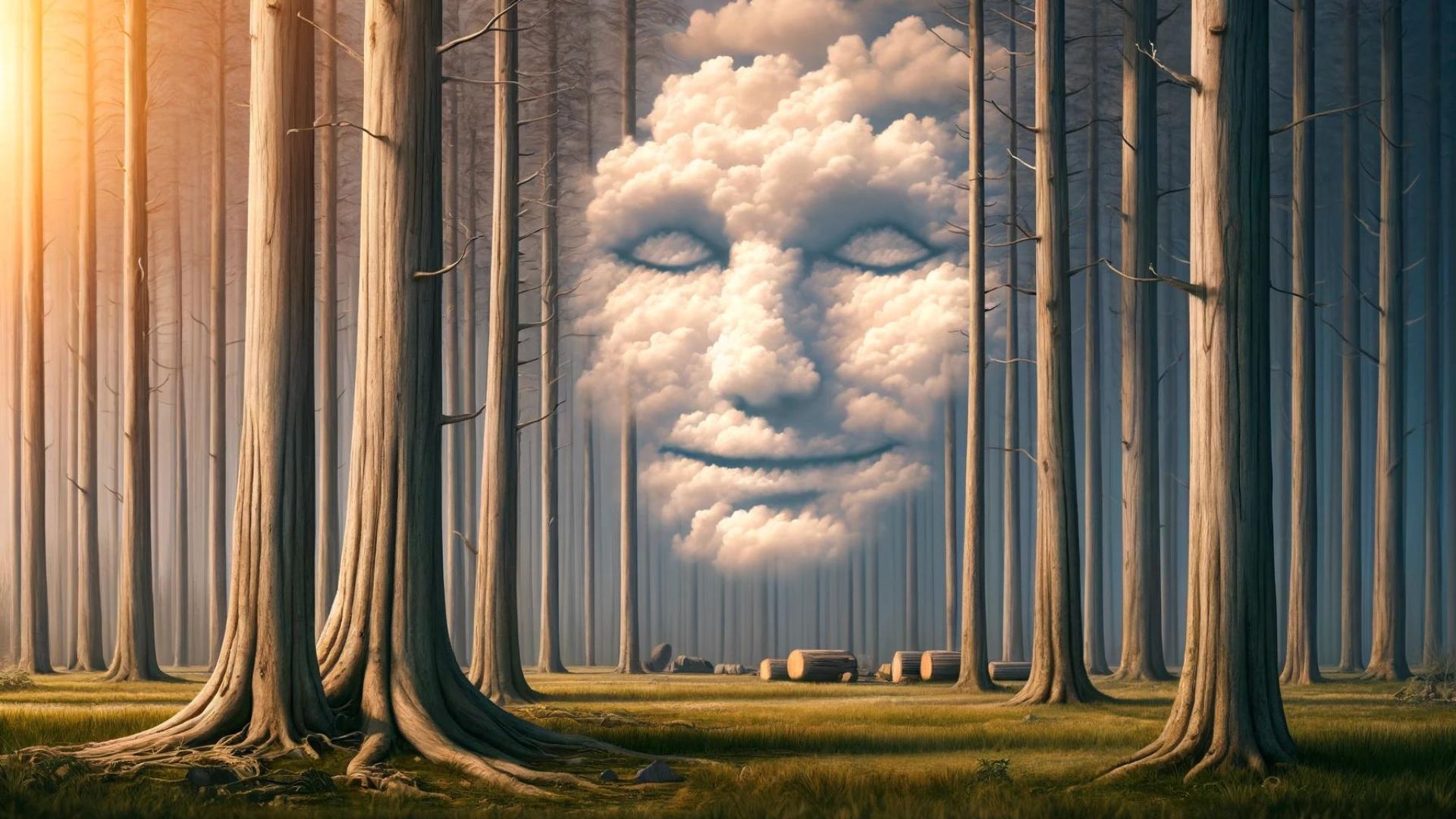
From the Man in the Moon to the face on a slice of toast, humans have a knack for spotting faces in the most unexpected places. This fascinating phenomenon is called pareidolia (pronounced par-i-DOH-lee-a). But why are our brains so eager to find faces where none actually exist?

The Science of Seeing Faces

Our brains are wired for facial recognition. From birth, we’re attuned to picking out facial features; it’s a survival skill crucial for social interaction and identifying potential threats. This means our brains are constantly on the lookout for the familiar patterns of eyes, nose, and mouth.

Pareidolia occurs when this pattern-seeking process goes into overdrive. Random shapes or textures – like a power outlet or clouds in the sky – can trigger our facial recognition systems, leading us to perceive a face where there’s simply none.

It’s All About Evolution

Our tendency towards pareidolia likely has evolutionary roots. Being able to quickly identify faces – whether friend or foe – would have been a distinct advantage for our early ancestors. It’s better to overreact to a false face-like pattern occasionally than to miss a real face that signals a potential threat.

Pareidolia in the Modern World

While spotting faces in rocks may not be vital to our survival these days, pareidolia can reveal how our minds work. It helps us understand:

  • Pattern-Seeking: Our brains love finding patterns and imposing order, even where chaos exists.
  • Creativity: Pareidolia sparks our imagination and can lead to artistic inspiration.
  • Brain Disorders: In some cases, heightened pareidolia can be associated with conditions like Parkinson’s disease and dementia.

Fun Examples of Pareidolia

  • The Man in the Moon: A classic example of seeing faces in celestial bodies.
  • Jesus on Toast: A common (and often humorous) instance of pareidolia triggered by random burn patterns.
  • Car Faces: Ever felt your car was smiling or frowning at you? Headlights and grills can easily suggest a face.

Embracing the Whimsy

Pareidolia is a reminder that our perception of the world is influenced by our own brains. It injects a touch of whimsy and wonder into the everyday, turning ordinary objects into unexpected sources of amusement. So next time you see a face peering back at you from a knot in a tree, don’t be startled – it’s simply your remarkable brain doing what it does best!
0 Comments

Submit a Comment

This site uses Akismet to reduce spam. Learn how your comment data is processed.

<a href="https://englishpluspodcast.com/author/dannyballanowner/" target="_self">English Plus</a>

English Plus

Author

English Plus Podcast is dedicated to bring you the most interesting, engaging and informative daily dose of English and knowledge. So, if you want to take your English and knowledge to the next level, you're in the right place.

You may also Like

Recent Posts

When The Bells Stop Ringing 12 | The Layover

When The Bells Stop Ringing 12 | The Layover

Frankfurt Airport is a cathedral of efficiency, designed to move millions without a hitch. But on Christmas Eve, a massive snowstorm has stopped the clock. At Gate Z-15, the mood is toxic: business travelers are shouting, tourists are hoarding power outlets, and the departure board is a sea of red ‘CANCELED’ signs. Then, the lights go out. In the sudden darkness, a low hum begins in the corner—a melody that transcends language. Join us for a story about what happens when our plans are ruined, and we are forced to find harmony in the delay.

read more
When the Bells Stop Ringing 11 | Noche Buena

When the Bells Stop Ringing 11 | Noche Buena

Manila is usually a symphony of noise—firecrackers, karaoke, and celebration. But inside the Public General Hospital, the air is sterile and silent. Reya, a nurse on the night shift, watches over ‘Lolo Ben,’ a coma patient with no family to claim him. It is Noche Buena, the midnight feast, and Reya refuses to let him spend it in the dark. She hangs a small paper lantern on his IV pole and begins to read. But the hospital doors are about to open, bringing a reminder that even in the quietest rooms, we are never truly alone.

read more
When The Bells Stop Ringing 10 | The Guardian in the Ice

When The Bells Stop Ringing 10 | The Guardian in the Ice

The cold in Moscow is a living entity, prowling the streets for any weakness. Ivan, a homeless veteran, sits on a steam grate behind a metro station, his only warmth coming from the mongrel dog, Laika, tucked inside his coat. When the Social Patrol van pulls up offering a warm bed in a shelter, there is a catch: no dogs allowed. Ivan looks at the open door of the van, and then at the loyal eyes of his companion. This is a story about the family we choose, and the lines we refuse to cross, even when the temperature drops to minus thirty.

read more
When the Bells Stop Ringing 9 | The Longest Ring

When the Bells Stop Ringing 9 | The Longest Ring

In Stockholm, the winter darkness arrives just after lunch, settling over the city like a heavy blanket. Astrid sits by her window, watching a candle burn down—a silent, stubborn signal to a son she hasn’t spoken to in two years. She calls it ‘waiting,’ but deep down, she knows it is pride. The candle is fading, and the silence of the phone is deafening. Tonight, Astrid faces the hardest journey of all: the distance between her hand and the receiver. A story for anyone who is waiting for the other person to blink first.

read more

Categories

Follow Us

Pin It on Pinterest