Introduction and Listening Tips
Welcome back to our listening comprehension practice series. Today, we’re listening to a monologue, which is a long speech by one person. This is a common format in academic lectures and talks you might encounter in exams like TOEFL or IELTS.
Here are some tips for tackling a monologue:
- Follow the Story’s Arc: Monologues, especially stories, usually have a clear beginning, middle, and end. Try to identify the setup (the initial situation), the conflict (the problem), and the resolution (how it ended).
- Listen for Tone: The speaker’s tone of voice (humorous, sad, angry) tells you a lot about their feelings and perspective. Even without seeing them, you can infer their attitude. The speaker today is described as humorous and relatable. Listen for that.
- Don’t Lose the Main Idea: In a long speech, it’s easy to get lost in the details. Periodically ask yourself, “What is the main point the speaker is trying to make?” In this case, it’s about a bad purchase and the psychological reasons behind it.
Now, let’s listen to the story of the worst purchase ever.
Listening Audio
Listening Transcript: Please do not read the transcript before you listen and answer the questions.
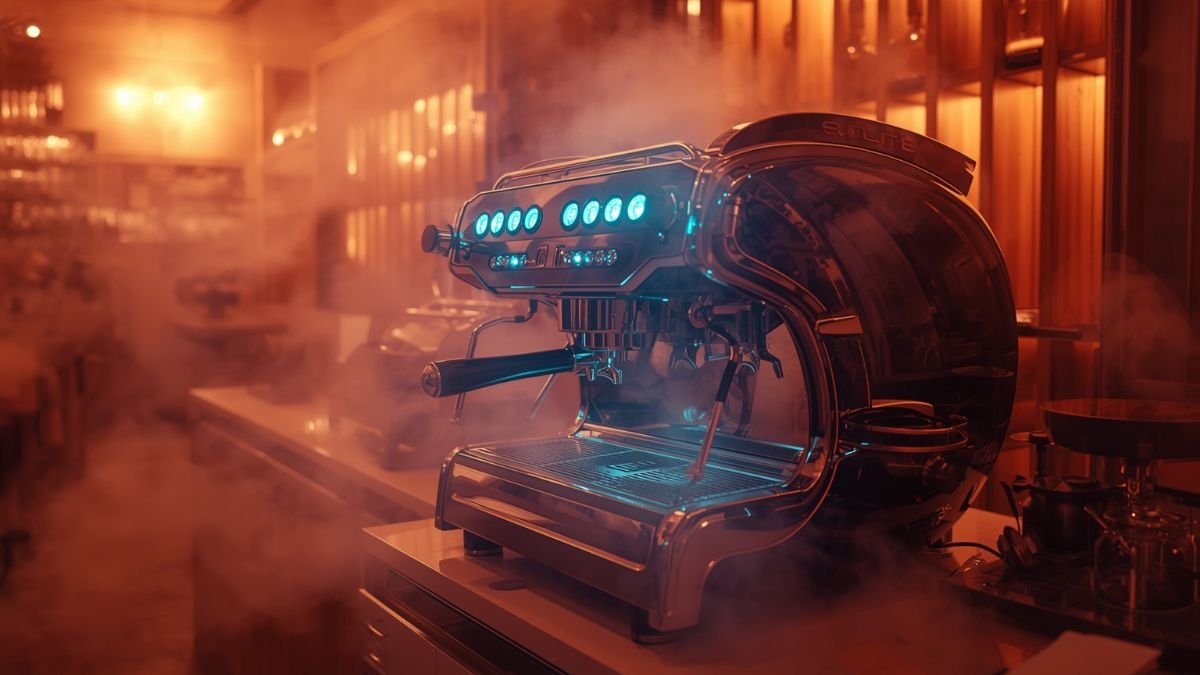
I want to tell you about the worst thing I’ve ever bought. And I’ve bought some questionable things in my time. I once bought a unicycle. Another time, a “learn Japanese in your sleep” audio course. Neither worked out. But this purchase, this one takes the cake. It was a coffee machine. Not just any coffee machine, but the ‘Grind-o-matic 9000’. It had a name that sounded like it belonged in a science fiction movie, and frankly, it had a price tag to match.
My journey to ruin began, as it often does, with research. My old, trusty drip coffee maker had finally given up the ghost, and I decided I deserved an upgrade. I was going to become a coffee connoisseur. I spent weeks watching online videos, reading reviews. And I started to notice a pattern. The more expensive the machine, the more glowing the reviews seemed to be. I saw the Grind-o-matic 9000. It cost… well, let’s just say it cost more than my first car. And in my mind, that astronomical price became an anchor. It fixed itself in my brain as a benchmark of quality. If something costs that much, it simply has to be the best, right? It must be engineered by geniuses and built to last a lifetime. That’s the anchoring bias at work, though I didn’t know the term for it then. I just knew I wanted the best.
So, I took the plunge. I clicked ‘buy’. When it arrived, it was a glorious beast of stainless steel and blinking blue lights. It took up half my kitchen counter. The first week was pure bliss. It made a passable cup of coffee, but the process! It was so complex, so theatrical. It was less about the coffee and more about the performance. I felt like a scientist in a lab, a barista in a fancy Milan café. I was in love.
Then, the trouble started. It was subtle at first. A strange grinding noise, a bit of water leaking from an unidentifiable seam. I told myself it was just settling in. New machines make noises. But then, one morning, it refused to turn on. The blue lights were dark. The silence was deafening. My heart sank. I had owned this pinnacle of coffee technology for all of three months.
Now, a rational person might have called customer service, used the warranty, or even demanded a refund. And I did call them. I spent an hour on hold listening to terrible jazz music only to be told I needed to ‘recalibrate the bean sensor’ by following a 30-step process that seemed to require an engineering degree. I tried. I failed.
This is where the second psychological trap sprang on me: the sunk cost fallacy. I had invested so much money in this machine. I couldn’t just give up on it. That would be admitting I’d made a catastrophic, wallet-incinerating mistake. It would mean the money was gone forever. So, I thought, if I just spend a little more time, a little more effort, I can salvage this. I can make my initial investment worthwhile.
So I didn’t return it. Instead, I became a part-time coffee machine repairman. I bought special tiny screwdrivers. I watched hours of tutorials online, filmed by other poor souls who had also been lured in by the Grind-o-matic 9000. I learned to disassemble the grinding mechanism, clean the water pump, and talk to it in a soothing voice, hoping to coax it back to life. Every weekend, my kitchen counter looked like an appliance graveyard.
It would work, sometimes. For a day or two, it would produce a lukewarm, bitter liquid that bore a passing resemblance to coffee. And each time it did, I’d feel a surge of triumph. “See!” I’d tell myself. “It was worth it! I fixed it!” But the victory was always short-lived. The next day, it would be dead again. My friends started to worry. They’d come over and see me, covered in coffee grounds, muttering about pressure valves. They’d gently suggest I just buy a simple French press. “No!” I’d say, “I’m too invested in this! I’ve put too much into it to quit now.”
This went on for a year. A whole year of my life dedicated to wrestling with this chrome monster. I probably spent more on special cleaning tablets and replacement O-rings than a new, better machine would have cost. I was throwing good money after bad, all because I couldn’t accept that my initial investment – that huge, anchored price – was a total loss.
The end came when it made a sound like a small explosion and shot a spray of hot, gritty water all over my kitchen ceiling. As I stood there, dripping and defeated, I finally had an epiphany. The money was already gone. It was gone the moment I clicked ‘buy’. All the time, all the stress, all the extra money I was putting in now wasn’t bringing that original cost back. It was just digging the hole deeper.
I unplugged it. I didn’t even try to fix it. I carried it out to the dumpster, this monument to my bad judgment, and I let it go. It was one of the most liberating moments of my life. The next day, I went out and bought a simple, twenty-dollar coffee maker. It doesn’t have blue lights. It doesn’t have a fancy name. But every single morning, it makes a perfect cup of coffee. And that, I’ve learned, is a purchase that’s truly priceless.
Listening Quiz
Keywords & Phrases
- Takes the cake: An idiom meaning ‘to be the most outstanding or extreme example of something,’ often used negatively or sarcastically. The speaker uses it to say his coffee machine purchase was the absolute worst one he’s ever made.
- Given up the ghost: A colloquial phrase that means something has stopped working, died, or broken down permanently. The speaker says his old coffee maker had “given up the ghost.”
- Connoisseur: An expert judge in matters of taste. The speaker humorously claims he decided to become a “coffee connoisseur” as a reason for buying an expensive machine.
- Anchoring bias: A cognitive bias where an individual depends too heavily on an initial piece of information (the “anchor”) when making decisions. The speaker explains that the high price of the machine acted as an anchor, making him believe it was high-quality.
- Took the plunge: An idiom that means to commit to a course of action, especially after a period of hesitation. The speaker “took the plunge” when he finally clicked ‘buy’ on the expensive machine.
- Sunk cost fallacy: The tendency to continue an endeavor once an investment in money, effort, or time has been made, even if the current costs outweigh the expected benefits. The speaker demonstrates this by continuing to fix the machine because he had already spent so much money on it.
- Wallet-incinerating: A creative, descriptive adjective made by combining “wallet” and “incinerating” (burning to ashes). The speaker uses it to emphasize how catastrophically expensive his mistake was.
- Poor souls: A sympathetic term for people in a difficult or unfortunate situation. The speaker uses it to describe other people he saw in online tutorials who also bought the faulty machine.
- Throwing good money after bad: An idiom that means to waste more money on something that has already failed and is a lost cause. The speaker did this by buying parts and cleaning supplies for his broken machine.
- Epiphany: A moment of sudden and great revelation or realization. The speaker had an epiphany when he realized he needed to stop trying to fix the machine and just accept the loss.









0 Comments