
The Tyranny of the Visual
We live in a world that is aggressively, relentlessly visual. We are creatures who trust our eyes above almost any other sense. If we see a cast on a leg, we rush to hold the door. If we see a white cane, we step aside. If we see a scar, we understand there was a wound. We are conditioned to believe that pain, if it is real, must have a shape. It must have a color, a bruise, a bandage, or a limp. But what happens when the suffering has no geometry? What happens when the agony is internal, hidden behind a smile that has been practiced in the mirror for ten minutes before leaving the house?
This is the silent crisis of invisible disabilities. It is the parking lot drama where a young, seemingly healthy person steps out of a car parked in a handicapped spot, and the passersby scoff, roll their eyes, or worse, leave a nasty note on the windshield. It is the coworker who leaves early for a “doctor’s appointment” for the third time this month, and the whispers in the breakroom label them as lazy or uncommitted. It is a massive disconnect between what we see and what is actually happening. We are judging books by their covers, but in this case, the cover is a fabrication designed to survive a world that demands we look “normal.”
The Architecture of the Hidden
When we talk about invisible disabilities, we aren’t talking about a niche group. We are talking about a demographic so large it would constitute one of the biggest nations on Earth. We are casting a net that catches everything from chronic pain conditions like fibromyalgia and Ehlers-Danlos Syndrome to autoimmune disorders like Lupus and Crohn’s disease. It includes the vast, complex landscape of mental health—anxiety, depression, PTSD—and the neurodivergent spectrum of autism and ADHD.
The Spectrum of Invisibility
The term “invisible” is actually a bit of a misnomer. It suggests that these conditions are totally undetectable, like a superpower. But they aren’t. They are often visible if you know what to look for, but the signs are subtle, or they are actively hidden. The “invisibility” is often a result of active concealment. It is the diabetic quietly checking their pump under the dinner table. It is the autistic person forcing eye contact until their head pounds just to appear attentive. It is the person with chronic fatigue drinking three espressos just to make it through a meeting, knowing they will crash for fourteen hours afterward.
The spectrum is vast. On one end, you have conditions that are purely physiological but internal—a heart condition or a transplanted organ that is rejecting. On the other end, you have cognitive and sensory processing disorders where the brain is misfiring in a way that makes the lights in the grocery store feel like physical assaults. The common thread is that none of this shows up in a selfie.
The “But You Look Fine” Phenomenon
This phrase—”But you look fine”—is perhaps the most unintentionally devastating sentence in the English language. It is usually meant as a compliment. The speaker thinks they are reassuring the person. “Oh, don’t worry, you don’t look sick!” But to the person living inside that body, it feels like gaslighting. It invalidates their reality. It suggests that because the outside of the house is painted, the fire burning in the kitchen isn’t real.
The psychology here is fascinating and tragic. Humans have a bias toward “just-world” thinking. We want to believe the world is fair and predictable. If someone is sick, they should look sick. If they look healthy, they should be healthy. When we encounter a discrepancy—a healthy-looking person claiming deep pain—our brains glitch. We become suspicious. We start looking for cracks in their story rather than offering empathy. We become detectives of other people’s misery, demanding proof before we offer compassion.
The Energy Economy
To understand the life of someone with an invisible disability, you have to understand economics. Not money, but energy. Christine Miserandino famously coined the “Spoon Theory” to explain this to a friend. The idea is simple: a healthy person wakes up with a limitless supply of spoons (energy). They shower, dress, work, cook, and socialize without ever counting their spoons. A person with chronic illness wakes up with ten spoons. Getting out of bed costs one. Showering costs two. Getting dressed costs one. By the time they are at work, they might have three spoons left for the entire day.
The Cost of Existence
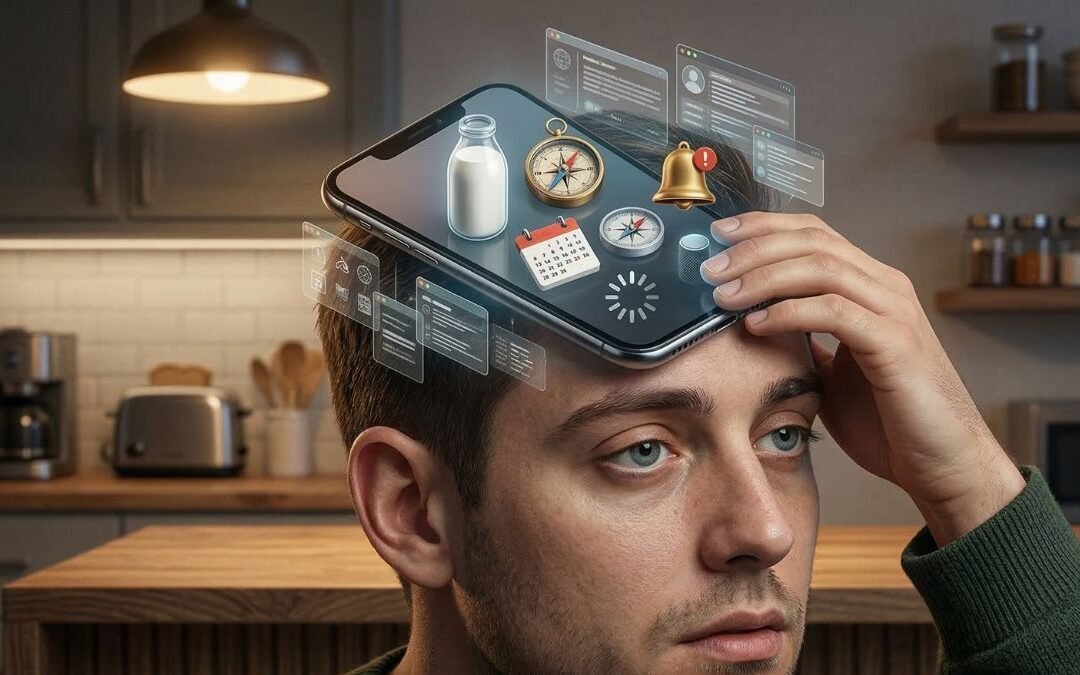
This constant calculation is exhausting. Imagine living your life like your phone battery is permanently at 15%. You have to make choices that “healthy” people never consider. “If I stand up to wash the dishes, I won’t be able to stand up to cook dinner.” “If I go to this birthday party, I will be in bed for two days.” This is the invisible math. When someone cancels plans at the last minute, it’s rarely because they are flaky. It’s often because they ran out of spoons. They hit a wall that you cannot see, but is as solid as concrete to them.
The Performance of Wellness
Because society punishes sickness—especially vague, undefined sickness—people with invisible disabilities become master actors. They perform wellness. This is often called “masking.” Masking is the deliberate suppression of symptoms to fit in. It is laughing at a joke when your brain is in a fog. It is sitting upright in a chair when your joints are screaming. It is a survival mechanism, but it comes with a high tax.
The Workplace Minefield
The workplace is where this performance is most critical and most dangerous. In a corporate environment, consistency is king. You are expected to operate at 100% capacity from 9 to 5, Monday through Friday. But bodies with chronic conditions don’t work on linear schedules. They have flares. They have bad days and worse days.
Employees are terrified to disclose their conditions. If they say nothing, they risk being fired for “performance issues” when they have a bad week. If they disclose, they risk being passed over for promotions because they are seen as “unreliable” or “a liability.” So, they hide it. They use their vacation days for recovery, not vacation. They go to the bathroom to cry or to rest for five minutes. They work twice as hard to appear half as capable, burning themselves out in a cycle that inevitably leads to a crash.
The Burden of Proof
And if they do ask for accommodations? The bureaucracy is often humiliating. You need doctor’s notes, forms, and meetings with HR. You have to prove you are broken enough to need a special chair or a flexible schedule, but not so broken that you can’t do the job. It is a tightrope walk over a canyon of unemployment. The burden of proof is always on the sufferer. They have to prove the invisible is real, over and over again, to people who are predisposed to doubt them.
Reframing Empathy
So, how do we fix this? We can’t give everyone X-ray vision. We can’t force everyone to wear a label listing their diagnosis (nor should we). The solution lies in a fundamental shift in how we process human interaction. We need to move from “seeing is believing” to “listening is believing.”
We need to decouple empathy from evidence. True empathy doesn’t require a permission slip in the form of a cast or a wheelchair. It requires a suspension of judgment. It requires us to accept that the human experience is vast and that our personal sensory input is not the limit of reality. When someone says they are in pain, we need to believe them. Not because we see it, but because they said it.
This isn’t about being gullible. It’s about being humane. It’s about realizing that the person sitting in the priority seat on the bus who looks like a twenty-year-old athlete might have a heart condition that means standing up could cause them to faint. It’s about realizing that the colleague who wears noise-canceling headphones isn’t being rude, but is trying to filter out a sensory environment that feels like a physical attack so they can do their best work.
Conclusion
The next time you find yourself judging a stranger’s ability or health based on a quick glance, catch yourself. That judgment is a reflex, a remnant of a simpler, more primitive brain that needed visual threats to survive. But we are complex creatures now. We live in a complex society. The person next to you might be fighting a war you know nothing about. They might be carefully rationing their last ounce of energy just to smile at you. The least we can do, the very absolute minimum, is not to be another obstacle in their day. The world is hard enough for them. Let’s not make the invisibility the hardest part.
Focus on Language: Vocabulary and Speaking
Let’s dive right into the machinery of the language we just used. When we talk about topics like invisible disabilities, we need words that are precise, because we are describing things that are, by definition, hard to pinpoint. We can’t just use “sad” or “painful” or “tired.” Those words are too small. They don’t carry enough weight.
Take the word visceral. We used this when talking about how we trust our eyes. Visceral comes from “viscera,” which refers to your internal organs—your guts. So when you have a visceral reaction to something, it’s not an intellectual thought. It’s a feeling deep in your gut. It’s instinctual. Emotional. If you see someone get hurt and you flinch, that is visceral. In the context of the article, we have a visceral bias toward visual proof. In real life, you can use this to describe any strong, deep feeling. “I had a visceral hatred for that movie,” or “The music had a visceral quality to it.” It sounds much more intense than just saying “I really felt it.”
Then there is discrepancy. This is a great professional word. It means a lack of compatibility or similarity between two or more facts. In the article, we talked about the discrepancy between how a person looks (healthy) and how they feel (sick). It’s the gap. The error. You can use this constantly in work or daily life. If your bank statement says you have $100 but you thought you had $200, there is a discrepancy. If your friend says they are vegan but they are eating a burger, that is a discrepancy. It’s a polite, analytical way to point out a contradiction.
We also used the word accommodate. To accommodate means to fit in with the wishes or needs of someone. In the disability space, “accommodations” are legal rights—like a ramp or a flexible schedule. But in everyday life, to accommodate someone is to make room for them, physically or metaphorically. “Can you accommodate a meeting at 4 PM?” or “The hotel couldn’t accommodate our request for a sea view.” It implies flexibility and adjustment.
Let’s look at validation. We talked about how “looking fine” invalidates a person’s reality. To validate is to check or prove the accuracy of something, but emotionally, it means to make someone feel that their feelings are legitimate. If your friend is crying and you say, “Stop crying, it’s not a big deal,” you are invalidating them. If you say, “I understand why you are upset,” you are validating them. Everyone craves validation. It is a currency of human connection.
We mentioned the word spectrum. We usually think of light or rainbows, but in modern English, we use spectrum to describe anything that isn’t just black and white. It has a range. The autism spectrum, the political spectrum. It implies nuance. “I’m not a total introvert, I’m somewhere on the spectrum.” It suggests that things exist on a sliding scale, not in binary boxes.
Subjective is another crucial one. Subjective means based on or influenced by personal feelings, tastes, or opinions. Pain is subjective. Only you can feel your pain. The opposite is objective (fact-based). The doctor can objectively see a broken bone, but the pain you feel is subjective. Use this when you are debating opinions. “Well, art is subjective.” It’s a way of saying “there is no right answer.”
We talked about masking. In this context, it’s not about Halloween. It’s a psychological term for hiding your true self to fit in. We all do it to some degree—you use your “customer service voice” on the phone—that’s a mask. But for neurodivergent people, masking is a survival tactic. You can use this to describe anytime you are faking it. “I was masking my annoyance all dinner.”
Stoicism. This refers to the endurance of pain or hardship without the display of feelings and without complaint. We often expect men or sick people to be stoic. “He bore the pain with stoicism.” It’s often seen as a virtue, but the article challenges this. Sometimes stoicism is just hiding.
Exhaustive. Be careful with this one. It doesn’t mean tired (that’s exhausted). Exhaustive means comprehensive, including all elements. “We did an exhaustive search.” In the article, we talked about the exhaustive list of conditions. It means we looked at everything.
And finally, empathy. We use this word a lot, but do we mean it? Empathy is the ability to understand and share the feelings of another. It’s different from sympathy. Sympathy is “I feel bad for you.” Empathy is “I feel what you feel.” The article argues for “decoupling empathy from evidence.”
Now, let’s move to a speaking challenge. It’s easy to read these words; it’s harder to make them come out of your mouth naturally.
The Speaking Challenge: The “Taboo” Description
I want you to try an exercise called “The Taboo Description.” The goal is to describe a sensation or an emotion without using the name of that emotion or sensation. This forces you to use visceral, descriptive language—the kind of language we need to bridge the gap of invisibility.
Here is your assignment: I want you to describe the feeling of a “headache” (or “anxiety” if you prefer) for 60 seconds. But you are forbidden from using the words: hurt, pain, headache, pound, ache, or sad.
You have to use metaphors. You have to use the environment.
Instead of “My head hurts,” you might say: “It feels like there is a vice tightening just behind my eyes, and every time I see a bright light, it’s like a cymbal crashing inside my skull. The fog is so thick I can’t find the words I need.”
Do this out loud. Record it. When you are done, listen to it. Did you convey the weight of the feeling? This is how you practice validation and describing subjective experiences. It trains your brain to find new pathways to expression, which is exactly what people with invisible disabilities have to do every single day.
Critical Analysis
Now, let’s take a step back. I’ve written this article with a lot of empathy, painting the picture of the struggle. But if I’m doing my job as a critical thinker, I have to play the skeptic. I have to look at the other side of the coin, because no cultural phenomenon is purely one-sided.
We need to talk about the commodification of diagnosis. We are living in the “TikTok Era” of mental health and disability. While awareness is fantastic, there is a growing trend of self-diagnosis based on 60-second algorithmic clips. You watch a video that says, “Do you tap your foot? You might be neurodivergent!” and suddenly, everyone has a label.
Does this mass labeling dilute the resources for those with severe, debilitating conditions? If everyone claims to be “on the spectrum” because they are socially awkward, does it make it harder for the non-verbal autistic person to get the funding they need? There is a risk of “compassion fatigue.” If everything is a disability, then nothing is. If society feels like everyone is claiming a special status, the collective empathy might dry up. We might swing from “believing everyone” to “believing no one.”
Furthermore, we ignored the economic reality. The article calls for accommodations. That sounds morally right. But accommodations cost money. Small businesses operating on razor-thin margins might genuinely struggle to employ someone who needs unpredictable time off. It’s an uncomfortable truth. We can demand a more inclusive world, but unless we figure out who pays for that flexibility—is it the government? The employer? The insurance companies?—it remains a nice idea with no structural support. The system isn’t just “mean”; it’s designed for efficiency, and efficiency is the enemy of chronic illness.
And finally, is there a danger in identifying too closely with a diagnosis? If “I am sick” becomes the entirety of your identity, does it prevent you from finding out who you are outside of your pain? There is a fine line between acknowledging a limitation and letting that limitation define your entire existence.
Let’s Discuss
Here are five questions that are designed to make you uncomfortable—in a good way. I want you to wrestle with these in the comments.
1. Is it ever okay to ask for proof of a disability?
Think about priority seating or handicap parking. If we rely purely on the honor system, will people exploit it? But if we demand proof, do we humiliate the disabled? Where is the line between trust and verification?
2. Does the rise of social media “disability influencers” help or harm the community?
On one hand, they educate. On the other, they often present a “glamorized” or “performative” version of disability that might not match the gritty reality of others. Is it becoming a trend?
3. Should mental health days be distinct from sick days in the workplace?
If I have the flu, I’m contagious. If I have anxiety, I’m not. Should the policies be different? Or does separating them create more stigma?
4. Is the “Spoon Theory” applicable to everyone, or does using it for normal tiredness appropriate the struggle of the chronically ill?
Everyone gets tired. Can a healthy person say “I’m out of spoons,” or does that steal the language of a specific community? Who owns the metaphors of suffering?
5. How much should an employer be allowed to know about your health?
Privacy vs. Safety. If you operate heavy machinery and you have a condition that causes fainting, the employer needs to know. But what if you work a desk job? Do they have a right to know your diagnosis to “plan” for your absence?








0 Comments