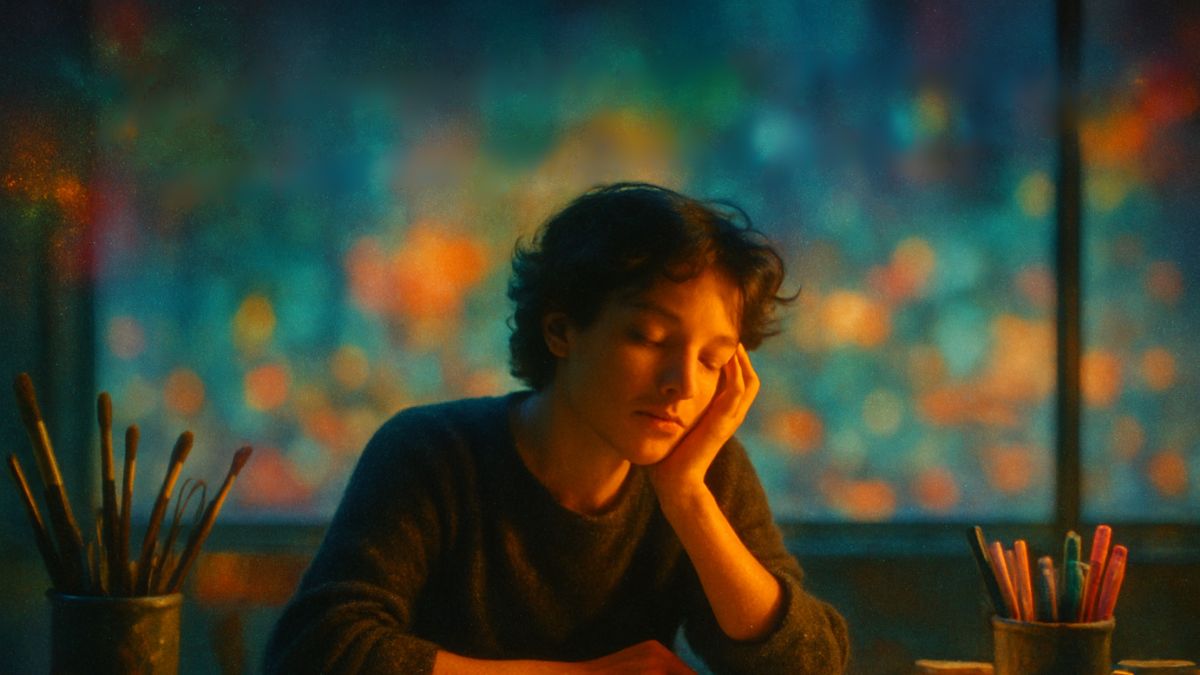
When was the last time you made something just for the sheer, unapologetic joy of making it? Not for a job, not for a side hustle, not even for Instagram… just for you. It’s a surprisingly tough question for most of us, isn't it? We get so caught up in being productive and efficient that we forget about the part of us that just wants to play with colors, or words, or ideas. We’re here today to talk about that part of you. We’re going to explore what it means to truly nurture your creativity, not as a task to check off a list, but as a relationship to cultivate with the most interesting part of your own mind. So let’s wander into this question together: In what ways do you nurture your creativity, and how can you foster it further?
Is Your Creativity a Wild Animal or a Houseplant?
How do you even picture creativity? For some, it’s this mystical, wild creature. A majestic unicorn that appears in a sun-dappled forest only when it feels like it. It can’t be tamed, it can’t be scheduled, you just have to hope it graces you with its presence. If you believe this, then not feeling creative feels like a cosmic injustice. The unicorn just hasn't visited you today. But what if creativity is less like a unicorn and more like a houseplant? It’s still beautiful and a little bit wild, but it’s not entirely out of your control. It needs the right conditions to thrive. It needs sunlight, it needs water, it needs good soil. It needs you to pay attention to it. If your plant is wilting, you don't blame the plant; you check the soil. This shifts everything, doesn't it? It takes creativity out of the realm of pure luck and puts it into the realm of care and cultivation. It suggests that we all have this seed within us, and whether it grows into a sprawling vine or a tiny sprout depends on the environment we create for it. So, which is it for you? Do you wait for the unicorn, or are you tending to the houseplant?
The Sacred and Terrifying Art of Being Bored
Let's talk about the soil. If creativity is a plant, then boredom is the rich, dark, fertile soil it needs to grow. And boy, are we terrified of that soil. Think about the last 24 hours. How much of it was spent in true, unoccupied silence? In a line at the store, on your commute, even waiting for the microwave… we fill every single crack of our lives with podcasts, videos, articles, and endless scrolling. We've optimized boredom right out of existence. But something magical happens in the empty spaces. When your brain isn't actively taking in new information, it does something else. It starts to play. It connects the dots between that weird dream you had, a line from a song you heard last week, and a problem you’re trying to solve at work. This is the "shower thought" phenomenon. You’re not trying to solve the problem, you're just standing there, and poof, the answer appears. That’s not magic; that’s your brain’s default mode network kicking in. It’s the mind’s internal sandbox. By refusing to be bored, are we refusing to let our own minds play? What masterpiece of insight might be waiting for you, just on the other side of five minutes of staring out a window?
What’s on Your Creative Menu?
We are what we eat, and that's not just true for our bodies. It's profoundly true for our minds. Everything you watch, read, and listen to is a meal for your creative spirit. So, what’s on your menu? Is it a steady diet of the same stuff? The same genre of show, the same type of music, the same political echo chamber on social media? An algorithm is designed to feed you more of what you already like, creating a perfectly comfortable, perfectly predictable, and perfectly uninspiring feedback loop. To nurture creativity is to be a curious omnivore. It’s about intentionally seeking out flavors you’ve never tried. It’s reading a book on a topic you know nothing about—mycology, ancient naval history, the art of puppet-making. It’s listening to an album from a country you’ve never visited. It’s going to a museum and spending ten minutes with a painting you don’t understand. This isn't about becoming an expert. It's about collecting new ingredients. You can’t make a surprising new dish if you only have three things in your pantry. So, what new ingredient can you add to your mental pantry this week?
The Courage to Make Glorious Junk
Now we get to the really tender part: the act of making. This is where the inner critic shows up, with its clipboard and its red pen, ready to judge everything you do. "That’s not very good." "You don't know what you're doing." "Who do you think you are, an artist?" Fostering creativity requires building a playground—a safe, judgment-free zone where your inner critic is not allowed. In this playground, you have permission to be a beginner. You have permission to be messy. You have permission to make glorious, wonderful, absolute junk. Because the point of play isn't to create a masterpiece; the point of play is to play. To feel the joy of finger painting without worrying about the final product. To write a terrible poem just to feel the rhythm of words. Somewhere along the way, we got this idea that everything we create has to be "good" or monetizable or shareable. That's not creativity; that's content creation. Creativity is the process, not the product. So where is your playground? And what would you make today if you knew, with absolute certainty, that no one else ever had to see it?
Ultimately, this question isn't about finding the "right" way to be creative. It's about becoming a student of your own mind. It’s about noticing what makes you light up, what makes you curious, and what silences that nagging voice of self-doubt, even for a moment. It’s a dance between intentional action—like seeking out new music—and intentional inaction, like allowing yourself to be bored. It’s a lifelong relationship.
So, I’ll turn the question back to you, and I really want you to think about this. What is one way you already nurture your creativity, even if you don’t call it that? And what is one small, gentle thing you could do this week to foster it just a little bit more?
Share your thoughts in the comments. Let's learn from each other.





0 Comments