- 1. From Lectures to Labs: Immersive Learning with Virtual and Augmented Reality
- 2. AI-Powered Learning: It’s Personal
- 3. Breaking Barriers: Learning Without Limits
- 4. Data-Driven Decisions
- The Importance Goes Beyond Tech
- Action Point
- Why Should You Care?
- Key Takeaways
- Keywords
- Frequently Asked Questions
- Myth Buster
- Let’s Talk
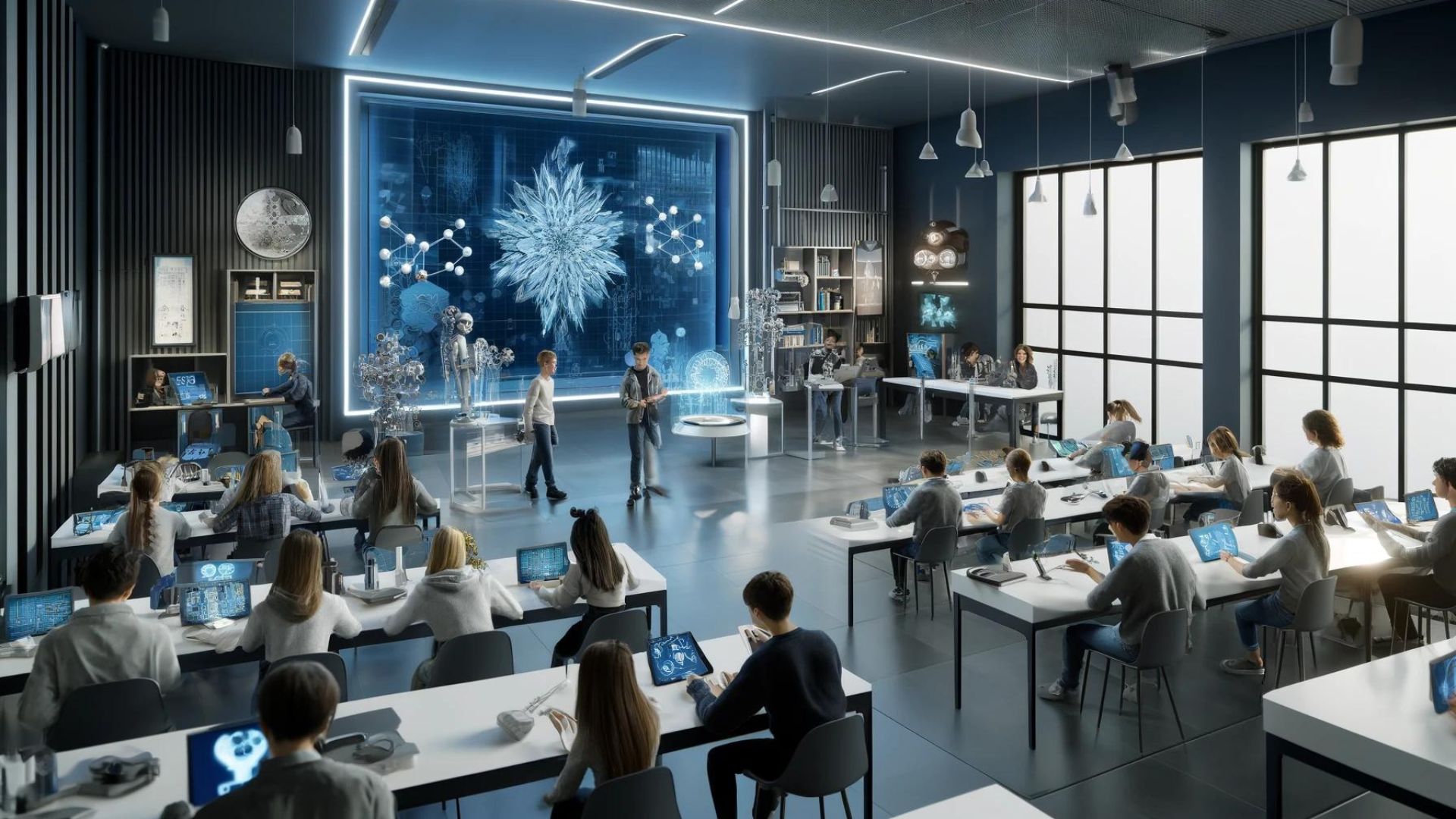
Think back to your own college experience, or picture a classic lecture hall scene in your mind: students rustling in packed rows, a professor lecturing at the front of the room, maybe scribbling on an old-fashioned chalkboard. That image, while perhaps nostalgic, is becoming less and less accurate as technology storms the gates of higher education.
We live in a world fueled by rapid technological advancements. It’s no surprise these advancements are spilling over into the way we learn. Here’s a glimpse at how technology is changing the game:
1. From Lectures to Labs: Immersive Learning with Virtual and Augmented Reality
Get ready to ditch those dusty textbooks. Imagine exploring ancient cities in virtual reality (VR) as a history student. Medical students get to dissect virtual bodies and delve into anatomy in ways never before possible. Engineers can manipulate complex prototypes without ever setting foot in a physical workshop.
Augmented reality (AR) takes this to another level. Imagine your biology textbooks coming to life with 3D models floating in front of you, or walking through campus with AR pop-ups explaining historic buildings. VR and AR make learning a hands-on, exhilarating experience.
2. AI-Powered Learning: It’s Personal
Ever wish you had a personal tutor adjusting lessons just for you? Artificial Intelligence (AI) is getting us closer. AI analyzes your learning patterns, strengths, and weaknesses. It can tailor study plans, recommend resources, and pinpoint exactly where you need extra support. Goodbye one-size-fits-all education, hello personalized learning paths.
3. Breaking Barriers: Learning Without Limits
Imagine living in a remote village and having Harvard professors at your fingertips. Technology shatters geographical and economic barriers. Online courses, massive open online courses (MOOCs), and digital libraries let you access the world’s best educational resources from anywhere, often for little or no cost.
The boundaries of the classroom fade away. You can collaborate on projects with students on different continents, access virtual research labs, and learn at your own pace.
4. Data-Driven Decisions
Professors aren’t the only ones benefiting from technology. Analytics track student performance, engagement, and outcomes. This helps educators spot those falling behind, what teaching methods work best, and allows them to improve courses constantly. Data informs improvements, meaning more effective, student-centered learning.
The Importance Goes Beyond Tech
The true magic of technological innovation isn’t just about the fancy gadgets. It’s about what it enables:
- Student agency: Imagine not just attending class, but helping design your own learning adventure
- Inclusivity: Education becomes accessible, breaking down limitations
- Lifelong learning: Technology removes the notion that education ends at graduation
Action Point
The future of education is intertwined with innovation. Whether you’re a student, educator, parent, or simply curious— embrace these changes. Be open to new ways of learning. Advocate for tech adoption that supports, not replaces, your educators. Help shape a future where technology truly serves to empower learners of all ages and backgrounds.
Why Should You Care?
- Career preparation: Understanding how technology reshapes education helps you (or anyone close to you) develop future-proof skills employers will seek.
- Advocacy: Knowing the possibilities allows you to push for technology that empowers, not distracts, in your educational institution.
- Lifelong learning mindset: These changes fuel the idea that learning is always possible and should be accessible to all.
Key Takeaways
- Technology breaks down the traditional classroom model.
- Immersive tech (VR, AR) make learning interactive and engaging.
- AI customizes education to individual needs.
- Online learning erases geographic and often economic limitations.
- Data analysis improves course design and teaching effectiveness.
Keywords
- Higher education: Post-secondary education (university, college, technical schools)
- Technological innovations: New tools and methods based on technology
- Virtual Reality (VR): Computer-simulated environments offering immersive experiences.
- Augmented Reality (AR): Technology that overlays digital information onto the real world.
- Artificial Intelligence (AI): Computer systems capable of tasks mimicking human intelligence.
- Personalized learning: Instruction tailored to a student’s individual needs and pace.
- MOOCs: Massive Open Online Courses, often free or low-cost, to vast audiences.
- Learning Analytics: Data collection and analysis to understand student trends.
- Student agency: Students taking a more active, self-directed role in their learning.
- Lifelong Learning: The idea that education continues far beyond formal schooling.
Frequently Asked Questions
- Will technology replace teachers?
- No. Good technology empowers teachers to personalize learning, spend more time mentoring, and provide individual attention.
- Isn’t online learning less effective?
- Studies are mixed. It depends on course design, self-discipline, and how well tech is used, not just its mere presence.
- Is all this expensive?
- Open-source tools, MOOCS, and the ever-dropping cost of hardware make it more accessible than ever.
Myth Buster
- Myth: If it’s digital, it’s better learning.
- Reality: Bad tech is just as bad. It’s about design and how tech serves a learning goal, not just being flashy.
Let’s Talk
- Do you think your education benefited from technology? If so, how?
- Do you have fears about tech in the classroom? What are they?
- What’s one tech tool you’d like to try as a learner?
Let’s chat in the comments!






0 Comments