Empowerment and Resilience in ‘Invictus’: Unpacking William Ernest Henley’s Timeless Poem

by | Mar 26, 2024 | Poetry

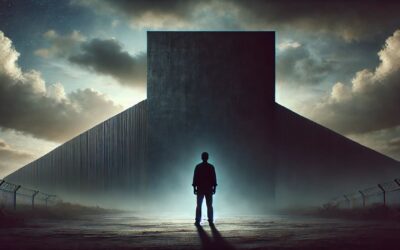
In the vast landscape of English literature, “Invictus” by William Ernest Henley stands as a towering beacon of inspiration, a testament to the resilience and unconquerable spirit of the human soul. Written in 1875, Henley’s immortal lines emerge not merely as a poem but as a declaration of defiance against the adversities of life. This article aims to explore the layers of meaning within “Invictus,” inviting readers to reflect on their own journeys of perseverance and self-determination.

The Darkness That Covers Me

“Out of the night that covers me,
Black as the pit from pole to pole,
I thank whatever gods may be
For my unconquerable soul.”

Henley begins with an acknowledgment of the engulfing darkness that surrounds him, a metaphor for the despair and trials he faced, particularly in relation to his long battle with tuberculosis of the bone. Despite the pervasive darkness, there is a profound sense of gratitude—not for deliverance from his circumstances, but for the resilience of his soul. This opening stanza sets the tone for the poem, establishing the theme of an indomitable spirit that refuses to be defeated by external conditions.

The Clutch of Circumstance

“In the fell clutch of circumstance
I have not winced nor cried aloud.
Under the bludgeonings of chance
My head is bloody, but unbowed.”

The second stanza delves deeper into Henley’s personal struggle, highlighting his stoicism in the face of “circumstance” and “chance”—forces beyond his control that have sought to beat him down. The imagery of a “bloody, but unbowed” head is particularly striking, symbolizing dignity and resilience in the face of adversity. Henley’s refusal to wince or cry aloud underlines a theme of stoic endurance, a refusal to let the trials of life diminish his spirit.

Beyond the Place of Wrath and Tears

“Beyond this place of wrath and tears
Looms but the Horror of the shade,
And yet the menace of the years
Finds and shall find me unafraid.”

As the poem progresses, Henley acknowledges the inevitability of death (“the Horror of the shade”) but refuses to be cowed by it. The “place of wrath and tears” serves as a metaphor for the world and its sorrows, suggesting that despite the trials life presents, there is a courage within that remains undiminished by the passage of time. This stanza speaks to the human capacity to face the unknown and the inevitable with courage rather than fear.

The Master of My Fate

“It matters not how strait the gate,
How charged with punishments the scroll,
I am the master of my fate,
I am the captain of my soul.”

The final stanza of “Invictus” is a powerful assertion of autonomy and personal agency. Henley declares himself the “master of [his] fate” and the “captain of [his] soul,” a profound statement of self-determination and inner strength. Regardless of the challenges life presents (“how strait the gate, / How charged with punishments the scroll”), Henley asserts his ability to control his response, his attitude, and ultimately, his destiny.

Conclusion: A Call to Inner Strength

“Invictus” by William Ernest Henley resonates across generations as a call to resilience, autonomy, and the invincible strength of the human spirit. Henley’s personal battle with physical ailment and despair gave birth to a universal message of empowerment: that within each of us lies an unconquerable soul capable of overcoming the darkest nights. In today’s world, where challenges and uncertainties abound, “Invictus” serves as a timeless reminder that we hold the power to navigate our lives with courage and determination, masters of our fates and captains of our souls.

0 Comments

Submit a Comment

This site uses Akismet to reduce spam. Learn how your comment data is processed.

<a href="https://englishpluspodcast.com/author/dannyballanowner/" target="_self">English Plus</a>

English Plus

Author

English Plus Podcast is dedicated to bring you the most interesting, engaging and informative daily dose of English and knowledge. So, if you want to take your English and knowledge to the next level, you're in the right place.

You may also Like

Recent Posts

When the Bells Stop Ringing 9 | The Longest Ring

When the Bells Stop Ringing 9 | The Longest Ring

In Stockholm, the winter darkness arrives just after lunch, settling over the city like a heavy blanket. Astrid sits by her window, watching a candle burn down—a silent, stubborn signal to a son she hasn’t spoken to in two years. She calls it ‘waiting,’ but deep down, she knows it is pride. The candle is fading, and the silence of the phone is deafening. Tonight, Astrid faces the hardest journey of all: the distance between her hand and the receiver. A story for anyone who is waiting for the other person to blink first.

read more
When the Bells Stop Ringing 8 | The Spice of Memory

When the Bells Stop Ringing 8 | The Spice of Memory

Berlin in December is gray, damp, and smells of wet wool. For Fatima, a refugee from Aleppo, the city feels impossibly cold and distant. Desperate for a sense of home on Christmas Eve, she opens a jar of seven-spice and begins to cook Maqluba, filling her apartment building with the rich, loud scents of the Levant. But when a sharp knock comes at the door, Fatima fears the worst. On the other side stands her stern German neighbor, Frau Weber. What follows is a story about the flavors that divide us, and the unexpected tastes that bring us together.

read more
When the Bells Stop Ringing 7 | The Snowbound Station

When the Bells Stop Ringing 7 | The Snowbound Station

A blizzard has erased the highways of Hokkaido, trapping a diverse group of travelers in a roadside station on Christmas Eve. There is a businessman with a deadline, a crying toddler, and a truck driver named Kenji hauling a perishable cargo of sunshine—mandarin oranges. As the power flickers and the vending machines die, the tension in the room rises. With the road closed and hunger setting in, Kenji looks at his sealed cargo and faces a choice: follow the rules of the logbook, or break the seal to feed the strangers stranded with him.

read more
When The Bells Stop Ringing 6 | The Candle Carrier

When The Bells Stop Ringing 6 | The Candle Carrier

In Beirut, the darkness doesn’t fall gently; it seizes the city. On Christmas Eve, the power grid fails, leaving twelve-year-old Nour and her neighbors in a suffocating blackout. In a building where iron doors are usually triple-locked and neighbors rarely speak, the silence is heavy. But Nour remembers her grandmother’s beeswax candles and makes a choice. Instead of huddling in her own apartment, she heads for the dark stairwell. This is a tale about what happens when the lights go out, and we are forced to become the light for one another.

read more
When the Bells Stop Ringing 5 | The Pub On the Corner

When the Bells Stop Ringing 5 | The Pub On the Corner

In Dublin, the rain drifts rather than falls, turning the streetlights of Temple Bar into blurred halos. Cillian sits alone in a pub, avoiding the deafening silence of his own home—a house that has been too quiet since his wife, Siobhan, passed away. He has set a place at the table out of habit, a monument to his loss. But when a soaking wet traveler stumbles into the pub with a backpack and a ruined plan, Cillian is forced to decide whether to guard his grief or open the door. Join us for a story about the ’empty chair’ and the courage it takes to fill it.

read more

Categories

Follow Us

Pin It on Pinterest