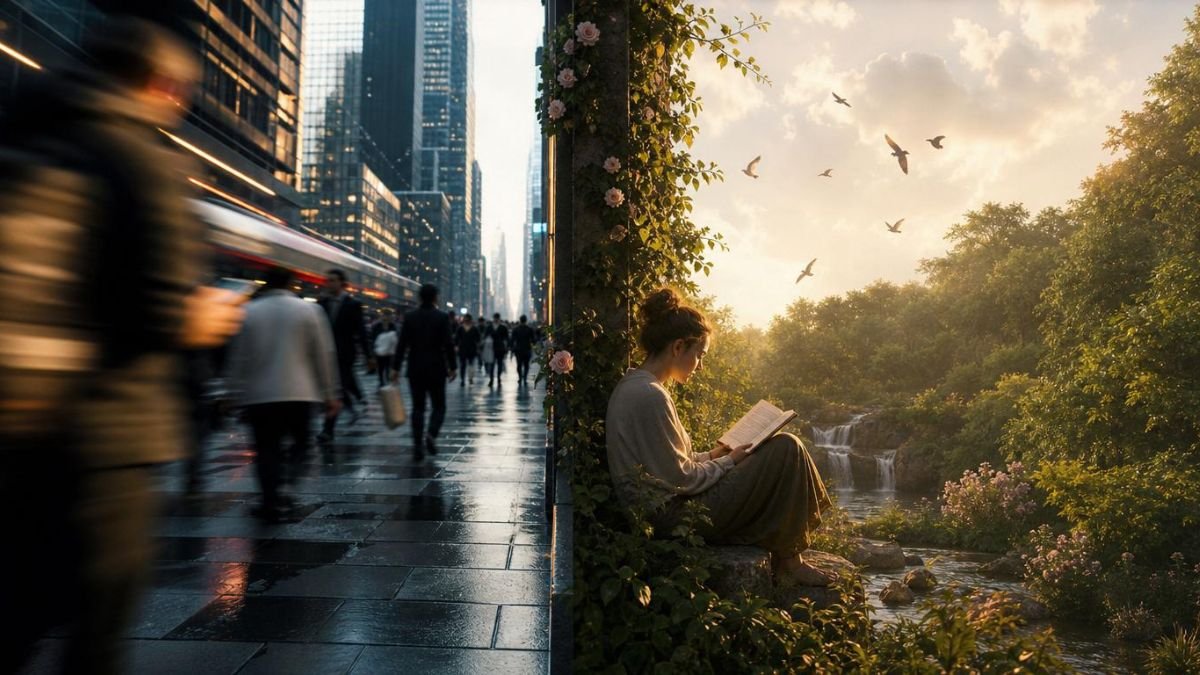
Let’s imagine for a moment, together, you and I, something that may happen to you every single day, way too many times, actually. You’re scrolling through your phone, probably waiting for your coffee to brew or sitting in traffic (as a passenger, I hope), and you swipe past a quote. It’s something like, "The sun will rise, and you will try again." The background is a minimalist sketch of a sunrise. It has three million likes.
You pause. You double-tap. You might even share it to your stories. It feels profound in that specific, fleeting three-second window.
But is it poetry? And more importantly, if that is what’s moving millions of people today, does actual poetry—the kind that takes a little chewing, a little mulling over—even matter anymore?
This isn’t the tired, old "Is Poetry Dead?" debate. We’ve been having that argument since someone first decided a limerick wasn't serious enough for the royal court. No, we know poetry isn't dead. It’s alive and well, living in protests, song lyrics, and, yes, Instagram feeds. But the deeper question, the one that keeps me up at night is whether the depth of poetry matters to us anymore.
Have we lost our appetite for words that demand something from us?
I ask this not from some lofty academic perch, but from the trenches of my own life. Writing poetry has always been my anchor. It has brought me the greatest joy, the most profound clarity, and honestly, a cheap form of therapy. When the world is screaming, poetry is the quiet room where I can hear myself think. It’s a space where language isn't just a tool for selling something or winning an argument; it’s the destination itself.
But this isn't about me. It’s about us. It’s about the fact that words still possess an undeniable, world-shaping power. Yet, it often feels like we are increasingly moved by the simplest, most frivolous arrangements of those words. We react to platitudes as if they were revelations. We encounter a cliché wrapped in an aesthetic font, and we call it genius.
And look, I get it. The world is heavy. It’s exhausting. We are bombarded with information, crises, and noise from the moment we wake up to the moment we pass out with our phones on our chests. In that environment, a simple, easily digestible "you are enough" feels like a lifeline. I am not here to judge anyone for finding comfort in simplicity. We all need a quick fix sometimes.
But we should perhaps worry just a little bit. We should worry if we are consistently running away from the deeper, richer, more complex meanings found in true poetry. Because when we only consume the literary equivalent of fast food, our intellectual and emotional palates change. We lose the patience required to sit with a difficult emotion. We lose the vocabulary needed to articulate the messy, contradictory, beautifully complicated human experience. We settle for "sad" when we could be exploring "melancholy," "despair," or "the quiet ache of a Sunday afternoon."
When we run from complex language, we are running from complex thought.
Now, before we sound the alarm and blame the modern attention span for all of society's ills, we need to have a very honest conversation about who is actually to blame for this disconnect. We can't talk about whether poetry matters without talking about the people who, for a very long time, acted like they owned it.
Yes, I’m talking about the gatekeepers. The self-appointed guardians of the literary realm who lived in their ivory towers, peering down at the masses through spectacles frosted with disdain. For decades—centuries, really—poetry was often taught and presented as a secret club. You had to know the password, which usually involved understanding obscure Greek mythology and recognizing iambic pentameter on sight.
If you didn’t “get” a poem immediately, the implication wasn’t that the poem was dense; the implication was that you were stupid.
This elitist ostracization did incredible damage. It took an art form that began as an oral tradition—stories told around fires, songs sung in pubs, rhythms used to remember history—and locked it in a dusty classroom. It became ostentatious. It became, in many ways, empty. A performance of intellect rather than a communication of the soul.
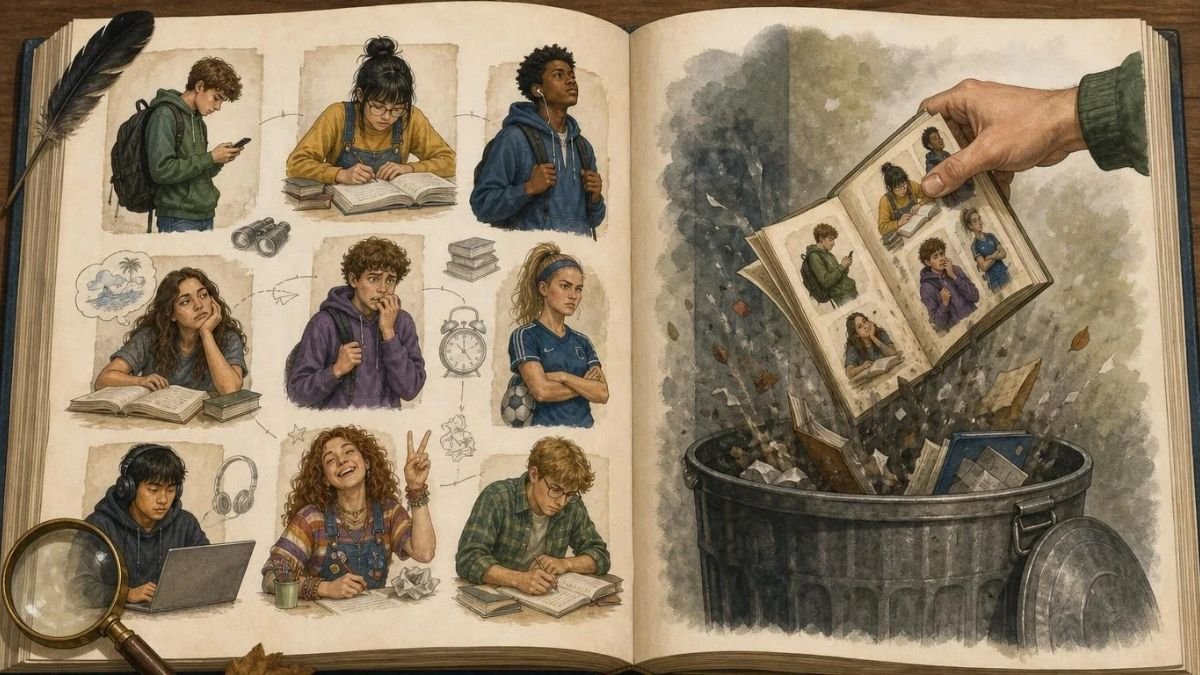
Think about how poetry was often introduced to us in school. It was presented as a puzzle to be solved, a code to be cracked. What does the blue curtain symbolize? (Plot twist: Sometimes, the author just liked blue). We were taught to dissect poetry, not to feel it. We were taught to analyze the meter, not to let the rhythm move our own heartbeat.
Is it any wonder, then, that so many people ran screaming from the poetry section of the bookstore the moment they graduated? If you are constantly told that you aren't smart enough to understand an art form, you will eventually decide that the art form isn't for you.
So, when Instagram poetry exploded onto the scene, offering short, immediate, highly accessible feelings, of course, millions of people flocked to it. It was a rebellion against the ivory tower. It was people saying, "I want to feel something right now, and I don't want to need a dictionary to do it."
I applaud that rebellion. I really do. The democratization of publishing through social media has brought incredibly diverse voices to the forefront. It has proven that people still crave the emotional resonance that only poetry can provide.
However, we have to be careful not to throw the baby out with the bathwater. In our justified rejection of elitism, we shouldn't reject the beauty of craft, the power of nuance, and the sheer magic of a perfectly chosen, perhaps slightly uncommon, word.
Poetry is not supposed to be a riddle designed to make you feel inadequate. But it is supposed to make you slow down.
In a world that demands we move faster, consume more, and react instantly, a good poem is a speed bump. It forces you to stop scrolling. It forces you to read a line twice. It asks you to sit in a space of ambiguity, where a feeling might not be easily categorized into "happy" or "sad."
This brings us back to the original question: Does poetry matter anymore?
It matters more than it ever has.
It matters because we are losing the art of precision in our language. We live in an era of hyperbole, where everything is "the best ever" or "literally the worst." We communicate in emojis and acronyms. And while that’s efficient, it’s not always effective at capturing the truth of who we are.
Poetry is the antidote to the flattening of our language. A poet doesn't just say they are heartbroken; they describe the exact sound the floorboards make when they are pacing at 3 AM. A poet doesn't just say they are in love; they describe how the light catches the dust motes in the room when that person walks in.
Poetry matters because it exercises the muscle of empathy. When you read a poem written by someone whose life looks nothing like yours—someone from a different culture, a different era, a different circumstance—you are stepping into their mind. You are feeling their pulse. It is incredibly difficult to hate someone, or to dismiss them as "the other," when you have deeply felt their poetry.
It matters because it helps us process the unspeakable. When tragedy strikes, personally or globally, our everyday language often fails us. "I'm sorry for your loss" feels woefully inadequate. But a poem? A poem can hold the weight of grief. It can provide a container for the chaos. We turn to poetry at weddings and funerals because those are the moments when normal words simply aren't big enough.
So, how do we bridge the gap? How do we reclaim the depth of poetry without retreating into the elitist towers of the past?
First, we need to change how we talk about it. Let’s stop pretending that every poem has to be "understood." Sometimes, a poem is just meant to be experienced. You don't have to understand the chemical composition of the ocean to enjoy swimming in it. Let a poem wash over you. If a line gives you goosebumps, that’s enough. You don't need to write a five-page essay explaining why.
Second, we need to celebrate the middle ground. We don't have to choose between a two-line aesthetic quote on Instagram and a 500-page epic poem from the 17th century. There is a vast, beautiful world of contemporary poetry that is accessible, relevant, and still incredibly rich in craft and meaning. There are poets writing right now about the anxieties of the digital age, about climate change, about modern love, using language that is both grounded and transcendent.
Third, we have to permit ourselves to be moved by complexity. It is okay to be challenged by a piece of writing. It is okay to look up a word. It’s okay to read a poem and think, "I don't know what that meant, but it made me feel strangely nostalgic." That is the magic working.
Ultimately, poetry matters because your inner life matters. Your complicated, messy, profound, unique human experience deserves more than clichés and algorithm-friendly platitudes. You deserve words that are as rich and deep as the life you are living.
We don't need to worry that poetry is dead. It will survive as long as humans have breath and a need to be understood. But we do need to make sure we are still showing up for it. We need to make sure we haven't traded the feast for the fast food simply because it was quicker.
So, here is my challenge to you, as we wrap up this conversation.
I want you to think about your relationship with words.
When was the last time a piece of writing made you stop completely in your tracks?
Are you settling for simple comforts in your reading, or are you allowing yourself to be challenged?
Have you let a bad experience in a high school English class keep you away from an art form that could bring you immense joy and clarity?
I encourage you to seek out a poem today. Don't worry about analyzing it. Just read it aloud. Feel the rhythm in your mouth. Notice how the words taste. Let it slow you down, even just for a minute.
And if you’re feeling brave, pick up a pen. Write down your own complicated, messy truth. You don't need a gatekeeper's permission. You don't need to be in an ivory tower. You just need to remember that your words—your real, deep, thoughtfully chosen words—have power.
Use them.
Danny Ballan
Editor-in-Chief
English Plus Magazine


0 Comments