The Gist
You’ve probably heard the saying “lightning never strikes sand,” but is it actually true? When lightning strikes, it usually aims for the highest object in its path—trees, buildings, or even people. But what happens when it hits sand? This common myth has circulated for years, but the truth is much more fascinating and rooted in science. Understanding how lightning interacts with sand not only demystifies the myth but also reveals the stunning beauty and power of nature.
What Really Happens When Lightning Hits Sand?
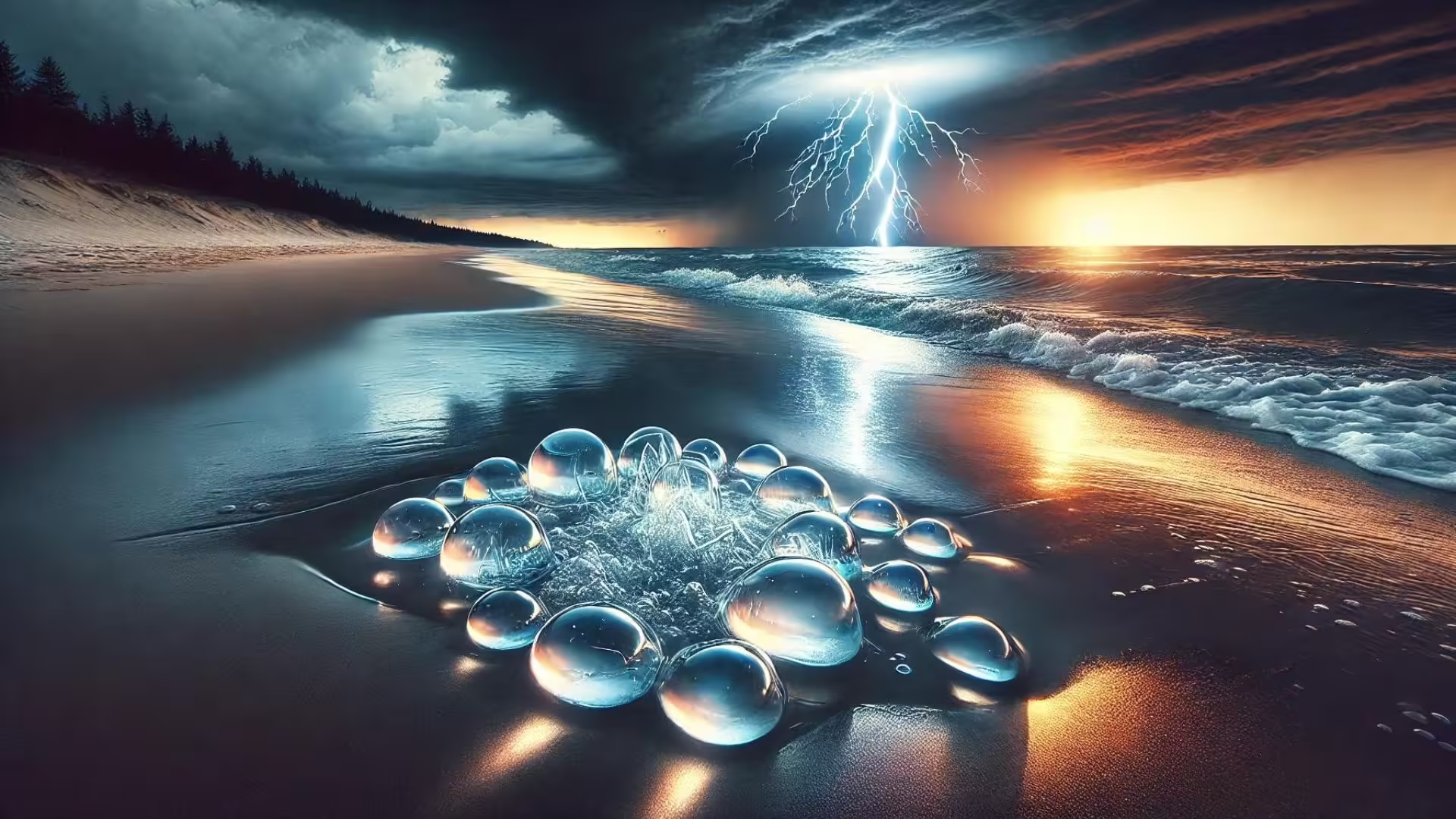
Let’s get this out of the way first: lightning absolutely can strike sand. When a bolt of lightning, which can reach temperatures of up to 50,000 degrees Fahrenheit, hits a sandy surface, something quite remarkable happens. The intense heat melts the silica in the sand, and when it cools down, it forms glass-like structures called fulgurites. These fulgurites are natural sculptures created by lightning, often taking the form of hollow tubes or branches beneath the surface.
These lightning-created artworks are proof that the idea of lightning never striking sand is simply a myth. Not only does lightning strike sand, but it also leaves behind tangible evidence in the form of fulgurites, which have fascinated scientists and collectors alike. They can be found in deserts, beaches, and other sandy areas after powerful storms.
The Science Behind Fulgurites
Fulgurites are formed when the extreme heat of lightning fuses grains of sand into glass. The result is often a fragile, tubular structure, with the shape and size depending on the strength of the lightning strike and the type of sand it hits. Silica, the main component in sand, melts at about 3,000 degrees Fahrenheit, but the heat from lightning far exceeds that, allowing the sand to transform into glass almost instantly.
This transformation is not just a natural marvel but a reminder of how lightning interacts with the Earth’s surface. Fulgurites are not just rare; they’re a physical representation of the raw power of nature. People often collect them as souvenirs, and scientists study them to understand more about the geological impact of lightning.
Why the Myth?
So, why do people believe that lightning never strikes sand? It likely stems from the fact that open, flat surfaces like beaches don’t attract lightning as frequently as taller objects like trees or buildings. Lightning tends to strike the tallest point in an area because it’s the path of least resistance between the storm clouds and the ground. On a beach, with few tall objects around, people may assume the lightning avoids sand entirely. But as we now know, that’s not the case.
In fact, if you’ve ever heard of someone being struck by lightning on a beach, it’s likely because the electrical charge found its way to the ground and the surrounding sand. The myth that lightning never strikes sand is simply a misunderstanding of how lightning behaves.
Real-Life Implications: Safety During Storms
Understanding that lightning does strike sand—and what happens when it does—is more than just a cool science fact. It’s also a reminder of the importance of lightning safety, especially in areas like beaches and deserts. Just because you’re standing on a flat surface doesn’t mean you’re immune to lightning strikes. In fact, people at the beach or in open areas are vulnerable because they might be the tallest object in that environment.
It’s crucial to seek shelter when a storm approaches, no matter where you are. Stay away from open areas, and if you’re near a beach or sandy location, remember that lightning can and does strike there. Fulgurites are proof of that.
Take Action: Be Safe, Stay Curious
The next time you’re on a beach during a storm—or anywhere, really—remember that lightning’s power extends far beyond tall trees and metal poles. It can strike sand, water, or anything else in its path. Knowing that fact should encourage you to take lightning safety seriously, no matter where you are.
But beyond safety, understanding the science of lightning strikes and fulgurites invites you to stay curious about the natural world. Who knows, maybe your next beach walk after a storm could reveal one of nature’s own glass sculptures—a fulgurite left behind by a powerful bolt of lightning. Keep exploring, keep asking questions, and always take the time to appreciate the incredible mysteries that nature continues to reveal.
Expand Your Vocabulary
- Fulgurite: A glass-like structure formed when lightning strikes sand. In everyday conversation, fulgurite refers to a rare, natural creation. You might say, “Finding a fulgurite after the storm was like discovering a hidden treasure.”
- Silica: The primary component in sand, which melts to form glass when exposed to high heat. In everyday terms, silica is often found in products like glassware or electronics. For example, “The glass in your windows is made from silica.”
- Myth: A widely held but false belief or idea. You can use this word to describe common misconceptions, like “The myth that lightning doesn’t strike the same place twice isn’t true.”
- Conductor: A material that allows electricity to flow through it. In everyday English, we might call someone who easily connects people a “conductor of ideas,” as they facilitate the flow of communication.
- Lightning: A powerful electrical discharge during storms. Lightning is used metaphorically in phrases like “He moved like lightning,” meaning someone acted quickly.
- Melts: To change from a solid to a liquid due to heat. In everyday language, “melt” is often used to describe emotional reactions, such as “My heart melted when I saw the puppy.”
- Strike: In this context, it means the sudden impact of lightning. In everyday usage, “strike” can refer to sudden action, like “He struck a deal in record time.”
- Sandy: Describing something covered in or made of sand. It can be used to describe textures, such as “The floor was sandy after our trip to the beach.”
- Surface: The outer layer or top part of something. This term is used broadly, like “On the surface, the project seemed simple, but it was more complex underneath.”
- Tangible: Something that can be touched or is concrete. In conversation, people use “tangible” to describe things that feel real, like “I need tangible results to measure my success.”
Let’s Talk
- Have you ever heard any other myths about nature, like the one about lightning and sand? What were they, and how did you find out they weren’t true?
- Why do you think people believe myths, even when there’s evidence to the contrary? How can we challenge these beliefs in a productive way?
- Fulgurites are rare and fragile, formed under extreme conditions. Can you think of other natural phenomena that create something beautiful through destruction or chaos?
- How does understanding the science behind lightning strikes change the way you think about storms or natural disasters?
- Knowing that lightning can strike sand and create glass, how does this challenge your perception of where we are most vulnerable to lightning strikes?








0 Comments