Introduction
Hi again! You're doing such a wonderful job learning English! Today, we're going to explore the colorful world around us and learn the names of some basic colors in English. Knowing your colors is really useful for describing things, whether you're talking about your clothes, your favorite foods, or the beautiful world outside. Think of this lesson as your vibrant guide to the spectrum of English colors. Ready to add some color to your vocabulary? Let's dive in!
Naming Basic Colors
Let's learn the names of some common colors. I'll write the color word and give you some everyday examples to help you remember them. Say each color name out loud with me!
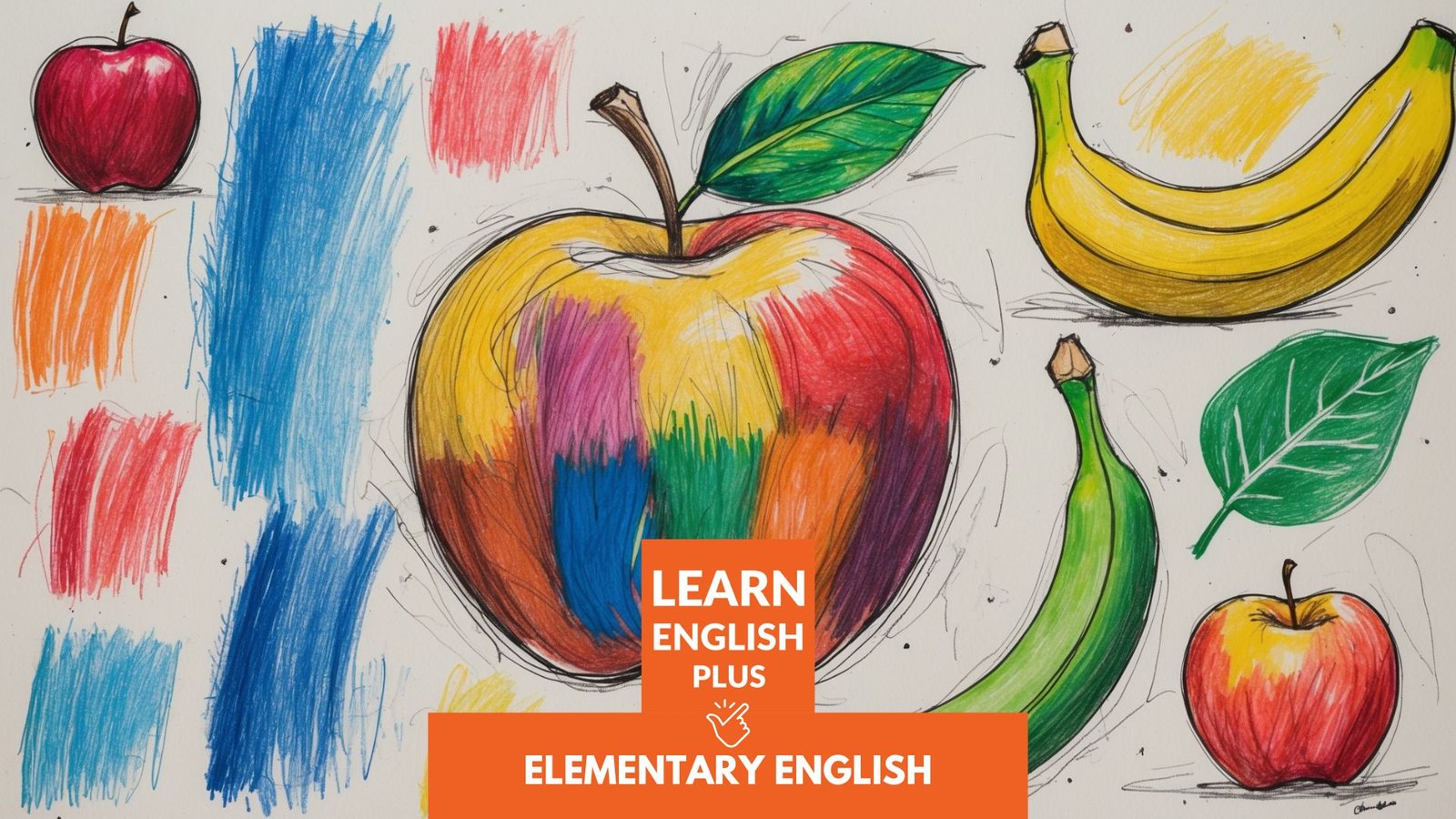
- Red: Think of an apple or a tomato. They are often red.
- Practice: Say "red." Now say "red" again. Good job!
- Blue: Think of the sky on a sunny day or the ocean. They are often blue.
- Practice: Say "blue." Now say "blue" again. Wonderful!
- Yellow: Think of a banana or the sun. They are often yellow.
- Practice: Say "yellow." Now say "yellow" again. Great!
- Green: Think of grass or leaves on a tree. They are often green.
- Practice: Say "green." Now say "green" again. Well done!
- Orange: Think of the fruit, an orange! It's usually orange.
- Practice: Say "orange." Now say "orange" again. Fantastic!
- Purple: Think of grapes or some flowers. They can be purple.
- Practice: Say "purple." Now say "purple" again. Excellent!
- Pink: Think of some flowers or sometimes a pig! They can be pink.
- Practice: Say "pink." Now say "pink" again. Perfect!
- Black: Think of a dark night or some shoes. They can be black.
- Practice: Say "black." Now say "black" again. Good job!
- White: Think of snow or milk. They are often white.
- Practice: Say "white." Now say "white" again. Wonderful!
- Brown: Think of chocolate or the ground. They are often brown.
- Practice: Say "brown." Now say "brown" again. Great!
Let's Practice Saying the Colors!
Now, let's try saying all the colors together. Say these words out loud with me:
Red, blue, yellow, green, orange, purple, pink, black, white, brown.
Try it again, maybe a little faster this time:
Red, blue, yellow, green, orange, purple, pink, black, white, brown.
You did it! You know ten basic colors in English!
Associating Colors with Common Items
Now, let's practice connecting these color words with things you see every day. I'll name an item, and you try to say what color it usually is.
- The sky? (*Blue
- A banana? (*Yellow
- An apple? (*Red
- Grass? (*Green
- The fruit, an orange? (*Orange
- Grapes? (*Purple
- Some flowers? (*Pink or other colors!
- A dark night? (*Black
- Snow? (*White
- Chocolate? (*Brown
How did you do? Remember, some things can be different colors, but we're thinking about the most common color.
Let's Try Another Way!
I'm going to say a color, and you try to think of one thing that is usually that color:
- Red? (Maybe a car?
- Blue? (Maybe jeans?
- Yellow? (Maybe a lemon?
- Green? (Maybe a tree?
- Orange? (Maybe a carrot?
- Purple? (Maybe an eggplant?
- Pink? (Maybe a flower?
- Black? (Maybe your hair?
- White? (Maybe a piece of paper?
- Brown? (Maybe a table?
There are so many possibilities!
Using Colors in Sentences
Now, let's see how we can use these color words in simple sentences:
- "My shirt is blue."
- "The flowers are red and yellow."
- "I like green apples."
- "That car is black."
- Practice: Think about something you are wearing right now. What color is it? Say, "My ______ is ______." (For example, "My shirt is blue."
- Look around the room you are in. Can you see something that is red? Say, "The ______ is red." Do the same for blue, yellow, and green.
Let's Ask Questions About Color!
We can also ask questions about the color of things:
- "What color is your hair?"
- "What color is the door?"
- "What color is your favorite fruit?"
- Practice: Ask yourself these questions and answer them! For example, "What color is my hair? My hair is brown." "What color is the door? The door is white." "What color is my favorite fruit? My favorite fruit is red."
- Now, think of someone you know. What color do you think their favorite color is? You could ask them, "What's your favorite color?"
A Little Color Game!
I'm going to describe something, and you guess the color:
- It's the color of sunshine. (*Yellow
- It's the color of many leaves. (*Green
- It's the color of a common berry, like a strawberry. (*Red
- It's the color of the night sky. (*Black
- It's the color of milk. (*White
You're so good at this!
You're So Colorful!
You've now learned the names of ten basic colors in English and practiced using them to describe things around you. That's a really bright achievement! Keep noticing the colors of things you see every day and saying their names in English. The more you practice, the more colorful your English vocabulary will become! Keep up the amazing work – you're a color expert!





0 Comments