Develop your advanced English writing skills by crafting a chilling 500-word horror story set in an abandoned amusement park. Perfect for creative writing practice and exam versatility.


Develop your advanced English writing skills by crafting a chilling 500-word horror story set in an abandoned amusement park. Perfect for creative writing practice and exam versatility.

Master the art of professional thank-you letters by drafting a heartfelt appreciation to a career mentor. Perfect for advanced English writing skills and exam preparation.

Hone your advanced English writing skills by crafting a compelling 250-word persuasive speech for remote work flexibility. Ideal for international exam success.

Practice reflective writing for English proficiency. Learn how to structure a concise (200-word) journal entry about overcoming a personal challenge, focusing on thoughts and feelings.

Learn to write captivating Instagram captions for travel photos. Boost engagement with hooks, storytelling, emojis, hashtags, and calls to action. Suitable for advanced English learners.

Improve your process writing skills for English exams. Learn how to write clear, sequential process paragraphs with transition words, using coffee brewing as an example.

Learn how to write a professional press release for English proficiency exams and business contexts. Step-by-step guide with examples for an eco-friendly product launch.

Improve your dialogue writing skills for English exams (IELTS/TOEFL/SAT). Learn to write natural, engaging dialogue with character voice using a secret map scenario.
Learn how to write an effective cover letter for a digital marketing job application. Essential skills for English exams (e.g., BEC, IELTS GT) and career success. Includes structure and tips.
Improve argumentative essay writing for English exams. Learn to structure arguments, use evidence, and write persuasively about teaching financial literacy in schools (300-word example).

Tired of democracy failing you? Try the premium option! A biting, satirical guide to navigating the congressional marketplace, buying influence, and ensuring your “speech” is heard louder than anyone else’s.

What happens when progress destroys tradition? Dive into Danny’s “The Keeper of the Spring” story and analysis for a full summary, character guide, and theme breakdown.
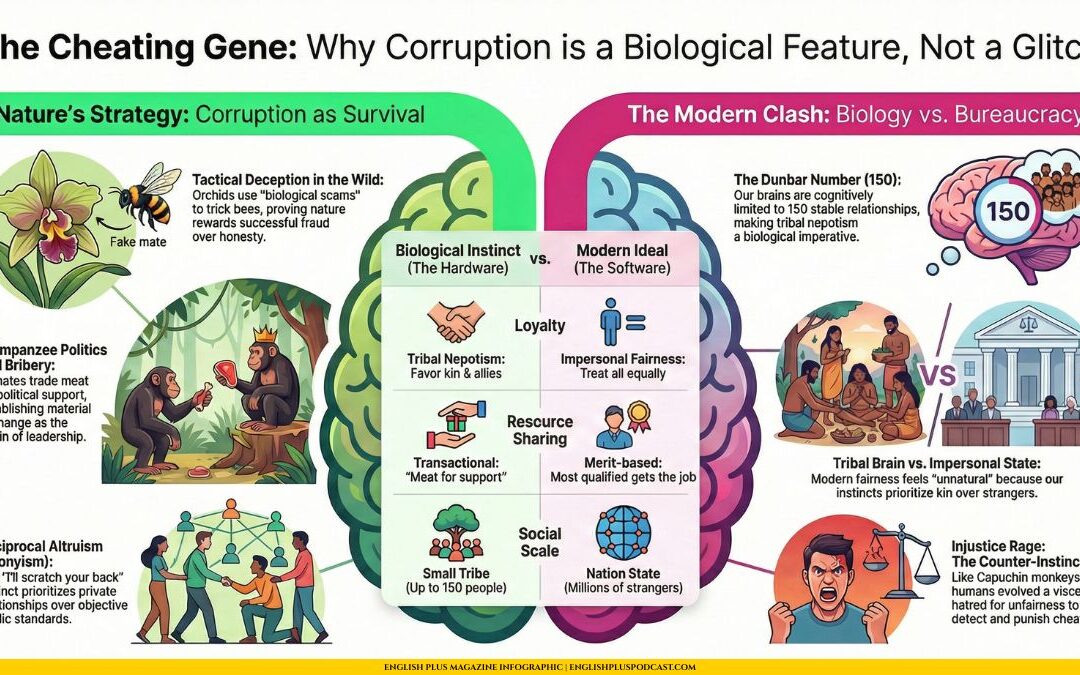
From orchids lying to bees to chimps trading meat for votes, we explore the biological roots of corruption. Is bribery a human flaw or an evolutionary survival strategy?

Discover how the ultra-wealthy consolidate power in Episode 3 of Shadow Games. We explore the Media Monopoly, Regulatory Capture, and the “Too Big to Fail” phenomenon. A deep dive into the mechanics of modern oligarchy.

Did Nero really play music while Rome burned to ash? We dig into the historical evidence to separate fact from fiction and discover why this ancient rumor still shapes our view of power and truth today.

Can suffering actually be good for you? We explore the uncomfortable truth that pain, while unpleasant, is often the secret ingredient for wisdom, resilience, and a truly meaningful life.