Introduction: How to Approach This Writing Workout
Hey there! Ready to work on making your written dialogues sound natural and engaging? Writing good dialogue is a fantastic skill, whether for creative pieces or even incorporating quotes effectively in essays. It’s also great practice for understanding tone and character, which helps in reading comprehension too!
Here’s how you can get the most out of this session:
- Understand the Challenge: First, really grasp the writing task we’re tackling today – creating a dialogue.
- Follow the Plan: We’ll map out a simple plan together. Stick with it as we go.
- Walk Through the Steps: We’ll go step-by-step, brainstorming, drafting, and refining. Pay close attention to the tips, common mistakes, and examples. This is where the learning happens!
- Check the Recap: Quickly review the main takeaways.
- Take the Optional Challenge: The best way to solidify a skill is to practice it independently. Give the final challenge a go!
Alright, let’s craft some dialogue!
The Challenge: A Secret Map Discovery
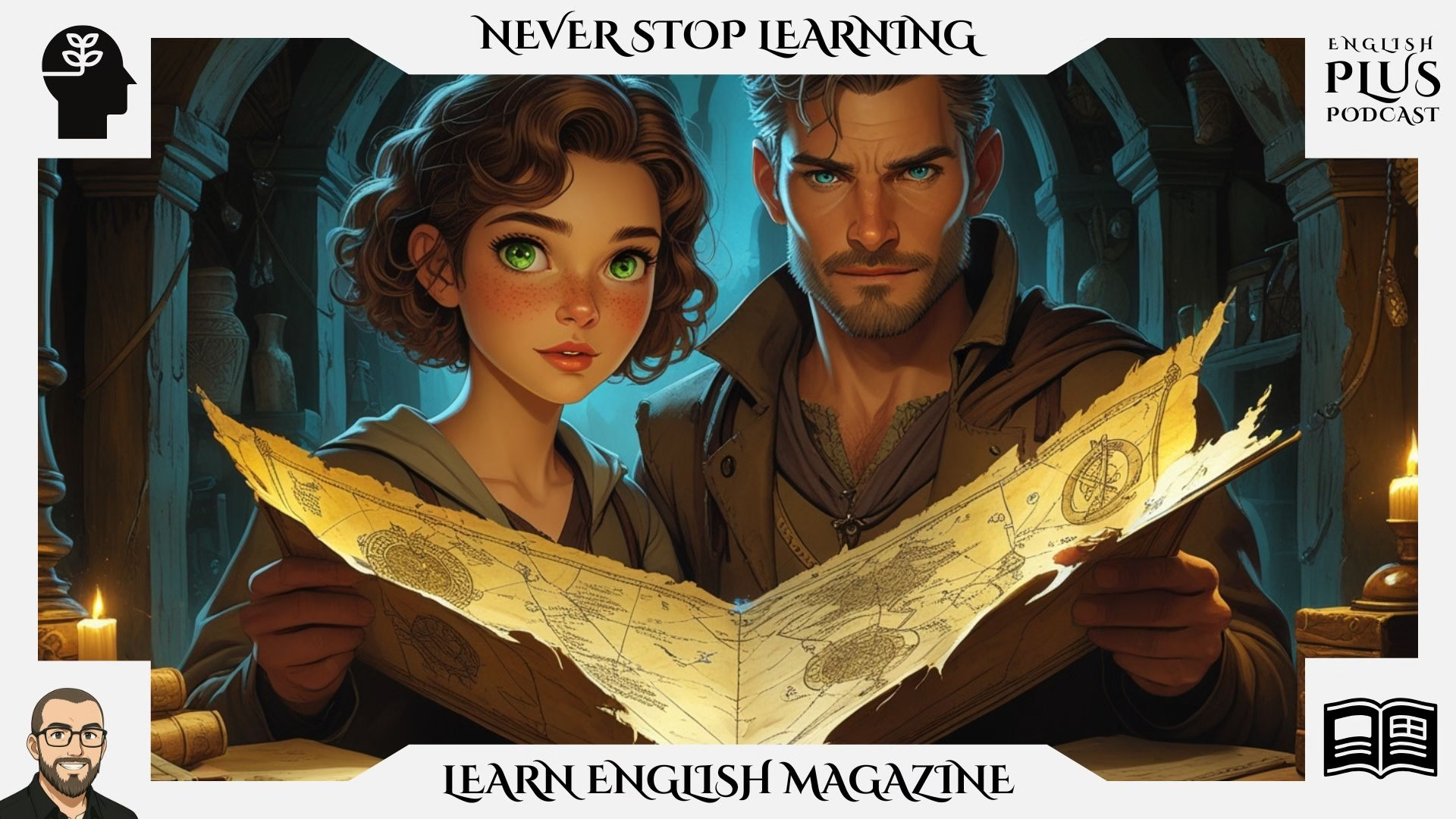
Okay, here’s the scenario: Imagine two characters stumble upon something unexpected – an old, mysterious map tucked away somewhere (maybe in an attic, an old book, a hidden drawer). Your task is to write a short dialogue (around 150-250 words) capturing that moment of discovery and their immediate reactions. We need to hear their voices, feel their excitement or confusion, and get a sense of what this map might mean.
Sounds fun, right? But how do we make it sound real and not just like two robots talking? Let’s make a plan.
Our Plan:
- Characters & Setting: Briefly decide who our characters are and where they find the map. This influences how they speak.
- Opening Hook: Start the dialogue right at or just after the moment of discovery.
- Show, Don’t Just Tell: Use the dialogue and brief action tags to reveal emotions and the map’s details.
- Character Voice: Make the characters sound distinct.
- Pacing & Reaction: Build a little suspense or excitement.
- Refine & Polish: Check punctuation, flow, and naturalness.
Step-by-Step Walkthrough: Crafting the Dialogue
Step 1: Characters & Setting
Let’s decide. How about two siblings, maybe teenagers or young adults, cleaning out their late grandfather’s dusty attic? Let’s call them Maya (practical, slightly skeptical) and Leo (more impulsive, imaginative). The setting is cluttered, dim, maybe a bit spooky. This contrast between the characters will help create more interesting dialogue.
Step 2: Opening Hook – The Discovery
We need to jump right in. How does one find a map? Maybe it falls out of something.
- Okay Draft Idea:
Leo: Look what I found.
Maya: What is it?
Leo: A map.
- Critique: Uh oh. A bit bland, isn’t it? No excitement, no sense of place. This is telling us they found a map, not showing the discovery. Let’s try again, adding action and reaction.
- Better Draft Idea:
Leo: Whoa! Maya, check this out! It fell out of this old sea chest.
Maya: (Coughing from dust) What did? Don’t just stand there holding… wait, is that parchment?
Step 3: Show, Don’t Just Tell – Revealing Details & Emotion
They’ve found it. Now what? They need to react and describe it through their conversation. Avoid just saying “It was an old map.” Show it through their words.
- Common Mistake: Over-explaining or using dialogue only for exposition (giving background information). Dialogue should feel like a real conversation.
- Adding Detail & Reaction:
Maya: Parchment? Seriously? Let me see. (Takes it carefully) It’s brittle… smells like… damp cellar and secrets. What are these markings? Looks hand-drawn.
Leo: Exactly! And look at this symbol here – isn’t that the weird crest Grandpa had on his old ring?
Maya: Hmm, maybe. It’s hard to tell, it’s so faded. Is this… is this supposed to be a map of the coastline nearby? But it looks… wrong. The landmarks are different.
- Improvement: Now we’re getting somewhere! We ‘see’ the map is old parchment, hand-drawn, faded, maybe inaccurate or ancient. We feel Maya’s carefulness and Leo’s excitement (“Exactly!”). We also added a intriguing detail (the crest).
Step 4: Character Voice
Do Maya and Leo sound different? Maya seems more cautious (“Hmm, maybe,” “It’s hard to tell”), while Leo is quicker to jump to conclusions (“Exactly!”). Let’s ensure their language reflects this throughout.
- Example of Weak Voice: If both just said factual things like “The map shows the coast. The symbol is faded.”
- Strengthening Voice: Let Leo be more speculative, Maya more questioning.
- Continuing the Draft:
Leo: Wrong? Or old? Like, really old! Maybe it shows where that smuggler’s treasure Grandpa used to joke about is hidden!
Maya: (Scoffs lightly) Leo, seriously? Smuggler’s treasure? Grandpa told those stories to everyone. This is probably just some old nautical chart, maybe inaccurate.
Leo: But the crest, Maya! And look how carefully it was hidden! Why else would it be tucked away in here?
Step 5: Pacing & Reaction
The conversation should build slightly. We started with the discovery, moved to description and initial theories. What’s the next beat? Maybe a shared sense of wonder, despite Maya’s skepticism.
- Building the Moment: Maya: (Leaning closer, tracing a line with her finger) I admit… it is strange. This bay isn’t shaped like this anymore. And what’s this ‘X’ marked just offshore? Leo: You see it too! It’s got to mean something! What do we do? Maya: (Looks around the dusty attic, then back at the map) I don’t know… but I guess we don’t put it back in the chest just yet.
Step 6: Refine & Polish – Dialogue Formatting & Flow
Now let’s put it all together and check formatting. Remember:
- New speaker = new line.
- Punctuation usually goes inside the quotation marks.
- Use action tags (like ‘Scoffs lightly’, ‘Leaning closer’) sparingly to add depth without slowing it down too much.
- Common Mistakes: Incorrect punctuation (commas outside quotes), long paragraphs of description instead of dialogue, overuse of “he said/she said.”
- Polished Sample Dialogue (approx. 190 words):
Leo: Whoa! Maya, check this out! It fell out of this old sea chest.
Maya: (Coughing from dust) What did? Don’t just stand there holding… wait, is that parchment?
Leo: Looks like it! Feel how old it is!
Maya: Parchment? Seriously? Let me see. (Takes it carefully) It’s brittle… smells like… damp cellar and secrets. What are these markings? Looks hand-drawn.
Leo: Exactly! And look at this symbol here – isn’t that the weird crest Grandpa had on his old ring?
Maya: Hmm, maybe. It’s hard to tell, it’s so faded. Is this… is this supposed to be a map of the coastline nearby? But it looks… wrong. The landmarks are different.
Leo: Wrong? Or old? Like, really old! Maybe it shows where that smuggler’s treasure Grandpa used to joke about is hidden!
Maya: (Scoffs lightly) Leo, seriously? Smuggler’s treasure? Grandpa told those stories to everyone. This is probably just some old nautical chart, maybe inaccurate.
Leo: But the crest, Maya! And look how carefully it was hidden! Why else would it be tucked away in here?
Maya: (Leaning closer, tracing a line with her finger) I admit… it is strange. This bay isn’t shaped like this anymore. And what’s this ‘X’ marked just offshore?
Leo: You see it too! It’s got to mean something! What do we do?
Maya: (Looks around the dusty attic, then back at the map) I don’t know… but I guess we don’t put it back in the chest just yet.
Wrap-up: Key Dialogue Writing Takeaways
So, what did we focus on?
- Show, Don’t Tell: Use dialogue and brief actions to reveal setting, objects, and emotions.
- Character Voice: Make characters distinct through their word choice and attitude.
- Natural Flow: Keep sentences relatively short and conversational. Include pauses, interruptions, or questions.
- Pacing: Build the conversation logically, revealing information gradually.
- Formatting: Use correct punctuation and paragraphing for new speakers.
Optional Writing Challenge!
Ready to try it yourself? Here’s a new scenario:
Write a dialogue (around 150-250 words) between two friends who are looking at a strange weather phenomenon in the sky (e.g., oddly coloured clouds, strange lights). One friend is scientifically minded, the other is more imaginative or superstitious.
Remember to use the techniques we practiced: show don’t tell, distinct character voices, natural flow, and correct formatting. The only way to get better at writing is by writing! Give it a shot!






0 Comments