Acids and Bases | Word Power

by Danny Ballan | Aug 29, 2022 | Vocabulary Building

Introduction

Learn about acids and bases and add 10 new words to your active vocabulary bank with the interactive activities on the website and the PDF practice worksheet.

Audio Podcast

Acids and Bases

You have no doubt heard the expression "Let's give it the acid test." An acid test is a crucial, severe test. Acids are well known as burning, caustic chemicals. Less well known, however, are the chemicals called bases. Bases are the opposites of acids. Acids and bases counteract each other on contact and are the key substances in many important chemical reactions that take place every day.

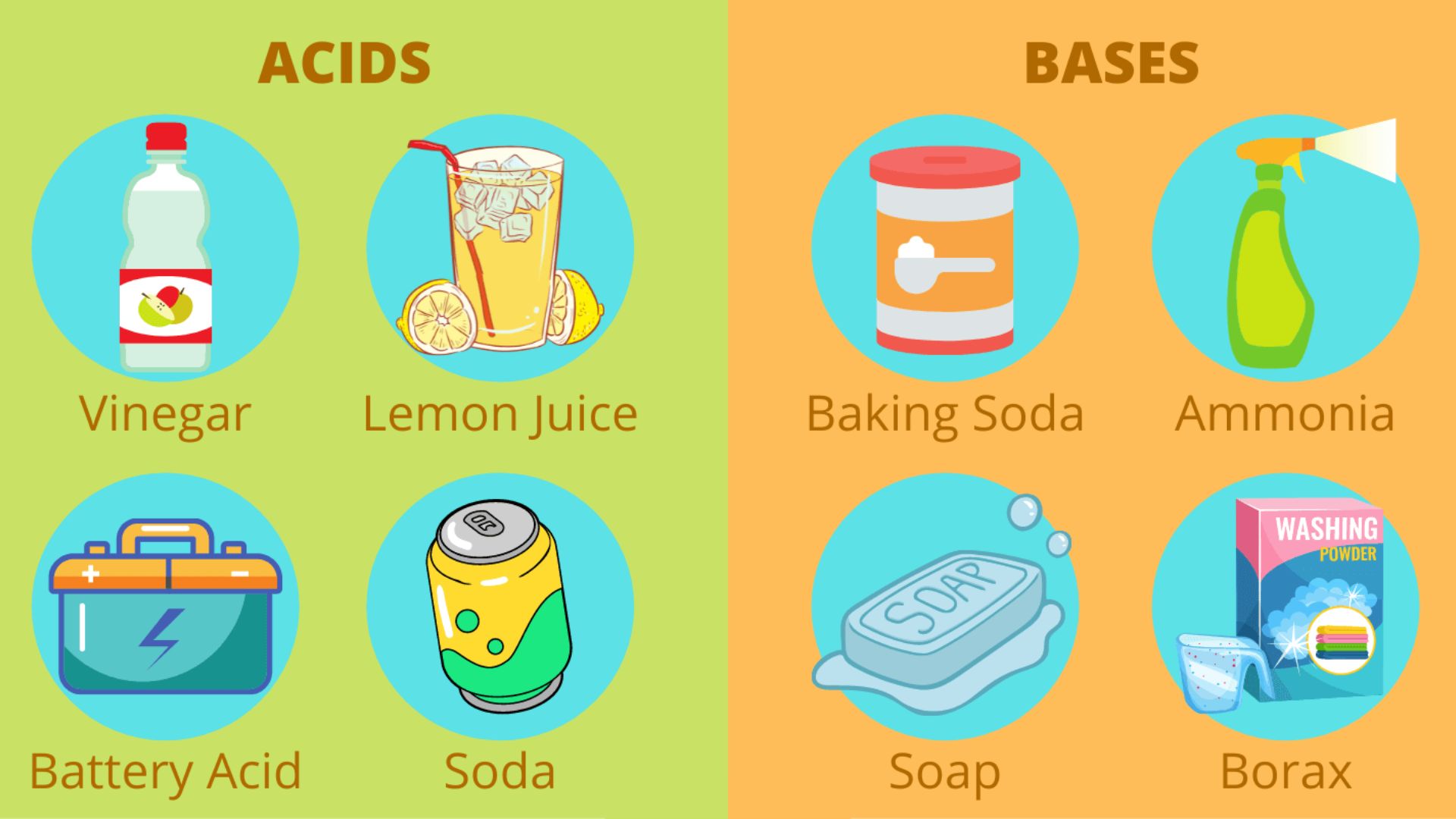
If you are like most people, the word acid makes you think of dangerous liquids that burn clothing and skin, but this is not always the case. To assuage your fears, consider the fact that many acids are beneficial. For example, your stomach contains very concentrated amounts of hydrochloric acid—an acid so vital that you could not digest your food without it. Our diet itself would be very bland without acids, because the characteristic taste of many fruits, like the lemon and grapefruit, is the result of citric acid. Vinegar, another common acid, is a prime ingredient in many salad dressings. In fact, the word acid comes from the Latin word acidus, which means "sour."

However, some very dangerous acids contain hydronium ions, which can rip electrons off of other compounds in a process called oxidation. Chemically, this oxidation process is very similar to combustion. Body parts touched by a strong acid are literally burned, a process that can denude them of hair and layers of skin.

While the word base does not conjure up the fear that acid does, the names of common bases sometimes do. Lye, known by the chemical name sodium hydroxide, is one of the premier bases in household use. It is used as a drain cleaner. The exterior of its container is labeled with dire warnings and poison symbols. Lye is very caustic and can severely damage your skin if you touch it. However, to allay your concern, you should know that other bases are quite harmless, and we use them every day with impunity. A weak solution of ammonia, used to clean windows, is one common example.

When acids and bases meet, they react, sometimes violently, and neutralize each other. Take heartburn, for instance. After someone engages in gastronomic excess at the pizza house, it is not uncommon for a surplus of acid to form in the stomach. Heartburn is that burning sensation in the stomach caused by too much acid. The most common therapeutic treatment for this "acid stomach" is to swallow some form of bicarbonate of soda, or baking soda. This base neutralizes some of the acid, and the burning sensation in the stomach is relieved. When the base sodium hydroxide reacts with hydrochloric acid, they neutralize each other and form sodium chloride. Sodium chloride is the common household condiment more commonly called table salt.


Interactive Activities

Flashcards

Learning

Matching

Spelling

Test

Crossword Puzzle

PDF Practice Worksheet

Related Posts

Episode 759 The Three Laws of Newton

Three Laws That Must Be Obeyed | Word Power

In this episode, we explore the meaning and usage of ten interesting keywords from a text about Sir Isaac Newton’s laws of motion. We discuss words like “apocryphal,” “behemoth,” “brevity,” “dally,” “depreciate,” “paraphrase,” “reinforce,” “relatively,” “respite,” and “svelte,” and share their definitions and common usage. Join us as we deepen our understanding of these words and learn how to use them effectively in our everyday conversations and writing. Don’t forget to follow our podcast on your favorite platform, share it with others, and leave us a rating and review to help us reach more listeners!

Episode 757 Word Power Learning the Ropes

Learning the Ropes | Word Power

In this Word Power episode – Learning the Ropes, we discuss 10 commonly used English keywords, including Gothic, impregnable, riven, insularity, elite, reverence, mystique, exhort, sundry, and primal. We define each of these words and explore how they can be used in different contexts. Plus, we offer tips for practicing these words to help expand your vocabulary.

Episode 755 Word Power Stick Style

Stick Style | Word Power

In this episode of Word Power, we explore the unique architectural style of the Great Camps in the Adirondack Mountains, and learn 10 new vocabulary words that will help you describe and appreciate this historic design. From the rustic charm of the buildings, to the prepossessing interiors filled with luxurious accoutrements, to the patina that has developed over time, we delve into the fascinating world of the Adirondack Great Camps. Along the way, we learn the meaning and usage of 10 new vocabulary words, including redolent, romantic, fastidious, and prototype. Plus, we provide exercises and resources to help you practice and retain these words in your own vocabulary. Don’t miss this engaging and informative episode of Word Power!

0 Comments

Submit a Comment

This site uses Akismet to reduce spam. Learn how your comment data is processed.

Recent Posts

A History of Sex as a Business

A History of Sex as a Business 09 | The Digital Turn: Platforms, Algorithms, and OnlyFans

This is part 9 of 10 in The Oldest Profession

The internet transformed commercial sex as radically as anything since the industrial revolution — enabling greater autonomy for some, creating new vectors for exploitation for others, and producing a legislative and ethical landscape that nobody has figured out how to navigate. This episode examines FOSTA-SESTA, OnlyFans, the trafficking-platform debate, and where we actually stand.

read more...
A History of Sex as a Business

A History of Sex as a Business 08 | The Business Model: How the Industry Actually Works

This is part 8 of 10 in The Oldest Profession

Beneath the historical narrative is an economic structure — one characterized by specific mechanisms of recruitment, control, and profit extraction that have remained remarkably consistent across centuries and continents. This episode examines the business of commercial sex as a business: how it actually operates, how exploitation is maintained, and where the money actually goes.

read more...
A History of Sex as a Business

A History of Sex as a Business 07 | The 20th Century: Wars, Migration, and the Criminalization Wave

This is part 7 of 10 in The Oldest Profession

The twentieth century saw two world wars that massively expanded military commercial sex economies, massive migration patterns that created new trafficking vulnerabilities, and a wave of criminalization campaigns that often made things worse for the people they claimed to help. This episode traces how the modern policy landscape was created.

read more...
A History of Sex as a Business

A History of Sex as a Business 06 | Victorian Shadows: The Underground Economy of the Empire

This is part 6 of 10 in The Oldest Profession

Victorian Britain preached sexual purity while building one of the most extensive commercial sex economies in European history. This episode examines the extraordinary contradiction between Victorian public morality and private practice, the Contagious Diseases Acts, the underground networks of London’s streets, and the investigative journalism that exposed child exploitation and changed the law.

read more...

Categories

Follow Us