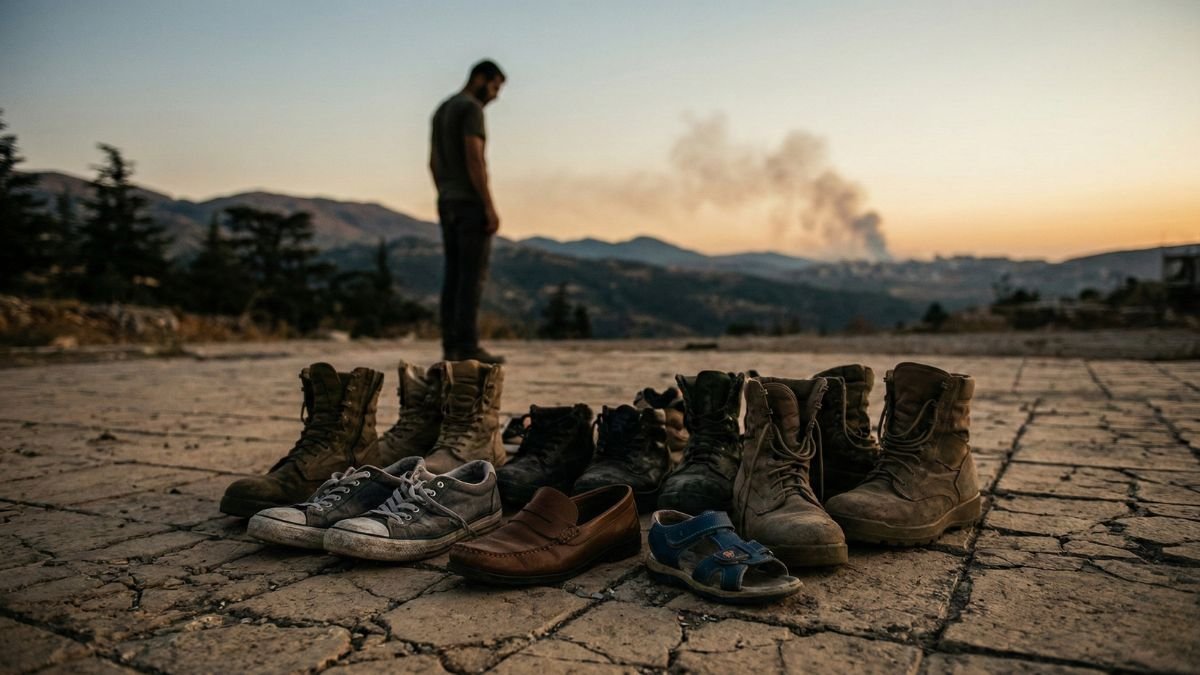
It starts with the hum of the refrigerator, doesn’t it? That low, mechanical drone that you only ever notice when the rest of the world goes deathly, terrifyingly quiet. You stand there in the kitchen, the ceramic mug cold against your palm, waiting for the water to boil, and you realize you are holding your breath. Not because you’re underwater, but because you’re listening to the sky. You’re waiting for the hum to be broken by the tear. That ripping sound, like canvas being shredded across the heavens, followed by the thud that rattles the teacups and shakes the dust from the ceiling. And in that split second between the tear and the thud, your mind doesn’t flash before your eyes—no, that’s a movie myth. What happens is your mind shatters into a million tiny, empathetic shards, flying out across the borders, across the seas, across the ideological divides, settling into the heads of everyone pulling the strings and everyone caught in the web.
You pour the water. You stir the coffee. And suddenly, you aren’t standing in a kitchen in Lebanon anymore.
You’re a young man, barely in your twenties, crouching in the damp, unforgiving rock of the southern hills. You smell of damp earth and stale sweat, clutching a rifle that feels heavier today than it did yesterday. You are the vanguard, the protector, the shield. That’s what they told you, isn’t it? That’s the song you grew up singing, the poetry of resistance etched into your bones since you were old enough to comprehend the concept of an enemy. You look at the dirt beneath your boots and you love it. You love it so fiercely it burns in your chest. You are fighting for God, for the land, for the dignity of your people who have been stepped on for too long. But then, as the cold bites through your jacket, a fleeting, treacherous thought slips past the armor of your absolute certainty. You think of your mother, in a village that is now just a collection of craters, baking bread over an open fire because there is no gas. You are protecting her, yes. But you are also the reason the sky is falling on her. The thought tastes like ash in your mouth. You are the ultimate patriot, the martyr-in-waiting, giving up your life so your family can live… in the rubble of the home you were trying to save. It’s a beautiful, tragic irony, isn’t it? To love a place so much you are willing to see it destroyed just to prove it cannot be taken. You grip the rifle tighter, pushing the thought away, because in this rocky trench, doubt is deadlier than a drone.
And speaking of drones, the shard of my mind shifts, skipping across the invisible, electrified line in the dirt.
Now, you are sitting in a sterile, air-conditioned room. The glow of the monitor paints your face in a pale, ghostly blue. You are young, too. You have a family waiting for you in a city where the sirens wail like a mechanical chorus of the damned. You look at the screen, at the little heat signatures moving across the monochromatic landscape. They are targets. They are threats. You have grown up with the heavy, suffocating blanket of history wrapped tightly around your shoulders. Never again. Those two words are the foundation of your universe. You are surrounded by enemies; the world has always wanted you gone, and so you must be strong. You must be impenetrable. You press a button, or you give a coordinate, and you tell yourself that you are preempting the next tragedy. You are securing the perimeter. But sometimes, when the screen goes bright with the impact, and the heat signature scatters into a blooming flower of destruction, you blink. You know, deep down in the quiet spaces of your own heart, that the perimeter is expanding, that the security you are building is constructed entirely out of newly minted grief. You are dropping fire to put out a fire, hoping that eventually, everything will just burn down to a manageable, peaceful ash. It makes perfect sense. The logic is flawless. You must strike them before they strike you, even if striking them guarantees they will spend the next fifty years trying to strike you back. It is the perfect, self-fulfilling prophecy of survival.
I take a sip of the coffee. It’s bitter. The noise is getting louder now, drowning out the refrigerator.
The perspective shifts again, flying halfway across the world, landing softly on plush carpet in a corridor of immense, unbothered power. You are an analyst, a strategist, a suit sitting at a polished mahogany table. Outside, the leaves are turning, people are walking their dogs, buying lattes. Here, inside, you are looking at a map of a place you have perhaps only visited once, from the secure confines of an embassy. You speak in terms of “geopolitics,” “containment,” “strategic deterrence,” and “acceptable margins of escalation.” It’s a game of three-dimensional chess, and you are playing to win, or at least, to not lose. You sign off on shipments, on policies, on statements of unwavering support. You are the arbiter of freedom, the beacon of democracy, and you genuinely believe you are the good guy holding the chaotic world together. The fact that your definition of ‘global stability’ requires the continuous, localized apocalypse of a small strip of land on the Mediterranean is just… unfortunate collateral. It’s the cost of doing business. You want peace, truly you do. You just want a very specific, heavily armed, highly profitable kind of peace. It’s exhausting, isn’t it? Having to constantly manage these ancient, tribal squabbles from afar. You adjust your tie, draft another press release calling for “de-escalation,” and approve the next transfer of munitions. The irony is so thick you could carve it with a steak knife, but you don’t. You just call it foreign policy.
But wait, the chess board has another player, doesn’t it? The mind slips eastward, into a different kind of corridor, lined with different kinds of rhetoric but the exact same scent of detached ambition.
Here, you wear the robes of spiritual and regional authority. You speak of divine mandates, of the ultimate liberation, of resisting the great evils of the world. You are the patron, the benefactor, the grand architect of a righteous struggle. You pour funds and weapons into the hands of the faithful thousands of miles away. You tell them their sacrifice is glorious, that their blood is the ink writing the future of the region. You believe in the cause—of course you do. But you also believe in leverage. You believe in keeping the fire burning in someone else’s living room so the heat doesn’t reach your own doorstep. It is a masterful stroke of statecraft. You are fighting a holy war down to the very last drop of someone else’s blood. You shed a tear for the martyrs during the Friday sermon, then return to the intricate negotiations of your own national interests. It’s a heavy burden, being the moral compass of the resistance, especially when you never have to actually face the consequences of the needle pointing north. You sleep soundly, knowing the front line is comfortably distant.
The coffee is cold now. The hum of the kitchen returns, but the silence outside feels heavier. There is one more shoe to step into. The one that feels the most worn, the most tired, the most achingly tragic.
You are standing at a checkpoint on a dusty road. You wear a uniform that commands respect in theory, but in practice, it’s just target practice camouflage. You are a soldier of the national army. The local army. The one that is supposed to protect this bruised, battered, beautiful sliver of a country. You hold a rifle, you stand tall, you have sworn an oath to the flag that ripples weakly in the polluted breeze. But you are a ghost. You watch the resistance fighters drive past you with weapons you could only dream of holding. You watch the skies above you filled with foreign aircraft you have no means of stopping. You watch the politicians on television arguing over a state that only exists on paper. You haven’t been paid a living wage in years. Your boots have holes in them. Your child needs medicine you cannot afford. Yet, you stand there at the checkpoint. Why? Because you love this country. You are the embodiment of the state’s dissonance: a sovereign power with no sovereignty, a military force forced to be an observer in its own war. You are told to maintain the peace in a place where peace was evicted, its locks changed, its bags thrown out on the street decades ago. You swallow your pride, day after day, hour after hour, standing between titans who don’t even acknowledge your existence, hoping today isn’t the day you become an accidental casualty in a war you aren’t allowed to fight.
I set the mug down on the counter. The kitchen is just a kitchen again. The shards of my mind pull back, retreating from the trenches, the consoles, the boardrooms, the checkpoints. They snap back into my own skull, and the sheer weight of it all threatens to pull me down to the floor.
It is exhausting to understand everyone. It is paralyzing to see the terrified, desperately flawed human logic in every single move on this bloody board. The ancient ideologies wrapped in modern justification. The constant, suffocating fear that masquerades as righteous anger. Everyone is defending themselves. Everyone is pre-empting. Everyone is protecting their families, their borders, their interests, their God. And in the process of all this glorious, undeniable self-defense, the world is being ripped to shreds.
I look out the window at the city. It’s waiting. We are all just waiting. We understand the fighter’s conviction, the neighbor’s trauma, the empire’s calculus, the patron’s leverage, and the local soldier’s despair. We see it all. We have been forced to become scholars of our own demise, understanding the psychological profiles of the people dropping the bombs and the people drawing the fire. We empathize. We intellectualize. We twist our brains into knots trying to see the humanity in the inhumanity.
Now that I have walked in all those shoes, who walks in mine?
Danny Ballan
Editor-in-Chief
English Plus Magazine






0 Comments