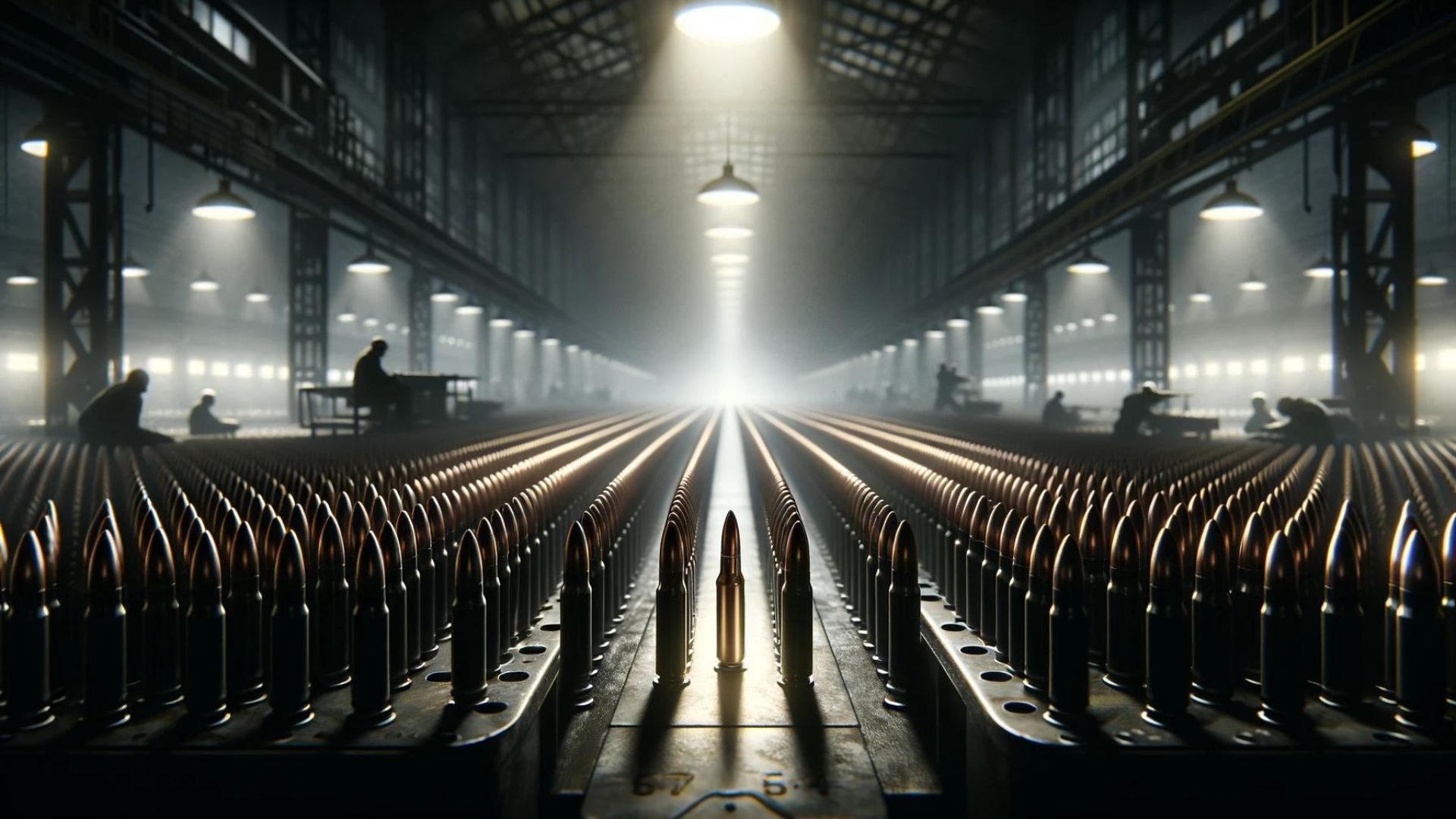
A Bullet’s Life by Phoenix
I was born yesterday
in a hustle-free factory,
a man was smoking carelessly
on top of the gunpowder
around the cases and me;
fitting me inside is never an easy task
yet not anymore is it done manually,
nor does anyone tend to save on me—
I am abundant as the sun,
Yet at night I shine, mostly.

I was loaded in a box,
I looked around in shock
I thought I was unique—
thousands of brothers and sisters
lining up to be loaded and wasted
for fear or joy, we’re viciously shot.

Legend has it, a bullet tells the truth,
a bullet that knows the righteous way to go,
a bullet controlling its primer;
the road was long and stories were longer,
none will ever see a son,
how could they ever claim a father?
Where do these stories come from?
Wait, the truck has stopped;
in the distance you hear a familiar sound—
our kin being wasted, again shot,
yet the sound alone was not enough
to tell whether it was to kill or just for fun.

I was in such a big company,
now in a magazine, it feels too tight—
loaded not with so many—
brothers in arms, are we not?
for we will probably spill the same blood;
alas, in vain, like these poor soldiers,
some of us are sent to die
some are sent to kill—
we’re all younger than those,
but sometimes, it feels they’re younger still—
lasting for a couple of seconds
shorter than memory
on the battlefield, but we stay
in the memory of those who mourn the ones we kill.
Who’s more memorable now,
a soldier or a bullet?
every soldier gets one
today or in fifty years,
in the head, in the heart or in memory—
oh! there are a lot;
every successful shot
that killed a friend
has become a legend.

Now for wrath, stand fast brothers—
enemies are whizzing everywhere;
prepare to die, to kill and conquer—
I had the best view in the house,
the first sneaky shot to come out—
my man was moving slowly
trying to get a vantage point
but wait, isn’t that a child
I can see from the barrel?
I held myself tight;
click, I stood still withstanding the urge to fly,
too late for my pal,
I gave him away—
he did receive us from the other side
so many there was no one left of us
for any special memory;
oh yes, those were also brothers—
like these fools we were all the same.

We stayed for a whole day
in the loaded magazine,
all intact, except for me—
I thought I was saving someone,
but I killed a friend;
take me back to a factory
before I harden like life,
I wish I’d been molded into something else,
but wait, here comes the very boy I tried to save
salvaging and desecrating bodies,
why did you shoot young man?
my friend is already dead
stop wasting my brothers—
I had to take revenge,
it was time;
I jammed and now I can simply unjam,
but wait for the perfect angle,
here I go, I am inside his little skull—
It’s dark in here,
am I dead?
the boy’s about to be,
well, let me look
for I may see
a trace of cocaine—
not too young to take it now that I have been in his head—
a memory flashes here and there,
his family on a wall lined up and killed
like lambs no one did understand
what their blood for, was spilled,
but that was a long time,
I doubt the boy still recollects;
Oh no! I saw what I came here in for, at last—
the reason behind my being and all,
I saw the purpose in his little mind—
like all these soldiers who died in vain,
and all my brothers who died in shame,
the boy’s mind was but thinking of one thing—
like all of us, the boy was only playing a game.
The War Within: A Bullet’s Eye View
Phoenix’s poem, “A Bullet’s Life,” isn’t just about a bullet; it’s about the harrowing nature of war, the senselessness of violence, and the way conflict strips away the humanity of all involved. By giving voice to an inanimate object, Phoenix forces us to confront the uncomfortable truths of our violent world.
Symbolism and the Bullet’s Journey
The bullet’s first-person narrative is striking in its simplicity. It begins with its creation, highlighting the industrialized, depersonalized nature of war: “I was born yesterday in a hustle-free factory.” This mass production and the careless handling of the bullets underscore how lives are reduced to expendable resources in conflict.
As the bullet is loaded and transported, it witnesses a cycle of death: “…our kin being wasted, again shot.” This repetition drives home both the ubiquity of violence and the futility of hoping for a different outcome.
Blurred Lines and Lost Innocence
The poem’s power lies in how the bullet grapples with its own purpose and morality. It is designed to kill, yet it expresses a desire to save a child, only to inadvertently cause another death. The lines blur between good and evil, victim and perpetrator: “We were all the same.”
The boy the bullet kills, himself a victim of senseless violence, becomes addicted to the cycle of war and revenge. The bullet discovers his motivation is horrific and tragically simple: “…the boy was only playing a game.”
The War’s Enduring Trauma
The bullet sees not only physical death but the death of souls. The soldiers it describes are younger than the bullets themselves, yet seem more ancient in their weariness. This reversal of youth and age speaks to how war robs people of their innocence. Even in death, the soldiers cling to their bullets, inseparable from the violence that defined their lives.
The Question That Remains
“A Bullet’s Life” challenges us to consider uncomfortable questions:
- Dehumanization: How are both victims and those who carry out the killing reduced to mere instruments within the war machine?
- Collective Responsibility: Are we all implicated in cycles of violence when we focus on enemies and revenge rather than seeking understanding?
- The Child’s Game: Does calling war a “game” trivialize its devastation, or simply reflect that even amidst horror, humans seek meaning and purpose?
Lasting Impact
Phoenix’s poem leaves no easy answers. Instead, it serves as a stark reminder of the profound psychological and moral toll of war. The bullet’s perspective, shocking in its mundanity, forces us to confront the chilling reality that lies behind statistics and battle reports.






0 Comments