
The Face
Have you ever been pitied by someone who was, at that very moment, absolutely convinced they were being kind?
You know the one I mean. The face. The head tilts about fifteen degrees to the side, the eyebrows lift and then droop toward the middle like a pair of tired curtains, and the eyes go soft and glassy with a sorrow they didn't have thirty seconds ago. It's the expression people usually reserve for a lost puppy, a wilting houseplant, or a friend who has just announced a truly regrettable haircut. And then comes the line, delivered gently, so gently, as if they're breaking difficult news: "You really should get out more. You're not enjoying life."
Here's what makes it wonderful, in a way I've come to genuinely appreciate. I did not ask. I was, moments before, perfectly content — happily buried in a book, or a script, or some idea that had been keeping me company all week like a good song stuck in the best possible way. I was fine. I was, in fact, better than fine. And then the face arrived, uninvited, to grieve a tragedy that only exists inside the person making it.
So I want to talk about that face today. Not to fight it. Not to make my own, more sophisticated, more devastating version of it and aim it right back. That would be easy, and it would also make me exactly the kind of person this whole conversation is trying to gently walk away from. No. I want to sit with the face. I want to look at it for a while, and ask the only question worth asking: friend, why do you think my life needs your tears?
Because I have to tell you something. I have never once looked at your life and called it wasted. I have never watched you do the things that make you happy and performed a little sad look on your behalf. It genuinely never occurred to me. So I'm honestly, sincerely curious. Where on earth did you get the idea that mine is the life that needs mourning?
A Confession Before We Begin
Let me get something out of the way right at the start, because if I don't, this whole thing collapses into the very thing I'm complaining about, and I refuse to let that happen.
I am not here to tell you that the quiet, bookish, thinking life is the superior one. It isn't. It's just mine. And that distinction — mine versus superior — is the entire point of everything I'm about to say, so hold onto it.
If you love a loud Saturday night, if the beach and the music and the crowd and the noise fill you up until you're glowing, if brunch with eight friends and a long, laughing table is where your soul lives, then I am, with my whole heart, happy for you. I mean that. I'm not saying it through gritted teeth. I'm not saying it the way people say "no offense" right before they say something extremely offensive. I am saying it plainly: good. Beautiful. Go. Enjoy every second of it, and don't let anyone, including a fellow with a stack of books and a suspiciously large tea collection, make you feel small for it.
So here's my confession: I don't have a case against your life. I have no complaint filed, no argument prepared, no quiet judgment simmering behind a polite smile. When I see you doing what makes you happy, my honest internal reaction is something close to "oh, nice." That's it. That's the whole thought.
Which is exactly why the pity confuses me so much. Because the transaction isn't equal. I'm not doing to you what you're doing to me. You look at my life and see something missing. I look at yours and see a person who is happy in a different way than I am. One of us is keeping score. And, gently, lovingly, it isn't me.
The Great Enjoyment Audit
Somewhere along the way, and I genuinely don't remember signing the paperwork, we all agreed to be audited.
Not by a government. Not by our jobs. By each other, and by a fuzzy, unspoken checklist of what "enjoying life" is supposed to look like. And the checklist, if you actually pull it out and read it, is oddly specific. Enjoying life apparently involves being outside a certain amount. It involves other people, ideally many of them, ideally in photographs. It involves motion, spontaneity, a certain amount of noise. It involves, and I say this with love, a lot of activities that require you to change out of comfortable clothing.
Now, none of these things are bad. Not one. Sunlight is genuinely good for you. Friends are one of the great treasures of being alive. Dancing is a delight. I'm not building a case against joy; I'd have to be some kind of monster.
But look closely at what happened. We took a handful of specific pleasures — perfectly lovely ones — and we quietly promoted them to the definition of pleasure itself. We turned a preference into a standard. And once something becomes the standard, anyone who lives outside it isn't just different. They're deficient. They're not simply choosing another flavor of happy; they're understood to be missing happiness altogether. The audit doesn't ask, "Are you content?" The audit asks, "Are you content in the approved way?"
And this is where the face comes from. When the auditor sees me at my desk on a Friday night, learning something that will never impress anyone at a party, they don't run the correct check. They don't ask whether I'm happy. They can't, because the form doesn't have a box for it. They only see that I've failed to check the boxes the form does have. And so, with real sincerity, they conclude I must be sad. They're not being cruel. They're just reading the wrong instrument, the way you'd try to measure temperature with a ruler and come away worried that the soup has no height.
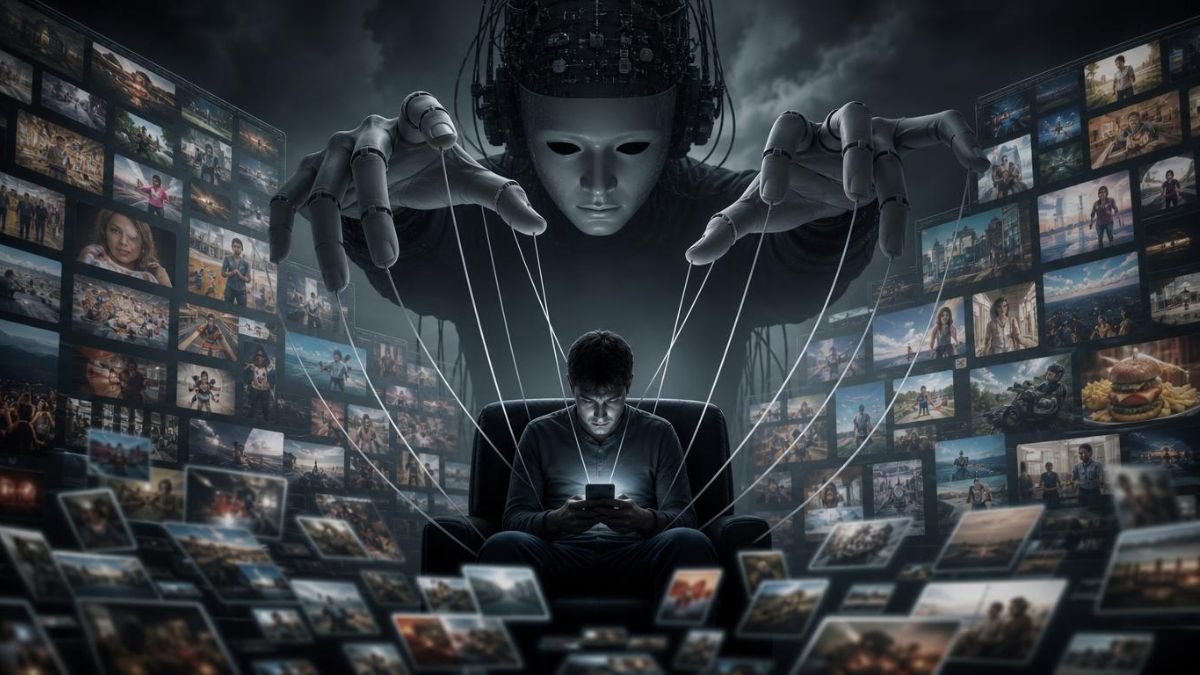
Here's the funny part, the part that would make me laugh if it weren't so quietly telling. The audit is never applied fairly. The person who spends six hours scrolling through videos of strangers they'll never meet is "relaxing." The person who spends six hours reading about how a civilization collapsed and what it might teach us is "wasting his life." Same couch. Same six hours. Wildly different verdicts. And the only real difference between them is which activity the checklist happens to approve of this decade.
So before we go further, I just want to name the instrument for what it is. It's not a law of nature. It's a fashion. And fashions, as anyone who has seen an old photo of themselves knows, are not to be trusted.
What A Full Life Actually Weighs
Let me tell you what my days are actually made of, not to defend them, but because I think the picture matters.
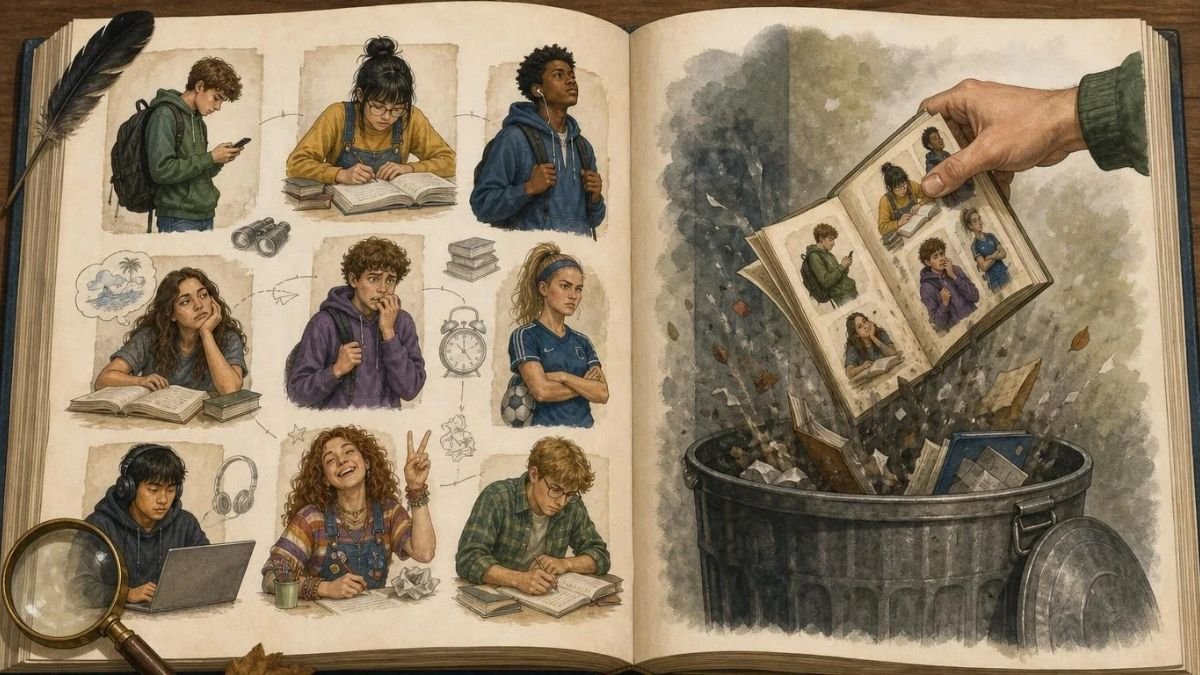
I learn things. Constantly, obsessively, for no immediate practical reason. I'll fall down a hole about how memory works, and climb out three days later slightly changed, carrying something I didn't have before. I write. I sit and I sweat over sentences, moving a word from here to there and back to here again, chasing a rhythm that maybe eleven people will ever notice and that I would chase anyway if it were zero. I think about big, unwieldy things — the future of our species, the strange and fragile fact that we exist at all, the questions that don't have tidy answers and probably never will.
And here's the thing I need you to believe, because it's the truth and I'm not performing it: this is not a consolation prize. This is not the life I settled for because the fun one was sold out. This is the life I wanted. When I was younger and imagining who I'd become, this — the learning, the writing, the chasing of beauty and meaning — is what I was reaching toward. I'm not living in the waiting room of a better life. I'm in the room I asked for.
I want to be careful here, because I can feel the temptation to make it sound grander than it is, to dress it up in robes. Let me resist that. My life is not noble. It's not a sacrifice. I'm not a monk on a mountain denying himself the world's pleasures for some higher cause. I'm just a person who happens to find his deepest pleasure in places that don't photograph well. The joy I get from finally understanding something I've been circling for weeks is, to me, every bit as electric as the joy you get from a perfect night out. It just doesn't come with a soundtrack, and it's very hard to post.
That's really the whole misunderstanding, isn't it? A full life doesn't have a standard weight. Fullness isn't measured in events attended or places visited or people met. It's measured in something much harder to see from the outside: the quiet, private sense that your hours are being spent on the things you actually love. By that measure — the only honest one — my life is full to the brim. Not by your standards. I keep saying that, and I'll keep saying it, because it's the crux of everything. Not by your standards. By mine. And it's my life we're measuring.
When I say it's full, I need you to hear that I'm not being brave. I'm not putting on a good face over a bad situation. I'm reporting the weather from inside my own life, where it is, most days, genuinely lovely. You're standing outside the window, seeing rain, and feeling sorry for me. And I'm in here, warm, wondering what you're looking at.
On Not Having The Answers, And Why That's The Point
Now I have to admit something that makes me an even harder sell, and I want to admit it cheerfully, because it's one of the things I'm actually proud of.
I don't have the answers. And worse, from a marketing perspective, I refuse to pretend I do.
We live in a golden age of people who have unlocked the secrets of the universe. You've met them, or at least you've met their content. They've cracked the code. They know the five things successful people do, the one trick that changes everything, the hidden truth they don't want you to know. They speak with the smooth, total confidence of someone who has never once lain awake at three in the morning wondering if they've got it all completely wrong. And I understand the appeal. Certainty is comfortable. Certainty is a warm bath. Certainty goes viral.
I don't do that. I can't. When I approach a big question, I show up dragging all my doubt behind me like an overpacked suitcase. I lay out one side, and then I turn around and lay out the other side, and then I find the side neither of them mentioned and lay that out too. I try not to judge too quickly. I try, even harder, not to dismiss too quickly — because dismissing is just judging that thinks it's being efficient. And by the end, more often than not, I hand you not an answer but a better-shaped question, which I realize is a bit like ordering a cake and being handed a very thoughtful essay about flour.
I know this isn't the thrilling style. Nobody makes a breathless thumbnail out of "It's Complicated, and Here Are Six Reasons Why We Should Stay Humble." I've watched the confident ones sail past me with their secrets of the universe, and I've felt that little tug of, should I be doing that instead?
And every time, my answer is no. Because here's what I actually believe: the humility is the honesty. When someone tells you they've got it all figured out — the mind, the market, the meaning of everything — they are, almost always, selling you the feeling of an answer rather than the answer itself. And that feeling is delicious and it is also empty, and it leaves you hungrier than before, which is, conveniently, excellent for business.
I'd rather give you the real thing, even though the real thing is less satisfying to hold. I'd rather say "I don't know, but let's think about it carefully together" than "I know, follow me." Because I give a damn about us. About people. About the actual, messy, high-stakes questions of how we live and whether we make it and what we owe each other. And when you actually care about the truth of something, you handle it gently. You don't pretend to certainty you haven't earned. You show your work. You leave room for being wrong.
So yes. My life includes a lot of admitting I don't know. And I understand if that reads as unimpressive, or even boring, next to someone confidently unlocking the universe on a Tuesday. But I'll take the honest question over the profitable answer every single time. That, too, is what a full life looks like from the inside. It just doesn't trend.
The Money Thing, Let's Talk About It
Alright. Let's talk about the elephant, because I promised myself I'd be honest and the elephant is very large and clearly in the room.
I don't have a lot of money. I'm going to be even more honest than that, because half-honesty about money is worse than none: at various points, the accurate number has been closer to none. And I know that for some people, this alone is enough to close the case. This is the smoking gun. "See? He says his life is full, but look — no money. Case closed. Pity confirmed."
So let me not dodge it. Let me walk right up to it.
First, the small correction, and I'll say it with a smile: when I say this is the life I always dreamed of, I do not mean the version without money. Nobody dreams of that. I'm not romanticizing empty pockets. I would very much like some money, thank you. If money came along tomorrow, I would not weep and send it back with a note about the purity of the struggling artist. I'd welcome it in, offer it tea, and be genuinely glad. Wanting a full life and wanting money are not enemies. I'd like both. I'm just not willing to trade the first to chase the second.
But here's the thing the smoking-gun crowd misses. They've quietly assumed that money is the container that holds a full life — that without it, fullness simply leaks out the bottom. And I understand why they think that, because money buys comfort, and comfort is real and it matters and I don't want to be glib about how hard life gets without it. I'm not going to sit here and tell you that being broke is a spiritual gift. It's mostly just stressful, and anyone who tells you otherwise probably has money.
What I'm saying is subtler. I'm saying that money and fullness are two different measurements that happen to sometimes travel together, and we've confused them for the same thing. My bank account and my sense that my life is rich are, it turns out, not strongly correlated. On the poorest days I've had, I was still learning, still writing, still chasing that particular beauty — and the fullness didn't drain away just because the account did. It sat there, stubborn and warm, refusing to be a function of my finances.
So when someone pities me because of the money, they're making a specific claim. They're saying that a life is only as full as its wallet. And I just… don't find that to be true, not in my actual lived experience. I find it to be a very popular idea that falls apart the moment you test it against a genuinely contented poor person or, for that matter, a genuinely miserable rich one. Both of whom exist, in enormous numbers, all around us, quietly refusing to fit the theory.
Would more money make things easier? Yes. Obviously. Unquestionably. Would it make my life fuller, in the sense that actually matters to me? That's a much stranger question, and the honest answer is: it would remove some stress, which is not nothing, but it wouldn't add meaning that isn't already there. The meaning is already here. It arrived before the money and it'll be here regardless. And in time, if some money finds its way to me along the road, I promise you I won't be sad about it. I'll just have the same full life with fewer things to worry about, which sounds, when I put it that way, like a rather nice upgrade.
The Whole Beautiful Spectrum
Here's where I want to open the windows and let some air in, because I've been talking about my own life for a while and I don't want you to think this is a manifesto for people like me.
It absolutely is not.
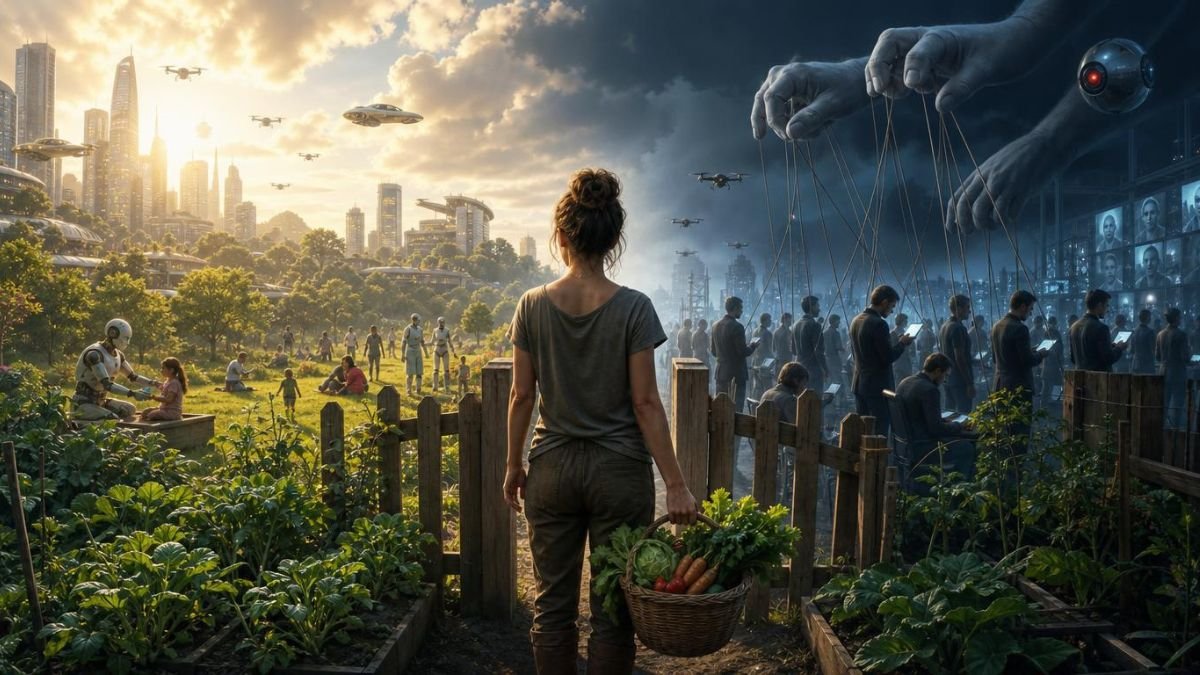
Picture a long, long line. A spectrum, stretching further than you can see in either direction. On one end, way over there, are the people trying to cure cancer. The ones working on peace, on hunger, on the climate, on the enormous problems that keep the rest of us up at night. People pouring their one precious life into pushing the whole species an inch forward. And on the other end, all the way over there, are the people who spend their evenings comfortably horizontal, working steadily through an entire streaming service one show at a time, snacks within reach, phone charging, world safely outside.
And here is what I actually think, which may surprise you given everything I've said: I respect the entire line. All of it. End to end.
I mean this. The person trying to cure cancer and the person happily binge-watching their comfort show for the fourth time have exactly the same right to their life, and I refuse to hand out my respect based on where a person falls on that line. Because who am I? Who made me the judge? What cosmic authority appointed me to decide that the cancer researcher's Tuesday is worth more than the tired nurse's Netflix, or the exhausted parent's quiet collapse onto the couch, or anyone's ordinary, unremarkable, deeply-earned rest?
Somewhere on that spectrum is you, wherever you are, however you spend your hours. And wherever that is — the busy end, the quiet end, the muddled middle where most of us actually live — I respect you, and I commend you for building a life that makes you feel happy. That's not a small thing. Genuine happiness is rare and hard-won and worth celebrating in whatever form it shows up.
There's one condition, and it's the only one, and it's not a small one either: as long as your happiness isn't built on someone else's misery. That's the line under the line. That's the one rule I do hold. Live however you want, chase whatever fills you up, take the shape that fits you — right up until the moment your joy requires someone else's suffering to exist. There, and only there, does my generous "live and let live" run out. Everywhere else, it's yours. Take it. Enjoy it. I'm cheering for you.
So notice what I'm not doing. I'm not sneaking my own way of life back in as the secret winner. The quiet, curious life isn't the top of the spectrum. It's just one point on it, no more sacred than any other. I don't want you to read all this and conclude "ah, so the real full life is the thoughtful one." No. The real full life is the one that's actually yours, lived on purpose, that doesn't hurt anybody. That's the whole rule. It's remarkably roomy in here. There's space for nearly everyone.
The Only People I Feel Sorry For
But I told you I'd be honest, and honesty means admitting that there is, in fact, a group of people I feel sorry for. I do. I can't pretend otherwise. So let me tell you exactly who they are, because it's not who you'd guess, and it's definitely not you.
I don't feel sorry for the partier or the reader. I don't feel sorry for the ambitious or the restful, the loud or the quiet, the rich or the broke. I don't feel sorry for people whose lives look nothing like mine, because looking different is not the same as being sad.
The only people who genuinely make my heart ache are the ones living someone else's life while pretending to be happy.
You've met them, though it's hard to spot from the outside, which is part of the tragedy. It's the person going to the parties not because the parties fill them up but because they think they're supposed to, because staying home would mean admitting they don't want to go, and admitting that is terrifying. It's the person chasing a career they never chose, handed to them by a parent or a culture or a version of themselves they outgrew years ago. It's the person performing an entire life — the right hobbies, the right opinions, the right kind of fun — for an audience that isn't even watching as closely as they fear. It's anyone whose days are shaped not by "what makes me feel alive" but by "what will make the pity stop."
That is the only life I mourn. Not because it looks a certain way from the outside, but because of what it feels like on the inside: the exhausting, lonely work of wearing a life that doesn't fit, and smiling so no one asks why it pinches.
And here's the uncomfortable turn, and I want to make it softly because I'm not trying to wound anyone. The pity we started with — the head tilt, the sad eyes, the "you're not really enjoying life" — very often comes from exactly this group. Not always. Sometimes it's just thoughtlessness, a reflex, the wrong instrument innocently misread. But often, if you look closely, the person most anxious to grieve your life is someone quietly unsure about their own. It's easier to pity someone else's Friday night than to sit with the question of whether you actually wanted to be at yours. The face isn't always about you. Sometimes it's a mirror the person is holding up backward, hoping you won't notice it's pointed at them.
I say this without a shred of superiority, because I've felt that pull too. We all have. The urge to look at someone else's contentment and poke at it, just a little, because their peace makes our own restlessness louder. It's deeply human. I'm not above it. I'm just naming it, so that the next time the face appears, we can meet it with something better than a face of our own.
So Why The Pity?
Let's come back around to where we started, because I think we can finally answer the question honestly now.
Why do you look at my life and pity me?
I don't think it's cruelty. I've never thought that. I think, mostly, it's a category error. You looked at a life that doesn't check the approved boxes and, running the wrong instrument, concluded it must be empty — because the form you were handed doesn't have a box for the kind of full it actually is. You measured my joy in a currency I don't spend, found my balance low, and felt genuine, well-meaning sorrow. The pity is real. It's just aimed at a problem that isn't there.
And sometimes, yes, it's the mirror thing. Sometimes the sorrow you feel for my quiet Friday is a little bit of sorrow you haven't let yourself feel about your loud one, borrowed and redirected because it's safer to spend on someone else. I don't say that to accuse you. I say it because if it's true, even a little, then you deserve to know it — because your life is worth examining honestly, and no one who's actually content needs to grieve anyone else's contentment.
But mostly, I think, it's just this: we are all so rarely taught that other people's happiness is allowed to look nothing like our own. We learn our own recipe for a good life so early and so deeply that we forget it's a recipe and not the recipe. And so when we meet someone cooking something completely different, our first instinct isn't curiosity — "oh, what's that?" — it's concern — "oh no, you've done it wrong." The face is what concern looks like when it's forgotten to be curious first.
So here's all I'm really asking, and it's small. The next time you see someone living a life you don't understand — too quiet, too strange, too far from the checklist — before the face arrives, try the other instrument. Don't ask whether they're living the way you'd live. Ask whether they seem happy. And if they do, then whatever it looks like from where you're standing, that's a full life. Full by the only standard that has ever actually counted: theirs.
What I'd Actually Wish For You
I want to end not with a defense but with a wish, because I've spent this whole time not fighting the pity, and I'd hate to fumble it at the finish line by getting even a little bitter.
Here's what I actually wish for you, whoever you are, wherever you fall on that long beautiful line.
I wish you a life that's yours. Not mine — please, not mine, my life fits me and would probably fit you terribly. I wish you your life, the one you'd choose if you were absolutely certain no one was watching and no one was keeping score and there was no face to avoid. I wish you the particular joy that's shaped like you, whether that's a crowded table or a quiet desk or something I've never even imagined. I wish you the nerve to want what you actually want instead of what you're supposed to want. And I wish you the deep, unbotherable peace of a person who no longer needs anyone else's version of "enjoying life" to sign off on their own.
And if, along the way, you catch yourself about to make the face — the head tilt, the sad eyes, the gentle diagnosis — I hope you'll pause, just for a second, and turn it into a question instead. "That looks different from my life. Tell me about it." You'd be amazed what people will show you when they can tell you actually want to see.
As for me, I'm going to go back to my desk. There's something I've been trying to understand all week, and I'm close, and the getting-close is one of the best feelings I know. My tea is going cold, which is a small tragedy I'll survive. My bank account is doing whatever it's doing, which I'll deal with. And my life, right now, this ordinary quiet Friday of it, is full. Not by your standards.
By mine. And believe me — I really wish you'd believe me — that's more than enough.
Questions Worth Mulling Over
Take these slowly. There are no right answers, which is rather the point.
When you imagine "a full life," whose picture are you actually seeing? Is it genuinely yours, or is it a picture you inherited — from family, from culture, from the internet — and quietly started measuring yourself against?
Think of the last time you felt sorry for how someone else was living. Be honest with yourself: were they actually unhappy, or were they just happy in a way that didn't match your own recipe?
Is there any part of your own life you're living for an audience — doing because you're "supposed to" rather than because it fills you up? What would change if that audience stopped watching?
We drew a line between "money" and "fullness" and argued they're not the same thing. Do you agree? Where, in your own life, have you seen the two come apart — a rich person who seemed empty, or a person with little who seemed full?
If you knew, with total certainty, that no one would ever pity you for it and no one would ever be impressed by it, how would you spend next Saturday? And how far is that from how you'll actually spend it?
Before You Go
If any of this landed — if you've ever been on the receiving end of the face, or caught yourself making it — do one small thing with it this week. Just one.
Catch yourself once. The next time you're about to quietly grade someone's life against your own checklist, stop and swap the judgment for a question. "Tell me about that. What's it like?" See what happens. It costs nothing and it changes the whole texture of how you move through people.
And turn it inward too. Somewhere this week, spend an hour on the thing you'd do if no one were watching and no one were keeping score — the reading, the writing, the walking, the whatever-it-is that's yours and only yours. Not because it's productive. Not because it'll impress anyone. Because it's a small, honest vote for the life that's actually yours instead of the one you're supposed to want.
If this conversation is your kind of thing — the slow, curious, doubt-and-all, no-secrets-of-the-universe kind — then you already know where to find more of it. That's what we do here, week after week: chase beauty and meaning without pretending we've caught them for good. Come back. There's always room, and the tea, I promise, is better when it's shared.
And if you know someone who lives a quiet, curious, unfashionable life and gets the face for it more than they should — send this their way. Sometimes the most generous thing you can tell a person is simply: your life is full. I see it. Not by anyone else's standards. By yours. And that was always enough.




0 Comments