- The Paradox of the Machine Age
- The "Wikipedia Problem" and the Colonization of Logic
- The Digital Ark: Salvation in the Cloud
- Cultural "Hallucinations" and the rewriting of History
- Visualizing the Race: Extinction vs. Archiving
- Focus on Language: Vocabulary and Speaking
- Critical Analysis
- Let's Discuss
- Let's Play & Learn
- Check Your Understanding
The Paradox of the Machine Age
It is a strange time to be alive, isn’t it? We are currently living through a moment where we have outsourced our memory to silicon chips and our creativity to predictive algorithms. We sit at the intersection of the greatest accumulation of knowledge in human history and the most rapid loss of cultural diversity we have ever seen. It is a paradox that keeps me up at night, and it should probably worry you a little bit, too. We are building a god in the machine, an artificial intelligence that can write sonnets, debug code, and diagnose diseases. But there is a ghost in that machine, and it speaks English. Almost exclusively.
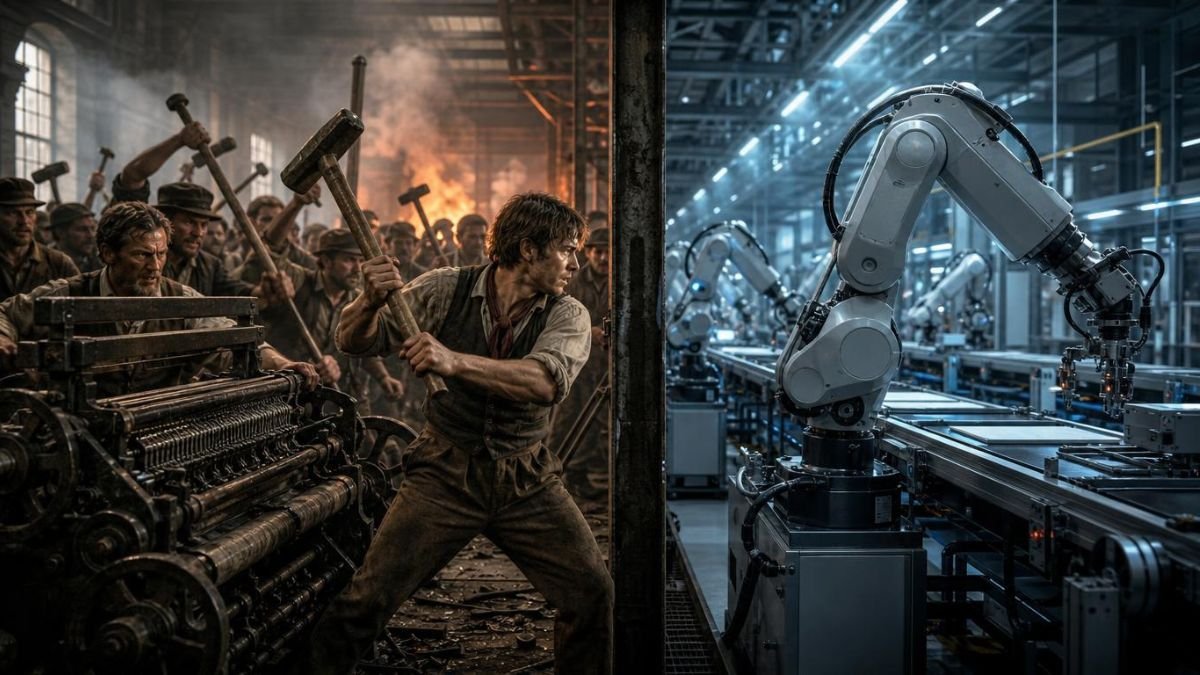
We talk a lot about the existential risks of AI—Terminator scenarios, job markets collapsing, the singularity. But there is a quieter, more insidious threat that doesn’t look like an explosion. It looks like a slow fading of color. It looks like homogenization. We are handing over the keys of human expression to a technology that is, by its very nature, a statistical average of the data it is fed. And since the internet—the primary food source for these Large Language Models—is dominated by the West, we run the risk of creating a digital world that is flattened, standardized, and culturally gray.
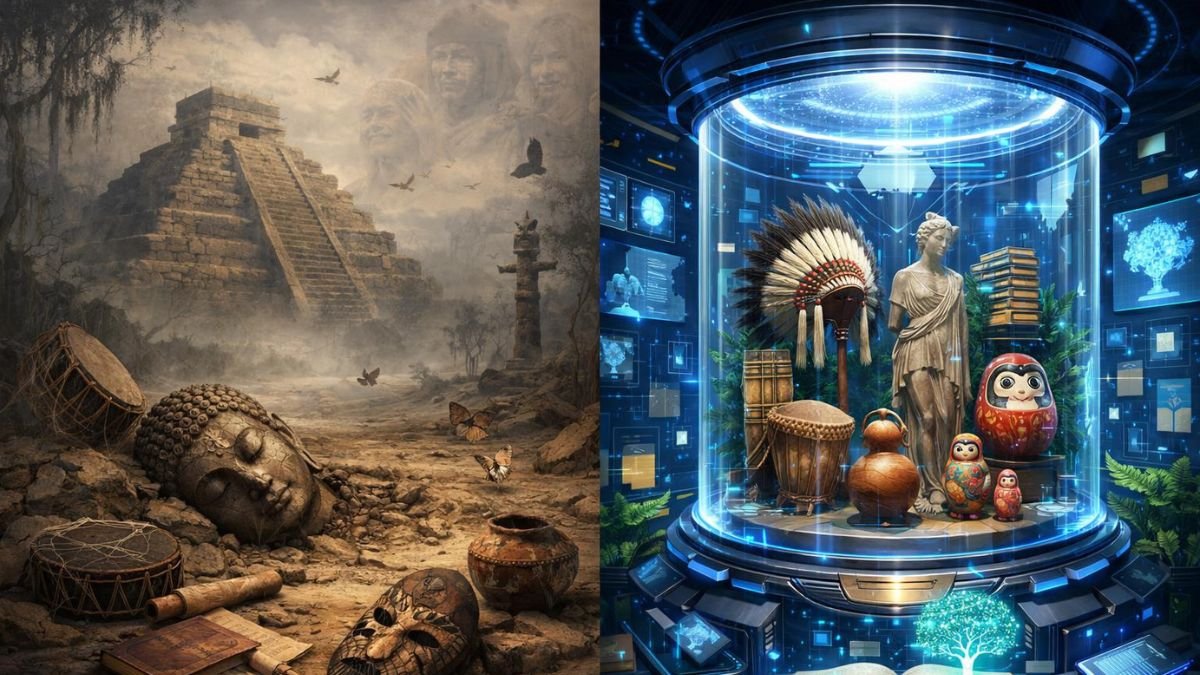
Yet, here is the twist, the maddening contradiction that makes this topic so rich: this same technology, this "homogenizing monster," might be the only thing fast enough and capable enough to save the very cultures it threatens to erase. We are witnessing a race between a silent extinction of human heritage and the construction of a Digital Ark.
The "Wikipedia Problem" and the Colonization of Logic
Let’s get technical for a second, but not too technical. Think about how a Large Language Model learns. It reads. It reads everything it can get its digital hands on—Wikipedia, Reddit, digitized books, academic papers. Now, consider the sheer volume of that data. The vast majority of high-quality, accessible text data used to train models like GPT or Claude is in English.
The Illusion of Translation
You might say, "But wait, I can ask the AI to speak Spanish or Arabic or Swahili, and it does it." True. But there is a difference between translation and genuine cultural cognition. When an AI writes a poem in a low-resource language, or even a major language like Arabic, it is often not "thinking" in the poetic traditions of that culture. It is "thinking" in English logic, English idioms, and Western narrative structures, and then mathematically mapping those concepts onto foreign words.
The result is something that looks correct on the surface but feels hollow underneath. It’s like eating a dish that looks exactly like your grandmother’s stew but tastes like cardboard and preservatives. The nuance is gone. The specific cultural weight of a word—the way a specific phrase in Japanese might carry the connotation of a fleeting cherry blossom season and the impermanence of life—gets swapped for a sterile English equivalent like "springtime."
This is the "Wikipedia Problem." If 90% of the training data represents a Western worldview, the AI inevitably becomes an agent of cultural imperialism, not through malice, but through statistics. It effectively rewrites the logic of the world to fit a standard deviation that favors New York, London, and Silicon Valley. We risk raising a generation that speaks their native tongue but thinks in American concepts.
The Digital Ark: Salvation in the Cloud
If we stopped the conversation there, I would just be another luddite yelling at a cloud server. But we have to look at the other side of the coin. The rate of language extinction is terrifying. We lose a language roughly every two weeks. When a language dies, we don't just lose words; we lose a unique biological and ecological knowledge system, a way of perceiving time, color, and relationships.
Preserving the Oral Tradition
Here is where AI puts on its superhero cape. For the vast majority of human history, culture was oral. It wasn't written down. Once the last elder dies, the library burns. Traditional archiving is too slow. You need linguists, funding, recording equipment, and years of transcription time. We don't have years.
Enter the Digital Ark. Indigenous communities from the Amazon to the Australian outback are now partnering with technologists to use AI to speed up this process. We have speech-to-text models that can be fine-tuned on very small amounts of data. An elder can tell a story, and the AI can not only transcribe it but help analyze the grammatical structures, preserving the voice and the syntax before they vanish.
There are projects right now where AI is being used to revitalize Maori in New Zealand, not just by recording it, but by creating tools that allow young people to text and interact in Maori, keeping the language functional in the modern world. This is the Digital Ark—using the speed of the processor to outrun the decay of time. It is a desperate measure, sure, but it is better than silence.
Cultural "Hallucinations" and the rewriting of History
However, we have to be careful about what we are archiving. We all know AI hallucinates. It makes things up when it doesn't know the answer because it is designed to please us, to complete the pattern. Now, imagine applying that tendency to cultural heritage.
The Fake Folklore
There is a disturbing emerging phenomenon where AI generates "traditional" art patterns, folklore, or historical summaries that never actually existed. If you ask an image generator for "ancient Incan textile patterns," and it has seen enough genuine Incan art mixed with generic "tribal" tags, it might synthesize a pattern that looks authentic to the untrained eye but contains symbols that are gibberish or, worse, offensive misinterpretations.
If these hallucinations get fed back into the internet, they become part of the dataset. Future generations—or future AI models—might look at this synthetic culture and accept it as fact. We could be polluting our own history with digital artifacts that are nothing more than statistical noise. We are risking a future where we can’t tell the difference between a song passed down for twenty generations and a song generated in twenty seconds by a server farm in Oregon.
Visualizing the Race: Extinction vs. Archiving
It is hard to grasp the scale of this emergency without visualizing the timeline. Picture two lines on a graph. The first line is plummeting downwards—that is the number of active, spoken languages on Earth. It is a steep drop. By the end of this century, linguists predict we could lose between 50% and 90% of the world's 7,000 languages. That is a cultural mass extinction event.
The second line is shooting upwards exponentially. That is our computing power and our ability to store data. The question is: can the second line catch the first line before it hits zero?
We are currently in the bottleneck. The elders who hold the knowledge of the pre-digital age are in their 80s and 90s. We have perhaps a ten-year window to capture the nuance of humanity before it is smoothed over by the global internet culture. AI is the only tool fast enough to do this. It is a flawed tool, a biased tool, and a dangerous tool, but it is the only one we have that can work at the necessary speed.
The Final Verdict
So, where does that leave us? Are we saving culture or are we freezing it in carbonite? Are we preserving languages, or are we just creating a museum of dead words that no one actually uses?
The reality is likely somewhere in the middle. We will lose nuance. We will see the rise of a globalized, AI-influenced culture that blends traditions in ways that purists will hate. But, if we are smart, and if we are deliberate, we can use these tools to build a Digital Ark that ensures the diversity of human thought doesn't vanish entirely. It is a imperfect solution for an imperfect world, but it is a fight worth fighting. Because a world where everyone thinks exactly the same way, in the same language, using the same logic, isn't a utopia. It's a spreadsheet. And humans were never meant to live in spreadsheets.
Focus on Language: Vocabulary and Speaking
Let's dive right into the language we just used, because if you want to articulate complex ideas about technology and society, you need words that carry weight, words that act like precision tools rather than blunt instruments. We threw around some heavy concepts in that article, and I want to unpack them not just as definitions, but as weapons you can use in your own intellectual arsenal.
Take the word homogenizing. We used it to describe what AI does to culture. In a kitchen, when you homogenize milk, you are mixing the cream and the milk so thoroughly that they become one consistent liquid. It makes the texture smooth. But when you use this in a cultural context, "homogenizing" is almost always a negative thing. It implies stripping away the unique, rough edges that make something special. You can use this in real life anytime you see diversity disappearing. If you walk into a neighborhood that used to have cool, weird little shops and now it’s just five Starbucks and a Gap, you can say, "Gentrification is really homogenizing this neighborhood." It sounds much smarter than just saying "everything looks the same now."
Then we have nuance. This is one of my favorite words because it is exactly what AI often lacks. Nuance is that subtle shade of meaning, the tiny difference that changes everything. It’s the difference between a smirk and a smile. In the article, we talked about how translating a language without its culture erases the nuance. You need this word when you are arguing with someone who is being too black-and-white. You can say, "I think you're missing the nuance of the situation." It’s a polite way of telling them they are being too simplistic.
We also discussed the concept of an indigenous community. This refers to the original inhabitants of a region, people who have a long-standing historical continuity with a land before colonizers or settlers arrived. But the word has a broader utility. You can talk about plants being indigenous to a region. It anchors something to a specific place and history. In the context of our digital discussion, indigenous knowledge is what is at risk of being overwritten by global data.
And how about hallucination? Usually, you think of this in medical terms—seeing pink elephants because of a fever. But in the AI world, a hallucination is when the model confidently states a fact that is completely false. It’s a great metaphorical term. You can even use it jokingly in conversation. If your friend is remembering a night out completely differently than you are, you could say, "I think you're having a hallucination, that is not what happened." It frames the error as a creative invention rather than just a lie.
We mentioned artifact. In archaeology, an artifact is a physical object made by a human being, typically of cultural or historical interest. But we talked about "digital artifacts" or "fake cultural artifacts." This is a powerful concept—the idea that a computer file or a generated image can be an artifact. It blurs the line between the physical and the virtual. You can use this word to describe anything that is a remnant or a byproduct of a process. "This blurry noise in the photo is just a digital artifact."
Then there is the paradox. The whole article is built on one. A paradox is a situation that seems impossible because it contains two opposite facts that are both true. AI is destroying culture; AI is saving culture. That is the paradox. Life is full of them. You can use this word whenever you face a contradiction. "It’s a paradox: I have to work to make money to enjoy my life, but working takes away all the time I have to enjoy it."
We talked about the proliferation of data. Proliferation means rapid increase in numbers. Nuclear proliferation, cell proliferation. Here, it’s about the explosion of content. You can use this to describe anything that is spreading too fast. "The proliferation of coffee shops on this street is out of control."
We touched on linguistic relativity. Linguistic just means relating to language. But it’s a useful adjective to elevate your speech. Instead of saying "language problems," say "linguistic barriers." It sounds more clinical and precise.
Heritage is another big one. It’s not just history; it’s what is inherited. It’s the legacy. Property, culture, traditions. When we talk about "cultural heritage," we are talking about the things that give a group of people their identity. You can use it personally. "It’s part of my heritage to cook this meal on Sundays."
And finally, preservation. Keeping something safe from harm or decay. We usually think of preserving fruit in jars or preserving old buildings. But preserving a language is much harder because a language is alive. You can’t just put it in a jar. You have to keep it spoken. You can use this in business or relationships too. "We need to focus on the preservation of our core values."
Now, let's pivot this into a speaking session. I want you to stop just reading and start articulating. The problem with learning sophisticated vocabulary is that it often stays in your passive memory—you understand it when you read it, but you never actually say it. We are going to change that.
I want you to try a technique called "The Devil's Advocate." This is a speaking exercise where you force yourself to argue against your own beliefs using high-level vocabulary. It forces your brain to work harder to construct the sentences because the emotional connection isn't there to help you.
Here is your challenge: I want you to record yourself for two minutes. Yes, actually record it on your phone. I want you to make an argument in favor of a homogenized global culture. Use the word homogenizing not as a negative, but as a positive. Argue that a single global language would remove linguistic barriers and solve the paradox of miscommunication. Use the word proliferation to describe the spread of understanding.
This is going to feel weird. You might hate the argument you are making. But by forcing yourself to use "homogenize" as a positive verb, you are breaking the semantic lock your brain has on the word. You are gaining total control over it. Once you can manipulate a word to mean what you want it to mean in a debate, you own that word forever.
After you do that, record a second take. This time, argue the opposite. Argue that indigenous heritage is the only thing saving us from being robots. Use the word nuance and artifact. Compare the two recordings. Which one flowed better? usually, the one where you believe what you are saying flows better, but the one where you lied requires better technical command of the language. This exercise bridges the gap between knowing a word and being able to wield it under pressure.
Critical Analysis
Now, I am going to take off the "enthusiastic writer" hat and put on the "skeptical expert" hat. We need to look at this article and poke some holes in it, because critical thinking isn't about agreeing; it's about dissecting.
The article paints a picture of a "Digital Ark" as a hopeful solution. It suggests that while AI is dangerous, it’s also our savior. But there is a massive perspective missing here: Ownership and Data Sovereignty.
The article mentions indigenous communities partnering with technologists. That sounds nice. But who owns the servers? Who owns the model? If an indigenous tribe uses a tool built by OpenAI or Google to preserve their sacred stories, do those stories become training data for the next version of ChatGPT? Do they become the intellectual property of a Silicon Valley corporation?
This is a modern form of colonialism. We aren't taking the land this time; we are taking the data. If a language is preserved, but it only exists inside a proprietary "black box" system that the community has to pay to access, is it really preserved? Or has it just been captured?
Furthermore, the article assumes that "preservation" means "recording." But language isn't just a file on a hard drive. Language is a social activity. If you have terabytes of recordings of a language, but nobody speaks it to their children over breakfast, the language is still dead. It’s a zombie language. It’s a museum exhibit. The article glosses over the fact that technology cannot replace the social motivation to speak a language. An app can teach you vocabulary, but it can't give you a reason to use it.
We also didn't talk enough about the environmental cost. We used the metaphor of the "Digital Ark." But real Arks require wood. Digital Arks require energy. Training these massive models to preserve culture consumes a staggering amount of water and electricity. Are we burning down the actual physical environment to save the cultural environment? That is a trade-off that deserves its own article.
So, while the Digital Ark is a beautiful concept, we have to ask: Is it an Ark, or is it a cage? And who holds the key?
Let's Discuss
Here are five questions to get you thinking. I don't want simple "yes or no" answers. I want you to dig deep.
1. If a language is preserved perfectly by AI but no human speaks it, is it alive or dead?
Think about the definition of "life" regarding language. Is a language defined by its grammar rules (which AI can save) or by the human connection it creates (which AI cannot save)? Compare this to Latin—is Latin "dead" or "immortal"?
2. Should AI companies be required to pay "data royalties" to cultures whose folklore and art they use for training?
Focus on the economics of culture. If an AI generates a billion dollars using patterns from Nigerian art, does Nigeria get a check? How would you even calculate that? Is culture "property" or "commons"?
3. Is it better to let a culture die naturally than to have it "hallucinated" and altered by AI?
This is a question of purity vs. survival. Is a corrupted, AI-altered version of history better than no history at all? Would you rather be forgotten or remembered incorrectly?
4. Does the convenience of real-time AI translation (like Google/Samsung Live Translate) actually discourage people from learning new languages?
Think about motivation. If your earbuds translate everything instantly, why struggle to learn French verbs? Will this lead to a world where we only speak our native tongue and rely on machines for everything else?
5. If an AI writes a poem that makes you cry, does the fact that it has no feelings invalidate your emotion?
This touches on the "authenticity" of art. Does art require a human soul, or is it just a biological reaction to a stimulus? If the output is the same, does the source matter?



0 Comments