
The Museum of You
There is a distinct sensation you get when you look at a photograph of yourself from ten years ago. It is a cocktail of nostalgia, amusement, and a sharp, cringing embarrassment. You look at the haircut, the fashion choices—perhaps a fedora that had no business being on your head or a pair of jeans that defied the laws of circulation—and you wonder, "Who was that person?" You recognize the face, but the mind behind it feels like a distant relative you only see at holidays. You acknowledge, with full clarity, that you were a work in progress back then. You were naïve, your taste in music was questionable, and your political opinions were likely borrowed from a bumper sticker.
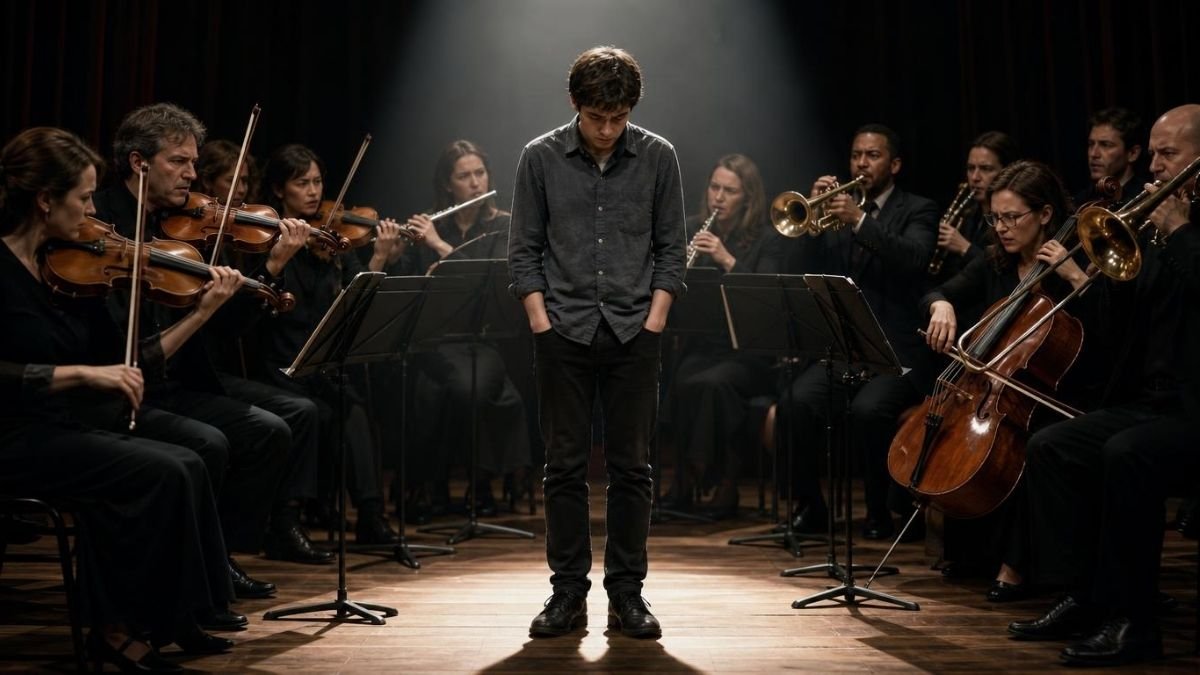
But here is the fascinating trick your brain plays on you right now, as you sit reading this: You believe that the "You" of today is the final version. You believe that the evolution has stopped. You think that the person you are right now—with your current values, your current favorite foods, your current circle of friends—is the person you will be for the rest of your life. You look back at the past as a time of change, but you look at the present as a time of arrival.
Psychologists call this the "End of History Illusion." It is the mistaken belief that while our personal history is a story of growth and flux, our personal future is a flat line of stability. We treat the present moment as the summit of the mountain, rather than just another ledge on the climb. And spoiler alert: You are wrong. In ten years, you will look back at your current self—the one you think is so enlightened and settled—with the same mix of affection and embarrassment that you currently reserve for your past self. You are not a finished product; you are a rough draft that thinks it’s a published manuscript.
The Science of Stagnation
The Quoidbach, Gilbert, and Wilson Study
This isn't just armchair philosophy; it is hard science. In 2013, researchers Jordi Quoidbach, Daniel Gilbert, and Timothy Wilson published a landmark study in Science magazine. They surveyed thousands of people aged 18 to 68. They asked half the participants to look back ten years and describe how much they had changed. They asked the other half to look forward ten years and predict how much they would change.
The results were consistent across every single age group. People of all ages acknowledged massive changes in their past. The 30-year-olds said they had changed wildly since they were 20. The 60-year-olds said they were completely different people than they were at 50. However, when asked to predict the future, everyone underestimated the change. The 30-year-olds predicted they would be roughly the same at 40. The 60-year-olds assumed they would be identical at 70.
Why We Can’t See the Future
Why do we do this? Why are we so bad at imagining our future evolution? The researchers suggest it is a failure of imagination combined with the ease of memory. Remembering the past is passive; the data is already there. You can remember the breakup, the job change, the moment you realized you actually hated jazz. Constructing the future, however, requires active mental energy. It is difficult to imagine liking a genre of music you currently hate. It is difficult to imagine holding a political view that currently repulses you.
Because it is hard to imagine, we confuse the difficulty of imagining change with the unlikelihood of change happening. We mistake our lack of imagination for the stability of reality.
The Comfort of Certainty
The Psychological Anchor
There is also an emotional component to this illusion. Believing we are "done" makes us feel safe. If we admit that we are still in flux, it introduces a level of existential vertigo. We make decisions—marriages, mortgages, career paths—based on who we are today. To admit that the person who signed the mortgage might not be the same person paying it off in twenty years is terrifying. It undermines our sense of agency. We want to believe that our values are absolute truths we have discovered, not just temporary preferences we are currently trying on.
The Cost of the Illusion
This illusion has a price tag. When we overestimate our stability, we make long-term commitments that our future selves might resent. We get tattoos of bands we will eventually stop listening to. We buy houses in suburbs that will eventually bore us. We optimize our lives for the person we are today, leaving no room for the stranger we will become tomorrow. We treat our future selves not as different people with different needs, but as clones of our current selves. And as anyone who has ever looked at a regrettable tattoo knows, the future self is rarely a clone.
Chronicles of the Late Bloomers
To understand this better, it is helpful to look at people who shattered this illusion—people who, at an age where society expects calcification, decided to undergo a metamorphosis. I spoke with three individuals who prove that the cement never really dries unless you let it.
The Corporate Lawyer Who Became a Potter
Take Elias, 68. For forty years, Elias was the guy you called when you wanted to sue a corporation. He wore Italian suits, lived in a penthouse in Chicago, and defined himself by his billable hours. "If you asked me at 50 who I was," Elias told me, laughing, "I would have said I was a shark. And I thought I’d be a shark until I died."
At 62, Elias had a stroke. It was minor, but it forced him to sit still for two months. In that silence, the "shark" identity dissolved. He realized he hated the conflict. He hated the suits. He took a pottery class on a whim—a cliché, perhaps, but clichés exist for a reason. Today, Elias lives in New Mexico. He wears linen. He spends his days covered in clay. "The man who lived in Chicago feels like a character I played in a movie," he says. "I didn't just change my hobbies. I changed my soul. I used to value victory; now I value texture."
The Grandmother Who Went to University
Then there is Sarah, 74. She spent her life as a homemaker, raising four children and supporting her husband’s career. She was the bedrock of stability. When her husband passed away when she was 68, everyone expected her to retreat into a quiet widowhood. Instead, she enrolled in a university to study astrophysics.
"People thought I was having a breakdown," Sarah explains. "They said, 'Sarah, you’re a mother, a grandmother, you bake cookies.' And I said, 'I’ve baked enough cookies.' I realized that part of me was finished, but a new part was starving." Sarah is now working on a thesis about dark matter. She didn't just add a hobby; she rewrote her intellectual identity. She proved that curiosity doesn't have an expiration date.
Embracing the Flux
The Liberation of Being Unfinished
Understanding the End of History Illusion shouldn't be depressing. It should be liberating. If you are not a finished product, then you are not trapped by your current limitations. The anxieties you feel today, the insecurities that plague you, the skills you lack—they are not permanent fixtures of your architecture. They are just the furniture in the room you are currently inhabiting.
When we accept that we will change, we can stop protecting our identities so fiercely. We can be more forgiving of others, knowing they are also in flux. We can be more forgiving of ourselves. We can stop trying to "find ourselves" as if the self is a hidden treasure waiting to be discovered, and instead realize that we are "creating ourselves" every single day.
The Horizon Moves With You
So, the next time you find yourself making a definitive statement about who you are—"I’m just not a math person," "I’m an introvert," "I will never live in the city"—add a mental asterisk. Add the word "yet" or "currently." Respect the stranger you will become.
You are not the museum of your past. You are a construction site. It’s messy, it’s loud, and it looks nothing like the blueprints you drew up ten years ago. And thank goodness for that. Because a finished building is static, but a construction site is full of possibility. You haven't reached the end of history. You’ve just turned the page.
Reading Comprehension Quiz
Focus on Language
Part 1: Vocabulary and Speaking
Let's dive into the language we used to deconstruct this psychological phenomenon. We’re not just looking for "big words" here; we are looking for words that carry weight, words that act like architectural beams holding up the argument. When we talk about psychology and personal growth, specific vocabulary allows us to be precise rather than vague.
The first word we need to grapple with is illusion. We used this in the title: "The End of History Illusion." In everyday conversation, an illusion is a magic trick, something a rabbit pops out of. But in this context, it refers to a deceptive appearance or impression—a false idea or belief. When you say, "I’m under no illusion that this will be easy," you are saying you are being realistic. It’s a powerful way to admit that our perception might be flawed.
Then we have stagnation. We talked about the "Science of Stagnation." Stagnation is what happens to water when it stops flowing—it gets murky and smells bad. Metaphorically, it refers to a lack of activity, growth, or development. If you feel stuck in your career, you might say, "I’m terrified of stagnation." It’s much more evocative than just saying "I’m bored." It implies a state of decay caused by standing still.
A beautiful word we used is flux. We mentioned that our history is a story of "growth and flux." Flux means continuous change. It’s a state of uncertainty or instability, but not necessarily in a bad way. The stock market is in flux; the weather is in flux. If someone asks how your life is going, and everything is changing at once, you can simply say, "Everything is in a state of flux right now." It sounds sophisticated and implies that the chaos is just a phase of movement.
We also used the word calcification. We talked about an age where society expects calcification. Literally, this is the hardening of tissue into calcium—like bone. Metaphorically, it means becoming inflexible, unchangeable, or set in one's ways. You might complain about a company’s policies by saying, "There is too much bureaucratic calcification here." It paints a picture of something that has become hard, brittle, and impossible to mold.
That leads us to metamorphosis. We described Elias undergoing a metamorphosis. This is a biological term for a profound change in form from one stage to the next in the life history of an organism, like a caterpillar becoming a butterfly. In conversation, we use it to describe a massive, almost magical transformation. "After the divorce, he underwent a total metamorphosis." It implies the new version is unrecognizable from the old one.
We shouldn't ignore retrospective. We talked about "retrospective" memory. This means looking back on or dealing with past events or situations. A "retrospective exhibition" looks at an artist's past work. You can use this in business or personal reviews: "In retrospective, I should have taken that job." It’s a formal, cleaner way of saying "looking back."
Another key term was agency. We said admitting change undermines our sense of agency. Agency is the capacity of individuals to act independently and to make their own free choices. If you feel like life is just happening to you, you feel a "loss of agency." Reclaiming your agency means taking back the steering wheel of your life.
We used the word naive. We said past versions of ourselves were naive. This means showing a lack of experience, wisdom, or judgment. It’s innocent, but usually with a negative connotation of being easily fooled. "I was naive to think the project would only take a week."
Then there is ephemeral. Though not explicitly bolded in the text, the concept of the "current self" being temporary touches on the ephemeral. Something ephemeral lasts for a very short time. Trends are ephemeral. Youth is ephemeral. It adds a poetic touch to your speech.
Finally, let's look at malleable. We want to believe we are no longer malleable. Malleable means capable of being shaped or bent, like soft metal or clay. We want our minds to remain malleable. If you say, "My plans for the weekend are malleable," you are saying you are open to suggestions. It’s a lovely, tactile word.
Speaking Lesson: The "Ten-Year Voice Note"
Now, how do we use these in speech without sounding like a textbook? The trick is to use them to describe feelings, not just facts. Don't just say "I changed." Say, "I felt a sense of stagnation, so I knew I needed a metamorphosis."
Here is your speaking challenge. I want you to record a voice note—a digital time capsule. Imagine you are speaking to yourself ten years in the future. I want you to make a prediction about what will change, using the vocabulary we just discussed.
Don't just say "I hope I'm rich." Try this structure:
"Right now, I feel my career is in flux. I worry about stagnation, but I am trying to keep my skills malleable. I am under no illusion that the next decade will be easy, but I hope that in retrospect, I will see this as a moment of growth, not calcification."
Try to record this for 60 seconds. Listening to your own voice using these words helps bridge the gap between passive understanding (reading) and active usage (speaking). It forces your mouth to get comfortable with the weight of these words.
Vocabulary and Speaking Quiz
Part 2: Grammar and Writing
For this section, we are going to tackle a writing challenge that requires a very specific, somewhat tricky set of grammar tools: Future Perfect and Speculative Modals.
The Writing Challenge: The Letter from the Future
I want you to write a letter to your current self, but written from the perspective of your self 20 years in the future. This forces you to break the "End of History Illusion." You have to imagine a future where you have changed.
The prompt is: It is the year 2046. You are looking back at the person you are today. Tell your current self what you have accomplished, what you have let go of, and how you have changed.
To do this effectively, you need to master the Future Perfect Tense.
The structure is: Subject + will + have + past participle.
We use this to talk about actions that will be completed before a specific time in the future.
In your letter, you aren't just saying what you will do (Future Simple). You are looking back from the future, so you treat future events as finished history.
- Weak: "I will learn to play the piano."
- Strong (Future Perfect): "By 2046, I will have mastered the piano. I will have played in three concert halls."
This tense gives your writing a sense of certainty and accomplishment. It projects the mind forward to a point of completion.
Grammar Deep Dive: Nuance with Modals
Since we are speculating, we can't be 100% sure. This is where Speculative Modals come in to add sophistication. These are words like might have, could have, may have.
However, in this letter, you are writing as if it has happened. So, let's mix Future Perfect with Future Continuous (will be + verb-ing) to paint a picture of your future life in progress.
- Future Continuous: "I will be living in a small cottage by the sea." (This describes the state of affairs in 2046).
- Future Perfect: "I will have finally finished that novel I started in my thirties." (This describes an action completed before 2046).
Structuring the Letter
- The Salutation: Address your younger self with empathy.
- The Setting the Scene (Future Continuous): Describe where you are and what you are doing in the future.
- Example: "I am writing this while sitting on my porch. The world has changed. We are living in a time of..."
- The Accomplishments (Future Perfect):
- Example: "You are worried about your career right now. Don't be. By the time you read this, you will have realized that the corporate ladder was leaning against the wrong wall. You will have started your own bakery. You will have forgotten the names of the bosses who stress you out today."
- The Shift in Values (Verbs of Change): Use verbs like evolve, discard, embrace.
- Example: "The anxiety you hold? You will have discarded it years ago."
Tips for Success:
- Avoid the "Jetpack" Trap: Don't focus on flying cars or technology. Focus on internal changes. The End of History Illusion is about personality, not gadgets.
- Be Specific: Generalities are boring. Don't say "I will have traveled." Say "I will have walked the streets of Kyoto in the rain."
- Use "Arguably" and "Presumably": These adverbs allow you to sound objective about your own life. "It was, arguably, the best decision of our life."
Grammar Pitfall to Watch For:
Do not confuse "I will have gone" (Future Perfect) with "I would have gone" (Conditional Perfect).
- "I will have gone" = I am predicting this will happen and be finished in the future.
- "I would have gone" = I didn't go, but in a different situation, I might have.
For this letter, stick to will have. You are manifesting a reality, not regretting a past that never happened.
Your turn. Draft 300 words. Start with: "Dear [Your Name], from the vantage point of two decades hence..."
Grammar and Speaking Quiz
Critical Analysis
Okay, let's take off the rose-colored glasses and put on our skeptic's hat. I’ve sold you hard on the idea that you are constantly changing, but as an expert in this field, I have to admit: there are holes in this theory.
First, let's talk about the "Big Five" Personality Traits. While the article suggests we are shapeshifters, decades of psychological research show that the "Big Five" traits (Openness, Conscientiousness, Extraversion, Agreeableness, and Neuroticism) actually do stabilize significantly after age 30. You might change your job or your hobbies, but if you are highly neurotic at 25, it is statistically unlikely you will be the Dalai Lama at 45. The "End of History Illusion" might exaggerate the degree of change. We might be changing the paint color of the house, but the foundation remains the same.
Secondly, there is the Fatigue Factor. Constant reinvention is exhausting. The brain craves efficiency (heuristics). If we truly lived as if we were constantly in flux, we would suffer from decision fatigue. We need to assume some things are fixed to function. The article demonizes "stagnation," but maybe what it calls stagnation is actually "mastery." You can't master the violin if you pivot to the drums every three years. Sometimes, staying the same is the only way to go deep.
Thirdly, consider the Core Values argument. While tastes change (you hate classic rock now, you love it later), deep moral values tend to be incredibly sticky. A person who values compassion deeply at 20 rarely becomes a ruthless tyrant at 60. The "End of History Illusion" study focused heavily on preferences and personality traits, but perhaps our moral history really does have an end point earlier in life.
So, while it is true we change more than we think, we shouldn't throw the baby out with the bathwater. We aren't entirely different people every decade. We are more like a theme and variations. The melody changes, but the key signature often stays the same.
Let's Discuss
Here are five questions to help us dig deeper into the "End of History Illusion." These aren't just for comprehension; they are designed to challenge your worldview.
1. Is the "End of History Illusion" actually a survival mechanism?
The article frames this illusion as a cognitive error. But imagine if we woke up every day acutely aware that our marriage, career, and personality were temporary and unstable. We might be paralyzed by anxiety. Is this "illusion" actually a necessary mental shield that allows us to commit to things? Discuss the balance between necessary delusion and harmful ignorance.
2. How does this illusion affect long-term relationships and marriage?
We marry a person based on who they are today. The vow "til death do us part" assumes a continuity of self. If both partners change radically, is it luck that keeps them compatible? Should marriage vows be rewritten to acknowledge that you are promising to love the future strangers you both will become?
3. Does the digital age make the illusion weaker or stronger?
On one hand, social media (Timehop, Facebook Memories) constantly forces us to confront our past selves, perhaps breaking the illusion. On the other hand, we curate our online profiles to look like "finished products." Does the internet help us see our trajectory, or does it pressure us to present a static, perfect brand?
4. At what age does "change" become "instability"?
If a 20-year-old changes their career path five times, we call it "exploration." If a 50-year-old does it, we call it a "mid-life crisis." Is there a societal deadline for when we are "supposed" to be finished? Why do we stigmatize change in later life, and how does that reinforce the illusion?
5. If we are not a "finished product," how can we make ethical decisions for our future selves?
This is a deep philosophical one. If I decide to smoke today, I am hurting a "future me" who might value health more than I do now. If the future me is effectively a different person, do I have the right to burden them with debt, tattoos, or health problems? To what extent are we the "guardians" of a stranger?



0 Comments