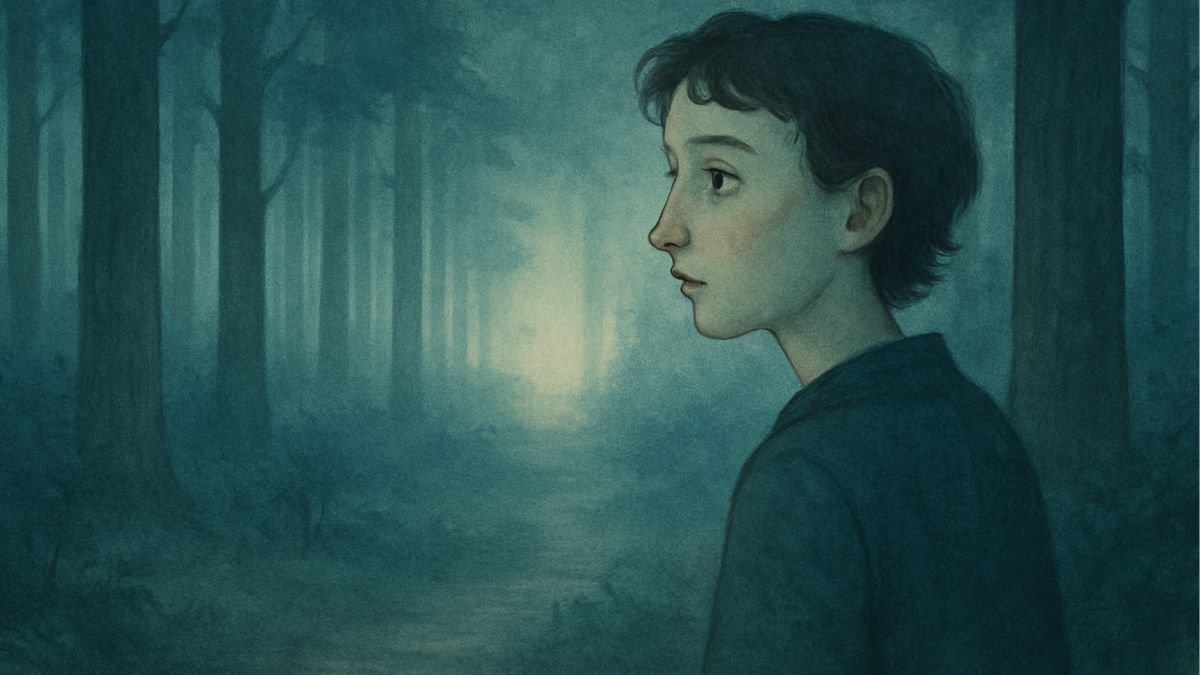
Have you ever finished a book or a movie and felt haunted? Not by a ghost in the narrative, but by a question it left behind, whispering in the quiet moments of your day? We're so often trained to talk about stories in terms of plot, character arcs, and themes. We ask, "What was it about?" But what if the more important question is, "What did it ask of me?" Moving beyond the surface-level enjoyment of a narrative and into a practice of reflective reading can transform entertainment into a profound tool for self-discovery. It’s about recognizing that the greatest stories don’t just give you answers; they leave you with better, deeper, and far more personal questions.
The Uncomfortable Mirror: Where Am I in This?
So, you’ve met the hero. Brave, noble, witty, with fantastic hair even after fighting a dragon. It's easy to see ourselves in them, isn't it? We are, naturally, the protagonist of our own epic. But what happens when the story asks you to look for yourself in the other characters? I mean all of them. Where are you in the coward who runs when things get tough? In the bitter side character who’s paralyzed by envy? Or—and let's just breathe through this one—where do you see a sliver of yourself in the villain? It’s an unsettling thought. We love to believe our motivations are pure, that we are the good guys. But great stories don't deal in cartoons; they deal in the messy, complicated truth of humanity. The villain often has a backstory, a wound, a warped logic that, if we’re brutally honest, we can almost understand. The story might be asking: What’s your tragic flaw? Under what circumstances would your own pain curdle into cruelty? Looking for yourself in the antagonist isn't an exercise in self-flagellation. It's a radical act of humility. It asks you to acknowledge your own capacity for darkness, which, paradoxically, is the first step toward consciously choosing the light.
A Crisis of Conscience: Does This Recalibrate My Moral Compass?
Stories are empathy machines. They smuggle you across the border of your own experience and drop you into someone else's heart, someone else's crisis. You read about a character who has to make an impossible choice—do they lie to protect someone they love? Do they commit a small crime to achieve a greater good? Suddenly, the neat little box of "right and wrong" you keep on your mental shelf starts to rattle. The story doesn't give you a multiple-choice quiz with a correct answer. Instead, it immerses you in the gray. It forces you to feel the weight of the decision, the pull of competing virtues. It asks, "What would you do?" And the honest answer is often a deeply uncomfortable, "I don't know." A story might challenge your politics, your religious beliefs, your fundamental assumptions about justice. It might introduce you to a character whose life is so different from yours—a refugee, a soldier, a person from a century past—that you are forced to concede that your moral framework isn't a universal law; it's a product of your time and place. The story asks not for your judgment of its characters, but for your curiosity about your own judgments. Is your compass pointing true north, or just to the magnetic pull of your own comfortable biases?
The Architectural Blueprint: How Does This World Interrogate Mine?
Every story builds a world. In fantasy and sci-fi, that's obvious. There are maps, new languages, and creatures with an unseemly number of tentacles. It’s easy to see how a dystopian novel like 1984 or The Handmaid's Tale serves as a stark warning about our own society. But this question is just as potent for a realistic novel set in a quiet suburb. The world of that story has its own intricate rules of power, its own social currencies, its own unspoken laws about who matters and who doesn't. When you read it, the story is subtly asking you to become an anthropologist of your own reality. What are the invisible power structures in your workplace? What are the sacred, unspoken rules in your family? What does your society value, and who gets left behind because of those values? A story about the cutthroat world of corporate law might ask you what you're willing to sacrifice for success. A quiet novel about a lonely old woman in a small town might ask you to confront how your own community treats its most vulnerable members. These fictional worlds are like diagnostic tools, or those special glasses in a sci-fi movie that reveal the hidden infrastructure of things. They ask you to look at the familiar architecture of your own life and wonder, for the first time, who designed it and if it’s truly built to last.
The Call to Action: So… Now What?
This, right here, is the question that echoes long after the book is closed. What does this story demand of you now that you know what you know? The answer is rarely as dramatic as "Go start a rebellion!" I mean, if it is, good for you, and please be safe. But most of the time, the call is quieter, more intimate. A novel about forgiveness might not ask you to forgive some grand, cinematic betrayal. It might just be asking you to finally let go of that stupid grudge you’ve been holding against your sibling for five years. A story about a character who takes a leap of faith might be asking you to finally sign up for that pottery class you've been dreaming about. A memoir about someone's struggle with mental health might be asking you to be a little kinder, a little more patient with yourself on a bad day. Or maybe it’s asking you to check in on that friend who’s gone quiet lately. Stories change us not by giving us a to-do list, but by planting a seed. The story does its work, and then it turns to you and asks, "Will you water this? Will you let this insight grow into a new way of being, a new way of acting in the world, even in the smallest of ways?" It’s the ultimate transfer of responsibility from the author to the reader. The story is over. Yours is still being written. What happens next?
The power of a narrative isn't just in the escape it offers, but in the return. How do you re-enter your own life after living in its pages for a while? Do you see things with sharper clarity? Do you feel things with a more tender heart? Do you walk a little differently through the world? That’s the magic. It’s not on the page; it's in the space between the last word and your next breath.
So, think about the last story that truly stuck with you—be it a book, a film, or even a song. If you had to distill it down to one question it was asking you personally, what would that question be? Share it with us in the comments. I truly want to know what the stories of your life are asking of you.


0 Comments