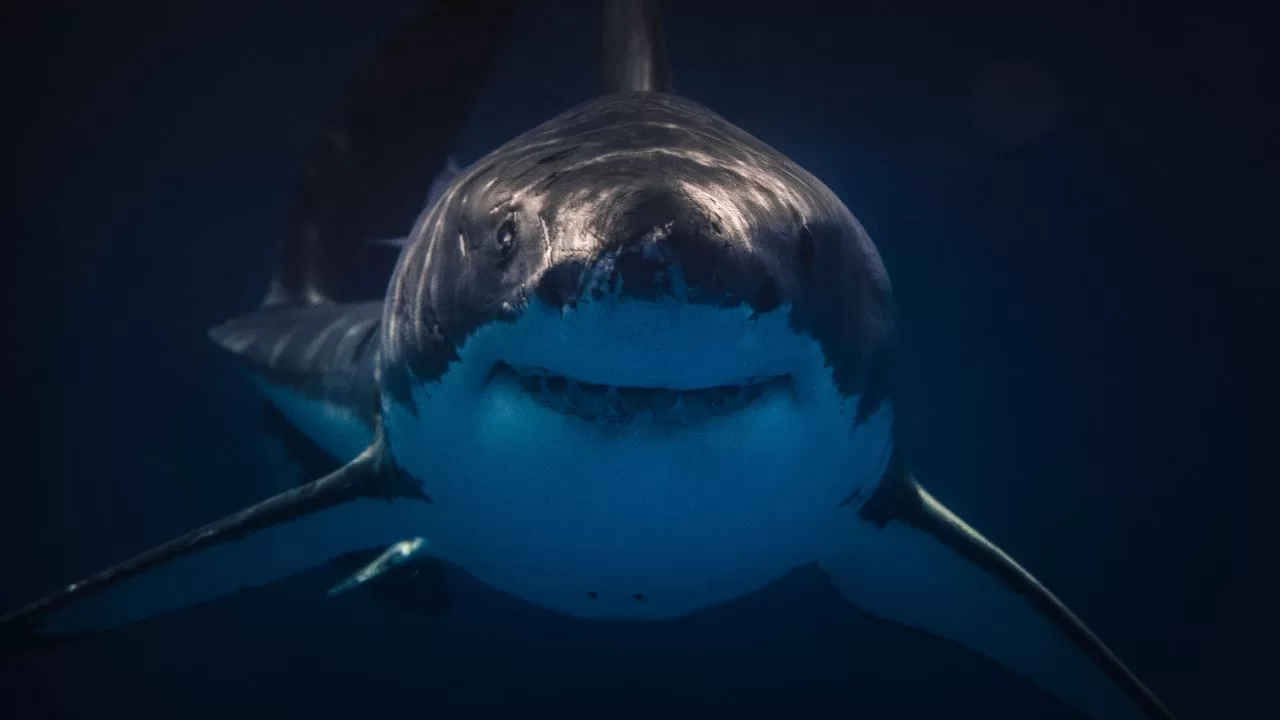
Amidst the vast expanse of the ocean, where the blue deepens into an abyss and sunlight barely penetrates, there swam a creature both feared and revered - the mighty shark. In tales told on sandy beaches and whispered amongst divers, one particular story about this apex predator persisted: that a shark, with its keen senses, could detect a single drop of blood from miles away.
Lucas, an experienced marine biologist, had heard this tale countless times. He'd seen the wary glances of tourists dipping their toes into the water, nervous chuckles when someone had a minor cut, and the wide-eyed wonder of children hearing about the shark's seemingly supernatural abilities. It wasn't just a story; it had become part of the cultural fabric, a belief held by many. But Lucas knew better. It was time to dive into this myth and separate fact from fiction.
The origin of the belief wasn't hard to fathom. Sharks, particularly species like the Great White, have long held the human imagination captive. Their streamlined bodies, rows of razor-sharp teeth, and undeniable presence in the marine ecosystem painted them as the ultimate hunters. It seemed plausible, even logical, that such a creature would possess senses beyond our comprehension.
In truth, sharks do have an extraordinary sense of smell. Their nostrils, or nares, aren't used for breathing but are exclusively dedicated to detecting odors. Inside these nares are folds of tissue filled with olfactory receptors. With every wave washing through these folds, sharks pick up chemical cues from their environment, helping them locate prey, mates, and even navigate their vast watery world.
But could they truly detect a single drop of blood from miles away? Lucas reflected on his countless encounters with these magnificent creatures and his years of research. The reality was more nuanced.
In perfect conditions, where the waters were calm and free from other overpowering scents, a shark could detect blood at impressive distances. However, this wasn't about detecting a lone drop from miles away. It was about the concentration of the scent and how it spread. A single drop disperses, diluting rapidly. In such a scenario, a shark might be able to sense it from a few hundred meters away, but certainly not from miles.
What amplified their tracking ability was not just the initial detection, but their keen sense of direction. Once they picked up a scent, sharks could discern its direction, following the trail with remarkable accuracy, even if it meant covering significant distances. It was this combination of initial detection and persistent tracking that gave the illusion of them sensing a drop from miles away.
However, another factor played a crucial role in this misconception: the type of blood. While human folklore centered around our own blood, sharks in their natural habitat often responded more keenly to the blood of marine animals, like fish. After all, that was their primary prey. Human blood, contrary to popular belief, wasn't their preferred scent cue.
As the sun set, casting a golden hue over the ocean's horizon, Lucas sat on the deck of his research boat, lost in thought. The myth of the shark and the drop of blood was not just a misconception; it was a testament to the intricate dance between humans and nature. In our awe and fear, we sometimes painted creatures with abilities bordering on the mythical. Yet, the truth, with its shades of gray, was often more fascinating.
The mighty shark, with its keen senses, was undoubtedly a marvel of evolution. But it wasn't a supernatural entity. By understanding and respecting its true capabilities, we could coexist, appreciating the wonder that was the marine world, without letting myths cloud our perception.
In the heart of the ocean, where myths were born and legends created, Lucas found solace. Here, amidst the waves and the whispers of marine life, he knew that every tale held a grain of truth, waiting to be discovered. And as the stars began to shimmer, reflecting on the gentle ripples of the sea, he felt a profound connection to the mysteries of the deep, forever eager to unravel them, one myth at a time.









0 Comments
Trackbacks/Pingbacks