Ballet | Short Reads

by | Jul 8, 2022 | Short Introductions

BALLET

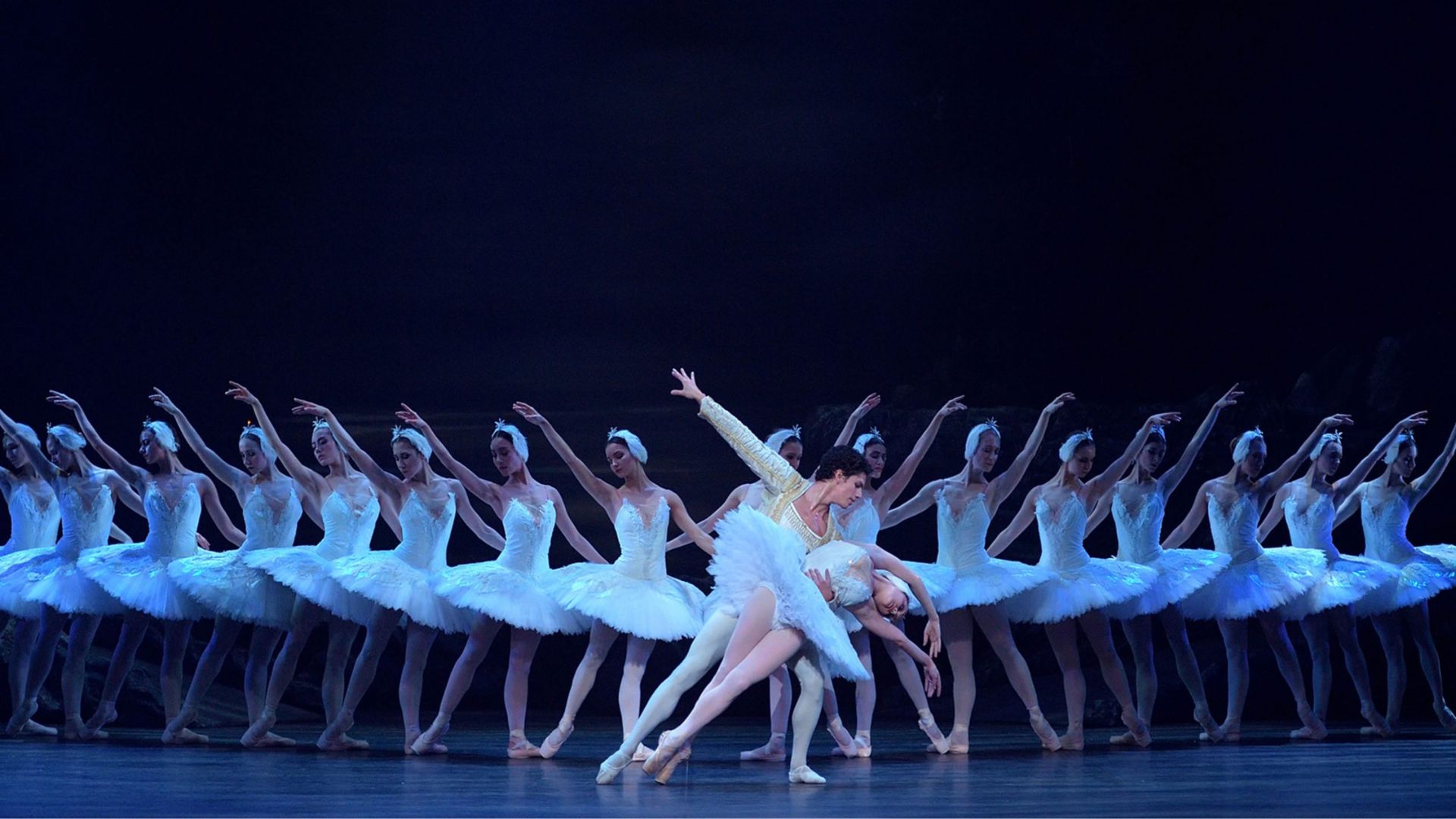
Raise your arms and bring your fingers together over your head. Now lift one foot, point your toes, and strike a pose. You are doing ballet. Ballet is a form of dance with graceful steps and arm movements as well as leaps and spins.

We also use the word ballet to describe a story performed to music, using ballet dance techniques. Ballet performances include not only dance and music but also costumes and scenery. Some of the most popular ballets are Swan Lake, The Nutcracker, and The Sleeping Beauty.

HOW ARE BALLET DANCERS TRAINED?

Girls who study ballet generally begin by age eight to ten. Boys often start later. Ballet training is hard work. Ballet students must develop strength, balance, and flexibility as well as grace. They must learn a set of movements and gestures. Girls also learn to dance on their toes. They usually begin pointe (tip-of-the-toes) work after three years of training.

All ballet students practice five basic positions of the feet. These five positions form the basis of almost all ballet steps. All of these positions are performed with the legs turned outward at the hip. The feet should be able to form a straight line on the floor.

The turned-out position gives a dancer a more pleasing “line.” Line has to do with the placement of the dancer’s body, in motion and at rest. All parts of the dancer’s body must be placed in the correct position to achieve good line. Training can improve a dancer’s line. Good line gives a dancer the greatest stability and ease of movement. It also makes the dancer’s body seem light in weight.

All dancers take daily classes to keep their bodies flexible and strong. Most classes begin with warm-up exercises at the barre, a railing that dancers hold onto for support. The second part of the class consists of slow exercises that develop balance and fluid (flowing, not jerky) motion. After this, dancers practice quick movements, such as small jumps and leg extensions, and then large steps, turns, and leaps.

WHO CREATES BALLETS?

Ballet dancers work with their bodies to perform the movements in a ballet and achieve dramatic effects. The choreographer is the person who decides what movements the dancers will execute.

The choreographer chooses a story or theme for the ballet. He or she also decides on the music. Sometimes, the choreographer uses music that is already written. Sometimes, music is composed specifically to accompany a new ballet. Choreographers may create ballets for specific dancers. In that case, they try to show off what these dancers do best.

WHY SO MUCH FRENCH?

The language of ballet—its rules and steps—developed over centuries. The steps were first named in France, and they have kept their French names. For example, when the body spins on one foot, the step or movement is called a pirouette. This French word once meant a spinning top. A pas de deux, meaning “step for two,” is a dance for two dancers. En pointe, on the tip of the toes, comes from French words meaning “on point.”


0 Comments

Submit a Comment

This site uses Akismet to reduce spam. Learn how your comment data is processed.

<a href="https://englishpluspodcast.com/author/dannyballanowner/" target="_self">English Plus</a>

English Plus

Author

English Plus Podcast is dedicated to bring you the most interesting, engaging and informative daily dose of English and knowledge. So, if you want to take your English and knowledge to the next level, you're in the right place.

You may also Like

Recent Posts

When The Bells Stop Ringing 12 | The Layover

When The Bells Stop Ringing 12 | The Layover

Frankfurt Airport is a cathedral of efficiency, designed to move millions without a hitch. But on Christmas Eve, a massive snowstorm has stopped the clock. At Gate Z-15, the mood is toxic: business travelers are shouting, tourists are hoarding power outlets, and the departure board is a sea of red ‘CANCELED’ signs. Then, the lights go out. In the sudden darkness, a low hum begins in the corner—a melody that transcends language. Join us for a story about what happens when our plans are ruined, and we are forced to find harmony in the delay.

read more
When the Bells Stop Ringing 11 | Noche Buena

When the Bells Stop Ringing 11 | Noche Buena

Manila is usually a symphony of noise—firecrackers, karaoke, and celebration. But inside the Public General Hospital, the air is sterile and silent. Reya, a nurse on the night shift, watches over ‘Lolo Ben,’ a coma patient with no family to claim him. It is Noche Buena, the midnight feast, and Reya refuses to let him spend it in the dark. She hangs a small paper lantern on his IV pole and begins to read. But the hospital doors are about to open, bringing a reminder that even in the quietest rooms, we are never truly alone.

read more
When The Bells Stop Ringing 10 | The Guardian in the Ice

When The Bells Stop Ringing 10 | The Guardian in the Ice

The cold in Moscow is a living entity, prowling the streets for any weakness. Ivan, a homeless veteran, sits on a steam grate behind a metro station, his only warmth coming from the mongrel dog, Laika, tucked inside his coat. When the Social Patrol van pulls up offering a warm bed in a shelter, there is a catch: no dogs allowed. Ivan looks at the open door of the van, and then at the loyal eyes of his companion. This is a story about the family we choose, and the lines we refuse to cross, even when the temperature drops to minus thirty.

read more
When the Bells Stop Ringing 9 | The Longest Ring

When the Bells Stop Ringing 9 | The Longest Ring

In Stockholm, the winter darkness arrives just after lunch, settling over the city like a heavy blanket. Astrid sits by her window, watching a candle burn down—a silent, stubborn signal to a son she hasn’t spoken to in two years. She calls it ‘waiting,’ but deep down, she knows it is pride. The candle is fading, and the silence of the phone is deafening. Tonight, Astrid faces the hardest journey of all: the distance between her hand and the receiver. A story for anyone who is waiting for the other person to blink first.

read more

Categories

Follow Us

Pin It on Pinterest