The Real You vs. The Performed You: Defining Authenticity

by Danny Ballan | Jan 24, 2026 | English Plus Espresso

Defining Authenticity

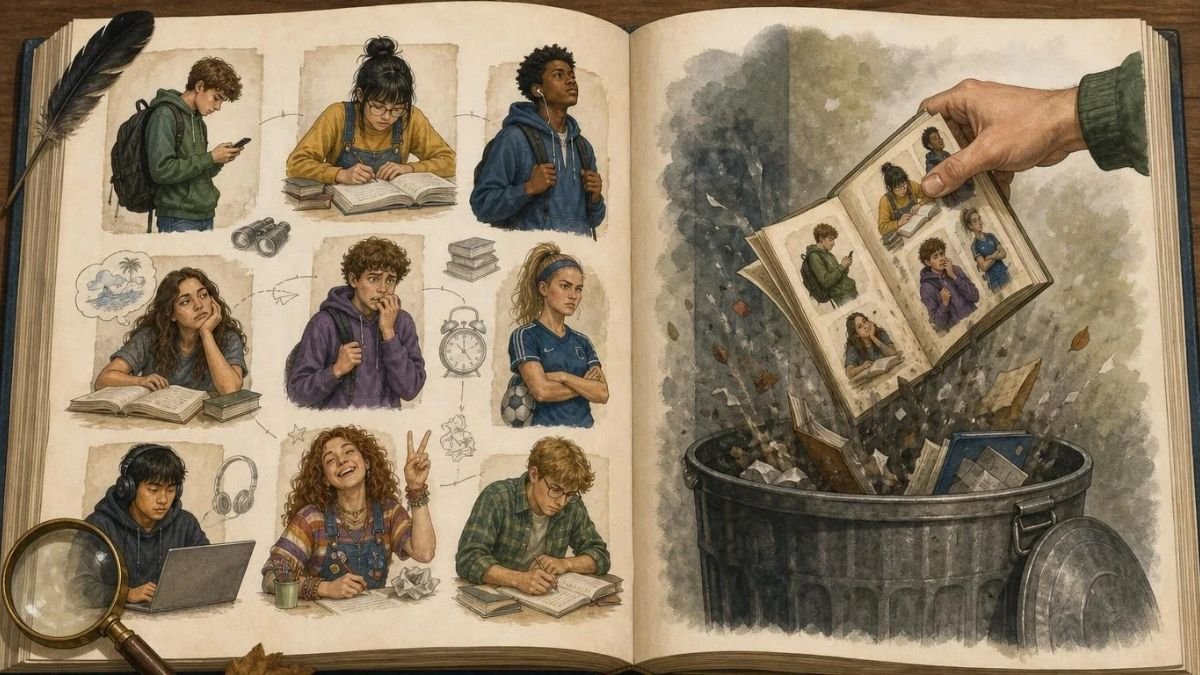
If you met yourself as a stranger, would you be able to tell if you were faking it? It’s a strange question, but we live in a time where "being yourself" has become a marketing slogan rather than a way of life. We talk a lot about authenticity, but how do we actually define it? Is it just saying whatever pops into your head? Is it refusing to wear a suit to a job interview? Or is it something quieter, deeper? I think authenticity is the alignment of what you believe, what you say, and what you do. It’s when the internal you and the external you are holding hands rather than fighting for control. But achieving that alignment is one of the hardest things a human can do.

Why is it so hard? Because from the moment we enter school, we are rewarded for conformity. We are taught to smooth out our edges to fit into the puzzle. Being authentic feels dangerous because it opens us up to rejection. If I show you the real me—the one who is unsure, the one who loves weird music, the one who is afraid of the dark—and you reject that person, it hurts a lot more than if you reject my polished persona. But here is the paradox: the persona can never truly be loved, because it isn't real. You can only be truly loved when you are truly known. Authenticity is the price of admission for real connection.

Embracing authenticity also changes the way you navigate conflict. When you stop pretending to be perfect, you don't have to defend a false image. You can say, "I was wrong," or "I don't know the answer." It takes the pressure off. But it requires a constant checking in with yourself. You have to ask, "Am I doing this because I want to, or because I think I should?" It’s a daily practice of peeling off layers of expectation until you get to the core. It’s terrifying, yes, but it’s also the only way to feel truly alive.

So, here is the question for the day: In what area of your life do you feel you are wearing the thickest mask—work, relationships, or maybe even with your family—and what is one small step you could take to lower it just an inch? Let’s discuss it in the comments.


Related Posts

Memory Melding: What If We Could Trade Pasts?

What If We Could Transfer Our Memories

Have you ever struggled to explain exactly how you felt in a specific moment? Imagine a world where you didn’t have to use words. What if we could transfer our memories—sights, sounds, and emotions—directly to someone else? In this episode of English Plus Espresso, we dive into the beautiful, messy, and terrifying possibility of shared memory.

0 Comments

Submit a Comment

This site uses Akismet to reduce spam. Learn how your comment data is processed.

Recent Posts

A History of Sex as a Business

A History of Sex as a Business 09 | The Digital Turn: Platforms, Algorithms, and OnlyFans

This is part 9 of 10 in The Oldest Profession

The internet transformed commercial sex as radically as anything since the industrial revolution — enabling greater autonomy for some, creating new vectors for exploitation for others, and producing a legislative and ethical landscape that nobody has figured out how to navigate. This episode examines FOSTA-SESTA, OnlyFans, the trafficking-platform debate, and where we actually stand.

read more...
A History of Sex as a Business

A History of Sex as a Business 08 | The Business Model: How the Industry Actually Works

This is part 8 of 10 in The Oldest Profession

Beneath the historical narrative is an economic structure — one characterized by specific mechanisms of recruitment, control, and profit extraction that have remained remarkably consistent across centuries and continents. This episode examines the business of commercial sex as a business: how it actually operates, how exploitation is maintained, and where the money actually goes.

read more...
A History of Sex as a Business

A History of Sex as a Business 07 | The 20th Century: Wars, Migration, and the Criminalization Wave

This is part 7 of 10 in The Oldest Profession

The twentieth century saw two world wars that massively expanded military commercial sex economies, massive migration patterns that created new trafficking vulnerabilities, and a wave of criminalization campaigns that often made things worse for the people they claimed to help. This episode traces how the modern policy landscape was created.

read more...

Categories

Follow Us